
OEM metal stamping is not a one-time order — it is a production program. Brand manufacturers, Tier 1 suppliers, and industrial OEMs rely on stamping partners who can maintain consistent part quality across every production batch, manage tooling across the product lifecycle, and respond to engineering changes without disrupting supply. That is what we do.
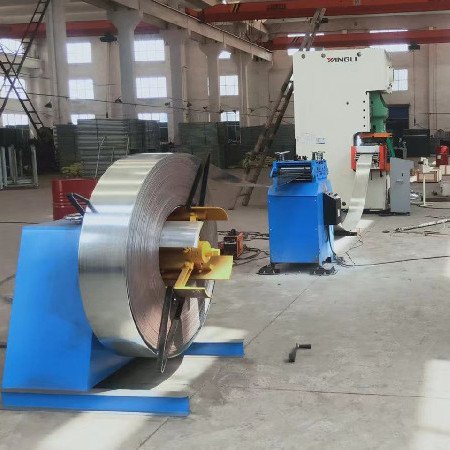
Looking for a long-term OEM stamping partner? Send your drawing or RFQ to our contact page — we will review your part, confirm process fit, and return a structured quotation within 2 business days.
What OEM Buyers Actually Need From a Stamping Partner
Most stamping suppliers can produce a part. Fewer can manage a production program. OEM buyers sourcing stamped components for their manufacturing lines face a different set of requirements than a buyer ordering a one-time batch:
- Consistent part quality across every production batch — dimensional variation that is acceptable in sample quantities becomes a line-stop problem at volume. Your supplier’s process control needs to be structured, not occasional.
- Tooling ownership, maintenance, and longevity — in a proper OEM relationship, you own the tooling and your supplier maintains it. Tool wear schedules, resharpen intervals, and die maintenance records should be part of the production plan, not an afterthought.
- Engineering change management — OEM programs generate ECNs. A stamping partner who can update tooling, re-validate parts, and maintain documentation without re-quoting everything from scratch is worth more than a low-price shop that treats every ECN as a new project.
- Supply chain integration — scheduling, packaging, shipping coordination, and reorder trigger management should work with your production planning system, not around it.
- Documentation for qualification — FAI reports, PPAP-style dimensional packages, material certifications, and process control records are standard requirements in automotive, medical, and aerospace OEM supply chains.
We structure our production programs around these requirements — not as optional add-ons, but as the standard operating model for OEM supply relationships.
Our OEM Metal Stamping Capabilities
We operate multiple stamping methods in the same facility. For OEM buyers, that means we can match the process to your part geometry, volume, and tolerance requirements — and switch methods or combine operations as the program evolves.
| Process | Best For | OEM Volume Range |
|---|---|---|
| Progressive die stamping | High-volume flat and lightly formed parts; lowest unit cost at volume | 100K–10M+ pcs/year |
| Transfer die stamping | Larger or complex parts that cannot run on a progressive strip | 20K–2M pcs/year |
| Compound die stamping | Flat precision parts requiring tight positional tolerances between features | 50K–5M pcs/year |
| Deep draw stamping | Cups, shells, housings, cylindrical drawn parts | 10K–1M pcs/year |
| Bending and forming | Brackets, channels, flanges; in-line or standalone | Prototype to volume |
Materials we stamp for OEM programs:
- Cold rolled steel (SPCC, DC01, DC04) — structural parts, brackets, enclosures
- Stainless steel (304, 316, 430) — medical, food-contact, corrosion-critical parts
- Aluminum (5052, 6061, 3003) — lightweight structural parts, EV components
- Copper (C11000, C26000) — electrical contacts, bus bars, conductive terminals
- Brass (C26000, C36000) — connector components, fittings, plated hardware
- HSLA and AHSS — automotive structural brackets, crash-relevant parts
- Galvanized and pre-coated steel — HVAC, construction, outdoor hardware
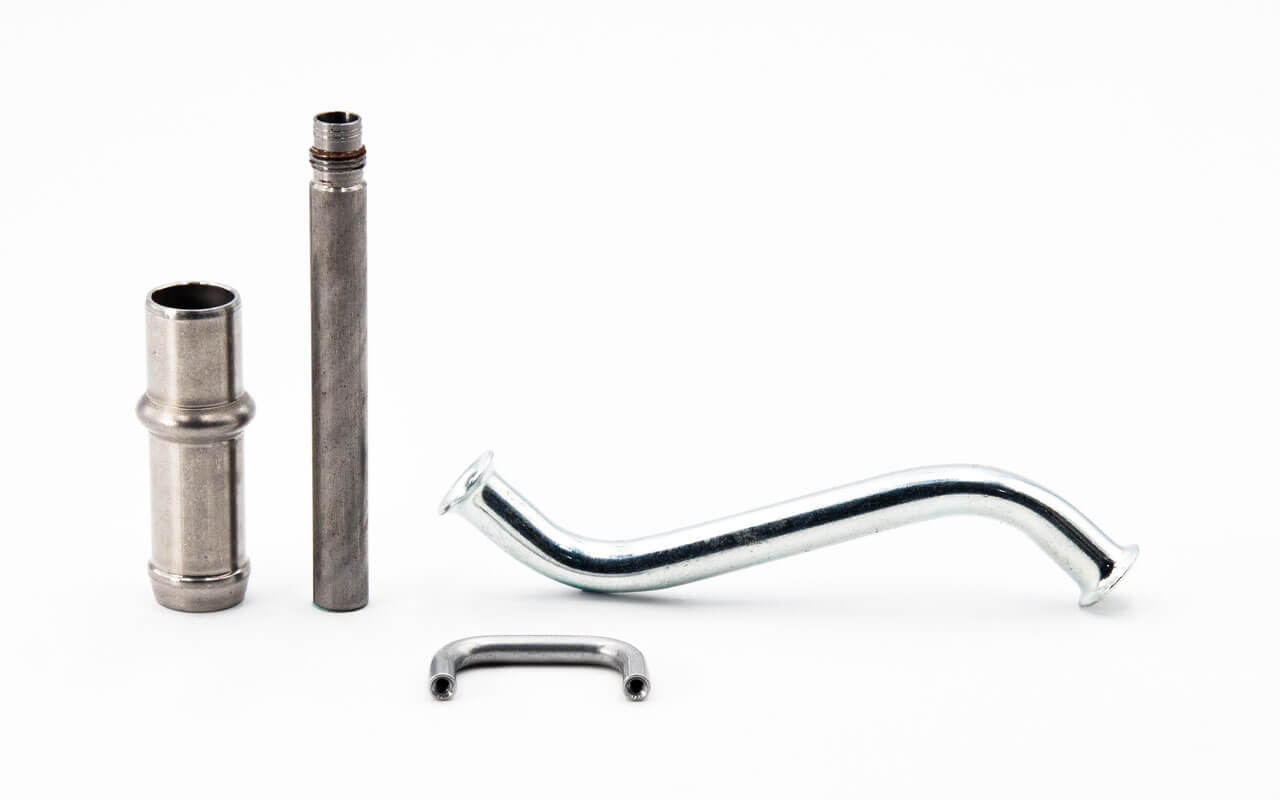
For detailed capability parameters, see our custom metal stamping page or contact us with your drawing for a direct assessment.
Production Capability Parameters
| Parameter | Capability |
|---|---|
| Material thickness | 0.1 mm to 8.0 mm (varies by material and process) |
| Dimensional tolerance | ±0.01 mm to ±0.05 mm typical; tighter with controlled tooling |
| Part size range | Micro-terminals to large structural brackets (up to ~600 mm) |
| Annual volume support | Pilot quantities to multi-million piece mass production |
| Tooling ownership | Customer-owned; in-house design, build, and maintenance |
| Secondary operations | Tapping, riveting, spot welding, deburring, plating coordination |
| Quality documentation | FAI, PPAP-style packages, material certs, dimensional reports |
| Packaging | Custom per part geometry; bulk, tray, reel packaging options |
The OEM Production Workflow
A well-managed OEM stamping program follows a structured sequence. Skipping stages early creates cost and quality problems later. Here is how we run OEM programs from first contact to stable supply:
- RFQ and DFM review — you send your drawing and volume forecast. We review part geometry for stampability, flag any DFM concerns (bend radius, minimum feature spacing, burr direction, strip utilization), and return a quotation with tooling cost, unit price, and lead time. Typically within 2 business days.
- Tooling design and build — die design is matched to your volume and tolerance requirements. A part heading to 1M pieces/year gets a different tool specification than one at 50K. We build tooling in-house and provide a build progress timeline.
- First article inspection (FAI) — first article samples are produced, 100% dimensionally inspected against the drawing, and documented in a report for your approval. No mass production release until FAI passes.
- PPAP documentation (if required) — for automotive and similar OEM programs requiring PPAP-style submission, we prepare the relevant elements: dimensional results, material certifications, process flow, control plan, and measurement system data.
- Mass production and process control — in-process statistical control, die maintenance at scheduled intervals, and incoming material verification are built into the standard production plan. We track and document any deviations.
- Ongoing supply management — reorder scheduling, ECN processing, packaging consistency, and shipping documentation are managed through clear communication protocols. We accommodate kanban, blanket order, and direct PO release models.
Industries We Supply OEM Stamped Parts
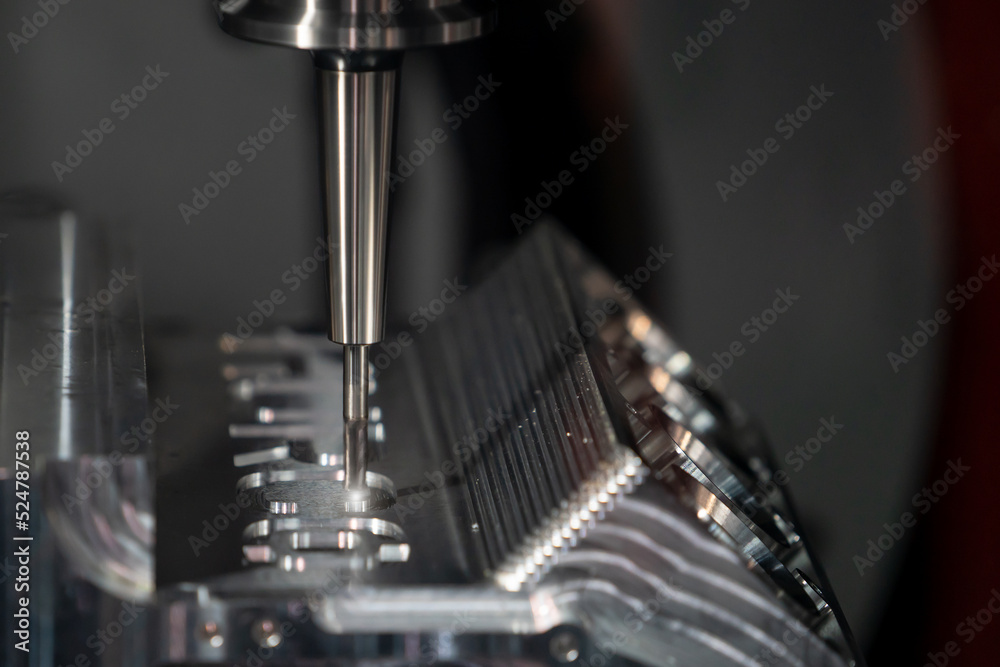
OEM stamped parts serve wherever sheet metal components need to be consistently produced to a drawing at production volumes. Our current OEM supply programs include:
- Automotive OEM — seat structure brackets, body clips and retainers, EV battery tray hardware, door panel mounting components, terminal and connector parts for wire harness systems. See automotive stamping.
- Electronics and electrical — EMI shielding frames, PCB mounting hardware, copper and brass contact terminals, connector housings, grounding components. See electronics stamping components.
- Home appliances — motor mounting brackets, heating element clips, control panel hardware, structural enclosure frames. See home appliances stamping.
- Medical devices — stainless steel housings, precision surgical instrument parts, implant-adjacent structural components with full traceability. See medical device stamping.
- Aerospace and defense — structural clips, harness routing brackets, enclosure panels manufactured to controlled documentation standards. See aerospace metal stamping.
- Construction hardware — galvanized anchor plates, joist hangers, structural connectors, outdoor-rated stamped brackets. See construction metal stamping.
Related Services
OEM stamping programs often involve complementary services and capabilities:
- Custom metal stamping — drawing-based custom part production, DFM-to-volume workflow
- Metal stamping manufacturer overview — full manufacturing capability and capacity summary
- Metal stamping parts — the complete range of stamped part types we produce
- Custom metal stamped parts — OEM drawing-based part production details
- Precision metal stamping — tight-tolerance parts for quality-critical OEM applications
- Progressive die stamping — highest-volume, lowest-unit-cost stamping for OEM mass production
FAQ: OEM Metal Stamping
What is OEM metal stamping?
OEM metal stamping refers to the production of stamped metal components for inclusion in another manufacturer’s finished product. The OEM buyer supplies drawings and specifications; the stamping supplier produces parts to those specifications at agreed volumes under a supply agreement that includes tooling, quality documentation, and ongoing production management.
What quality documents do you provide for OEM stamping programs?
Standard documentation includes FAI dimensional reports, material certifications (mill certs, RoHS, REACH compliance as applicable), in-process control records, and shipping documentation. For automotive OEM programs requiring PPAP, we prepare the relevant PPAP elements by mutual agreement. We can also provide CMM reports, SPC data, and custom quality plans on request.
Who owns the tooling in an OEM stamping program?
In our standard OEM supply model, the customer owns the tooling after payment of tooling cost. We build and maintain the tooling at our facility for the duration of the production program. If you move volume to another supplier, the tooling transfers with the program. Tooling maintenance costs are absorbed into the production unit price.
Can you handle engineering changes (ECN) during production?
Yes. Engineering changes are a normal part of any OEM program lifecycle. When you issue an ECN, we review the change impact on tooling, process, and documentation, provide a change assessment with any cost or lead time implications, update and re-validate the tooling if needed, and issue a revised FAI for approval before resuming production with the changed specification.
What is your minimum order quantity for OEM stamping?
There is no fixed minimum. MOQ is determined by tooling amortization economics relative to part value. For high-value or complex parts, even relatively small annual quantities can be viable. For simple flat stampings, higher volumes are needed to make tooling investment worthwhile. We discuss MOQ and tooling amortization options during the quotation stage so you can make an informed decision.
How long does it take to start an OEM production program?
Timeline from RFQ to first production delivery depends on tooling complexity. Simple single-station tooling: 3–5 weeks. Progressive dies with multiple stations: 5–8 weeks. Complex transfer dies: 8–12 weeks or more. We provide a project timeline with the quotation so you can plan your production launch accordingly.
Start Your OEM Stamping Program
The most efficient path to a realistic production quote is to send your drawing. We review geometry, confirm material and process fit, check for DFM issues, and return a structured quotation — including tooling cost, unit price by volume tier, and production lead time — usually within 2 business days.
Send your drawing, RFQ, or sample photos through our contact page. Include your annual volume estimate and target delivery timeline, and we will structure the response to match your program requirements.
Related Stamping Services
ISO-certified China supplier with low MOQ.
State-of-the-art press shop with in-house tooling.
Short-run and prototype stamping from 100 pcs.
Mass production stamping with JIT delivery.
Precision electronic and mechanical components.
Contacts, busbars, and terminals for electrical OEMs.
Stamped parts plus welding, riveting, and kitting.
Large complex parts up to 800×600 mm.
Up to 1,500 SPM for connectors and terminals.