

Choosing a metal stamping manufacturer is not only a sourcing decision. It is a manufacturing risk decision. A supplier may be able to stamp a sample part, but that does not necessarily mean they can maintain dimensional stability, delivery consistency, material traceability, and cost control over repeated production. For OEM buyers, the real question is whether the manufacturer can support the full lifecycle of the part, from engineering review and tooling strategy to long-term production and quality management.
We work as a metal stamping manufacturer for customers who need custom stamped parts, precision sheet metal components, production tooling support, and scalable capacity for both new and mature programs. Our manufacturing scope covers progressive die stamping, deep draw stamping, sheet metal stamping, bending, piercing, blanking, embossing, coining, and secondary operations such as tapping, welding, plating, and assembly support.
Whether you are sourcing a new OEM component, transferring production from an unstable supplier, or expanding capacity for a growing program, we focus on process-fit, manufacturability, and repeatability rather than offering a quote in isolation.
Looking for a qualified stamping manufacturer? Use our contact page to send drawings, annual volume, material callouts, and quality requirements for review.
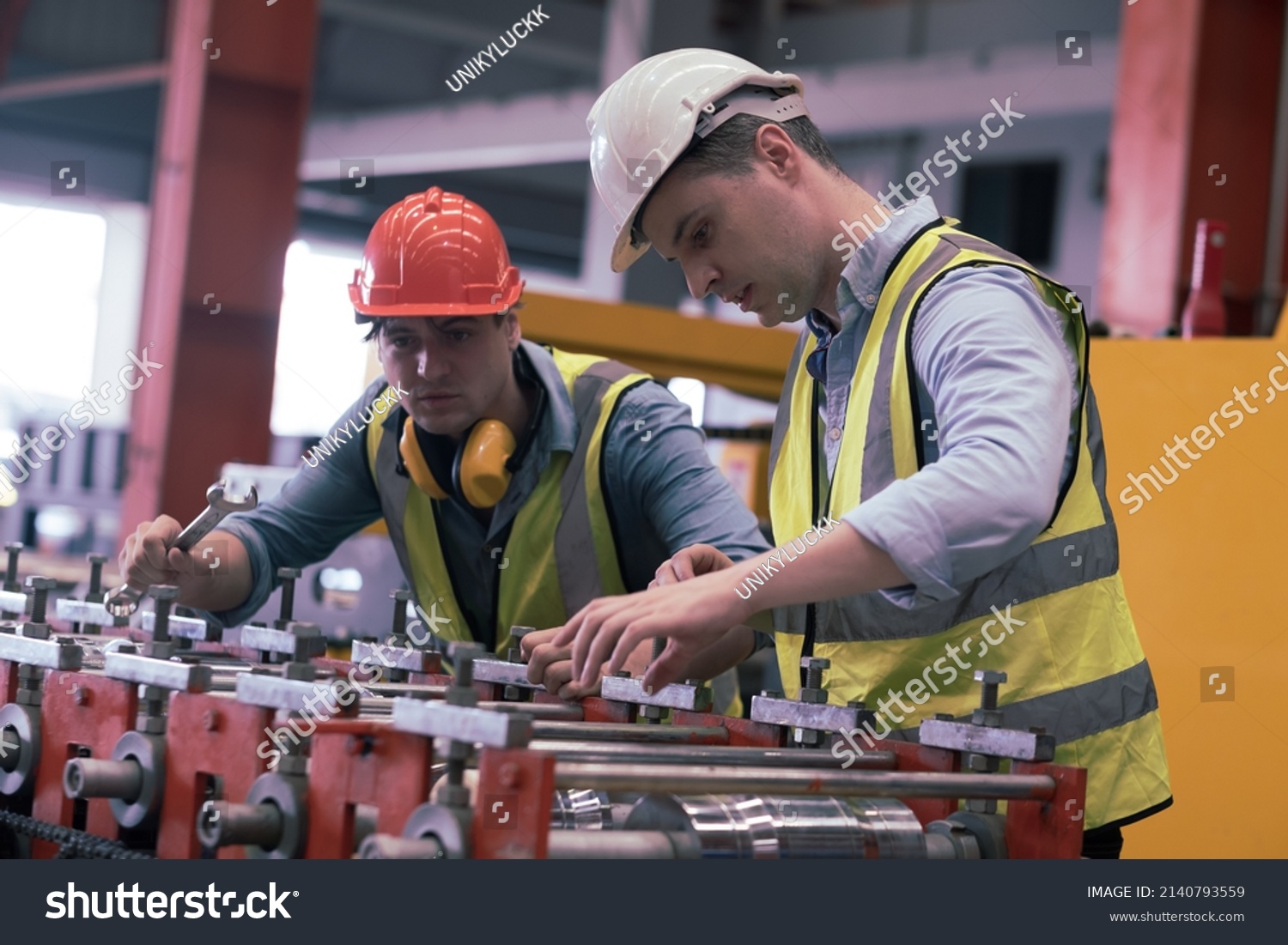
What a Reliable Metal Stamping Manufacturer Should Provide
A strong stamping supplier does more than run presses. The manufacturer should help reduce total project risk through engineering input, tooling coordination, process planning, inspection control, and practical communication during sampling and production.
In practical terms, a capable metal stamping manufacturer should offer:
- design-for-manufacturing review before tooling release
- tooling strategy matched to volume and part geometry
- experience with multiple materials and secondary processes
- controlled sampling and validation workflow
- stable production and inspection discipline
- clear response on lead time, revision control, and shipment requirements
This matters even more when the part goes into a larger assembly. In those cases, dimensional drift, inconsistent burr direction, or cosmetic variability can create downstream failures that cost much more than the stamped part itself.
Our Metal Stamping Manufacturing Scope
We support a broad range of manufacturing needs across custom and repeat production programs:
- Custom metal stamping for drawing-based OEM parts
- Precision metal stamping for tight-tolerance components
- Progressive die stamping for high-volume repeat production
- Deep draw stamping for shell, cup, and drawn geometries
- Sheet metal stamping for brackets, covers, mounting parts, and formed pieces
- Secondary operations such as tapping, riveting, deburring, and plating
- Assembly-ready parts for customers who want fewer suppliers in the chain
Related capability pages: custom metal stamping, precision metal stamping, progressive die stamping, deep draw stamping, sheet metal stamping, and stamping dies and tooling.
Materials We Commonly Stamp
Different industries and applications require different material behavior. We manufacture stamped parts in a range of engineering materials depending on formability, corrosion resistance, conductivity, strength, cosmetic requirements, and cost targets.
| Material | Typical Applications | Main Value |
|---|---|---|
| Carbon steel | Brackets, reinforcement parts, industrial hardware | Strength and cost balance |
| Stainless steel | Medical, hardware, corrosion-sensitive parts | Corrosion resistance and durability |
| Aluminum | Lightweight covers, housings, automotive and electronics parts | Weight reduction |
| Copper | Terminals, busbar-related parts, electrical contacts | High conductivity |
| Brass | Connector parts, decorative-functional components | Formability and finish stability |
Material-specific pages: aluminum stamping, stainless steel stamping, steel stamping, copper stamping, and brass stamping.
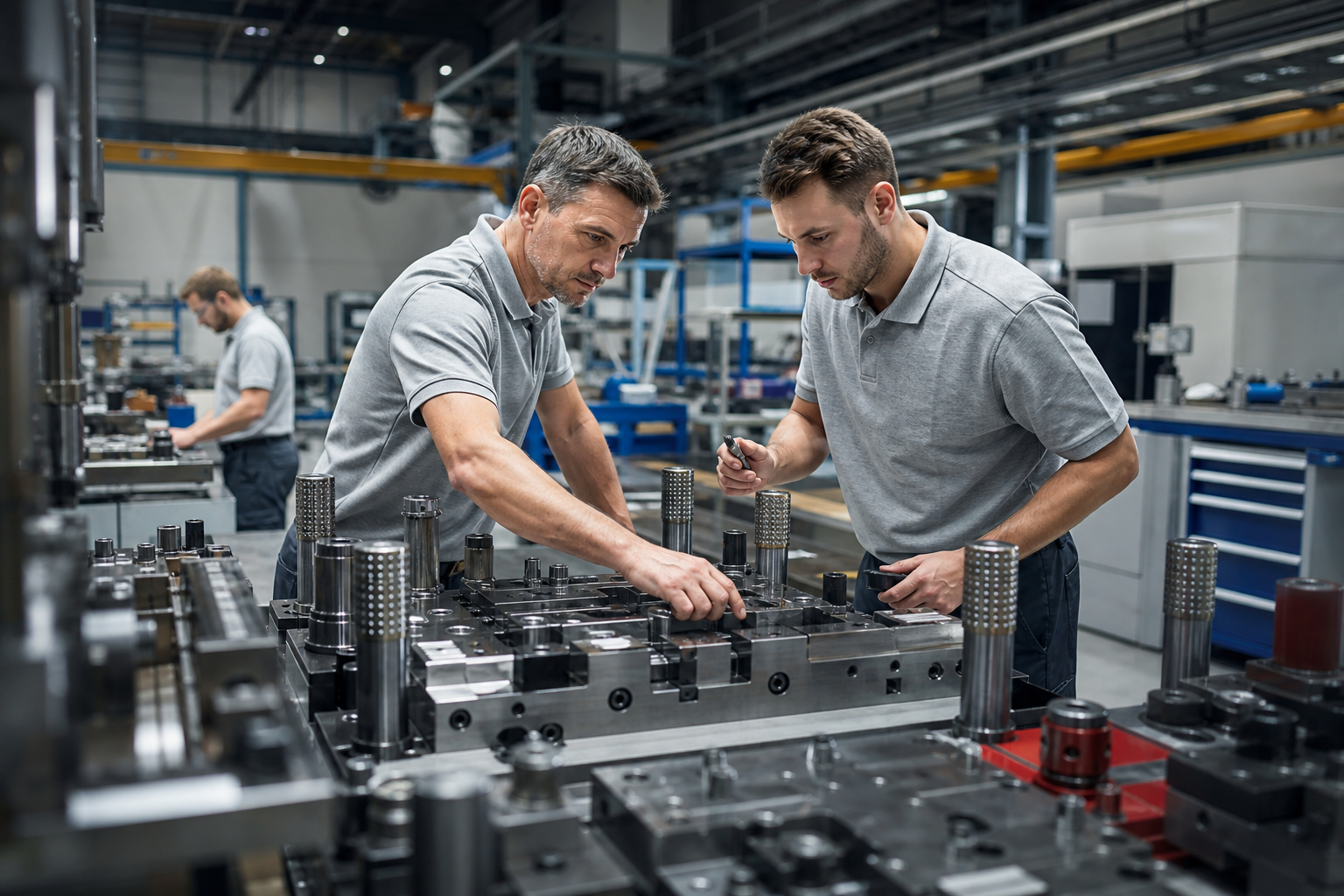
How We Support OEM Stamping Projects
OEM customers usually need more than a part. They need a supplier that can interpret drawing intent, identify manufacturability risks, plan tooling investment properly, and support a stable handoff into mass production.
- Requirement intake — drawing, 3D file, sample part, finish, material, annual usage, and assembly function
- DFM review — bend behavior, hole position, edge condition, burr direction, tolerances, strip efficiency
- Tooling route selection — progressive die, transfer die, single-hit tool, or staged forming method
- Sampling and validation — dimensional check, fit evaluation, finish review, packaging logic
- Production launch — control plan, inspection checkpoints, delivery schedule, and maintenance support
This workflow is especially useful for overseas buyers who need both technical response and sourcing predictability. The goal is to avoid the gap between a low first quote and a difficult mass-production reality.
Industries We Serve as a Metal Stamping Manufacturer
- Automotive — brackets, clips, terminals, structural support parts, retention features
- Electronics — terminals, contact parts, connector shells, shielding stampings
- Medical — stainless stamped parts and formed precision components
- Appliances — motor-related parts, mounting hardware, control-system metal components
- Aerospace — controlled metal components for structural and enclosure-related functions
- Construction and hardware — support parts, plates, fastening components, brackets
Industry pages: automotive stamping, electronics stamping components, medical device stamping, aerospace metal stamping, and home appliances stamping.
Why Buyers Work with an Experienced Stamping Manufacturer
- fewer manufacturability surprises during tooling and sampling
- better communication between engineering and sourcing teams
- more realistic lead time and process planning
- better control over tolerance-sensitive or assembly-critical parts
- lower risk of production instability after approval
- clearer support for revisions, documentation, and long-run maintenance
If you need a broader company profile before supplier qualification, review our metal stamping company overview for certifications, press capacity, in-house tooling, finishing, assembly, and international delivery workflow.
In many programs, the manufacturer becomes part of the product-delivery system. That is why supplier choice should be based on consistency and problem-solving ability, not only on unit price.
Quality Control and Production Discipline
As a metal stamping company serving OEM customers, we understand that production quality is evaluated over time, not only at sample stage. Our process emphasizes:
- incoming material verification
- tool condition monitoring and maintenance planning
- in-process dimensional checks on critical features
- final inspection before shipment
- support for inspection reports and material documentation when required
- packaging logic designed around part protection and handling stability
FAQ: Metal Stamping Manufacturer
What does a metal stamping manufacturer do?
A metal stamping manufacturer produces parts from sheet metal or coil material using tooling and press-based processes such as blanking, piercing, bending, forming, and drawing. Many manufacturers also support tooling, finishing, and assembly.
How do I choose the right metal stamping manufacturer?
Look for experience with your material and part type, DFM support, tooling competence, quality-control discipline, communication speed, and the ability to scale from sampling to production.
Can a metal stamping manufacturer support custom OEM parts?
Yes. Many OEM projects rely on custom metal stamping manufacturers to produce drawing-based parts with specific material, tolerance, finish, and packaging requirements.
What information is needed for a stamping quote?
The best quoting package includes a drawing or 3D file, material specification, thickness, annual volume, finish requirement, and any critical dimensions or assembly notes.
What is the difference between a stamping supplier and a stamping manufacturer?
A supplier may act mainly as a trading or sourcing entity, while a manufacturer is directly responsible for production process control, tooling coordination, inspection, and manufacturing execution.
Do you support both low-volume and high-volume production?
Yes. Production strategy depends on geometry, tooling route, and annual demand. Some parts start with pilot quantities and scale to long-run mass production.
Technical Capabilities That Define a Reliable Manufacturer
When evaluating a metal stamping manufacturer, the conversation should go beyond press tonnage and factory size. The capabilities that actually affect production quality and delivery consistency are more specific:
- Die design and engineering in-house — manufacturers who design their own tooling can respond faster to engineering changes, optimize strip layout for material utilization, and troubleshoot die issues without third-party delays. In-house die design also means the engineering team understands the production constraints from the start.
- Progressive, transfer, and compound die capability — a manufacturer running only one type of die will try to fit every part into that method. A facility with multiple die types can match the tooling to the part geometry and volume, which affects both unit cost and quality.
- Press range from 25-ton to 250-ton or higher — small parts need small presses with fast stroke rates; large parts need high-tonnage presses with bed area to match. A manufacturer with a range of press sizes can handle different part families without subcontracting.
- In-house secondary operations — tapping, deburring, spot welding, riveting, and assembly can be integrated into the stamping workflow or done as immediate post-press operations. This reduces handling, lead time, and the risk of damage during transfer between vendors.
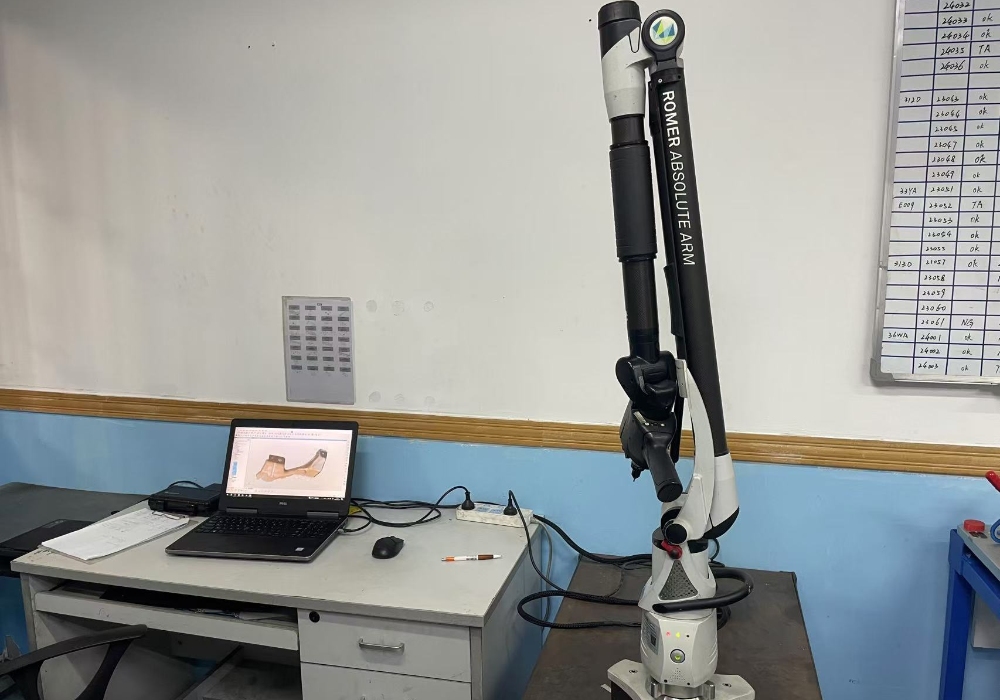
- Measurement and inspection equipment — CMM, optical comparators, surface roughness testers, and custom gauges are needed to verify parts against drawing requirements. A manufacturer without these tools is relying on assumption rather than data.
A manufacturer with these capabilities can handle the full production lifecycle of a stamped part — from initial DFM review through tooling, pilot run, mass production, and re-orders — without gaps in technical control.
Supply Chain and Delivery Reliability
Manufacturing capability means nothing if the supply chain fails. Delivery reliability in metal stamping depends on several factors that are often overlooked during vendor selection:
- Raw material sourcing and inventory management — a manufacturer with established relationships with steel mills and service centers can secure material availability even when supply tightens. Coil inventory for common materials and thicknesses shortens lead time for repeat orders.
- Die maintenance and spare parts management — progressive dies wear over time. Punches, inserts, and stripping plates need periodic replacement. A manufacturer with a die maintenance program and spare parts inventory can keep production running without unplanned downtime.
- Production scheduling transparency — you should be able to get a realistic delivery commitment based on current workload, not a promise that gets revised after the order is placed. Manufacturers who track their press utilization and tooling schedule can provide accurate lead times.
- Capacity buffer for demand fluctuations — if a manufacturer runs at 100% capacity, any disruption (material delay, die breakage, quality issue) cascades into delivery delays. A manufacturer with 15–20% capacity buffer can absorb disruptions without affecting your delivery schedule.
These supply chain factors are part of the manufacturing risk assessment we recommend for any new or transferred stamping program.
Learn more about Metal Stamping vs Die Casting.
Learn more about Bending in Metal Stamping.
Learn more about Blanking Process Guide.
Frequently Asked Questions
How do I evaluate a metal stamping manufacturer?
Evaluate based on die design capability (in-house vs outsourced), press range and tonnage, quality system documentation, inspection equipment, material sourcing stability, production capacity, and delivery track record. A facility audit and sample part trial run are the most reliable evaluation methods.
What certifications should a metal stamping manufacturer have?
ISO 9001 is the baseline quality management certification. For automotive work, IATF 16949 is often required. For medical or aerospace parts, additional certifications or compliance documentation may be needed. Certification alone does not guarantee quality — the actual production processes and inspection practices matter more.
Should I choose a manufacturer in China for metal stamping?
Chinese metal stamping manufacturers can offer significant cost advantages for medium to high-volume programs, particularly when tooling cost and unit price are compared against domestic options. The key is selecting a manufacturer with proper engineering capability, quality systems, and communication practices — not just the lowest quote.
How do I transfer a stamping program from one manufacturer to another?
Program transfer requires drawing review, tooling assessment (can existing dies be shipped or must new tooling be built), material specification confirmation, quality requirements alignment, and a pilot production run with first article inspection. Planning the transfer timeline and having clear specifications reduces the risk of production gaps.
What is the typical lead time for new stamping tooling?
Progressive die tooling typically takes 3–6 weeks. Transfer dies and complex forming tools take 5–9 weeks. Lead time depends on tool complexity, number of stations, and the manufacturer’s current engineering workload. Rush tooling programs can sometimes be accommodated with adjusted scheduling.
How do I protect my intellectual property when working with a stamping manufacturer?
Use a Non-Disclosure Agreement (NDA) before sharing drawings or 3D models. Work with manufacturers who have established IP protection policies and can demonstrate that customer tooling and designs are segregated and controlled. Reputable manufacturers treat customer IP as a business-critical responsibility.
Technical Capabilities That Define a Reliable Manufacturer
When evaluating a metal stamping manufacturer, the conversation should go beyond press tonnage and factory size. The capabilities that actually affect production quality and delivery consistency are more specific:
- Die design and engineering in-house — manufacturers who design their own tooling can respond faster to engineering changes, optimize strip layout for material utilization, and troubleshoot die issues without third-party delays. In-house die design also means the engineering team understands the production constraints from the start.
- Progressive, transfer, and compound die capability — a manufacturer running only one type of die will try to fit every part into that method. A facility with multiple die types can match the tooling to the part geometry and volume, which affects both unit cost and quality.
- Press range from 25-ton to 250-ton or higher — small parts need small presses with fast stroke rates; large parts need high-tonnage presses with bed area to match. A manufacturer with a range of press sizes can handle different part families without subcontracting.
- In-house secondary operations — tapping, deburring, spot welding, riveting, and assembly can be integrated into the stamping workflow or done as immediate post-press operations. This reduces handling, lead time, and the risk of damage during transfer between vendors.
- Measurement and inspection equipment — CMM, optical comparators, surface roughness testers, and custom gauges are needed to verify parts against drawing requirements. A manufacturer without these tools is relying on assumption rather than data.
A manufacturer with these capabilities can handle the full production lifecycle of a stamped part — from initial DFM review through tooling, pilot run, mass production, and re-orders — without gaps in technical control.
Supply Chain and Delivery Reliability
Manufacturing capability means nothing if the supply chain fails. Delivery reliability in metal stamping depends on several factors that are often overlooked during vendor selection:
- Raw material sourcing and inventory management — a manufacturer with established relationships with steel mills and service centers can secure material availability even when supply tightens. Coil inventory for common materials and thicknesses shortens lead time for repeat orders.
- Die maintenance and spare parts management — progressive dies wear over time. Punches, inserts, and stripping plates need periodic replacement. A manufacturer with a die maintenance program and spare parts inventory can keep production running without unplanned downtime.
- Production scheduling transparency — you should be able to get a realistic delivery commitment based on current workload, not a promise that gets revised after the order is placed. Manufacturers who track their press utilization and tooling schedule can provide accurate lead times.
- Capacity buffer for demand fluctuations — if a manufacturer runs at 100% capacity, any disruption (material delay, die breakage, quality issue) cascades into delivery delays. A manufacturer with 15–20% capacity buffer can absorb disruptions without affecting your delivery schedule.
These supply chain factors are part of the manufacturing risk assessment we recommend for any new or transferred stamping program.
Learn more about Metal Stamping vs Die Casting.
Learn more about Bending in Metal Stamping.
Learn more about Blanking Process Guide.
Frequently Asked Questions
How do I evaluate a metal stamping manufacturer?
Evaluate based on die design capability (in-house vs outsourced), press range and tonnage, quality system documentation, inspection equipment, material sourcing stability, production capacity, and delivery track record. A facility audit and sample part trial run are the most reliable evaluation methods.
What certifications should a metal stamping manufacturer have?
ISO 9001 is the baseline quality management certification. For automotive work, IATF 16949 is often required. For medical or aerospace parts, additional certifications or compliance documentation may be needed. Certification alone does not guarantee quality — the actual production processes and inspection practices matter more.
Should I choose a manufacturer in China for metal stamping?
Chinese metal stamping manufacturers can offer significant cost advantages for medium to high-volume programs, particularly when tooling cost and unit price are compared against domestic options. The key is selecting a manufacturer with proper engineering capability, quality systems, and communication practices — not just the lowest quote.
How do I transfer a stamping program from one manufacturer to another?
Program transfer requires drawing review, tooling assessment (can existing dies be shipped or must new tooling be built), material specification confirmation, quality requirements alignment, and a pilot production run with first article inspection. Planning the transfer timeline and having clear specifications reduces the risk of production gaps.
What is the typical lead time for new stamping tooling?
Progressive die tooling typically takes 3–6 weeks. Transfer dies and complex forming tools take 5–9 weeks. Lead time depends on tool complexity, number of stations, and the manufacturer’s current engineering workload. Rush tooling programs can sometimes be accommodated with adjusted scheduling.
How do I protect my intellectual property when working with a stamping manufacturer?
Use a Non-Disclosure Agreement (NDA) before sharing drawings or 3D models. Work with manufacturers who have established IP protection policies and can demonstrate that customer tooling and designs are segregated and controlled. Reputable manufacturers treat customer IP as a business-critical responsibility.
Request a Manufacturer Review and Quote
If you are evaluating metal stamping manufacturers for a new or transferred project, we can review the part from both manufacturing and sourcing perspectives. That includes tooling suitability, tolerance feasibility, production stability, and likely cost drivers.
Contact us to discuss your metal stamping project and send your RFQ package for review.