
Medical device metal stamping produces precision-formed components for surgical instruments, implantable devices, diagnostic equipment, and drug-delivery systems — applications where a dimensional deviation of 0.01 mm can mean the difference between a successful implant and a device failure inside the human body. Unlike general manufacturing, medical stamping must satisfy biocompatibility requirements, regulatory audits from the FDA and notified bodies, and documentation standards that trace every part back to its raw material heat lot.
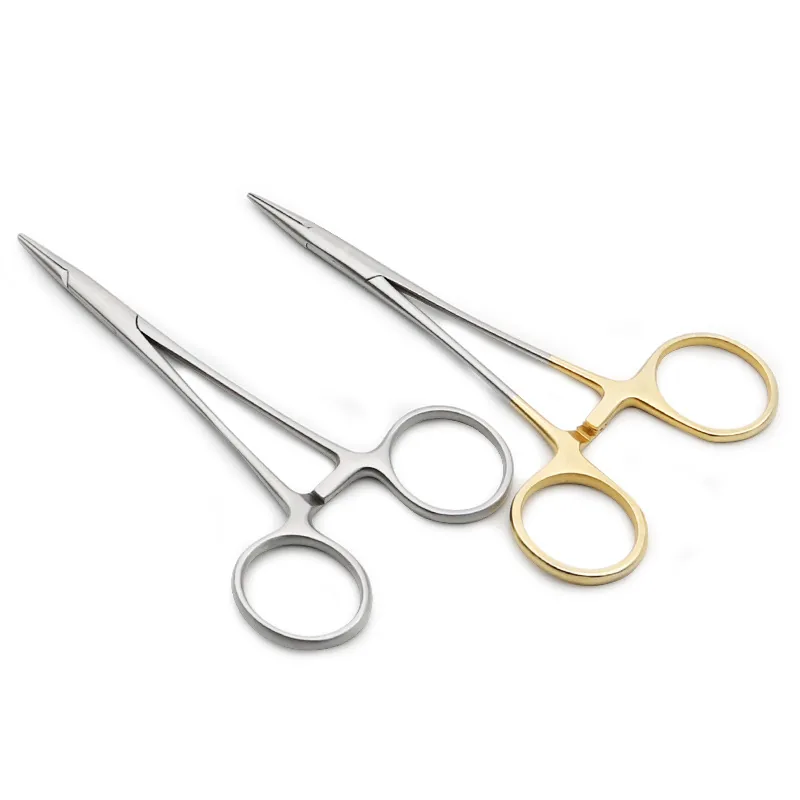
This guide covers the materials, regulatory frameworks, tolerance expectations, cleanroom requirements, and traceability obligations that define medical device stamping. Whether you are an engineer designing a new surgical instrument or a procurement manager qualifying a stamping supplier, this reference provides the technical foundation you need.
What Is Medical Device Metal Stamping?
Medical device metal stamping is a precision forming process that converts biocompatible sheet metals into components for medical instruments, implantable devices, and diagnostic equipment using progressive dies, transfer dies, or fineblanking tooling. It requires ISO 13485-certified quality systems, validated processes, sub-0.01 mm tolerances on critical features, and full material traceability from mill certificate to finished part.
Companies like Metal Stamping Parts Ltd maintain the cleanroom infrastructure, regulatory certifications, and process validation capabilities required to deliver medical-grade stamped components.
Medical Stamping Materials: Biocompatibility and Performance
Material selection in medical stamping is driven first by biocompatibility — the material must not elicit a toxic, immunogenic, or carcinogenic response when in contact with human tissue or fluids. The table below compares the most commonly used medical-grade stamping alloys.
| Alloy | Common Designations | Tensile Strength (MPa) | Biocompatibility (ISO 10993) | MRI Compatibility | Typical Medical Applications |
|---|---|---|---|---|---|
| Stainless Steel 316L | ASTM F138, ASTM F139, AISI 316LVM | 480–620 | Excellent — long history of implant use | Conditional (ferromagnetic artifacts possible) | Surgical instruments, bone plates, staples, needle hubs |
| Titanium CP Grade 2 / Grade 4 | ASTM F67, ASTM F1581 | 345–550 | Excellent — osseointegration-friendly | Fully compatible (non-ferromagnetic) | Dental implants, cranial plates, spinal cages |
| Titanium Ti-6Al-4V ELI | ASTM F136, ISO 5832-3 | 860–965 | Excellent — standard implant alloy | Fully compatible | Orthopedic implants, joint replacements, surgical tools |
| MP35N | ASTM F562, UNS R30035 | 800–1,100 (aged) | Excellent — nickel-cobalt-chromium-molybdenum | Conditional | Implantable springs, fixation devices, cardiac components |
| Elgiloy (Co-Cr-Ni-Mo) | ASTM F1058, UNS R30003 | 860–1,200 (aged) | Excellent | Conditional | Guide wires, stent frames, orthodontic archwires |
| Nitinol (NiTi) | ASTM F2063 | 895–1,100 (austenite) | Excellent — extensive clinical history | Conditional | Stents, guidewires, orthodontic archwires, vascular filters |
| Tantalum | ASTM F560 | 200–400 | Excellent — bioinert | Fully compatible | Cranial defect repair, marker bands, capacitor housings |
Key Material Considerations
- 316LVM (Vacuum Melted) is the baseline material for non-implantable surgical instruments and many implantable devices. The vacuum melting process reduces inclusion content, improving fatigue life and corrosion resistance. It is the most cost-effective biocompatible option for high-volume stamping.
- Ti-6Al-4V ELI (Extra Low Interstitials) is the gold standard for permanent orthopedic implants. Its elastic modulus (~110 GPa) is closer to bone (~20 GPa) than cobalt alloys (~210 GPa), reducing stress shielding. However, titanium is difficult to stamp — it requires heated forming for complex shapes and causes severe tooling wear.
- MP35N combines exceptional corrosion resistance with high strength and excellent fatigue life. It is the material of choice for implantable springs and fixation devices where 316L lacks sufficient strength. Its nickel content (35 %) requires careful biocompatibility assessment per ISO 10993.
- Nitinol presents unique stamping challenges due to its shape-memory and superelastic properties. It must be constrained during forming and requires precise thermal processing (shape-setting) at 400–550 °C to program the desired geometry.
For complex medical device housings and enclosures, deep draw stamping provides an efficient forming method for cylindrical and box-shaped components in stainless steel or titanium.
Regulatory Compliance: ISO 13485, FDA 21 CFR 820, and CE MDR
Medical device stamping suppliers operate under a multi-layered regulatory framework. Compliance is not optional — it is a legal prerequisite for selling into regulated markets.
| Framework | Issuing Authority | Geographic Scope | Core Requirements | Audit Frequency |
|---|---|---|---|---|
| ISO 13485:2016 | ISO / accredited registrar | Global (recognized in 170+ countries) | Quality Management System for medical devices; design controls, risk management (ISO 14971), CAPA, supplier management, process validation, document control | Annual surveillance; 3-year recertification |
| FDA 21 CFR Part 820 | U.S. Food and Drug Administration | United States | Quality System Regulation (QSR); design controls, production and process controls, corrective and preventive actions, labeling, records | Biennial inspection (routine); for-cause inspections as needed |
| EU MDR 2017/745 | European Commission / Notified Bodies | European Economic Area | Technical documentation, clinical evaluation (MEDDEV 2.7/1), post-market surveillance, UDI, Unique Device Identification, EUDAMED registration | Per Notified Body audit schedule (typically annual) |
| MDSAP (Medical Device Single Audit Program) | Regulatory authorities (US, Canada, Brazil, Australia, Japan) | Five founding member countries | Single audit covering requirements of all participating regulators; reduces audit burden for multi-market suppliers | Annual |
| ASTM F86 | ASTM International | Referenced by FDA and ISO | Standard for surface preparation and passivation of stainless steel surgical instruments | Per lot |
What This Means for Stamping Suppliers
- Process validation (IQ/OQ/PQ) is mandatory. Every stamping process that produces medical components must be validated with Installation Qualification, Operational Qualification, and Performance Qualification protocols. Revalidation is required when tooling, material, or process parameters change.
- Design controls apply if the stamping supplier contributes to the device design. Even pure contract manufacturers must maintain design history files (DHF) that document how the stamped component meets the device’s design inputs.
- CAPA (Corrective and Preventive Action) systems must be documented, with root-cause analysis (e.g., 8D, fishbone, 5-Why) and effectiveness verification for every corrective action.
At Metal Stamping Parts Ltd, our ISO 13485-certified quality system and FDA-registered facility ensure every medical stamped component meets regulatory requirements for the U.S., EU, and global markets.
Tolerance Standards for Medical Stamping
Medical device stamping tolerances are among the tightest in any industry. Where aerospace parts typically require ±0.025–0.050 mm, medical components — especially for implantable and surgical devices — routinely demand ±0.005 mm (±0.0002 in.) on critical features.
| Feature | General Medical | Implantable / Surgical | Notes |
|---|---|---|---|
| Hole diameter | ±0.025 mm | ±0.005 mm | Critical for fastener interference fits and fluid flow |
| Wall thickness (drawn parts) | ±0.050 mm | ±0.010 mm | Affects structural integrity and drug-delivery precision |
| Surface flatness (per 25 mm) | 0.025 mm | 0.005 mm | Essential for sealing surfaces, mating interfaces |
| Angular tolerance | ±0.5° | ±0.1° | Critical for articulating surgical instrument joints |
| Edge radius | 0.05 mm min | 0.02–0.05 mm controlled | Sharp edges cause tissue damage; burr-free edges mandatory |
| Surface roughness (Ra) | 0.8 µm | 0.2–0.4 µm | Lower Ra reduces bacterial adhesion and improves cleanability |
Achieving ±0.005 mm Tolerances
Producing medical stampings at ±0.005 mm requires a convergence of tooling precision, process control, and measurement capability:
- Sub-micron tooling — Die sections wire-EDM cut to ±0.002 mm, mirror-polished to Ra 0.05 µm. Tool steel grades like ASP-23 or carbide are standard.
- Press selection — Precision mechanical or hydraulic presses with positional repeatability of ±0.005 mm. Servo-driven presses allow programmable slide motion for complex forming sequences.
- Environmental control — Production areas temperature-controlled to 20 ±1 °C. Thermal expansion of steel tooling is approximately 11 µm/m/°C — a 3 °C shift introduces 33 µm/m error, which exceeds ±0.005 mm tolerances on a 75 mm feature.
- Metrology — CMMs with volumetric accuracy of 1.5 + L/333 µm or better. Non-contact optical systems (laser scanners, vision systems) for delicate features that cannot be touched by a probe.
- SPC with high Cpk — Medical device OEMs typically require Cpk ≥ 1.67 on critical dimensions, with some demanding Cpk ≥ 2.0.
Cleanroom Production Requirements
Many medical device components — especially those for implantable devices, drug delivery, and diagnostics — must be manufactured in controlled environments to prevent particulate and biological contamination.
Cleanroom Classifications
| Standard | Equivalent | Max Particles ≥0.5 µm/ft³ | Typical Application |
|---|---|---|---|
| ISO 14644-1 Class 7 | FED-STD-209E Class 10,000 | 352,000 | General medical device assembly, surgical instrument finishing |
| ISO 14644-1 Class 8 | FED-STD-209E Class 100,000 | 3,520,000 | Stamping and forming operations for non-implantable devices |
| ISO 14644-1 Class 5 | FED-STD-209E Class 100 | 3,520 | Implantable device packaging, final assembly of drug-contact components |
Cleanroom Stamping Practices
- Dedicated cleanroom presses — Presses are enclosed in cleanroom-rated enclosures with HEPA-filtered airflow. Lubricants must be medical-grade, non-toxic, and fully removable.
- Particulate control — Stamped parts are cleaned ultrasonically in validated cleaning solutions immediately after forming. Cleaning validation demonstrates that residual particulate and bioburden meet specified limits.
- Garment protocols — Operators wear cleanroom garments (gown, gloves, face mask, hair cover) and pass through air showers before entering controlled areas.
- Environmental monitoring — Continuous particle counting, temperature, and humidity logging. Records are retained as part of the device history record (DHR).
Material Traceability and UDI Requirements
Traceability in medical device stamping is legally mandated and auditable. It connects every stamped part to its raw material source, manufacturing process, and ultimately the patient.
Material Traceability
- Mill certifications must conform to ASTM or ISO material specifications (e.g., ASTM F138 for 361L surgical implant grade). Chemical composition, mechanical properties, microstructure, and inclusion content are reported.
- Lot segregation — Raw material lots are physically segregated and labeled throughout production. Lot numbers are carried on process travelers, work orders, and finished-part identification.
- Chain of custody — Documented handoffs from receiving inspection → storage → blanking → forming → finishing → inspection → packaging → shipping. Each transition is recorded with date, operator, and lot reference.
Unique Device Identification (UDI)
The FDA’s UDI system (21 CFR Part 830) and the EU MDR’s EUDAMED database require every medical device to carry a unique identifier that links to a global database of device information.
| UDI Component | Description | Stamping Relevance |
|---|---|---|
| Device Identifier (DI) | Identifies the device model/version and the labeler | Assigned to the stamped component’s product family |
| Production Identifier (PI) | Variable data: lot number, serial number, manufacturing date, expiration date | Stamped or laser-marked on the part or its packaging |
| UDI Carrier | Machine-readable code (barcode, RFID, 2D DataMatrix) | Applied by laser marking, etching, or adhesive label on the stamped part |
For high-volume disposable medical components (e.g., staples, clips, needle hubs), UDI is typically applied at the packaging level rather than on individual parts. For reusable surgical instruments and implantable devices, direct part marking (DPM) via laser engraving is required.
DFM for Medical Device Stamping
Design-for-manufacturing in medical device stamping must account for regulatory, biocompatibility, and functional requirements that do not exist in other industries.
1. Biocompatibility-Driven Surface Requirements
Medical stamped parts must be free of surface defects that could harbor bacteria or cause tissue irritation. This means:
– No sharp edges or burrs — deburring processes must be validated.
– Surface roughness controlled to Ra ≤ 0.8 µm for non-implantable and Ra ≤ 0.4 µm for implantable contact surfaces.
– Passivation per ASTM A967 or ASTM F86 for stainless steel to remove free iron and maximize the chromium oxide layer.
2. Stress-Relief Requirements
Many medical alloys (316L, Ti-6Al-4V, MP35N) require stress-relief heat treatment after cold forming to prevent stress-corrosion cracking and premature fatigue failure. DFM must accommodate the dimensional changes (~0.05–0.10 %) that occur during stress relief.
3. Cleaning Validation Compatibility
Part geometry must allow effective cleaning. Deep pockets, blind holes, and narrow crevices trap manufacturing residues and biological contaminants. DFM should minimize such features or provide access for ultrasonic cleaning and rinse fluid penetration.
4. Assembly Interface Precision
Medical devices are assembled from multiple precision components. Stamped parts must mate with machined, molded, or other stamped components with minimal clearance. DFM should include tolerance stack-up analysis per ASME Y14.5 to verify assembly fit.
5. Marking and Identification
DFM must provide a flat or gently curved surface area for UDI marking. Minimum marking area depends on the encoding method — a 2D DataMatrix symbol requires approximately 5 × 5 mm minimum. Marking must not compromise structural integrity or biocompatibility.
For stamping tooling design strategies specific to medical applications, see our metal stamping tooling guide.
Quality Control in Medical Device Stamping
Quality control in medical stamping follows a prevent-detect-correct model embedded in the ISO 13485 quality system.
- Incoming material verification — Chemical and mechanical verification against ASTM/ISO specs; certificate of conformance (CoC) from the mill.
- Process validation — IQ/OQ/PQ protocols for every stamping process. Validated parameters are locked; any change triggers revalidation.
- In-process inspection — SPC on critical dimensions; visual inspection for surface defects; automated vision inspection for high-volume parts.
- Final inspection — 100 % inspection on critical-to-safety features; AQL-based sampling per ISO 2859-1 for non-critical features.
- Biocompatibility testing — Per ISO 10993 (cytotoxicity, sensitization, irritation) for new materials, new suppliers, or process changes that affect surface chemistry.
- Sterilization compatibility — If the stamped part is terminally sterilized, DFM must ensure the material and geometry are compatible with the validated sterilization method (steam, EtO, gamma, e-beam).
For comprehensive inspection methodologies, see our guide on metal stamping quality control.
Medical vs. Aerospace Stamping: Key Differences
Engineers working across regulated industries will find useful parallels — and critical differences.
| Factor | Medical Stamping | Aerospace Stamping |
|---|---|---|
| Primary regulatory driver | Patient safety + biocompatibility | Structural integrity + airworthiness |
| Quality system | ISO 13485 / FDA 21 CFR 820 | AS9100 / Nadcap |
| Tolerances | ±0.005–0.025 mm | ±0.025–0.050 mm |
| Cleanroom requirement | Common (ISO 7–8) | Rare |
| Material focus | Biocompatible (316L, Ti, CoCr) | High strength-to-weight (Al, Ti, Inconel) |
| Traceability | UDI + lot traceability | Lot traceability + serial |
| Sterilization compatibility | Required for implantable/invasive | N/A |
| Volume | 1,000–10,000,000/year | 100–10,000/year |
Getting Started with Medical Device Stamping Projects
If you are sourcing stamped components for a medical device, follow these steps to set your project up for success:
- Define the regulatory pathway — Is the device Class I, II, or III (FDA) or Class I, IIa, IIb, or III (EU MDR)? The classification determines the level of evidence and audit scrutiny required.
- Specify material and grade — Use ASTM or ISO designations (e.g., ASTM F138, not just “316L”). Specify melting practice (VAR, VIM+ESR) if required.
- Establish critical dimensions and tolerances — Use GD&T per ASME Y14.5. Identify which features are critical-to-safety (CTS) vs. critical-to-quality (CTQ).
- Plan for process validation — Budget for IQ/OQ/PQ protocols and first-article inspection. This typically adds 4–6 weeks to initial production timelines.
- Define the cleaning and packaging specification — Residual particulate limits, bioburden limits, and packaging format must be established before production begins.
Understanding the fundamentals of the stamping process helps streamline your supplier qualification. Read our introduction to metal stamping for background. Ready to discuss your medical device stamping requirements? Contact Metal Stamping Parts Ltd for a DFM review and quote.
Frequently Asked Questions
What quality system is required for medical device metal stamping?
ISO 13485:2016 is the global baseline quality management system for medical device manufacturers. In the United States, suppliers must also comply with FDA 21 CFR Part 820 (Quality System Regulation). For EU markets, compliance with MDR 2017/745 is required. Many suppliers pursue MDSAP certification to satisfy multiple regulatory markets with a single audit.
What tolerances can be achieved in medical device stamping?
Medical device stamping routinely achieves ±0.005 mm (±0.0002 in.) on critical features such as hole diameters, wall thicknesses, and sealing surfaces. This requires precision-ground tooling, servo-driven presses with ±0.005 mm repeatability, temperature-controlled production environments (20 ±1 °C), and CMM inspection with sub-micron accuracy.
What materials are biocompatible for medical device stamping?
The most commonly used biocompatible stamping materials include stainless steel 316LVM (ASTM F138), titanium CP Grade 2 and Ti-6Al-4V ELI (ASTM F136), MP35N (ASTM F562), Elgiloy (ASTM F1058), and Nitinol (ASTM F2063). All must pass ISO 10993 biocompatibility testing (cytotoxicity, sensitization, irritation) for their intended patient contact duration and type.
What is UDI and why does it matter for stamped medical components?
UDI (Unique Device Identification) is a system mandated by the FDA (21 CFR Part 830) and EU MDR that assigns a unique identifier to every medical device. For stamped components, UDI data — including lot number, serial number, and manufacturing date — must be traceable and either directly marked on the part (for reusable/implantable devices) or on the packaging (for disposables).
What is the difference between ISO 13485 and FDA 21 CFR 820?
ISO 13485 is an international standard recognized globally, while FDA 21 CFR 820 is U.S.-specific regulation. They cover similar ground — design controls, process validation, CAPA, document control — but differ in specific requirements. For example, FDA requires medical device reporting (MDR) for adverse events, while ISO 13485 requires vigilance reporting per the applicable regulatory authority. Many suppliers align their quality system to both frameworks to serve global markets.