
Aerospace metal stamping is the process of forming sheet metal into flight-critical components using precision dies and presses under some of the tightest tolerances in manufacturing. A single bracket on a commercial jet must survive 60,000 pressurization cycles, temperatures from −55 °C to +200 °C, and corrosive hydraulic fluids — all while weighing as little as possible. Getting the material, process, and certification wrong is not an option when human lives are at stake.
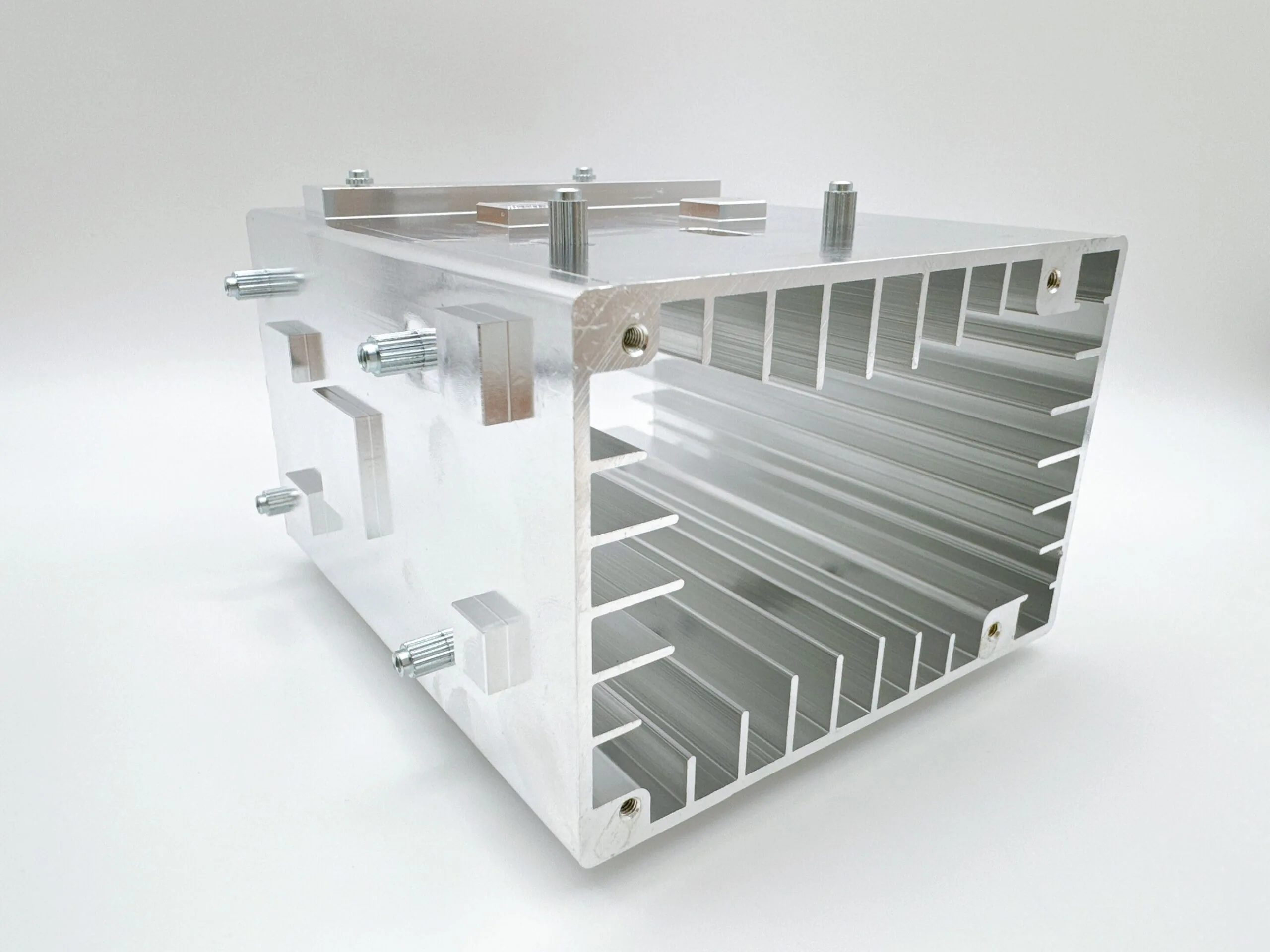
This guide walks engineers and procurement teams through the material choices, certification frameworks, tolerance expectations, traceability demands, and design-for-manufacturing (DFM) considerations that define aerospace stamping. If you are sourcing stamped parts for airframes, engines, or avionics housings, this is the reference you need before issuing an RFQ.
What Is Aerospace Metal Stamping?
Aerospace metal stamping is a precision forming process that transforms flat sheet or coil metal into structural and non-structural aircraft components using progressive dies, transfer dies, or deep-draw tooling. It differs from general industrial stamping in its requirement for flight-qualified materials, AS9100 quality systems, full lot traceability, and tolerances that are typically 50–70 % tighter than standard commercial work.
Companies like Metal Stamping Parts Ltd maintain the certifications, inspection infrastructure, and process controls required to deliver flight-qualified stamped parts on schedule.
Aerospace Stamping Materials: Comparison and Selection
Choosing the right alloy is the single most consequential decision in aerospace stamping. The material determines forming limits, tooling wear, post-form heat treatment, inspection scope, and ultimately whether the part passes first-article inspection. The table below compares the most commonly stamped aerospace alloys.
| Alloy Family | Common Grades | Tensile Strength (MPa) | Max Service Temp (°C) | Density (g/cm³) | Typical Aerospace Applications |
|---|---|---|---|---|---|
| Titanium | Ti-6Al-4V (Grade 5), CP Ti Grade 2 | 895–1,100 | 315 | 4.43 | Structural brackets, engine nacelle panels, fasteners |
| Nickel Superalloy (Inconel) | Inconel 718, Inconel 625 | 825–1,240 | 700 | 8.19 | Turbine shrouds, exhaust ducts, combustion liners |
| Aluminum | 2024-T3, 6061-T6, 7075-T6 | 276–572 | 150 (7075), 175 (2024) | 2.78 | Wing skins, fuselage panels, interior brackets |
| Precipitation-Hardening Stainless | 17-4 PH (AISI 630), 15-5 PH | 930–1,310 | 315 | 7.78 | Actuator housings, landing-gear components, bushings |
| Cobalt Alloy | Haynes 188, Stellite 6B | 860–965 | 1,095 | 9.13 | Combustion liners, high-temperature springs |
| Copper-Beryllium | C17200 (BeCu) | 410–1,400 (aged) | 150 | 8.25 | Non-sparking tools, EMI shields, instrument housings |
Key Material Selection Considerations
- Titanium offers the best strength-to-weight ratio but is notoriously difficult to stamp. It has low ductility at room temperature, requires heated forming (300–500 °C) for complex geometries, and galls tooling rapidly. Carbide or ceramic-coated dies are standard.
- Inconel 718 is the workhorse of turbine-section stamping. Its age-hardenable properties deliver exceptional creep resistance above 600 °C, but its work-hardening rate means presses need 30–40 % more tonnage than equivalent steel.
- Aluminum 7075-T6 is the go-to for weight-sensitive structural parts. It stamps well at room temperature but is susceptible to stress-corrosion cracking (SCC) in the short-transverse direction — a critical consideration for parts exposed to humid or salt-spray environments.
- 17-4 PH bridges the gap between stainless steel and nickel alloys. It can be precipitation-hardened to Rockwell C 40+ after forming, giving designers a path to high strength without the cost of Inconel.
For deep-drawn aerospace enclosures and housings, deep draw stamping is often the most cost-effective forming method, especially for cylindrical or box-shaped parts in aluminum or stainless steel.
Certification Requirements: AS9100, Nadcap, and FAA
Aerospace stamping suppliers must hold a layered set of certifications. No single certificate is sufficient — they address different aspects of quality, process capability, and regulatory compliance.
| Certification | Issuing Body | Scope | What It Covers | Renewal Cycle |
|---|---|---|---|---|
| AS9100 Rev D | SAE International / accredited registrar | Quality Management System for aviation, space, and defense | Risk-based thinking, configuration management, traceability, first-article inspection (FAI), counterfeit-part prevention | Annual surveillance; 3-year recertification |
| Nadcap (National Aerospace and Defense Contractors Accreditation Program) | Performance Review Institute (PRI) | Special processes — heat treating, welding, NDT, chemical processing, coatings | Process-specific audit of parameters, equipment calibration, operator qualification, test coupons | 12–24 months depending on process and supplier performance |
| FAA Production Approval (PMA / TSO) | U.S. Federal Aviation Administration | Parts Manufacturer Approval or Technical Standard Order authorization | Demonstrates that a replacement or aftermarket part meets airworthiness standards; requires conformity inspection and flight testing when applicable | Ongoing; subject to FAA audit at any time |
| EASA Part 21 Subpart G | European Union Aviation Safety Agency | Production Organization Approval for EU-registered aircraft | European equivalent of FAA PMA; mandatory for parts installed on EASA-regulated aircraft | 2 years |
| Boeing D6-82479 / Airbus AIMS | OEM-specific | Supplier quality and special process requirements | Additional requirements layered on top of AS9100 — tighter sampling plans, specific test methods, digital data packages | Per OEM audit schedule |
What This Means for Buyers
- Always verify AS9100 certification on the SAE OASIS database — expired or suspended certificates are an immediate disqualifier.
- If the part requires heat treatment, chemical processing, or NDT, confirm the supplier holds the specific Nadcap accreditation scope. A Nadcap accreditation for welding does not cover heat treating.
- For aftermarket or replacement parts, confirm whether the supplier holds FAA PMA or is working under a licensing arrangement with the TC (Type Certificate) holder.
At Metal Stamping Parts Ltd, our AS9100D-certified quality system and Nadcap-accredited special processes ensure every aerospace stamped component meets the most demanding industry requirements.
Tolerance Requirements in Aerospace Stamping
Aerospace tolerances are significantly tighter than general industrial stamping. Where a commercial bracket might carry ±0.13 mm (±0.005 in.) on a bend location, an aerospace equivalent frequently demands ±0.050 mm (±0.002 in.) or better.
| Feature | Typical Industrial Tolerance | Typical Aerospace Tolerance | Notes |
|---|---|---|---|
| Hole diameter | ±0.08 mm | ±0.025 mm | Critical for fastener fit and fatigue life |
| Bend angle | ±1° | ±0.25° | Affects aerodynamic surfaces and assembly stack-up |
| Hole-to-edge distance | ±0.13 mm | ±0.050 mm | Driven by bearing stress and edge-margin requirements per MIL-HDBK-5 |
| Flatness (per 100 mm) | 0.25 mm | 0.05–0.10 mm | Essential for sealing surfaces and gasket interfaces |
| Surface roughness (Ra) | 3.2 µm | 0.8–1.6 µm | Lower Ra reduces fatigue-crack initiation sites |
| Profile tolerance | ±0.15 mm | ±0.05 mm | Controls overall contour of complex shapes |
How Tighter Tolerances Are Achieved
- Precision-ground tooling — Die sections are wire-EDM cut and ground to ±0.005 mm, then polished to mirror finish.
- In-process gauging — Laser or vision systems measure critical dimensions every cycle or at defined intervals.
- Statistical process control (SPC) — Cpk values of 1.33 minimum (many primes require 1.67) on critical dimensions.
- Temperature-controlled production — Shop-floor temperature held at 20 ±2 °C to eliminate thermal expansion errors on tight-tolerance parts.
Traceability Requirements
Traceability is non-negotiable in aerospace. Every stamped part must be traceable from raw material heat lot to finished component, with documentation that survives for the life of the aircraft (often 30+ years).
What Must Be Documented
- Material certificates (mill certs) — Certified to AMS (Aerospace Material Specifications) or ASTM standards. Must include chemical composition, mechanical properties, heat/lot number, and testing lab accreditation.
- Process records — Forming parameters (press tonnage, speed, die set used), heat-treatment cycles (temperature, time, atmosphere, quench medium), and surface-treatment records (anodize, passivate, primer, paint).
- Inspection reports — Dimensional inspection (CMM or optical), first-article inspection (AS9102 format), and non-destructive testing (NDE) records (dye-penetrant, ultrasonic, radiographic, eddy-current).
- Lot and serial control — Each lot is assigned a unique identifier that links to the material cert, process traveler, and inspection package. For flight-critical parts, individual serial numbers may be required.
Digital Traceability Trends
Leading aerospace primes are migrating from paper-based travelers to MES (Manufacturing Execution System) platforms that capture real-time process data and link it to individual part serial numbers via QR codes or RFID tags. This eliminates transcription errors and makes audit responses nearly instantaneous.
DFM for Aerospace Stamping: Special Considerations
Design-for-manufacturing (DFM) in aerospace is a balancing act between structural performance, weight, and producibility. The following considerations are unique to or amplified in aerospace stamping.
1. Minimum Bend Radii Must Respect Material Limits
Every alloy has a minimum bend radius that depends on temper, grain direction, and sheet thickness. For aerospace aluminum 2024-T3, the minimum bend radius is typically 2t (twice the material thickness) parallel to the grain and 3t perpendicular. Violating this rule introduces surface cracking that becomes a fatigue-initiation site — a critical concern in flight-critical parts.
2. Hole Diameter-to-Thickness Ratios
Aerospace design standards (e.g., MMPDS, MIL-HDBK-5) specify minimum edge margins and hole spacing to prevent bearing failure and stress concentration. As a rule of thumb, holes should be no closer than 2.5× the hole diameter from any edge, and center-to-center spacing should be at least 3× the hole diameter.
3. Surface Finish Affects Fatigue Life
Aerospace parts are often shot-peened after forming to induce compressive residual stress on the surface, which dramatically improves fatigue life. DFM must account for peening access — deep recesses, blind holes, and tight flanges may shadow the peening stream and create weak zones.
4. Grain Direction Matters
Unlike general industrial stamping, aerospace DFM must specify grain direction relative to the primary stress axis. Bending perpendicular to the grain is preferred because it provides higher ductility. Parts bent parallel to the grain are more prone to cracking, especially in age-hardened aluminum and PH stainless steels.
5. Nesting and Material Utilization
Aerospace sheet is expensive — titanium can exceed $80/kg, and Inconel 718 runs $50–70/kg. Optimizing blank layout to maximize material utilization (targeting 65–75 %) can significantly reduce per-part cost without compromising structural requirements. Learn more about tooling strategies that improve material yield in high-value alloys.
6. Tolerance Stack-Up Analysis
In assemblies with multiple stamped components, tolerance stack-ups can accumulate to unacceptable levels. Aerospace OEMs require statistical stack-up analysis (RSS or Monte Carlo) during design review to verify that the assembled product meets interface requirements.
Quality Control in Aerospace Stamping
Quality control in aerospace stamping goes far beyond final inspection. It is a layered system of prevention, detection, and correction that operates at every stage of production.
- Incoming material inspection — Verify mill certs against AMS specs; sample mechanical properties per lot.
- First-article inspection (FAI) — Per AS9102, a complete dimensional report on the first production part, including ballooned drawings, CMM data, and material/process records.
- In-process inspection — SPC monitoring of critical dimensions; visual inspection for cracks, scratches, and burrs at defined intervals.
- Final inspection — 100 % dimensional check on flight-critical features; AQL-based sampling on non-critical features.
- Non-destructive testing (NDT) — Dye-penetrant inspection (DPI) for surface defects; ultrasonic testing for sub-surface anomalies in formed parts.
For a detailed look at inspection methods and statistical approaches, see our guide on metal stamping quality control.
Aerospace vs. Automotive Stamping: Key Differences
Engineers transitioning between industries often underestimate the differences. Here is a quick comparison.
| Factor | Aerospace Stamping | Automotive Stamping |
|---|---|---|
| Volume | 100–10,000 parts/year | 100,000–10,000,000 parts/year |
| Material cost | $15–100+/kg | $1–3/kg (mild steel) |
| Tolerances | ±0.025–0.050 mm | ±0.08–0.13 mm |
| Certification | AS9100 + Nadcap + FAA | IATF 16949 |
| Traceability | Full lot-to-part | Lot-level |
| Lead time (tooling) | 12–20 weeks | 6–12 weeks |
| Inspection | 100 % on critical + NDT | SPC + AQL sampling |
Getting Started with Aerospace Stamping Projects
If you are evaluating suppliers for an aerospace stamping program, start with these steps:
- Define material and specification — AMS number, temper, thickness, and grain-direction requirements.
- Establish tolerance criticals — Identify which dimensions are flight-critical vs. cosmetic and communicate these clearly on the drawing with GD&T callouts.
- Confirm certification scope — AS9100D is the baseline; add Nadcap for any special processes.
- Request a DFM review — A qualified aerospace stamper will identify cost and risk-reduction opportunities before tooling is cut. Understand the fundamentals of metal stamping if you are new to the process.
- Plan for traceability — Specify the documentation package you require (AS9102 FAI, material certs, process records) upfront to avoid delays.
Ready to discuss your aerospace stamping requirements? Contact Metal Stamping Parts Ltd for a DFM review and quote.
Frequently Asked Questions
What certifications are required for aerospace metal stamping?
At minimum, aerospace stamping suppliers must hold AS9100 Rev D certification. If the part undergoes heat treatment, chemical processing, or NDT, Nadcap accreditation for each specific process is also required. Parts intended as replacements on certified aircraft may additionally require FAA PMA or EASA Part 21 approval.
How tight are tolerances in aerospace stamping compared to commercial work?
Aerospace stamping tolerances are typically 50–70 % tighter than general industrial stamping. Common aerospace tolerances range from ±0.025 mm to ±0.050 mm on critical features, compared to ±0.08 mm to ±0.13 mm in commercial work. Surface roughness requirements are also stricter, typically 0.8–1.6 µm Ra versus 3.2 µm for industrial parts.
What is the most difficult aerospace alloy to stamp?
Inconel 718 and other nickel superalloys are the most challenging. They work-harden rapidly, requiring 30–40 % more press tonnage than equivalent steel parts. Tooling wear is severe, and the material’s tendency to springback demands careful die compensation. Titanium alloys are a close second, often requiring heated forming at 300–500 °C.
What traceability documentation is needed for aerospace stamped parts?
Every lot must be traceable to its raw material heat number via mill certifications conforming to AMS or ASTM standards. Process records must document forming parameters, heat-treatment cycles, and surface treatments. Inspection reports, including AS9102 first-article inspection data and NDT results, are required for flight-critical components.
How does grain direction affect aerospace stamped parts?
Grain direction influences both formability and structural performance. Bending perpendicular to the grain provides higher ductility and reduces cracking risk. Aerospace drawings typically specify grain direction requirements, and parts bent parallel to the grain in age-hardened alloys are more susceptible to stress-corrosion cracking and premature fatigue failure.