
Metal Stamping Quality Control: Standards, Methods & Inspection Checklist
Metal stamping quality control is the backbone of reliable parts production. When a stamped component fails in the field, the cost extends far beyond a single defective part — it ripples through supply chains, damages reputations, and can trigger costly recalls. For engineers and quality inspectors working with metal stamping suppliers, understanding the full quality control ecosystem is essential for selecting the right partner and ensuring consistent output.
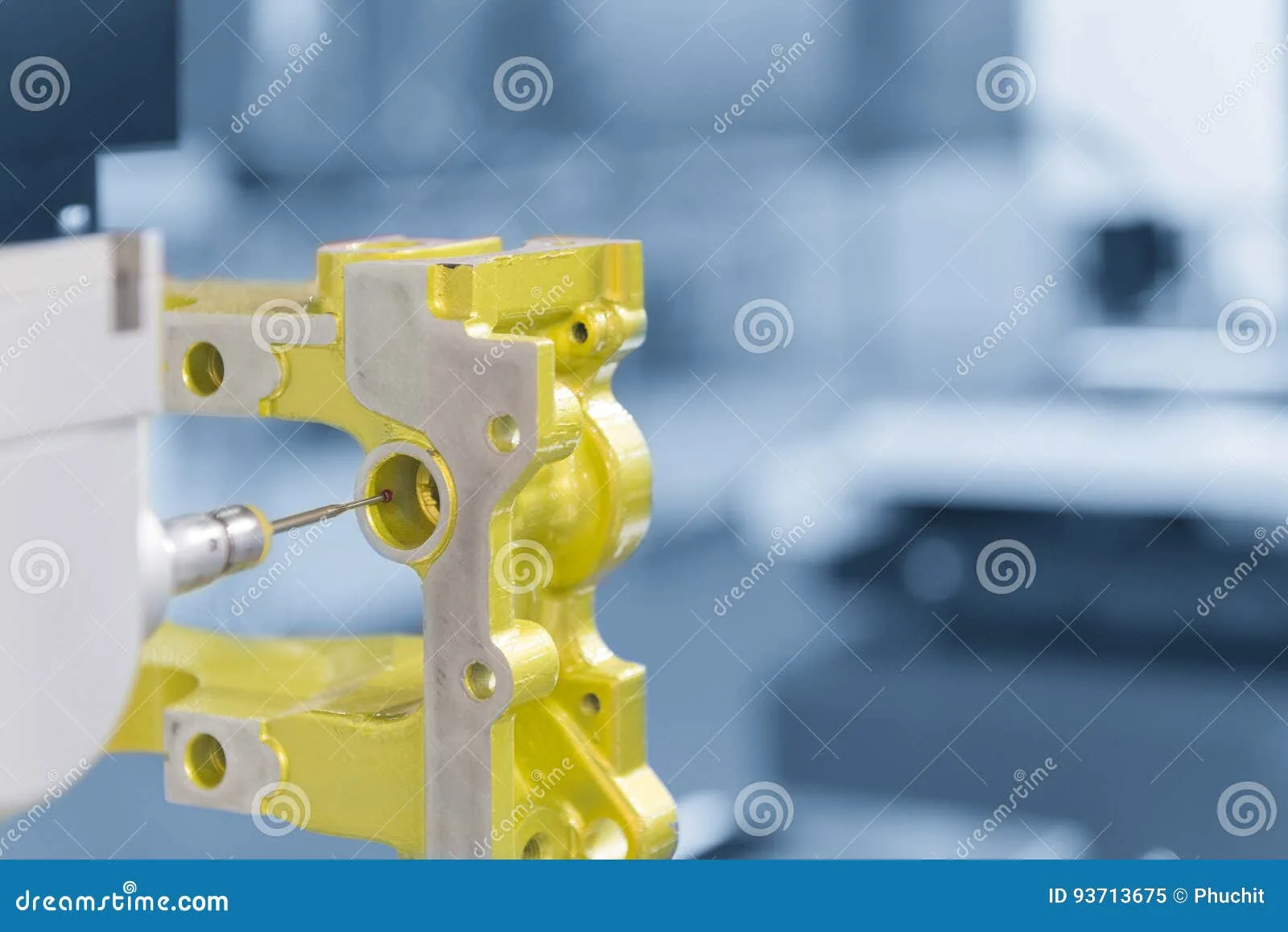
This guide covers the quality standards, inspection methods, process controls, and cost frameworks that define best-in-class metal stamping quality control. Whether you are qualifying a new stamping supplier or tightening your existing quality program, the information below provides a practical, actionable reference.
Why Quality Control Matters in Metal Stamping
Metal stamping processes — blanking, bending, forming, drawing, and piercing — operate at high speeds with tight tolerances. A progressive die running at 200 strokes per minute can produce thousands of defective parts in minutes if a tool cracks or material shifts. Unlike machining where each part is individually cut, stamping replicates errors at production speed.
Effective metal stamping quality control prevents:
- Scrap and rework costs — catching a burr issue at the first article saves thousands of rejected parts downstream.
- Customer line stoppages — automotive OEMs impose penalties of $10,000–$50,000 per minute of downtime.
- Safety failures — stamped brackets, clips, and structural components must meet load and fatigue specifications without exception.
- Regulatory non-compliance — IATF 16949 and AS9100 audits demand documented evidence of process control at every stage.
Quality Standards for Metal Stamping: ISO vs. IATF Comparison
Two standards dominate metal stamping quality management: ISO 9001 for general manufacturing and IATF 16949 for the automotive sector. Understanding their differences helps you specify the right requirements for your supply chain.
| Feature | ISO 9001:2015 | IATF 16949:2016 |
|---|---|---|
| Scope | Any organization, any industry | Automotive production and service parts |
| Core Focus | Quality management system fundamentals | Automotive-specific defect prevention |
| Risk Management | Risk-based thinking (Clause 6.1) | FMEA, control plans, and APQP required |
| Process Approach | Encouraged | Mandated — must map all COP (Customer-Oriented Processes) |
| Measurement Systems | General calibration requirements | MSA (Measurement Systems Analysis) mandatory |
| Statistical Methods | Referenced but not required | SPC, Cpk/Ppk minimum requirements defined |
| Supplier Management | Evaluation and monitoring | Sub-tier supplier development and auditing required |
| Continuous Improvement | General improvement framework | 8D, 5-Why, Kaizen — corrective actions audited |
| Certification | Third-party audit by accredited body | Third-party audit + IATF-recognized certification body |
| Customer-Specific Requirements | Not addressed | CSR compliance is mandatory (e.g., Ford Q1, GM BIQS) |
Key takeaway: If your stamped parts go into automotive assemblies, IATF 16949 is the baseline. For general industrial, medical, or consumer applications, ISO 9001 with demonstrable process controls is typically sufficient.
Beyond these two, aerospace stamping suppliers may also hold AS9100D, and defense applications require ITAR compliance. Always verify that the supplier’s certification scope covers the specific processes and part families you need.
Inspection Methods for Metal Stamped Parts
Choosing the right inspection method depends on the part geometry, tolerance requirements, production volume, and cost constraints. The table below compares the most widely used methods in metal stamping quality control.
| Method | Accuracy | Speed | Best For | Limitations | Typical Cost |
|---|---|---|---|---|---|
| CMM (Coordinate Measuring Machine) | ±0.001–0.005 mm | Slow (minutes per part) | Complex 3D geometries, GD&T verification | Requires skilled operator; not suitable for 100% inline inspection | $50K–$500K+ equipment |
| Optical / Vision Systems | ±0.005–0.02 mm | Fast (seconds per part) | Flat parts, profile checks, surface defect detection | Struggles with deep drawn features; lighting setup critical | $20K–$200K+ per station |
| Go/No-Go Gauges (Pin & Plug) | Pass/Fail only | Very fast | Hole diameter, thread, and slot verification | Only checks single dimension; gauges wear over time | $50–$500 per gauge |
| Laser Scanning / Structured Light | ±0.01–0.05 mm | Moderate | Full-surface comparison, first-article inspection | Data volume high; interpretation requires training | $30K–$300K+ |
| Hardness Testing (Rockwell/Vickers) | ±1 HRC | Fast | Heat-treated or work-hardened stampings | Destructive if done on finished surface | $2K–$20K equipment |
| Surface Roughness Tester (Profilometer) | ±0.01 µm Ra | Fast | Functional surfaces, sealing faces | Measures only a single line profile | $3K–$15K |
| Ultrasonic / X-Ray (NDT) | Varies | Moderate–Slow | Internal defects in thick stampings, weld joints | High equipment cost; trained technicians required | $20K–$500K+ |
Practical tip: Most stamping shops use a tiered approach — Go/No-Go gauges and vision systems for 100% inline checks, CMM for first-article and periodic audits, and destructive testing (tensile, hardness, cross-section) for material verification.
The Three-Stage Inspection Process
A robust metal stamping quality control program operates across three stages: incoming material inspection, in-process inspection, and final outgoing inspection. Each stage has distinct objectives and methods.
Stage 1: Incoming Material Inspection (IQC)
Raw material — coil steel, aluminum, stainless, or specialty alloys — must meet specifications before it enters the stamping press. Failures at this stage prevent downstream defects that are far more expensive to correct.
Key IQC activities:
- Material certification review — verify mill test reports (MTRs) for chemistry, mechanical properties, and heat/lot traceability against the purchase order and applicable standards (ASTM, SAE, EN).
- Dimensional check — measure coil width, thickness, and edge condition using micrometers and edge counters.
- Surface inspection — check for scale, rust, oil contamination, scratches, and lamination defects.
- Hardness verification — Rockwell or micro-hardness testing on sample coupons.
- Incoming lot sampling — use AQL (Acceptable Quality Level) sampling per ANSI/ASQ Z1.4 or ISO 2859-1. Typical AQL levels for critical characteristics: 0.65–1.0.
Documentation: Incoming Inspection Report with accept/reject disposition, traceability to lot number, and link to the supplier’s MTR.
Stage 2: In-Process Inspection (IPI)
In-process controls prevent defects from propagating during production. This is where metal stamping quality control delivers the highest ROI.
Key IPI activities:
- First Piece Approval — the first part off a new setup must be fully inspected against the control plan before production begins. Dimensional, visual, and functional checks.
- Operator periodic checks — typically every 30–60 minutes, operators measure critical dimensions using Go/No-Go gauges, calipers, or fixtures.
- Vision system monitoring — automated cameras inspect 100% of parts for presence/absence of features, burr height, and surface defects.
- Die inspection — check die condition at defined intervals (e.g., every 10,000–50,000 strokes). Monitor for chipping, galling, and misalignment.
- SPC data collection — critical dimensions are measured and plotted on control charts in real time (see SPC section below).
Documentation: Control Plan (per AIAG format), In-Process Inspection Log, SPC charts, and Die Maintenance Records.
Stage 3: Final / Outgoing Inspection (OQC)
The last gate before parts ship to the customer. This stage confirms that the lot meets all specifications.
Key OQC activities:
- Dimensional audit — CMM or fixture-based measurement of critical-to-quality (CTQ) dimensions per the drawing.
- Visual and cosmetic inspection — check for scratches, dents, burrs, discoloration, and contamination under defined lighting conditions.
- Functional testing — torque, push-out force, leak test, or assembly fit checks as applicable.
- Packaging verification — confirm correct labeling, quantity, separator sheets, and corrosion protection.
- Cpk/Ppk verification — ensure process capability indices meet customer requirements (typically Cpk ≥ 1.33 or 1.67).
- Certificate of Conformance (CoC) — issue shipping documentation confirming compliance with the PO, drawing, and applicable standards.
Documentation: Final Inspection Report, Cpk/Ppk Study, Certificate of Conformance, and Shipping Checklist.
SPC in Metal Stamping Quality Control
Statistical Process Control (SPC) is the most powerful real-time tool in metal stamping quality control. It shifts quality from “inspect and sort” to “predict and prevent.”
How SPC Works on the Press Line
- Select CTQ dimensions — work with the customer and engineering to identify the 3–8 dimensions that matter most.
- Choose the right chart type:
– X-bar and R chart — for variable data measured in subgroups (e.g., 5 parts every 30 minutes).
– X-bar and S chart — when subgroup size exceeds 10.
– Individuals and Moving Range (I-MR) — for single measurements or destructive tests.
– p-chart / np-chart — for attribute data (pass/fail counts). - Collect baseline data — run 25 subgroups minimum to establish control limits.
- Monitor and react — when a point falls outside control limits or a pattern emerges (e.g., 7 points trending in one direction), stop production, investigate, and correct.
Capability Indices
- Cp — measures the spread of the process relative to the tolerance. Cp = (USL − LSL) / 6σ.
- Cpk — accounts for centering. Cpk = min[(USL − μ) / 3σ, (μ − LSL) / 3σ].
- Ppk — uses overall standard deviation (long-term). More conservative than Cpk.
| Cpk Value | Interpretation | Typical Requirement |
|---|---|---|
| < 1.00 | Process is not capable | Immediate corrective action required |
| 1.00–1.33 | Marginally capable | May be accepted with 100% inspection |
| 1.33–1.67 | Capable | Standard automotive requirement |
| ≥ 1.67 | Highly capable | Premium / safety-critical applications |
Practical example: A bracket hole position tolerance is ±0.15 mm. SPC data shows X-bar = 0.02 mm (centered), σ = 0.035 mm. Cpk = (0.15 − 0.02) / (3 × 0.035) = 1.24. This is marginal — investigate tooling wear or material variation to improve centering and reduce spread.
Quality Cost Analysis: The Cost of Quality Framework
Understanding quality costs helps justify investments in metal stamping quality control systems. The “Cost of Quality” (COQ) model breaks quality spending into four categories.
1. Prevention Costs
Investments made to prevent defects from occurring.
- Tooling design reviews and FMEA
- Operator training and certification
- Preventive die maintenance programs
- SPC system implementation
- Supplier qualification audits
Typical share: 5–10% of total quality budget.
2. Appraisal Costs
Costs of measuring and inspecting to detect defects.
- Incoming, in-process, and final inspection labor
- CMM and vision system equipment and maintenance
- Gauge calibration and MSA studies
- Third-party testing and certification
Typical share: 20–30% of total quality budget.
3. Internal Failure Costs
Costs of defects caught before shipment.
- Scrap and rework labor
- Die repair due to quality-related failures
- Re-inspection after rework
- Production downtime for quality issues
Typical share: 25–35% of total quality budget.
4. External Failure Costs
Costs of defects reaching the customer — the most expensive category.
- Customer returns and warranty claims
- Sorting and containment at customer facility
- Expediting replacement parts
- Penalties and chargebacks
- Lost business and reputation damage
Typical share: Can spike to 40%+ when external failures occur.
The key insight: Increasing prevention spending by even 2–3% typically reduces total quality costs by 15–25% because internal and external failures drop dramatically. The optimal COQ target for a mature stamping operation is 2.5–4% of revenue, with a prevention-heavy distribution.
Printable Metal Stamping Inspection Checklist
Use this checklist for first-article inspections, incoming audits, or supplier qualification reviews. Print and keep at the inspection station.
METAL STAMPING INSPECTION CHECKLIST
Part Name: __ Part Number: __ Drawing Rev: ___
Supplier: __ Lot/Batch #: __ Date: ___
Inspector: __ PO Number: __ Die/Tool #: ___
SECTION A: DOCUMENTATION REVIEW
| # | Check Item | Pass | Fail | N/A | Notes |
|---|---|---|---|---|---|
| A1 | Material certification (MTR) on file and matches PO spec | ☐ | ☐ | ☐ | |
| A2 | Drawing revision matches customer-approved version | ☐ | ☐ | ☐ | |
| A3 | Control plan available and current | ☐ | ☐ | ☐ | |
| A4 | FMEA reviewed and updated | ☐ | ☐ | ☐ | |
| A5 | Process capability (Cpk/Ppk) data provided | ☐ | ☐ | ☐ |
SECTION B: DIMENSIONAL INSPECTION
| # | Feature | Nominal | Tolerance | Measured | Pass | Fail |
|---|---|---|---|---|---|---|
| B1 | ☐ | ☐ | ||||
| B2 | ☐ | ☐ | ||||
| B3 | ☐ | ☐ | ||||
| B4 | ☐ | ☐ | ||||
| B5 | ☐ | ☐ | ||||
| B6 | ☐ | ☐ | ||||
| B7 | ☐ | ☐ | ||||
| B8 | ☐ | ☐ |
SECTION C: MATERIAL & MECHANICAL PROPERTIES
| # | Check Item | Spec | Measured | Pass | Fail | N/A |
|---|---|---|---|---|---|---|
| C1 | Material grade and condition | ☐ | ☐ | ☐ | ||
| C2 | Hardness (Rockwell / Vickers) | ☐ | ☐ | ☐ | ||
| C3 | Tensile strength | ☐ | ☐ | ☐ | ||
| C4 | Plating/coating thickness | ☐ | ☐ | ☐ | ||
| C5 | Salt spray / corrosion test | ☐ | ☐ | ☐ |
SECTION D: VISUAL & SURFACE INSPECTION
| # | Check Item | Pass | Fail | Notes |
|---|---|---|---|---|
| D1 | No visible scratches, dents, or gouges | ☐ | ☐ | |
| D2 | Burr height within specification | ☐ | ☐ | |
| D3 | No cracks or fractures (use magnification if needed) | ☐ | ☐ | |
| D4 | Surface finish meets Ra specification | ☐ | ☐ | |
| D5 | No contamination (oil, rust, foreign material) | ☐ | ☐ | |
| D6 | Plating/coating uniform and adhesion acceptable | ☐ | ☐ |
SECTION E: FUNCTIONAL & ASSEMBLY CHECKS
| # | Check Item | Pass | Fail | N/A | Notes |
|---|---|---|---|---|---|
| E1 | Fit-check with mating part(s) | ☐ | ☐ | ☐ | |
| E2 | Torque or push-out force test | ☐ | ☐ | ☐ | |
| E3 | Leak / pressure test | ☐ | ☐ | ☐ | |
| E4 | Weld integrity (if applicable) | ☐ | ☐ | ☐ |
SECTION F: PACKAGING & LABELING
| # | Check Item | Pass | Fail | Notes |
|---|---|---|---|---|
| F1 | Correct quantity per container | ☐ | ☐ | |
| F2 | Labels match part number, revision, lot # | ☐ | ☐ | |
| F3 | Adequate separator sheets / dunnage / protection | ☐ | ☐ | |
| F4 | Corrosion protection applied (VCI, oil, etc.) | ☐ | ☐ |
DISPOSITION: ☐ ACCEPT ☐ REJECT ☐ CONDITIONAL ACCEPT (re-inspect after: ___)
Inspector Signature: __ Date: __
Quality Manager Approval (if rejected): __ Date: __
Best Practices for Implementing Metal Stamping Quality Control
Based on decades of industry experience, these practices separate average quality programs from excellent ones:
-
Invest in die design and maintenance — 80% of stamping quality issues trace back to tooling. Proper die steel selection, surface treatment, and preventive maintenance schedules prevent the majority of dimensional and cosmetic defects.
-
Automate inline inspection — human inspectors fatigue; vision systems do not. For high-volume stampings, automated optical inspection (AOI) delivers consistent, 100% coverage at production speed.
-
Close the loop with SPC — collecting data is not enough. Assign ownership for reacting to out-of-control signals. A control chart that nobody reads provides zero value.
-
Standardize your control plans — use the AIAG Control Plan format across all programs. This creates consistency, simplifies audits, and ensures nothing is missed during new product launches.
-
Conduct regular MSA studies — Gage R&R studies should be performed on all measurement systems used for SPC data collection. A Gage R&R exceeding 30% means your measurement system is adding too much noise to your data.
-
Build supplier partnerships, not just audits — work with material suppliers to improve incoming quality. Share defect data, conduct joint FMEAs, and align on specifications.
-
Track quality costs monthly — you cannot improve what you do not measure. Break COQ into the four categories above and set reduction targets quarter over quarter.
Frequently Asked Questions
What is the difference between Cpk and Ppk in metal stamping quality control?
Cpk measures short-term process capability using within-subgroup variation (σ within), while Ppk measures long-term capability using overall variation (σ overall). Cpk reflects the potential of the process if it were perfectly centered, while Ppk accounts for shifts and drifts over time. In practice, IATF 16949 requires initial capability studies using Ppk (minimum 300 parts) and ongoing monitoring using Cpk. A Cpk of 1.33 or higher is the standard automotive requirement, meaning the process spread fits within the tolerance with margin.
How often should stamping dies be inspected during production?
Die inspection frequency depends on the material, complexity, and production volume. For general steel stampings running at moderate speeds, inspect dies every 10,000–25,000 strokes. For high-speed progressive dies (>300 SPM) or abrasive materials like stainless steel, inspect every 5,000–10,000 strokes. Critical or safety-related stampings may require die checks every shift. Always document die condition and track wear patterns to optimize preventive maintenance schedules.
What AQL sampling plan should I use for incoming material inspection?
For incoming raw material (coil steel, aluminum), ANSI/ASQ Z1.4 (equivalent to ISO 2859-1) Level II normal inspection is standard practice. Use AQL 1.0 for critical characteristics (chemistry, mechanical properties) and AQL 2.5 for minor cosmetic or dimensional attributes. For safety-critical parts or new suppliers, tighten to AQL 0.65 or implement 100% inspection until the supplier demonstrates consistent quality over 5–10 consecutive lots.
Can SPC be applied to attribute data (pass/fail) in metal stamping?
Yes. While variable data (actual measurements) is always preferred for SPC, attribute charts work for pass/fail results. Use a p-chart to track the proportion of defective parts per sample, or an np-chart for the actual count of defects when sample sizes are constant. Attribute charts are less sensitive than variable charts — you need larger sample sizes to detect shifts. If a defect type is recurring, consider switching to variable measurement (e.g., measuring burr height instead of pass/fail burr check) to enable more precise SPC monitoring.
What is the typical cost of implementing a quality control system for a stamping operation?
For a mid-size stamping shop (10–30 presses), a full quality management system including ISO 9001 certification, basic SPC software, CMM equipment, vision inspection on critical lines, and training typically costs $150,000–$400,000 in the first year, with $50,000–$120,000 in annual operating costs. Adding IATF 16949 certification increases first-year costs by $80,000–$200,000. However, the return is substantial: most operations see scrap rates drop 30–50% and warranty claims decrease 40–70% within the first 18 months of a properly implemented system.
Conclusion
Metal stamping quality control is not a single activity — it is a system of interlocking standards, methods, processes, and disciplines that work together to deliver consistent, specification-compliant parts. From incoming material verification through SPC-monitored production to final CMM audits, each layer adds protection against defects reaching your customer.
The most effective stamping suppliers treat quality as a competitive advantage, not a cost center. They invest in prevention, automate inspection where it matters, and use data — not guesswork — to drive decisions. When evaluating a metal stamping partner, ask for their Cpk data, review their control plans, and visit their inspection stations. The quality of their quality control tells you everything you need to know.
Ready to discuss your next stamped component project? Contact our engineering team to review your quality requirements and control plan.