
Beim Laserschneiden wird ein fokussierter Strahl zum Schneiden von Blech mit Toleranzen von ±0,05 mm verwendet, während beim Metallstanzen gehärtete Matrizen zum Formen und Schneiden von Teilen mit Toleranzen von bis zu ±0,01 mm verwendet werden. Die richtige Wahl hängt vom Produktionsvolumen, der Teilekomplexität, der Materialstärke und Ihren Kostenzielen pro Teil ab. In diesem Leitfaden werden beide Prozesse hinsichtlich aller Faktoren verglichen, die für Beschaffungs- und Engineering-Teams wichtig sind.
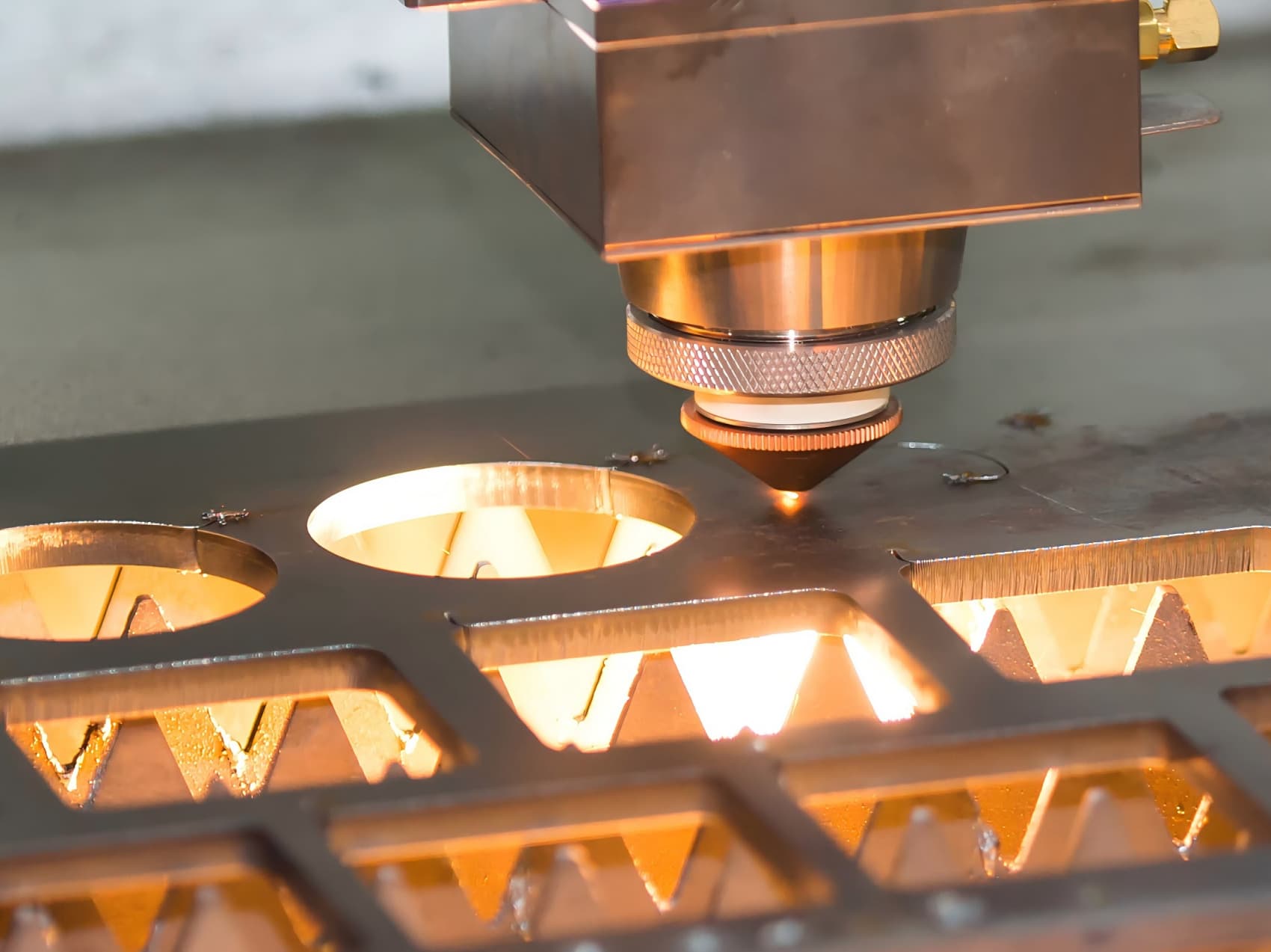
Die Wahl zwischen Laserschneiden und Stanzen ist eine der häufigsten Entscheidungen in der Metallverarbeitung. Jede Methode hat klare Stärken, und die Auswahl der falschen Methode kann Tausende von Nacharbeiten, Werkzeugen oder Durchsatzverlusten kosten. Im Folgenden erläutern wir Toleranzen, Geschwindigkeit, Kostenstruktur, Materialkompatibilität und den Volumenübergangspunkt, an dem ein Prozess den anderen überholt.
Wie jeder Prozess funktioniert
Laserschneiden
Ein CNC-gesteuerter Laser (Faser, CO₂ oder Nd:YAG) richtet einen hochenergetischen Strahl auf das Werkstück. Der Strahl schmilzt oder verdampft Material entlang einer programmierten Bahn, unterstützt von einem Gasstrahl, der geschmolzene Rückstände wegbläst. Es gibt keinen physischen Kontakt mit dem Blech, was bedeutet, dass kein Werkzeugverschleiß und nahezu sofortige Designänderungen möglich sind. Moderne Faserlaser schneiden Baustahl bis 25 mm Dicke und Edelstahl bis 20 mm.
Metallstanzen
Beim Stanzen wird ein flacher Rohling in oder durch einen Matrizensatz gepresst, wobei die Tonnage zwischen 20 und 2.000 Tonnen liegt. Zu den Vorgängen gehören Stanzen, Lochen, Biegen, Prägen und Formen. Folgestanzen verkettet mehrere Stationen in einem einzigen Durchgang und produziert so komplexe Teile mit hoher Geschwindigkeit. Für tiefere Geometrien wandelt Tiefziehstanzen flache Bleche in nahtlose Becher, Gehäuse und Gehäuse um.
Hauptunterschiede auf einen Blick
| Faktor | Laserschneiden | Metallstanzen |
|---|---|---|
| Maßtoleranz | ±0,05 mm typisch | ±0,01 mm erreichbar |
| Kantenqualität | Glatt, minimaler Grat; leichte Wärmeeinflusszone | Saubere Scherung; Bei dickem Material muss möglicherweise entgratet werden |
| Maximale Materialstärke | 25 mm (Baustahl, Faserlaser) | 12 mm+ je nach Presstonnage |
| Rüstzeit | Minuten (Programmlast) | Stunden bis Tage (Matrizendesign, Bau, Test) |
| Werkzeugkosten | Keine | 5.000–150.000 $+ pro Matrizensatz |
| Zykluszeit pro Teil | 10–60 Sekunden (abhängig von der Geometrie) | 0,5–5 Sekunden (Hochgeschwindigkeitspresse) |
| Bester Volumenbereich | 1–5.000 Einheiten | 5.000–1.000.000+ Einheiten |
| Designänderungsgeschwindigkeit | Gleicher Tag (DXF bearbeiten) | Wochen (Matrize ändern oder ersetzen) |
Kostenvergleich: Stanzen vs. Laserschneiden
Die Kostenstruktur jeder Methode ist grundlegend unterschiedlich. Beim Laserschneiden liegen die Fixkosten bei nahezu Null, die variablen Kosten pro Teil sind jedoch höher. Beim Stanzen sind vorab umfangreiche Werkzeuge erforderlich, die Kosten pro Teil sinken jedoch bei der Stückzahl drastisch.
Werkzeug- und Einrichtungskosten
Für einen Laserschneidauftrag sind nur eine CAD-Datei und Maschinenprogrammierung erforderlich – die Werkzeugkosten betragen effektiv $0. Im Gegensatz dazu kann eine einzelne progressive Matrize für Metallstanzteile 15.000 bis 80.000 US-Dollar kosten, und komplexe mehrstufige Werkzeuge für kundenspezifische Metallstanzung können 150.000 US-Dollar übersteigen. Diese Vorabinvestition amortisiert sich über die Produktionslaufzeit.
Kosten pro Teil bei Volumen
Bei geringen Stückzahlen ist das Laserschneiden hinsichtlich der Gesamtkosten günstiger, da keine Werkzeuge anfallen, die sich amortisieren. Bei höheren Stückzahlen sinken die Stanzkosten pro Teil im Vergleich zum Laserschneiden, da die Zykluszeiten in Sekunden und nicht in Dutzenden von Sekunden gemessen werden.
| Produktionsvolumen | Laserschneiden (pro Teil) | Stanzen (pro Teil) | Kostengünstigere Option |
|---|---|---|---|
| 100 Einheiten | $4.50 | 152,00 $ (Werkzeug amortisiert) | Laserschneiden |
| 1.000 Einheiten | $3.80 | $18.50 | Laserschneiden |
| 5.000 Einheiten | $3.20 | $5.10 | Laserschneiden |
| 10.000 Einheiten | $3.00 | $3.00 | Kreuzungspunkt |
| 50.000 Einheiten | $2.80 | $1.20 | Stanzen |
| 100.000 Einheiten | $2.70 | $0.85 | Stanzen |
Hinweis: Die Kosten sind beispielhaft für eine Halterung mittlerer Komplexität aus 1,5 mm Weichstahl. Die tatsächlichen Zahlen variieren je nach Geometrie, Material und Lieferant.
Der Volumen-Crossover-Punkt für die meisten flachen oder mäßig geformten Teile liegt zwischen 5.000 und 15.000 Einheiten. Unterhalb dieses Bereichs ist Laserschneiden wirtschaftlicher. Darüber hinaus sorgt das Stanzen für niedrigere Stückkosten und einen schnelleren Durchsatz.
Präzision und Toleranzen
Wenn enge Toleranzen die Funktion von Teilen bestimmen – wie etwa bei Automobilbaugruppen, Halterungen in der Luft- und Raumfahrt oder Gehäusen für medizinische Geräte – ist das Stanzen die bessere Wahl. Das progressive Stanzen hält ±0,01 mm bei kritischen Merkmalen bei großen Auflagen konstant. Beim Laserschneiden wird unter idealen Bedingungen ±0,05 mm erreicht, aber thermische Verformung bei dünnen oder reflektierenden Materialien kann dieses Band verbreitern.
Für Teile, die sowohl enge Toleranzen als auch eine komplexe dreidimensionale Geometrie erfordern, liefert Tiefziehstanzen geformte Formen, die durch Laserschneiden einfach nicht hergestellt werden können.
Geschwindigkeit und Durchsatz
Beim Laserschneiden wird jeweils ein Teil bearbeitet. Das Schneiden eines typischen flachen Teils mit mittlerer Komplexität dauert 15–45 Sekunden. Die Nesting-Software optimiert die Blechausnutzung, der Durchsatz wird jedoch durch die Strahlbewegungsgeschwindigkeit begrenzt.
Das Stanzen erfolgt nach der Werkzeugbestückung mit einer Pressengeschwindigkeit von 60–1.500 Hüben pro Minute. Ein Folgeverbundwerkzeug mit 200 Umdrehungen pro Minute produziert 12.000 Teile pro Stunde. Kein Lasersystem kann diese Leistung erreichen.
Geschwindigkeit spielt jedoch nur eine Rolle, wenn der Würfel vorhanden ist. Wenn das Projekt eine schnelle Abwicklung vom Entwurf bis zum ersten Teil erfordert, liefert das Laserschneiden Prototypen innerhalb weniger Tage, während der Bau von Stanzwerkzeugen 6 bis 12 Wochen dauern kann.
Materialüberlegungen
| Material | Laserschneiden | Stanzen |
|---|---|---|
| Weichstahl | Ausgezeichnet – sauberer Schnitt bis 25 mm | Ausgezeichnet – Standard-Stanzmaterial |
| Edelstahl | Gut – Faserlaser verarbeitet bis zu 20 mm | Gut – höhere Tonnage erforderlich |
| Aluminium | Gut – reflektierende Oberflächen erfordern Faserlaser | Gut – weichere Legierung, einfache Formgebung |
| Kupfer / Messing | Mittelmäßig – stark reflektierend; erfordert Hochleistungsfaser | Gut – Standard-Stanzmaterialien |
| Titan | Gut – Inertgasunterstützung erforderlich | Mittelmäßig – Rückfederung und Werkzeugverschleiß sind problematisch |
| Dicke Platte (>12 mm) | Gut – Laser verarbeitet 25 mm+ auf Weichstahl | Begrenzt – hohe Tonnage, dickere Werkzeuge erforderlich |
Wann Laserschneiden vs. Stanzen zu verwenden ist
Wählen Sie Laserschneiden , wenn:
- das Produktionsvolumen unter 5.000 Einheiten liegt
- Das Design befindet sich noch in der Entwicklung oder unterliegt einer Überarbeitung
- Die Vorlaufzeit bis zum ersten Teil muss Tage und nicht Wochen betragen
- Die Teilegeometrie ist flach oder erfordert nur minimale Formgebung
- Das Material besteht aus dickem Blech (12–25 mm), das die standardmäßige Stanzfähigkeit übertrifft
- Für Hardtooling ist kein Budget vorhanden
Wählen Sie Stempeln , wenn:
- Das Produktionsvolumen übersteigt 10.000 Einheiten pro Jahr
- Die Stückkosten müssen im großen Maßstab minimiert werden
- Bei kritischen Merkmalen sind Toleranzen von ±0,01 mm erforderlich
- Das Teil erfordert geformte, gezeichnete oder geprägte Merkmale
- Die Zykluszeit bestimmt die Durchsatzanforderungen
- Das Design ist stabil und es ist unwahrscheinlich, dass es sich ändert
Kombination beider Prozesse
Viele Hersteller nutzen Laserschneiden und Stanzen gleichzeitig. Ein gängiger Ansatz ist lasergeschnittene Prototypen und Kleinauflagen also zur Validierung Übergang zum Stempeln Sobald das Design eingefroren ist und das Volumen die Werkzeuginvestition rechtfertigt. Einige Betriebe schneiden auch Rohlinge mit dem Laser aus, die dann für Umformvorgänge einer Stanzpresse zugeführt werden – und kombinieren so die Flexibilität des Lasers mit der Umformfähigkeit einer Matrize.
Für kundenspezifische Geometrien, die sowohl Schneiden als auch Formen erfordern, kundenspezifische Metallstanzung Die Dienste können integrierte Werkzeuge entwerfen, die das Stanzen, Lochen und Formen in einer einzigen Folgestation durchführen, während bei Bedarf lasergeschnittene Merkmale als sekundäre Vorgänge hinzugefügt werden.
Treffen Sie die richtige Entscheidung für Ihr Projekt
Die Entscheidung zwischen Laserschneiden und Stanzen hängt von vier Variablen ab: Volumen, Toleranz, Teilekomplexität und Zeitrahmen. Ordnen Sie Ihr Projekt anhand dieser Kriterien zu:
- Volumen unter 5.000? Laserschneiden ist fast immer die richtige Antwort.
- Volumen über 20.000? Stanzen sorgt für eine bessere Wirtschaftlichkeit.
- Benötigen Sie eine Toleranz von ±0,01 mm? Die einzige Möglichkeit ist das Prägen mit Präzisionsstempeln.
- Design noch nicht fertig? Beginnen Sie mit dem Laserschneiden; Später zum Stempeln migrieren.
- Benötigen Sie geformte oder gezeichnete Features? Stempeln (oder Tiefziehen) ist erforderlich.
- Dickes Material (15+ mm)? Laserschneiden erledigt das; Stempeln möglicherweise nicht.
Für Projekte im Bereich von 5.000 bis 15.000 fordern Sie Angebote für beide Prozesse an. Welche Methode wirtschaftlicher ist, hängt von der Geometrie, dem Material und dem Toleranzaufbau ab. Ein qualifizierter Metallstanzteile Der Lieferant kann ein Kostenmodell verwenden, das die Werkzeugamortisation, die Zykluszeit, die Materialausbeute und sekundäre Vorgänge berücksichtigt.
Häufig gestellte Fragen
Wo liegt der Volumenübergangspunkt zwischen Laserschneiden und Stanzen?
Bei den meisten flachen Teilen mittlerer Komplexität liegt der Crossover dazwischen 5.000 und 15.000 Einheiten. Unterhalb dieses Bereichs ist das Laserschneiden günstiger, da keine Werkzeugkosten anfallen. Darüber hinaus sinken die Kosten pro Teil beim Stanzen aufgrund schnellerer Zykluszeiten und Werkzeugamortisation im Vergleich zum Laserschneiden.
Bei welchem Verfahren gelten engere Toleranzen?
Beim Metallstanzen werden bei kritischen Merkmalen Toleranzen von ±0,01 mm eingehaltenim Vergleich zu ±0,05 mm beim Laserschneiden. Stanzen ist die bessere Wahl, wenn Maßgenauigkeit die Funktion von Teilen bestimmt, beispielsweise in Automobil- oder Luft- und Raumfahrtbaugruppen.
Kann das Laserschneiden das Stanzen vollständig ersetzen?
Für flache Teile und geringe bis mittlere Volumina, ja. Aber Laserschneiden kann Metall nicht so formen, zeichnen oder prägen wie Stanzen. Teile, die eine dreidimensionale Geometrie erfordern – wie Tassen, Gehäuse oder geprägte Merkmale – müssen gestanzt oder gestanzt werden. Tiefziehstanzen.
Wie ist die Rüstzeit im Vergleich zwischen Laserschneiden und Stanzen?
Die Einrichtung des Laserschneidens dauert Minuten.– Programm laden und loslegen. Das Einrichten des Stempels erfordert Stunden bis Tage für die Installation, Ausrichtung und Ausprobierung der Matrize. Nach der Einrichtung erfolgt das Prägen jedoch mit 60–1.500 Hüben pro Minute, was den Laserdurchsatz bei weitem übertrifft.
Ist Laserschneiden oder -stanzen für dicke Materialien besser?
Laserschneiden verarbeitet dickere Materialien– bis zu 25 mm Baustahl mit einem Faserlaser. Das Stanzen ist im Allgemeinen auf 12 mm oder weniger begrenzt, abhängig von der Presskraft und der Matrizenkonstruktion. Für dicke Bleche mit komplexen Schnitten ist der Laser oft die einzig praktikable Option.
Kann ich am selben Teil sowohl Laserschneiden als auch Stanzen verwenden?
Ja. Viele Hersteller laserschneiden Zuschnitte oder sekundäre Merkmale und stanzen dann Formvorgänge in einer separaten Pressstation. Dieser Hybridansatz funktioniert gut, wenn das Teil sowohl komplexe Ausschnitte als auch geformte Geometrie aufweist. Besprechen Sie integrierte Optionen mit Ihrem kundenspezifische Metallstanzung -Lieferanten, um Kosten und Vorlaufzeit zu optimieren.