
Up to 1,500 SPM for connectors, terminals, lead frames & micro-components. Servo press precision • In-die sensing • ±0.01 mm tolerance.
What Is High Speed Metal Stamping?
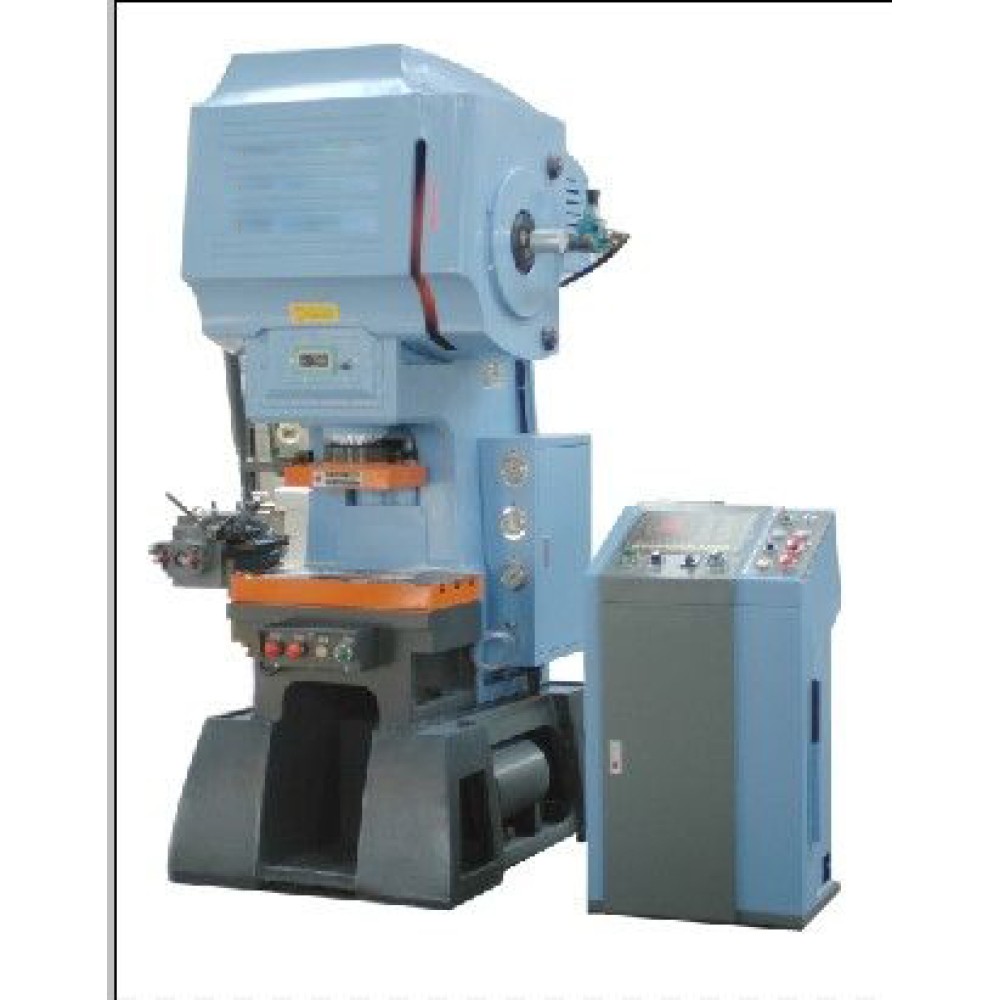
High speed metal stamping (HSMS) uses servo-driven or mechanical presses running at 400–1,500 strokes per minute to produce small, thin-gauge precision parts at extremely high volume. It is the dominant process for electrical connectors, spring contacts, lead frames, battery terminals, micro-brackets, and EMI shielding clips where unit costs must be below $0.05 and annual quantities range from millions to billions.
Unlike conventional stamping, high speed presses demand ultra-precise tooling, automatic in-die monitoring, and coil-fed strip material to sustain continuous production without operator intervention. The result is dramatically lower cycle cost with consistent dimensional repeatability across multi-million-part runs.
Key Advantages of High Speed Stamping
For high-volume electronic and electrical components, no other process matches the combination of speed, precision, and cost efficiency that high speed stamping delivers.
⚡ Ultra-Low Unit Cost
Running at 800–1,500 SPM, a single press can produce over 1 million parts per shift. Amortized tooling cost drops sharply at volumes above 5 million pieces per year, making HSMS the lowest unit-cost process for connectors and terminals.
🎯 ±0.01 mm Repeatability
Servo press drives combined with hydrostatically guided tool sets and in-die vision/laser sensors hold critical dimensions within ±0.01–0.02 mm across the full production run, eliminating the drift seen in conventional high-cycle tooling.
📈 Real-Time In-Die Sensing
Tonnage monitors, strip-detection photo-eyes, and force-signature analysis detect misfeeds, broken punches, and die wear in real time. The press stops automatically within one stroke, preventing cascade damage and minimising scrap.
⚙ Servo Press Flexibility
Programmable servo drives allow custom motion profiles—dwell at bottom dead center for complex forms, variable approach speed for fragile materials, and instant reversal for deep-draw pockets—all without changing the mechanical setup.
📦 Tape-and-Reel & Reel-to-Reel Output
Parts exit the press on a carrier strip and feed directly into a taping machine. Tape-and-reel packaging is SMT-compatible and eliminates manual handling between stamping and PCB assembly, reducing total landed cost.
📋 Integrated Secondary Operations
In-press tapping, staking, selective plating (gold, silver, tin), embossing, and 100% vision inspection can all be integrated into the die progression, eliminating off-press secondary steps and further reducing cost-per-piece.
Technical Capabilities
| Parameter | Specification |
|---|---|
| Press Speed Range | 400 – 1,500 SPM |
| Material Thickness | 0.05 – 3.0 mm |
| Strip Width | Up to 300 mm |
| Part Size | 0.5 × 0.5 mm – 80 × 60 mm |
| Dimensional Tolerance | ±0.01 mm (critical features) |
| Annual Volume Capacity | Up to 500 million pieces per line |
| Materials | Copper alloy, brass, phosphor bronze, stainless steel, cold-rolled steel, aluminum strip |
| Tooling Stations | 4 – 32 progressive stations |
| Coil Weight | Up to 3,000 kg per coil |
| Surface Finish Options | Selective gold plating, tin, silver, nickel, bright zinc, passivation |
| Output Packaging | Tape & reel, bulk box, carrier strip reel, tray |
| Quality Standard | IATF 16949, ISO 9001, AEC-Q200 referenced, 100% vision inspection |
How High Speed Progressive Stamping Works
Material coil unwinds into a servo roll feeder, which indexes the strip with sub-micron precision through each die station at every press stroke.
Coil Load & Feed
3,000 kg coil loaded on decoiler; servo feeder indexes strip ±0.005 mm per stroke at up to 1,500 SPM.
Pilot Pierce
First station punches pilot holes for precise registration at every subsequent station.
Blanking & Notching
Peripheral material removed; part outline defined with sharp carbide punches and close-clearance dies.
Forming / Bending
Contact geometry, spring arm radii, and housing clips formed in 2–8 stations with servo dwell profiles.
In-Die Operations
Tapping, staking, embossing, or selective plating integrated within the die progression.
Separation & Inspection
Parts separated from carrier strip; 100% vision camera checks profile, hole size, and bow/twist.
Tape-and-Reel / Pack
Accepted parts flow directly into taping machine; rejected parts automatically diverted to scrap bin.
High Speed vs. Conventional vs. Transfer Die Stamping
Choosing the right stamping method depends on part size, complexity, material, and volume. High speed progressive stamping wins decisively for small, high-volume precision parts.
| Factor | High Speed Progressive | Conventional Progressive | Transfer Die |
|---|---|---|---|
| Press Speed | 400–1,500 SPM | 60–300 SPM | 15–80 SPM |
| Part Size | Micro – small (<80 mm) | Small – medium | Medium – large (>200 mm) |
| Material Thickness | 0.05 – 3 mm | 0.3 – 6 mm | 0.5 – 8 mm |
| Tolerance | ±0.01 mm | ±0.05 mm | ±0.1 mm |
| Best For | Connectors, terminals, lead frames, shields | Brackets, clips, moderate complexity | Structural automotive, deep-drawn housings |
| Typical MOQ | 50,000+ | 5,000+ | 1,000+ |
| Unit Cost (high volume) | Lowest | Low–medium | Medium |
| Tooling Cost | High | Medium | Medium–high |
Applications & Industries
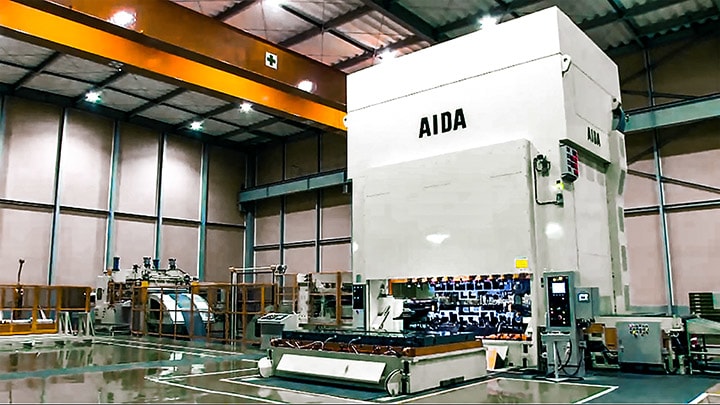
High speed metal stamping is indispensable wherever electrical conductivity, spring force, or shielding performance must be delivered at consumer-electronics price points.
Electrical Connectors
PCB pin headers, IDC contacts, JST-style terminals, USB-C shells, and FPC connectors stamped in phosphor bronze or beryllium copper.
Battery & EV Terminals
Lithium-ion cell tabs, busbar strips, prismatic cell end-caps, and high-current EV connector terminals in pure copper or copper alloy.
Lead Frames & IC Packages
Copper alloy lead frames for DIP, QFP, and TO-series IC packages; selective silver/gold spot plating for wire-bond pads.
EMI Shielding Clips
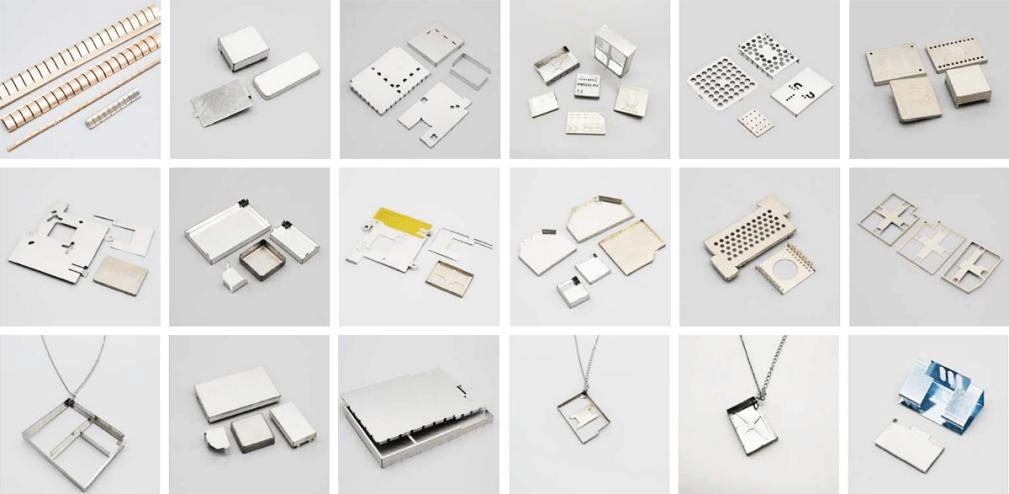
Stainless-steel or tin-plated steel spring clips, can shields, and RF gasket contacts for mobile phones, laptops, and IoT devices.
Automotive Electronics
ADAS sensor connectors, fuse clips, relay springs, and ADAS PCB brackets stamped to IATF 16949 quality standards.
Medical Devices
Surgical instrument springs, ECG electrode clips, glucose meter contacts, and implantable-device lead connector pins.
Tooling Design & Quality Assurance
High speed stamping performance starts in the tool room. Our toolmakers use CAD/CAM simulation to design progressive dies with balanced strip layout, optimised punch-to-die clearances (typically 3–5% of material thickness), and carbide or TiN-coated punch inserts rated for 100+ million strokes.
🏛 CAD/CAM Strip Layout
AutoCAD and SolidWorks strip simulations verify material utilisation (>75%), pilot pitch, and carrier-strip width before steel is cut. Finite-element springback analysis predicts formed angles to ±0.5°.
🔬 Carbide Tooling
Tungsten carbide punch inserts and die bushings withstand 400–1,500 SPM impact loads for 50–150 million strokes between sharpening. TiN / TiAlN coatings extend tool life on stainless-steel and hard copper alloys.
📊 In-Die Sensing
Tonnage signature monitors, strip presence photo-eyes, and inline vision cameras check every stroke. Non-conforming parts are automatically ejected before the taping machine—zero bad parts in reel.
🔍 CMM & Vision Inspection
First-article and in-process samples are measured on a Zeiss CMM. 100% vision systems check critical dimensions (hole diameter ±0.005 mm, profile ±0.01 mm) at full press speed.
🏆 IATF 16949 / ISO 9001
Our quality management system covers APQP, PPAP (level 3), FMEA, and control plans for every high-speed stamping program. Automotive and consumer-electronics OEMs receive full PPAP documentation package.
📦 Tape-and-Reel Packaging
EIA-481 compliant tape-and-reel on 7”, 13”, and 15” reels. Moisture barrier bags and MBB labels per J-STD-033. Custom pitch, pocket depth, and orientation per customer pick-and-place requirement.
Related Stamping Processes
Not sure which process fits your part? Explore our full stamping capabilities.
Frequently Asked Questions
What is the minimum order quantity for high speed stamping?
Because tooling investment is high, high speed stamping is cost-effective at annual volumes of 50,000 pieces or more. For quantities below 50,000, conventional progressive or compound-die stamping often delivers a better total cost. We can advise on the break-even point for your specific part once we review your drawing and annual forecast.
What materials can be high-speed stamped?
We run copper alloys (C194, C197, C260, C510, C752), phosphor bronze, beryllium copper, cold-rolled steel (SPCC, DC01), stainless steel (SUS301, SUS304), aluminum (A1050, A5052), and selective-silver or selective-gold-plated strip. Material hardness should be consistent reel-to-reel; we specify narrow hardness ranges in our purchase orders to maintain dimensional consistency.
How tight are the tolerances you can hold?
Critical dimensions such as contact gap, spring arm length, and hole diameter can be held to ±0.01 mm with carbide tooling and in-die sensing. General dimensions are ±0.03–0.05 mm. Flatness and bow are typically <0.1 mm per 100 mm of strip length, verified by inline laser gauging.
Can you deliver parts in tape-and-reel format?
Yes. Parts exit the press on a carrier strip and feed directly into an EIA-481-compliant taping machine. We supply 7” and 13” reels with pocket pitch, orientation, and cover-tape peel force per your specification. Moisture-sensitive devices are packed per J-STD-033 Level 2A.
What is your lead time for tooling and first samples?
Standard progressive die tooling takes 4–6 weeks from drawing approval to first article. Complex multi-strip or in-die plating tools may require 8–10 weeks. We provide a DFM report within 5 business days of receiving your 2D/3D files, and T1 samples are shipped by air to minimise your development timeline.
Do you provide PPAP documentation?
Yes. We support PPAP Level 1–5 for automotive customers and provide a standard first-article inspection report (FAIR) for all other programs. Deliverables include dimensional report (CMM), material certificates, process capability (Cpk ≥ 1.67 for CTQ features), appearance approval, and control plan.
Ready to Reduce Your Connector Cost?
Share your drawing or 3D file and annual volume. Our engineering team will review your design for high-speed stampability and send a tooling and unit-price quote within 48 hours.
Related Stamping Services
Full-service OEM stamping with PPAP and global delivery.
ISO-certified China supplier with low MOQ.
State-of-the-art press shop with in-house tooling.
Short-run and prototype stamping from 100 pcs.
Mass production stamping with JIT delivery.
Precision electronic and mechanical components.
Contacts, busbars, and terminals for electrical OEMs.
Stamped parts plus welding, riveting, and kitting.
Large complex parts up to 800×600 mm.