

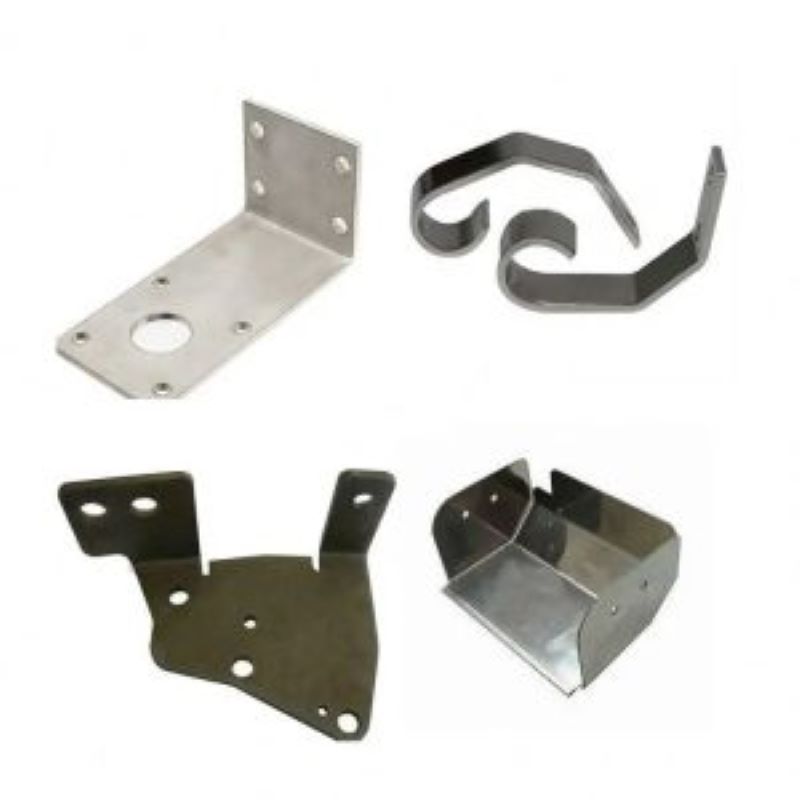
Low volume metal stamping serves the gap between prototype machining and mass production. When you need 500 to 50,000 stamped parts — too many to machine individually, too few to justify a dedicated high-volume die investment — low volume stamping is the answer. We produce short run stamped parts using production-grade tooling, with the same dimensional documentation and material traceability as our volume programs. No separate “prototype quality” — just smaller quantities from real tools.
Need a short run of stamped parts? Share your drawing and quantity via our contact page — we will confirm process fit and return a quotation within 2 business days.
When Low Volume Stamping Makes Sense
Stamping is a volume-driven process by nature — tooling is the fixed cost, and unit price decreases as volume increases. But there are several situations where low volume stamping is the right choice:
- Bridge production — you need parts now while awaiting high-volume tooling approval or while scaling up. Low volume tooling gets parts flowing while the long-term supply program is being qualified.
- Product development and design validation — you need stamped parts that are genuinely representative of production intent — correct material, correct thickness, correct process — not CNC-machined approximations. Low volume stamping produces parts that will behave exactly like production parts under testing.
- Low-demand products — not every part in your product family runs at high volume. Service parts, regional variants, specialty configurations, and low-sales-rate models may permanently require low volume stamping economics.
- First production run of a new product — qualifying a new part program with a modest first batch before committing to full inventory is good supply chain management. Low volume stamping supports phased production launch.
- Replacement parts and legacy production — spare parts programs and end-of-life production runs often require small quantities of discontinued stamped components. We can produce these from existing or new tooling.
Low Volume Stamping: Process and Economics
Understanding the economics helps you make the right tooling and process decision for your application:
| Factor | Low Volume (500–50K/yr) | High Volume (100K+/yr) |
|---|---|---|
| Tooling type | Simple dies, compound dies, soft tooling options | Progressive dies, transfer dies, hardened production tooling |
| Tooling cost | Lower upfront investment | Higher upfront, amortized over volume |
| Unit cost | Higher per-piece cost | Lower per-piece cost |
| Lead time for tooling | 2–5 weeks | 6–14 weeks |
| Setup time per run | Larger proportion of per-piece cost | Setup amortized over large runs |
| Quality documentation | Full FAI and dimensional report available | Full FAI and PPAP available |
| Minimum quantity | No hard minimum (discuss your volume) | Typically 50K+ annually |
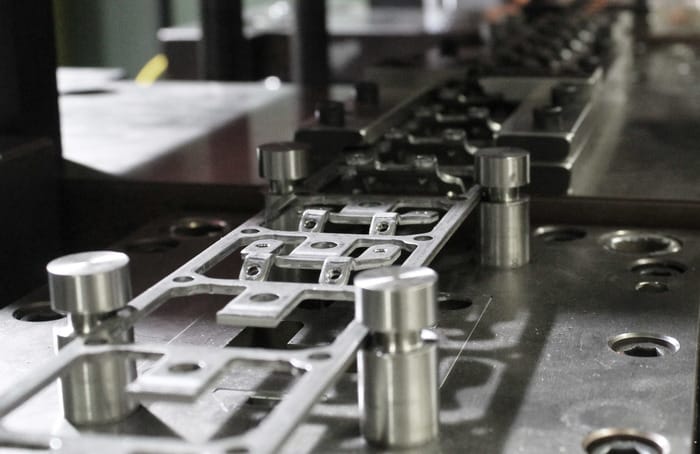
For low volume programs, we typically recommend compound dies or simple progressive dies that minimize tooling investment while maintaining dimensional repeatability across the production run.
Our Low Volume Stamping Capabilities
We support low volume programs across the following process range:
- Progressive die stamping — suitable for low volume when part geometry warrants a progressive strip layout. Run on shorter setups than high-volume programs.
- Compound die stamping — ideal for flat precision parts requiring tight positional tolerances between features. Efficient for short runs because the die produces a finished part in a single stroke.
- Bending and forming — brackets, channels, clips, and formed parts from blank. Very low setup cost, well-suited to short runs and design iterations.
- Deep draw stamping — shells, cups, housings, and cylindrical drawn parts. Low volume deep draw is feasible with appropriate draw die investment.
- Fine blanking (select geometries) — high-precision flat parts requiring smooth sheared edges and tight flatness. Minimum volumes are higher due to tooling complexity.
Materials available for low volume programs: cold rolled steel, stainless steel (304, 316, 430), aluminum (5052, 6061), copper, brass, and pre-coated steels. All material supplied with certifications.
Quality Documentation for Short Runs
Low volume does not mean low quality or reduced documentation. Our short run programs include the same quality deliverables as our volume production:
- First Article Inspection (FAI) — 100% dimensional verification of the first article against the engineering drawing. Balloon drawing, measurement data table, and inspection summary provided.
- Material certifications — certified material test reports (MTRs) for the coil or blank used in production. Heat number traceability included.
- Dimensional inspection report — AQL sampling or 100% inspection per customer requirement. CMM, vision system, or hand gauge data provided.
- Certificate of conformance (CoC) — signed declaration of conformance to the drawing and specification for each shipment.
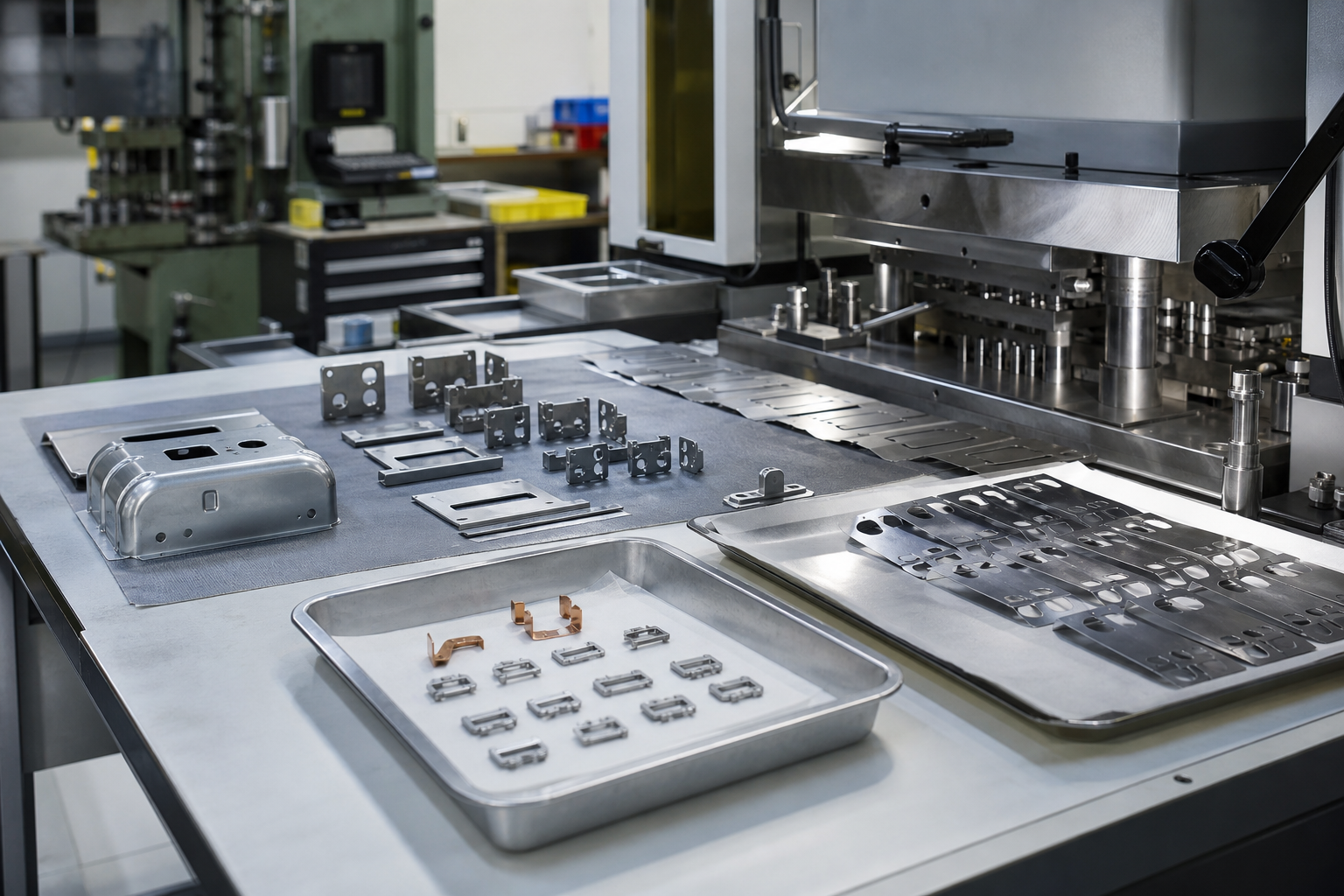
For customers who require PPAP documentation for low volume programs (common in automotive Tier 2 supply), we can produce Part Submission Warrant, dimensional results, and supporting documentation.
DFM Review for Low Volume Tooling
Before committing to tooling for a low volume program, we conduct a design-for-manufacturing (DFM) review to identify features that may increase tooling cost disproportionately for the intended volume:
- Hole-to-edge and hole-to-hole proximity relative to material thickness
- Bend radii relative to material thickness and springback behavior
- Tight tolerances on features that require additional die stations or secondary operations
- Surface finish requirements that may be achievable through process rather than secondary treatment
- Material selection optimization — sometimes a different alloy or temper can achieve the same result with lower tooling or processing cost
DFM review is included in the quotation process at no charge for programs we are quoting. We will flag any design features that significantly affect tooling cost or part quality before you commit to tooling.
Related Services
- High volume metal stamping — progressive die programs for 100K+ annual volumes
- Custom metal stamping — DFM review and prototype-to-production for new part designs
- OEM metal stamping — structured supply programs with PPAP and ECN management
- Metal stamping parts — product range and material options
- Progressive die stamping — process detail and volume range
- Request a quotation — send your drawing for a 2-business-day response
Low Volume Metal Stamping — Frequently Asked Questions
What is the minimum quantity for low volume stamping?
We do not apply a strict minimum order quantity. Practical minimums depend on tooling cost amortization and setup economics. For bending and forming operations with simple tooling, runs as low as 50–200 pieces can be economically viable. For progressive die programs, minimum runs are typically higher due to the tooling investment. Share your quantity and drawing — we will give you an honest assessment of whether the economics work for your application.
How long does tooling take for a low volume program?
Simple compound dies and bending tools typically take 2–4 weeks to design, machine, and tryout. More complex low volume progressive dies may take 4–6 weeks. We will confirm the specific tooling lead time during quotation after reviewing your part drawing and complexity. First article samples are produced from the production tooling — not from temporary prototype tooling.
Can I upgrade from low volume tooling to high volume tooling later?
In most cases, yes. The transition plan depends on part geometry and process. For many parts, we can run initial quantities from a simpler compound or single-station die, then invest in progressive tooling when volume justifies it. We design low volume tooling with this potential transition in mind when possible. The low volume tooling remains available as backup tooling after the high volume die is qualified.
What materials are available for low volume stamping?
We stock and process cold rolled steel (SPCC, DC01), stainless steel (304, 316, 430), aluminum (5052, 6061), copper (C11000), and brass (C26000) for low volume programs. For low volume runs, we typically purchase material to order — lead time for material procurement is 1–2 weeks for standard grades, which is factored into your overall lead time quote.
Do you provide samples before full production for low volume orders?
Yes. For tooled programs, we produce a first article run (typically 10–50 pieces) from the production tooling with full FAI documentation. You approve the first articles before we proceed with the balance of the order. This protects you from paying for a full run of non-conforming parts and gives us a clear record of approved part dimensions and appearance.
Can you stamp parts from customer-supplied material for low volume runs?
Yes. We can process customer-consigned material under a consignment arrangement. We will inspect incoming material against the agreed specification before production and issue a receiving inspection report. Note that material not purchased through us will not carry our material certification — the customer is responsible for providing the material test report for consigned stock.
Get a Low Volume Stamping Quote
Whether you need 500 parts for a product launch or 20,000 parts for a bridge production program, share your drawing and quantity and we will return a structured quotation — tooling cost, unit price, and lead time — within 2 business days.
Related Stamping Services
Full-service OEM stamping with PPAP and global delivery.
ISO-certified China supplier with low MOQ.
State-of-the-art press shop with in-house tooling.
Mass production stamping with JIT delivery.
Precision electronic and mechanical components.
Contacts, busbars, and terminals for electrical OEMs.
Stamped parts plus welding, riveting, and kitting.
Large complex parts up to 800×600 mm.
Up to 1,500 SPM for connectors and terminals.