
Vergleichsleitfaden für Qualitätsstandards beim Metallstanzen [2026]
Von Liu Zhou | Aktualisiert im Mai 2026
Qualitätsstandards für das Metallstanzen legen fest, wie Stanzteile entworfen, geprüft und geliefert werden. Die vier vorherrschenden Standards sind ISO 9001, IATF 16949, AS9100, Und ISO 13485. ISO 9001 ist die universelle Grundlage für die allgemeine Fertigung. IATF 16949 ist für Automobilzulieferer verpflichtend. AS9100 regelt Stanzteile für die Luft- und Raumfahrt sowie die Verteidigung. ISO 13485 gilt für Komponenten medizinischer Geräte. Die Wahl des richtigen Standards – und des richtigen dafür zertifizierten Lieferanten – wirkt sich direkt auf die Teilezuverlässigkeit, die Einhaltung gesetzlicher Vorschriften und die Gesamtbetriebskosten aus.
Dieser Leitfaden vergleicht diese Standards nebeneinander und behandelt Methoden zur Prüfung der Stanzqualität, Toleranzanforderungen, Spezifikationen für die Oberflächenbeschaffenheit, den PPAP-Prozess und die Eingangsqualitätskontrolle. Wenn Sie als Qualitätsingenieur oder Beschaffungsexperte Anforderungen für gestanzte Metallteile festlegen, ist dies Ihre Referenz für 2026.
Vergleichstabelle für Qualitätsstandards
| Kriterien | ISO 9001 | IATF 16949 | AS9100 | ISO 13485 |
|---|---|---|---|---|
| Vollständiger Name | Qualitätsmanagementsysteme | Qualitätsmanagementstandard für die Automobilindustrie | Qualitätsmanagementsysteme – Luft-, Raumfahrt und Verteidigung | Qualitätsmanagementsysteme für Medizinprodukte |
| Umfang | Allgemeine Fertigungsqualität | Automobilproduktion und Serviceteile | Luft- und Raumfahrt-, Verteidigungs- und Raumfahrtkomponenten | Medizinische Geräte und damit verbundene Dienstleistungen |
| Industrie | Alle Branchen | Automobil-OEMs und Zulieferer | Luft- und Raumfahrtunternehmen, Verteidigungsunternehmen | Hersteller medizinischer Geräte |
| Hauptanforderungen | Prozessansatz, risikobasiertes Denken, Kundenorientierung, kontinuierliche Verbesserung | Kernwerkzeuge (APQP, PPAP, FMEA, MSA, SPC), Produktsicherheit, Garantiemanagement | Konfigurationsmanagement, Erstmusterprüfung (FAI), Fälschungsprävention, Risikomanagement | Designkontrollen, Rückverfolgbarkeit, Überwachung nach dem Inverkehrbringen, Validierung von Prozessen |
| Audit-Zyklus | Überwachung jährlich; Rezertifizierung alle 3 Jahre | Überwachung alle 6–12 Monate; Rezertifizierung alle 3 Jahre | Überwachung jährlich; Rezertifizierung alle 3 Jahre | Überwachung jährlich; Rezertifizierung alle 3 Jahre |
| Typische Kunden | Allgemeine Industrie, Konsumgüter, Elektronik | Toyota, GM, Ford, Volkswagen, BMW, Stellantis | Boeing, Airbus, Lockheed Martin, Raytheon, Northrop Grumman | Medtronic, Johnson & Johnson, Stryker, Abbott |
| Mindesttoleranzerwartung | Gemäß Zeichnung / ISO 2768 | Pro Zeichnung; Cpk ≥ 1,67 für kritische Eigenschaften | Pro Zeichnung; oft strenger als die Feinklasse ISO 2768 | Pro Zeichnung mit dokumentierten Fähigkeitsstudien |
| Dokumentationsaufwand | Mäßig | Hoch (PPAP, Kontrollpläne, PFMEA) | Hoch (FAI-Berichte, Konfigurationsdatensätze) | Hoch (Designhistoriedatei, DHF) |
So wählen Sie den richtigen Standard für Ihre Stanzteile
Die Auswahl eines Qualitätsstandards hängt von Ihrem Endmarkt ab. Wenn Ihre gestanzten Teile in eine Autositzhalterung eingebaut werden, ist IATF 16949 nicht verhandelbar. Wenn sie in eine Halterung für ein Strahltriebwerk eingebaut werden, ist AS9100 erforderlich. Für chirurgische Instrumentenkomponenten gilt ISO 13485.
Für allgemeine Industrieanwendungen – Gehäuse, Halterungen, Clips, Kühlkörper – ist ISO 9001 normalerweise ausreichend. Allerdings fordern viele Tier-1-Automobilzulieferer die IATF 16949 auch für nicht sicherheitskritische Teile, da sie Disziplin bei der Prozesskontrolle erzwingt.
Schlüssel zum Mitnehmen: Überprüfen Sie immer, welchen Standard die Qualitätsklausel Ihres Kunden erfordert, bevor Sie einen Stanzlieferanten beauftragen. Die Behebung von Zertifizierungslücken, die nach der Herstellung der Werkzeuge entdeckt werden, ist kostspielig.
Methoden zur Qualitätsprüfung von Metallstanzen
Die Stanzqualitätsprüfung umfasst mehrere Methoden, die jeweils für unterschiedliche Fehlerarten und Teileeigenschaften geeignet sind.
Inspektion von Koordinatenmessgeräten (KMG).
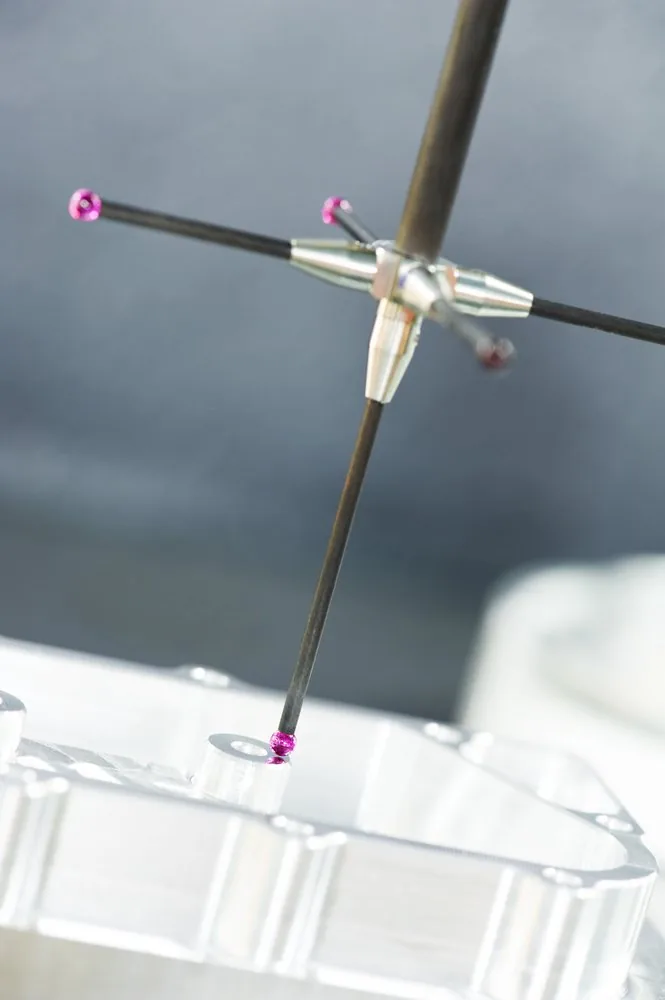
Die CMM-Inspektion ist der Goldstandard für die Maßprüfung von Stanzteilen. Ein taktiler oder scannender Messtaster misst Merkmale anhand der GD&T-Beschriftungen in der Zeichnung. Moderne KMGs erreichen eine Wiederholgenauigkeit von ±0,001 mm.
Wann sollte CMM verwendet werden: - Kritische Abmessungen mit engen Toleranzen (±0,05 mm oder enger) - Angaben zur tatsächlichen Position - Profil einer Oberflächenanforderung - Erstmusterprüfung (FAI) gemäß AS9102
KMG-Berichte umfassen typischerweise Messwert, Nennwert, Abweichung und Toleranzband. Bei großvolumigen Stanzteilen werden die CMM-Daten direkt in die SPC-Software eingespeist, um eine Prozessüberwachung in Echtzeit zu ermöglichen.
Visuelle Inspektion
Bei der visuellen Inspektion werden Oberflächendefekte erkannt, die den Instrumenten möglicherweise entgehen – Kratzer, Grate, Risse, Verfärbungen und Verformungen. Es ist die erste Verteidigungslinie an jeder Stempellinie.
Best Practices: - Verwenden Sie eine standardisierte Beleuchtung (normalerweise mindestens 1000 Lux). - Definieren Sie Akzeptanzkriterien mit Grenzstichproben - Schulung von Inspektoren nach einem gemeinsamen Standard (z. B. IPC-A-610-Konzepte angepasst für Metall) - Verwenden Sie die Vergrößerung für kleine Merkmale
Bei hochkosmetischen Teilen (Unterhaltungselektronik, Gerätepaneele) kann die Sichtprüfung Glanzmessgeräte und Farbmessgeräte umfassen.
Funktionstests
Durch Funktionstests wird überprüft, ob das Stanzteil in der Baugruppe wie vorgesehen funktioniert. Beispiele hierfür sind:
- Gut/Schlecht-Messung: Überprüft, ob kritische Merkmale zu den passenden Komponenten passen
- Biegetests: Validiert die Duktilität und das Fehlen von Rissen in geformten Bereichen
- Drehmomentprüfung: Für Gewinde- oder Clincheinsätze in Stanzteilen
- Pull-Test: Überprüft die Festigkeit von Schweiß- oder Pfahlverbindungen
- Elektrischer Durchgang: Für EMI-Abschirmung von Stanzteilen und Sammelschienen
Funktionstests sollten im Kontrollplan dokumentiert und in der in der PFMEA angegebenen Häufigkeit durchgeführt werden.
Toleranznormen für Metallstanzungen
ISO 2768 – Allgemeine Toleranzen
ISO 2768 definiert Standardtoleranzen für lineare und Winkelmaße, wenn in der Zeichnung keine spezifischen Toleranzen angegeben sind. Es besteht aus zwei Teilen:
- ISO 2768-1: Lineare und Winkelmaße
- ISO 2768-2: Geometrische Toleranzen für Merkmale (Ebenheit, Geradheit, Rechtwinkligkeit, Symmetrie, Rundlauf)
ISO 2768-1 Toleranzklassen (lineare Abmessungen):
| Nennmaßbereich | Gut (f) | Mittel (m) | Grob (c) | Sehr grob (v) |
|---|---|---|---|---|
| 0,5 – 6 mm | ±0.05 | ±0.1 | ±0.2 | — |
| 6 – 30 mm | ±0.1 | ±0.2 | ±0.5 | ±1.0 |
| 30 – 120 mm | ±0.15 | ±0.3 | ±0.8 | ±1.5 |
| 120 – 400 mm | ±0.2 | ±0.5 | ±1.2 | ±2.5 |
| 400 – 1000 mm | ±0.3 | ±0.8 | ±2.0 | ±4.0 |
Die meisten Metallstanzzeichnungen sind standardmäßig auf mittel (m) Klasse für lineare Bemaßungen und H Klasse für geometrische Toleranzen. Autoteile rufen oft gut (f) Klasse für kritische Schnittstellen.
Branchenspezifische Toleranzerwartungen
- Automobil (IATF 16949): ±0,05–0,10 mm typisch für kritische Abmessungen; Cpk ≥ 1,67 erforderlich
- Luft- und Raumfahrt (AS9100): ±0,025–0,05 mm gemeinsam; enger an flugkritischen Teilen
- Medizin (ISO 13485): Variiert stark; Chirurgische Instrumente erfordern möglicherweise ±0,01 mm
- Elektronik: ±0,05–0,10 mm für Steckverbinder und Abschirmdosen
- Allgemeine Industrie: ±0,10–0,25 mm für unkritische Merkmale
Erreichbare Toleranzen durch Stanzverfahren
| Verfahren | Typische Toleranz | Hinweise zur Leistungsfähigkeit |
|---|---|---|
| Stanzen/Stanzen | ±0,05–0,10 mm | Hängt vom Abstand, Material und Werkzeugzustand ab |
| Progressives Stanzen | ±0,025–0,05 mm | Beste Wiederholgenauigkeit für große Stückzahlen |
| Transferprägung | ±0,05–0,10 mm | Gut für größere Teile |
| Feinschneiden | ±0,01–0,025 mm | Hervorragende Kantenqualität; minimaler Überschlag |
| Tiefziehen | ±0,10–0,25 mm | Rückfederung ist eine wichtige Variable |
| Laserschneiden + Formen | ±0,05–0,10 mm | Flexibel für Prototypen und Kleinserien |
Anforderungen an die Oberflächenbeschaffenheit von Stanzteilen
Die Oberflächenbeschaffenheit beeinflusst Passform, Funktion, Aussehen und Beschichtungshaftung. Die primäre Messung ist Ra (arithmetischer Mittelrauwert) ausgedrückt in Mikrometern (µm) oder Mikrozoll (µin).
Allgemeine Spezifikationen für die Oberflächenbeschaffenheit
| Anwendung | Ra-Anforderung | Typische Methode |
|---|---|---|
| Dekor-/Gerätepaneele | 0,2–0,8 µm | Gesenkoberflächen poliert, Feinstanzen |
| Dichtflächen abdichten | 0,4–1,6 µm | Kontrolliertes Matrizenfinish |
| Strukturhalterungen (lackiert) | 1,6–3,2 µm | Standard-Matrizenoberfläche |
| Schweißflächen | 1,6–6,3 µm | Standard; Möglicherweise muss der Kalk entfernt werden |
| Lagerflächen | 0,1–0,4 µm | Feinschneiden oder Sekundärschleifen |
Messung der Oberflächenbeschaffenheit
- Kontaktprofilometer: Diamantstift zeichnet die Oberfläche ab; gebräuchlichste Methode
- Berührungsloses optisches Profilometer: Laser- oder Weißlichtinterferometrie; nützlich für empfindliche oder sehr glatte Oberflächen
- Vergleichsexemplare: Taktile und visuelle Referenzstandards (z. B. Rugotest)
Die Oberflächenbeschaffenheit sollte in der Zeichnung gemäß ISO 4287 (Profilmethode) oder ISO 1302 (Oberflächentextursymbole) angegeben werden. Sofern nicht anders angegeben, betragen typische gestanzte Oberflächen je nach Material und Gesenkzustand einen Ra von 0,8–3,2 µm.
Das PPAP-Verfahren zum Metallstanzen
Freigabeprozess für Produktionsteile (PPAP) ist der Standard der Automobilindustrie zum Nachweis, dass der Fertigungsprozess eines Zulieferers konsistent Teile produzieren kann, die allen Anforderungen entsprechen. Es ist gemäß IATF 16949 vorgeschrieben und wird weit über die Automobilbranche hinaus eingesetzt.
PPAP-Einreichungsstufen
| Ebene | Beschreibung | Typische Verwendung |
|---|---|---|
| Stufe 1 | Nur Part Submission Warrant (PSW). | Standardteile mit geringem Risiko |
| Stufe 2 | PSW mit Produktmustern und begrenzten Daten | Am gebräuchlichsten für Standardprägungen |
| Stufe 3 | PSW mit Produktmustern und vollständigen Daten (Standard) | Kritische oder neue Teile beim Lieferanten |
| Stufe 4 | PSW und andere vom Kunden definierte Anforderungen | Kundenspezifische Anforderungen |
| Stufe 5 | PSW mit Produktmustern und vollständigen Daten, die beim Lieferanten vor Ort eingesehen werden können | Validierung vor Ort |
Wichtige PPAP-Elemente für Stanzteile
- Designaufzeichnungen – Technische Zeichnungen mit GD&T
- Dokumente zu technischen Änderungen – ECOs und Abweichungen
- Technische Genehmigung des Kunden – Bei Bedarf
- Design-FMEA (DFMEA) – Normalerweise im Besitz des Kunden für Stanzteile
- Prozessablaufdiagramm – Vom Rohmaterial bis zum fertigen Teil
- Prozess-FMEA (PFMEA) – Risikobewertung für jeden Stanzvorgang
- Kontrollplan – Inspektionsmethoden, Häufigkeiten, Reaktionspläne
- Messsystemanalyse (MSA) – Gage R&R-Studien für kritische Messungen
- Dimensionsergebnisse – Vollständiger Inspektionsbericht oder aufgeblähter Inspektionsbericht
- Ergebnisse der Material-/Leistungstests – Materialzertifikate, Härte, Funktionstests
- Erste Prozessstudien – Cpk/Ppk für kritische Merkmale (Cpk ≥ 1,67 für Sicherheit/Signifikanz)
- Qualifizierte Labordokumentation – Aufzeichnungen zur Laborakkreditierung
- Erscheinungsbildgenehmigungsbericht (AAR) – Für sichtbare/kosmetische Oberflächen
- Musterteile aus der Produktion – Von den Produktionswerkzeugen und -prozessen
- Master-Probe – Zur Referenzzwecken aufbewahrt
- Prüfhilfen – Gut/Schlecht-Messgeräte, Vorrichtungen
- Kundenspezifische Anforderungen – Alles Weitere gemäß dem Lieferanten-Qualitätshandbuch des Kunden
- Part Submission Warrant (PSW) – Unterzeichnetes Genehmigungsdokument
PPAP-Zeitleiste für ein typisches Stempeln
Ein typisches progressives Stanz-PPAP dauert 8–12 Wochen vom Werkzeug-Kick-off bis zum genehmigten PSW. Kritische Pfadelemente sind die Werkzeugherstellung (4–6 Wochen), die ersten Musterläufe (1–2 Wochen) und die Messung/Datenerfassung (2–3 Wochen).
Eingangsqualitätskontrolle (IQC) für Stanzteile
Die Eingangsqualitätskontrolle ist der Kontrollpunkt des Käufers, um zu überprüfen, ob die gelieferten Stanzteile den Spezifikationen entsprechen. Ein robustes IQC-Programm verhindert, dass fehlerhafte Teile das Montageband erreichen.
IQC-Inspektionsplan
Ein gut gestalteter IQC-Plan umfasst:
- Probenahmeplan: Typischerweise gemäß ISO 2859-1 (AQL-basiert). Gängige AQL-Werte für Stanzteile:
- Kritische Mängel: 0 % AQL (Null-Akzeptanz)
- Hauptfehler: 0,65–1,0 AQL
-
Kleinere Mängel: 2,5 AQL
-
Stichprobenkontrolle: Messen Sie 5–10 kritische Abmessungen pro Los mit kalibrierten Instrumenten oder KMG
-
Sichtprüfung: Stichprobenartige Prüfung auf Grate, Kratzer, Risse und Verformungen
-
Materialnachweis: Vergleichen Sie Materialzertifikate (Mühlenzertifikate) mit den Bestellspezifikationen
-
Funktionstest: Wie vom Kontrollplan gefordert – Messung, Passungsprüfungen, Drehmoment-/Zugtests
-
Überprüfung der Dokumentation: Stellen Sie sicher, dass der Inspektionsbericht des Lieferanten der Sendung beiliegt und mit der Charge übereinstimmt
IQC-Dispositionsprozess
Wenn fehlerhafte Teile gefunden werden:
- Quarantäne das Los
- Stellen Sie eine Lieferantenkorrekturmaßnahmeanfrage (SCAR) aus. mit Fehlerbeschreibung, Fotos und betroffener Menge
- 8D-Bericht anfordern vom Lieferanten innerhalb eines definierten Zeitrahmens (in der Regel 10 Werktage)
- Verfolgen Sie Wiederholungen — Wiederholte Feststellungen lösen eine Eskalation aus (Herabstufung der Lieferantenbewertung, verstärkte Inspektion oder Disqualifikation).
Einrichten einer Lieferantenqualitätsvereinbarung
Bevor die Produktion beginnt, legen Sie Folgendes fest: Lieferantenqualitätsvereinbarung (SQA) das umfasst:
- Anwendbarer Qualitätsstandard (ISO 9001, IATF 16949 usw.)
- PPAP-Einreichungsebene und Zeitplan
- Inspektions- und Berichtspflichten
- Umgang mit Abweichungen und SCAR-Prozess
- Recht auf Prüfung
- Kontinuierliche Verbesserungserwartungen
- KPIs (PPM-Ziele, pünktliche Lieferung, SCAR-Abschlussrate)
Häufig gestellte Fragen
Was ist der Unterschied zwischen ISO 9001 und IATF 16949 für das Metallstanzen?
ISO 9001 ist eine allgemeine Qualitätsmanagementnorm, die für jede Organisation gilt. IATF 16949 baut auf ISO 9001 auf und fügt automobilspezifische Anforderungen hinzu, einschließlich der obligatorischen Verwendung zentraler Qualitätswerkzeuge (APQP, PPAP, FMEA, MSA, SPC), Produktsicherheitsmanagement, Garantiemanagement und Anforderungen für das Lieferantenmanagement auf untergeordneter Ebene. Für Metallstanzlieferanten, die die Automobilindustrie beliefern, ist die IATF 16949-Zertifizierung in der Regel obligatorisch und nicht optional.
Welche Toleranz kann ich von einer Folgestanze erwarten?
Beim progressiven Stanzen werden typischerweise ±0,025 bis ±0,05 mm bei kritischen Abmessungen und ±0,05 bis ±0,10 mm bei unkritischen Merkmalen erreicht. Die Toleranzfähigkeit hängt von der Materialart und -dicke, dem Design und Zustand der Matrize, der Pressgenauigkeit und der Schmierung ab. Das Feinschneiden kann ±0,01 bis ±0,025 mm erreichen. Fordern Sie für kritische Abmessungen immer eine Fähigkeitsstudie (Cpk) von Ihrem Lieferanten an, anstatt sich auf allgemeine Bereiche zu verlassen.
Wie gilt PPAP für nicht-automobile Stanzteile?
Obwohl PPAP seinen Ursprung im Automobilsektor hat (AIAG-Standard), wird es von vielen Käufern außerhalb des Automobilsektors für komplexe oder sicherheitskritische Stanzteile übernommen, da es einen strukturierten Rahmen für die Validierung der Lieferantenfähigkeit bietet. Wenn Ihr Kunde kein vollständiges PPAP benötigt, können Sie dennoch einen Teilsatz anfordern: Maßberichte, Materialzertifikate, Kontrollplan und Musterteile. Dies ist in Industrie- und Unterhaltungselektronikanwendungen üblich.
Welchen AQL sollte ich für die Eingangskontrolle von Stanzteilen verwenden?
Der AQL hängt von der Fehlerkritikalität ab. Für sicherheitskritische Merkmale (Risse in tragenden Bereichen, fehlende Löcher, die die Montage beeinträchtigen) verwenden Sie 0 % AQL ohne Akzeptanz. Bei größeren Mängeln (Maßabweichungen außerhalb der Toleranz, sichtbare Oberflächenschäden) ist ein AQL von 0,65–1,0 der Standard. Bei kleineren kosmetischen Problemen (leichte Kratzer in nicht sichtbaren Bereichen) ist ein AQL von 2,5 üblich. Basieren Sie Ihre Stichprobentabelle auf ISO 2859-1 (ANSI/ASQ Z1.4) und passen Sie sie basierend auf der Leistungshistorie des Lieferanten an.
Benötige ich eine AS9100-Zertifizierung für Luft- und Raumfahrtstanzteile?
Ja, wenn Sie ein direkter Lieferant eines Luft- und Raumfahrt-OEMs oder Tier-1-Unternehmens sind, das dies erfordert. AS9100 (technisch gesehen AS9100D, basierend auf ISO 9001:2015) fügt luft- und raumfahrtspezifische Anforderungen hinzu, einschließlich Konfigurationsmanagement, Erstmusterprüfung gemäß AS9102, Verhinderung gefälschter Teile und strengeres Risikomanagement. Die meisten großen Luft- und Raumfahrtkonzerne – Boeing, Airbus, Lockheed Martin – verlangen von ihrer Lieferkette eine AS9100-Zertifizierung. Ohne sie können Sie sich nicht als zugelassener Lieferant qualifizieren.
Abschluss
Das Verständnis der Qualitätsstandards für das Metallstanzen ist für die Festlegung der richtigen Anforderungen und die Auswahl qualifizierter Lieferanten von entscheidender Bedeutung. Ob Sie ISO 9001 für allgemeine Industrieteile, IATF 16949 für Automobilkomponenten, AS9100 für Luft- und Raumfahrtanwendungen oder ISO 13485 für medizinische Geräte benötigen, jede Norm stellt spezifische Anforderungen an Inspektion, Dokumentation und Prozesskontrolle.
Für Qualitätsingenieure und Beschaffungsfachleute sind die wichtigsten Maßnahmen:
- Geben Sie den richtigen Standard an auf Ihrer Zeichnung und Bestellung
- PPAP erforderlich (oder gleichwertig) für neue oder kritische Stanzteile
- Definieren Sie Toleranzen explizit – Verlassen Sie sich bei kritischen Funktionen nicht auf die ISO 2768-Standards
- Richten Sie IQC-Verfahren ein mit klaren AQL-Kriterien vor Produktionsbeginn
- Auditieren Sie Ihre Lieferanten regelmäßig gegen die geltende Norm
Durch die Anwendung dieser Praktiken reduzieren Sie Qualitätsrisiken, minimieren Kosten für Nichtkonformität und bauen eine zuverlässige Lieferkette für Stanzteile auf.
Benötigen Sie einen nach IATF 16949, AS9100 oder ISO 13485 zertifizierten Metallstanzlieferanten? Besuchen Metalstanzteile.ltd um ein Angebot anzufordern und unsere Qualitätszertifizierungen einzusehen.
Herausgegeben von Liu Zhou | Vergleichsleitfaden für Qualitätsstandards beim Metallstanzen | © 2026 metalstampingparts.ltd
Qualitaetsstandards Metallstanzen RFQ-Checkliste
Qualitaet beim Metallstanzen muss mit Anwendung, Dokumentenpaket, Pruefplan, Traceability und Freigabeprozess zusammenpassen.
| Anwendung | Automotive, Elektronik, Medizin, Energie, Industrie, Verbraucherprodukt oder allgemeine Baugruppe. |
|---|---|
| Standardbedarf | ISO 9001, IATF 16949, FAI, PPAP, Kontrollplan, FMEA, RoHS/REACH oder kundenspezifischer Standard. |
| Kritische Merkmale | Lochposition, Ebenheit, Biegewinkel, Kontaktflaeche, Federkraft, Oberflaeche und Funktionsmasse. |
| Pruefprozess | Wareneingang, In-Prozess-Pruefung, Endpruefung, SPC, CPK, Lehren und Stichprobenplan. |
| Dokumente | Massbericht, Materialzertifikat, Beschichtungsbericht, Traceability, Abweichung, Aenderung und Reklamation. |
| Freigabe | Mustertermin, Serienstart, Audit, Lieferplan, Verpackung, Label und Verantwortlichkeiten. |
ISO vs IATF AnforderungenStanzhersteller Qualitaet bewertenQualitaets-RFQ senden