
Appliance metal stamping is the high-volume production of formed, pierced, and cut metal components used in household appliances — from washing machine drums and refrigerator panels to oven liners and air conditioner fins. These stamped parts must meet strict safety certifications, surface finish requirements, and cost targets that define the competitive home appliance industry.
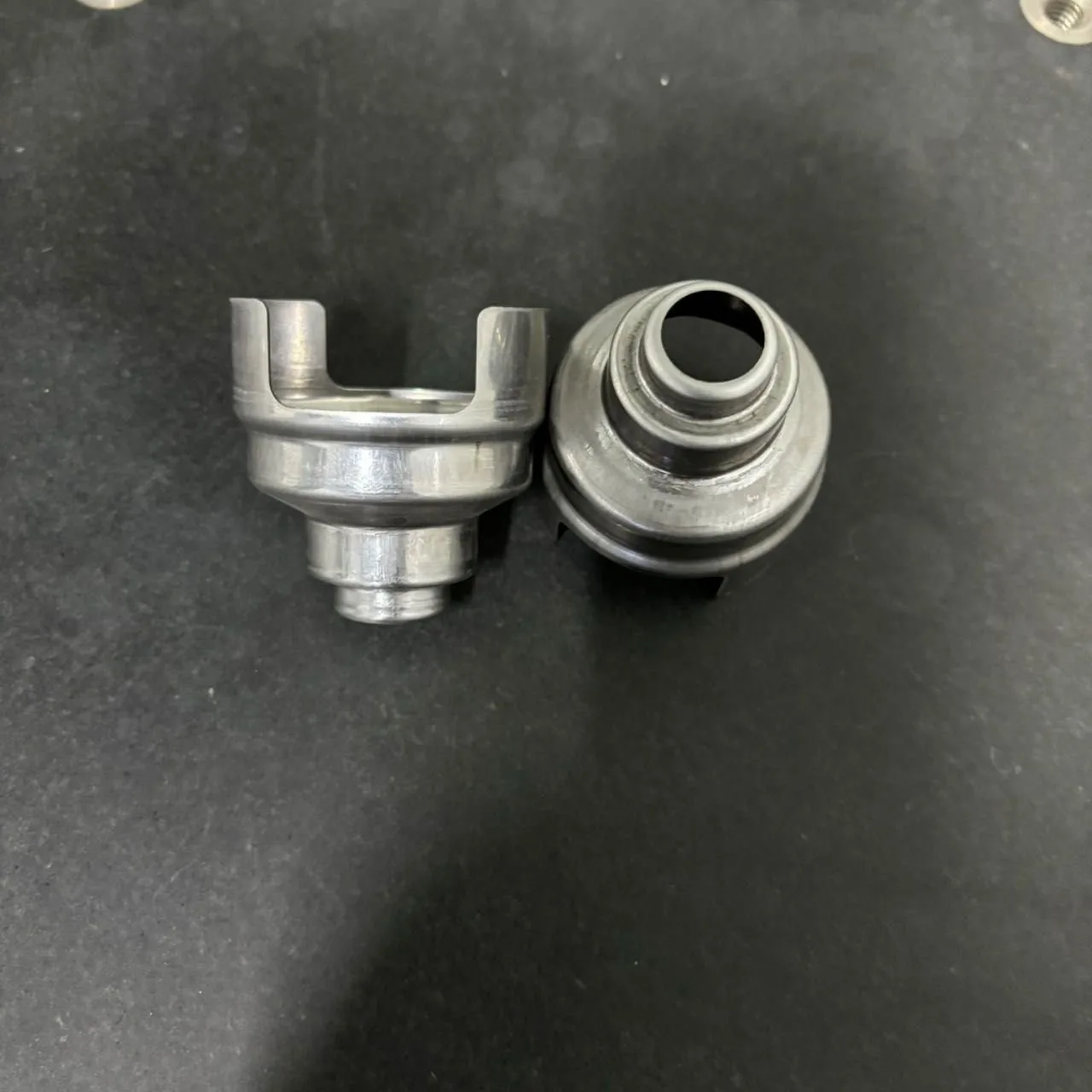
For appliance OEMs and contract manufacturers, selecting the right stamping partner is a decision that affects product quality, regulatory compliance, and unit economics. This guide covers the full scope of home appliance stamping — part types, materials, processes, quality standards, and cost optimization.
Common Stamped Parts in Home Appliances
Home appliances contain dozens of stamped metal components, each with distinct material, process, and quality requirements. The table below maps the most common part categories.
Appliance Stamped Part Types
| Part Category | Example Components | Typical Material | Stamping Process | Precision Requirement |
|---|---|---|---|---|
| Outer Shells / Housings | Washing machine outer tub, dryer drum | Galvanized steel, stainless steel | Deep drawing + trimming | ±0.3–0.5 mm |
| Inner Liners / Tubs | Refrigerator inner liner, dishwasher tub | Stainless steel 304/430 | Deep drawing, hydroforming | ±0.2–0.5 mm |
| Mounting Brackets | Motor mounts, compressor brackets, PCB supports | Cold-rolled steel, galvanized steel | Blanking, bending, piercing | ±0.1–0.2 mm |
| Decorative Panels | Control panels, door skins, front fascias | Stainless steel, pre-coated steel | Blanking, forming, embossing | ±0.1–0.3 mm (cosmetic) |
| Heat Exchanger Fins | AC evaporator/condenser fins, refrigerator condenser fins | Aluminum 1100/8011, copper | Progressive stamping | ±0.05 mm (fin spacing) |
| Structural Frames | Chassis frames, support rails | Cold-rolled steel, hot-dip galvanized | Blanking, forming, welding | ±0.2–0.5 mm |
| Latches and Hinges | Door latches, oven hinges, lid hinges | Spring steel, stainless steel | Blanking, coining, heat treatment | ±0.05–0.10 mm |
| Shielding and Deflectors | Microwave waveguide covers, oven heat deflectors | Aluminum, galvanized steel | Blanking, forming | ±0.2–0.5 mm |
Key insight: Unlike automotive stamping, where structural integrity dominates, appliance stamping splits into two distinct quality tracks — appearance-critical parts (panels, door skins) and functional parts (brackets, fins, liners). The surface finish expectations and inspection criteria are fundamentally different for each track. Metal Stamping Parts Ltd manufactures across both categories, serving major appliance brands with integrated stamping and finishing capabilities.
Quality Standards and Certifications for Appliance Stamping
Appliance stamped parts must comply with a web of safety, environmental, and performance standards depending on the target market. Understanding these requirements early in the design phase prevents costly redesigns and certification delays.
Key Certification Requirements
| Standard | Scope | Key Requirements for Stamped Parts |
|---|---|---|
| UL (Underwriters Laboratories) | North America — electrical safety | Material flammability, sharp edge elimination, grounding path integrity for metal enclosures |
| CE Marking | European Union — product safety | Compliance with Low Voltage Directive (LVD) and EMC Directive; stamped parts in electrical enclosures must meet creepage and clearance distances |
| RoHS (Restriction of Hazardous Substances) | EU, China, India, others | Restricts lead, cadmium, mercury, hexavalent chromium, PBB, and PBDE in materials and surface coatings |
| REACH (Registration, Evaluation, Authorization, Restriction of Chemicals) | European Union | Regulates chemical substances used in manufacturing — affects coatings, lubricants, and cleaning agents used in stamping |
| CCC (China Compulsory Certification) | China | Mandatory for appliances sold in China; covers safety of stamped enclosures and structural parts |
| CB Scheme | International (90+ countries) | Mutual recognition of safety test reports; simplifies multi-market certification |
RoHS and REACH Compliance in Stamping
For stamped appliance parts, RoHS compliance affects three areas:
- Base material — standard steel and aluminum alloys are inherently compliant, but recycled scrap may contain trace restricted substances if not properly sourced.
- Surface coatings — hexavalent chromium (Cr6+) in traditional passivation treatments is banned under RoHS. Trivalent chromium (Cr3+) or chrome-free alternatives must be used.
- Stamping lubricants — some drawing oils and forming compounds contain restricted substances. RoHS-compliant lubricants are required, and parts must be adequately cleaned after forming.
REACH adds further restrictions on substances of very high concern (SVHCs). Appliance OEMs increasingly require full material declarations (FMDs) from stamping suppliers to ensure compliance across the supply chain.
Surface Treatment Requirements for Appliance Parts
Surface finish is often the defining quality criterion for appliance stamped parts — particularly components visible to the end consumer. The choice of surface treatment depends on the application environment (kitchen, laundry, outdoor), aesthetic requirements, and cost targets.
Surface Treatment Comparison
| Treatment | Process | Aesthetic Quality | Corrosion Resistance | Cost Index | Common Applications |
|---|---|---|---|---|---|
| Powder Coating | Electrostatic spray + oven cure | Excellent — wide color range, smooth matte/gloss | Very good | 1.0× (baseline) | Washer/dryer panels, refrigerator doors |
| Electroplating (Cr, Ni) | Electrolytic deposition | Mirror or satin chrome/nickel finish | Excellent | 1.5–2.5× | Faucet components, decorative trim |
| Brushed / Satin Finish | Mechanical abrasion (belt or wheel) | Directional texture, premium look | Moderate (requires clear coat) | 0.8–1.2× | Stainless steel refrigerator panels, oven fronts |
| Anodizing | Electrochemical oxide growth | Colored or clear, uniform | Excellent (aluminum only) | 1.2–2.0× | Small appliance housings, decorative aluminum parts |
| Passivation | Chemical treatment (citric/nitric acid) | Natural metal appearance | Good (stainless steel) | 0.3–0.5× | Stainless steel inner liners, food-contact surfaces |
| Pre-coated Steel (PCM/VCM) | Coil-coated before stamping | Consistent color/pattern across large panels | Very good | 1.0–1.3× | Refrigerator doors, washing machine top covers |
Note on pre-coated steel (PCM/VCM): Many appliance manufacturers have shifted from post-stamping painting to pre-coated metal coils. This eliminates the painting line investment and ensures consistent color across large panels. However, stamping pre-coated material requires careful die design to avoid coating damage at bend radii and draw walls. Metal Stamping Parts Ltd has extensive experience forming PCM/VCM materials with zero visible coating defects.
Appearance Parts vs. Structural Parts: Quality Differences
The quality expectations for appliance stamped parts diverge sharply based on whether the part is visible to the consumer.
Appearance Parts (panels, door skins, control surfaces):
- Surface defects limited to 0 scratches > 0.1 mm per part
- Color consistency ΔE < 1.0 across production lots
- No die marks, orange peel, or coating peeling
- 100% visual inspection (automated camera systems preferred)
- Edge quality: no burrs, sharp edges, or exposed substrate at trimmed edges
Structural Parts (brackets, frames, liners):
- Dimensional tolerance is the primary criterion (±0.1–0.5 mm depending on function)
- Surface defects acceptable if not functionally relevant
- Spot-check visual inspection (AQL-based sampling)
- Burrs controlled to < 0.1 mm for assembly and safety reasons
This distinction drives fundamentally different manufacturing approaches. Appearance parts require mirror-finished dies, frequent die polishing, clean-room-level handling, and often automated optical inspection. Structural parts prioritize dimensional consistency and throughput over surface perfection.
Stamping Processes for Home Appliance Manufacturing
Several stamping processes are commonly used in appliance manufacturing, each suited to different part geometries and volumes.
Progressive Die Stamping
The workhorse of high-volume appliance production. A coil-fed progressive die performs blanking, forming, piercing, and trimming in a single automated line at 60–200+ strokes per minute. Ideal for brackets, clips, small panels, and heat exchanger fins where annual volumes exceed 100,000 pieces. Learn more about progressive die stamping and tooling.
Transfer Die Stamping
For larger parts — such as washing machine tubs and oven liners — that cannot remain attached to a carrier strip. Transfer dies use mechanical fingers or robots to move the blank between stations. Transfer stamping handles deep draws and complex geometries that exceed the capability of progressive dies.
Deep Drawing
Deep drawing transforms a flat blank into a cup-shaped or box-shaped part by forcing the material into a die cavity with a punch. Appliance applications include washing machine inner tubs (draw depth 300–500 mm), refrigerator inner liners, and sink bowls. Material selection (elongation, strain hardening exponent) and blank holder force control are critical to prevent wrinkling and tearing.
Tandem Press Lines
For very large appliance panels (refrigerator doors, washing machine cabinets), multiple individual presses are arranged in sequence. Each press performs one or two operations — draw, trim, pierce, flange — with automated transfer between stations. Tandem lines offer flexibility for part changes and are common in multi-model appliance factories.
Cost Pressures and Reduction Strategies in Appliance Stamping
The home appliance industry operates on thin margins — typically 3–8% net — and faces relentless cost pressure from retailers and consumers. Stamped parts, which can represent 15–30% of an appliance’s bill of materials, are a primary target for cost reduction.
Material Cost Optimization
- Downgauge where possible — a 0.1 mm reduction in material thickness on a high-volume part can save $50,000–$200,000 annually
- Substitute materials — replace stainless steel with pre-coated galvanized steel in non-food-contact applications
- Optimize blank size — nesting software and multi-out dies can improve material utilization from 65% to 80%+
- Negotiate coil contracts — long-term agreements with steel mills lock in pricing and reduce volatility
Process Cost Optimization
- Combine operations — progressive dies that perform forming, piercing, and trimming in one pass eliminate secondary operations and reduce labor
- Increase stroke rate — optimizing die design for higher press speeds (from 80 to 150 SPM) increases output without additional equipment
- Reduce scrap — skeleton recycling and blank optimization recover 15–25% of material cost
- Standardize tooling — shared die components across product families reduce tooling investment by 20–30%
Quality Cost Optimization
- Automated inspection — camera-based vision systems replace manual inspectors and catch defects with higher consistency
- Statistical process control — monitoring key dimensions during production reduces scrap rates and eliminates over-inspection
- Preventive die maintenance — scheduled tool sharpening and coating refresh prevent the cascade of defects that follows tool degradation
Metal Stamping Parts Ltd partners with appliance OEMs to implement these strategies holistically — not as isolated cost cuts but as a systematic approach to manufacturing efficiency. Contact us to discuss your appliance stamping requirements.
Choosing an Appliance Stamping Supplier
When evaluating a stamping partner for home appliance components, prioritize these capabilities:
- Multi-process capability — progressive, transfer, and deep-draw stamping under one roof
- Surface finish expertise — ability to handle pre-coated materials and deliver Class A surfaces
- Certification portfolio — UL, CE, RoHS, and REACH compliance documentation
- Volume flexibility — ability to scale from pilot runs to multi-million annual quantities
- Engineering support — DFM analysis, simulation, and prototype capability
- Quality infrastructure — CMM, optical inspection, SPC systems, and documented quality management
For a deeper look at how metal stamping compares to CNC machining for appliance parts, or to understand our full appliance metal stamping services, explore the linked resources.
Frequently Asked Questions
What is the most common material for appliance stamped parts?
Galvanized steel (hot-dip or electro-galvanized) is the most widely used material for appliance stampings. It offers good formability, adequate corrosion resistance, and low cost. For visible surfaces, pre-coated steel (PCM/VCM) is increasingly popular because it eliminates post-stamping painting. Stainless steel (304 or 430) is used for food-contact surfaces and premium aesthetics.
How do UL and CE requirements differ for stamped appliance parts?
UL certification (North America) focuses primarily on electrical safety — ensuring that stamped metal enclosures maintain grounding continuity, have no sharp edges that could damage wiring, and use materials with adequate flammability ratings. CE marking (EU) covers a broader scope including electrical safety (LVD), electromagnetic compatibility (EMC), and material compliance with RoHS. Both require documented testing, but UL typically involves more rigorous third-party testing of finished assemblies.
What surface finish quality level is required for visible appliance panels?
Visible appliance panels — such as refrigerator doors, washing machine front covers, and oven fascias — typically require Class A surface quality. This means no visible scratches, dents, die marks, or coating inconsistencies under standard lighting conditions. Pre-coated materials (PCM/VCM) must show no coating cracking at bend radii. Automated vision inspection systems are increasingly used to detect surface defects that are invisible to the human eye at production line speeds.
What is the typical tolerance for appliance stamped brackets?
Non-structural appliance brackets (wire harness mounts, PCB supports, component clips) typically require tolerances of ±0.15–0.20 mm. Structural brackets (motor mounts, compressor supports) require ±0.10–0.15 mm. These tolerances are achievable with standard progressive die stamping and routine SPC monitoring. Tighter tolerances (±0.05 mm) are occasionally specified for latches and hinges that must interface with precision mechanisms.
How can appliance OEMs reduce stamped part costs without compromising quality?
The most effective cost reduction strategies include: (1) downgauge to thinner material where structural analysis permits, (2) switch to pre-coated steel to eliminate painting operations, (3) optimize blank nesting to improve material utilization above 75%, (4) combine multiple stamping operations into progressive dies to reduce labor, and (5) implement automated inspection to reduce scrap and over-inspection costs. A comprehensive approach typically yields 10–20% cost reduction over 12–18 months.