
Bending is one of the most common forming operations in metal stamping. From simple brackets to complex enclosures, nearly every stamped part that changes direction relies on a bending process. Yet despite its apparent simplicity, bending introduces real engineering challenges — springback, cracking, dimensional drift, and surface defects — that demand careful calculation and tooling design.
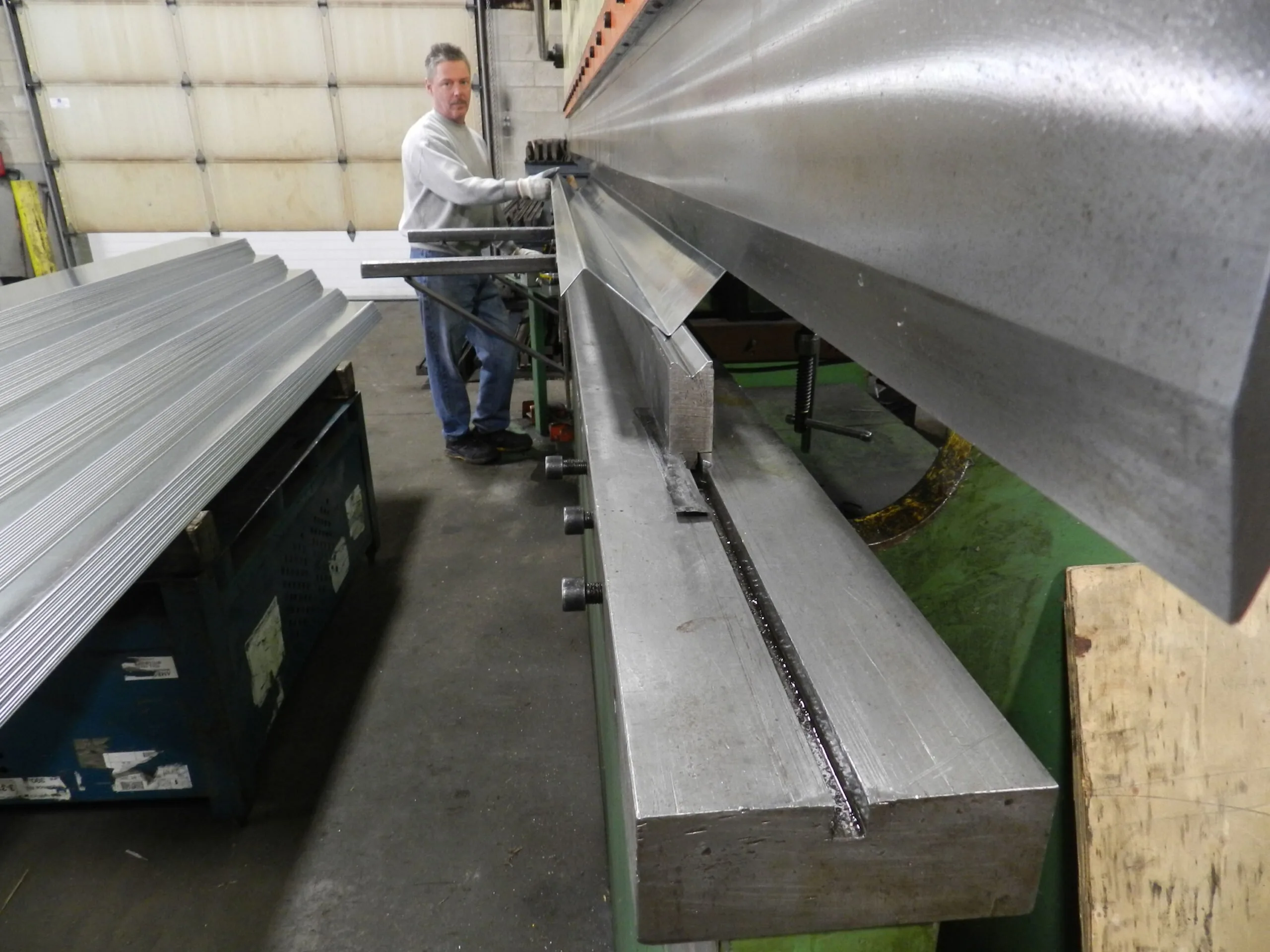
This guide covers the fundamentals of metal stamping bending: the major bend types and when to use each, how to calculate bend force and minimum bend radii, proven methods for predicting and compensating springback, and the die design principles that keep production runs consistent.
What Is Bending in Metal Stamping?
In metal stamping, bending is the plastic deformation of sheet metal around a straight axis using a punch and die set. The material on the outer surface stretches (tension) while the inner surface compresses. The neutral axis — roughly at 40–44 % of material thickness from the inner surface — remains at approximately constant length.
Bending operations can be performed in a press brake, a stamping die with built-in bending stations, or a dedicated forming die. The choice depends on part geometry, production volume, and tolerance requirements.
Types of Bending in Metal Stamping
Different bend profiles require different tooling approaches. The table below compares the most common bend types used in production stamping.
| Bend Type | Description | Typical Applications | Die Complexity | Springback Sensitivity |
|---|---|---|---|---|
| V-Bend | Punch presses sheet into a V-shaped die cavity | Brackets, covers, simple flanges | Low | Moderate |
| L-Bend | Single 90° flange formed against a die shoulder | L-brackets, mounting tabs, edge flanges | Low | Moderate |
| U-Bend | Sheet formed into a U-channel profile | Channels, trays, stiffening ribs | Medium | High (two bends) |
| Z-Bend | Two opposing bends creating a Z-offset | Offsets for clearance, step brackets | Medium | High (cumulative) |
| Hemming | Edge folded over 180° onto itself | Panel edges, safety edges, automotive closures | Medium–High | Low (trapped) |
| Rocker/Roll Bending | Gradual curvature formed by rolling or rocker dies | Curved panels, cylindrical shells | High | Variable |
| Wipe Bending | Sheet wiped over a die edge by a pressure pad | Simple edge bends, return flanges | Low–Medium | Moderate |
| Rotary Bending | Rotating die segment forms the bend | Precision bends, fragile surfaces | High | Low (controlled) |
When to Choose Each Type
- V-bend and L-bend are the default choices for single-direction flanges. They require the simplest tooling and suit medium-to-high volumes.
- U-bend is ideal when you need a channel or tray profile. Expect higher springback because two bend zones act simultaneously.
- Z-bend creates offset features but accumulates springback from both bends; plan for tighter angle tolerances.
- Hemming locks the material in place, virtually eliminating springback. Use for safety edges or where a flush panel surface is required.
- Wipe bending works well for long, straight edges where a full V-die set would be impractical.
Bend Force Calculation
Accurate bend force prediction prevents press overload and ensures consistent bend quality.
V-Bend Force Formula
The standard formula for V-bending force is:
P = (C × S × L × T²) / W
Where:
– P = required bending force (kN)
– C = die coefficient (1.3 for V-bend with die opening = 8T; 1.2 for 12T; 1.0 for 16T)
– S = material tensile strength (MPa)
– L = bend length (mm)
– T = material thickness (mm)
– W = die opening width (mm)
Practical Example
Given: Mild steel (tensile strength 400 MPa), thickness 2.0 mm, bend length 500 mm, die opening 16 mm (8 × T), V-bend.
P = (1.3 × 400 × 500 × 2.0²) / 16
P = (1.3 × 400 × 500 × 4) / 16
P = 1,040,000 / 16
P = 65 kN (approximately 6.6 tons)
Air Bending vs. Bottoming vs. Coining
| Method | Description | Force Requirement | Accuracy |
|---|---|---|---|
| Air bending | Punch does not fully seat; angle controlled by depth | 50–60 % of bottoming force | ±0.5° typical |
| Bottoming (coining flange) | Material pressed flat against die walls | 3–5 × air bend force | ±0.25° |
| Coining | Full tonnage stamps the bend radius into the material | 5–10 × air bend force | ±0.1° |
Air bending is the most common method in production stamping because it uses lower tonnage and allows angle adjustment without tooling changes.
Springback: Calculation and Compensation
What Is Springback?
When the punch retracts, elastic recovery causes the bend angle to open slightly and the bend radius to increase. This springback is the single largest source of dimensional error in stamped bends.
Springback Factors
Springback depends on:
– Material yield strength — higher yield = more springback
– Bend radius-to-thickness ratio (R/T) — larger R/T = more springback
– Bend angle — wider angles produce more absolute springback
– Material type — aluminum and stainless steel spring back more than mild steel
Springback Angle Estimation
A practical engineering approximation:
Δα = (σ_y × R) / (E × T)
Where:
– Δα = springback angle (radians)
– σ_y = material yield strength (MPa)
– R = inside bend radius (mm)
– E = elastic modulus (MPa)
– T = material thickness (mm)
Convert radians to degrees: Δα (deg) = Δα (rad) × 57.3
Over-Bending Compensation Table
To achieve a target bend angle, the punch must over-bend the material. The table below shows typical over-bend angles needed to hit a 90° final angle.
| Material | Thickness (mm) | R/T Ratio | Springback (°) | Over-Bend Angle to Hit 90° |
|---|---|---|---|---|
| Mild Steel (SPCC) | 1.0 | 1.0 | 1.5–2.0 | 91.5–92.0° |
| Mild Steel (SPCC) | 2.0 | 1.0 | 1.0–1.5 | 91.0–91.5° |
| Mild Steel (SPCC) | 2.0 | 3.0 | 2.5–3.5 | 92.5–93.5° |
| Stainless Steel (SUS304) | 1.0 | 1.0 | 3.0–4.0 | 93.0–94.0° |
| Stainless Steel (SUS304) | 2.0 | 1.0 | 2.0–3.0 | 92.0–93.0° |
| Aluminum 5052-H32 | 1.0 | 1.0 | 2.5–3.5 | 92.5–93.5° |
| Aluminum 5052-H32 | 2.0 | 1.0 | 1.5–2.5 | 91.5–92.5° |
| Aluminum 6061-T6 | 1.5 | 2.0 | 4.0–5.5 | 94.0–95.5° |
| Copper C110 | 1.0 | 1.0 | 2.0–3.0 | 92.0–93.0° |
Practical note: Always validate over-bend angles with first-article samples. Theoretical values are starting points — actual springback varies with material batch, grain direction, and die wear.
Methods to Control Springback
- Air bending with over-bending — the most common approach; adjust punch depth to compensate.
- Bottoming / coining — forces the material to conform fully to the die, reducing springback to ±0.25°.
- Coining the bend radius — stamps a precise radius into the material, minimizing elastic recovery.
- Material selection — choose alloys with lower yield-to-UTS ratios (e.g., annealed tempers over full-hard).
- Embossed or coined ribs — add a local stiffening feature along the bend line to resist elastic recovery.
- Roller or rotary bending — progressively forms the bend, distributing strain and reducing peak elastic stress.
- Heat-assisted bending — for high-strength alloys, localized heating reduces yield strength and springback.
Minimum Bend Radius Table
Exceeding the minimum bend radius causes cracking on the outer surface. The table below provides guideline values for common materials.
| Material | Temper | Min. Bend Radius (× T) |
|---|---|---|
| Mild Steel (SPCC, DC01) | Annealed | 0.5 T |
| Mild Steel (SPCC, DC01) | 1/4 Hard | 1.0 T |
| Stainless Steel 304 | Annealed | 1.0 T |
| Stainless Steel 304 | 1/4 Hard | 2.0 T |
| Stainless Steel 316 | Annealed | 1.0 T |
| Aluminum 1100 | O (Annealed) | 0 T (can bend to zero radius) |
| Aluminum 5052-H32 | 1/4 Hard | 1.5 T |
| Aluminum 6061-T6 | Full Hard | 3.0–4.0 T |
| Copper C110 | Annealed | 0 T |
| Brass C260 | Annealed | 0 T |
| Brass C260 | Half Hard | 1.0 T |
| Titanium Grade 2 | Annealed | 2.5–3.0 T |
| High-Strength Low-Alloy (HSLA) | As-rolled | 2.0–3.0 T |
Key rules of thumb:
– Bend perpendicular to the rolling direction (grain direction) when possible — bending parallel to the grain increases cracking risk by 30–50 %.
– Softer tempers allow tighter radii. Specify annealed material if tight bends are critical.
– For aluminum 6061-T6, cracking is common below 3T. Consider 6061-O (annealed) and re-heat-treat after forming.
Common Bending Defects and Solutions
Even with proper calculations, production bending can produce defects. The table below lists the most frequent issues and their root causes.
| Defect | Description | Root Cause | Solution |
|---|---|---|---|
| Surface cracking | Cracks on outer bend surface | Bend radius too tight; material too hard; grain direction wrong | Increase radius; use softer temper; rotate blank 90° to grain |
| Springback / angle drift | Final angle opens beyond tolerance | Insufficient over-bending; high R/T ratio | Increase punch travel; use bottoming die; add coining ribs |
| Wrinkling on inner radius | Compressive wrinkles on inside of bend | Excessive compressive strain; thin material; large R/T | Reduce die opening; use wipe bending; add back support |
| Edge distortion | Edges flare out or bow at bend ends | Free material at ends unsupported during bend | Add edge relief notches; use wider die opening; add hold-down pads |
| Twist | Part twists along bend axis | Uneven material thickness; off-center loading; grain anisotropy | Balance punch force; use anti-twist fixtures; check blank consistency |
| Dimensional shift | Flange length or bend position out of spec | Material flow during bend; tooling wear | Redesign blank dimensions; replace worn tooling; add pilot holes |
| Surface marring / galling | Scratches or material pickup on punch/die | Insufficient lubrication; rough tooling surface; high contact pressure | Improve lubrication; polish die surfaces; use coated tool steel |
| Bend line cracking at notch | Crack initiating at notch or cutout near bend | Stress concentration at feature edge | Add reliefs at notch corners; move notch away from bend zone |
Bend Die Design Key Points
Proper die design is the foundation of consistent, high-quality bending. The following considerations apply to both dedicated bending dies and bending stations within progressive dies.
1. Die Opening Width
The die opening (V-width) directly affects bend quality and required force.
Rule of thumb: W = 6T to 12T for air bending; W = 8T is a common starting point.
- Too narrow: high tonnage, risk of punch bottoming, surface marking
- Too wide: poor angle control, excessive springback, edge distortion
2. Punch Radius
The punch tip radius should be 0.5T to 1.5T for standard air bending. A smaller radius increases strain on the outer surface and raises cracking risk; a larger radius increases springback.
3. Die Shoulder Radius
Die shoulder radius (the curved transition from the die face to the V-cavity) typically ranges from 2T to 4T. A sharper shoulder reduces the effective bend radius but increases material drag and tooling wear.
4. Material and Coating for Die Components
| Component | Recommended Material | Surface Treatment |
|---|---|---|
| Punch | D2, DC53, or carbide (for high volume) | TiN or TiCN coating for wear resistance |
| Die block | D2, SKD11 | Hard chrome or nitriding |
| Pressure pad / stripper | A2 or S7 | Black oxide or phosphate |
5. Spring-Loaded Pads and Strippers
A spring-loaded pressure pad holds the blank flat during bending, preventing edge distortion and maintaining bend position accuracy. Pad force should be 10–20 % of the bending force.
6. Angular Compensation in the Die
For high-volume production, build in a fixed over-bend angle (based on the springback table above) rather than relying on press depth adjustment. Typical die angles for 90° finished bends:
- Mild steel: 88–88.5° die angle (punch angle 88°)
- Stainless 304: 86–87° die angle
- Aluminum 6061-T6: 84–85° die angle
7. Relief Notches and Pilot Features
When a bend terminates at a flange edge, add a relief notch (typically 1.5T × 1.5T) at the bend endpoints to prevent edge distortion and tearing. For parts with critical positioning, include pilot holes near the bend line for locating in the die.
8. Stripping and Part Ejection
After bending, the part may grip the punch. Plan for spring strippers, air ejection, or knockout pins to ensure reliable part removal on every stroke.
Best Practices for Production Bending
- Prototype first. Run first-article samples and measure springback before committing to production tooling angles.
- Control incoming material. Variations in thickness, temper, and grain direction directly affect bend angle consistency.
- Use lubricant. A consistent stamping lubricant (chlorinated paraffin or synthetic ester) reduces galling and improves surface finish.
- Monitor tooling wear. Punch radius and die shoulder radius change with use — schedule preventive maintenance intervals based on stroke count.
- Document everything. Record punch depth, tonnage, and measured angles for each setup. This data becomes invaluable for troubleshooting and future tooling design.
Frequently Asked Questions
What is the difference between air bending, bottoming, and coining in metal stamping bending?
Air bending forms the bend by pushing the material into the die without full contact — the punch depth controls the angle, and springback is compensated by over-bending. Bottoming presses the material fully against the die walls, reducing springback significantly. Coining applies extreme force to permanently set the bend radius into the material, virtually eliminating springback but requiring 5–10× more tonnage than air bending.
How do I calculate the minimum bend radius for my material?
Multiply the material thickness (T) by the minimum bend radius factor for your alloy and temper. For example, annealed stainless steel 304 has a factor of 1.0T — so a 2.0 mm sheet can bend to a minimum inside radius of 2.0 mm. Always bend perpendicular to the rolling direction when possible, and consult material datasheets for specific alloy grades.
Why does my bent part spring back more than expected?
Excessive springback usually results from one or more of these factors: the bend radius-to-thickness ratio (R/T) is too large, the material yield strength is higher than specified (check material certs), the grain direction runs parallel to the bend line, or the die opening is too wide. Reduce R/T, rotate the blank, switch to a softer temper, or use bottoming/coining to bring springback under control.
What causes cracking on the outer surface of a bend?
Outer-surface cracking occurs when the tensile strain on the bend’s exterior exceeds the material’s elongation limit. Common causes include bend radius below the material’s minimum (see the radius table above), bending parallel to the rolling grain direction, material that is too hard or work-hardened, or a sharp punch radius that concentrates strain. Increase the bend radius, use annealed material, or rotate the blank 90° to the grain.
How does die opening width affect bend quality?
The V-die opening width (W) controls the bend radius, required force, and springback. A general guideline is W = 6T to 12T, with 8T as a common starting point. A narrower opening produces a tighter radius with less springback but requires higher tonnage and risks surface marking. A wider opening reduces tonnage but increases springback and may cause edge distortion. Match the opening to your material thickness and desired bend radius.
Conclusion
Metal stamping bending is a deceptively complex operation. The interplay between material properties, bend geometry, and tooling design determines whether a part hits tolerance or ends up in the scrap bin. By selecting the right bend type, calculating force and springback accurately, respecting minimum bend radii, and designing dies with proper compensation, you can achieve repeatable, high-quality bends at production volumes.
Need a precision bending partner? At Metal Stamping Parts, we engineer and produce custom bent components from prototype through high-volume production. Request a quote or contact our engineering team to discuss your next project.