
Metal Stamping Components — Precision Parts for Electronics, Automotive, and Industry
Metal stamping components span the full range of industrial applications — from micron-tolerance electrical contacts and EMI shielding to structural brackets and enclosure hardware. What distinguishes precision stamped components from commodity stamped parts is the combination of dimensional control, material selection, and quality documentation that makes them suitable for integration into higher-level assemblies. We produce stamped components for electronics, automotive, medical, and industrial OEM customers who need more than a part — they need a documented, repeatable component.
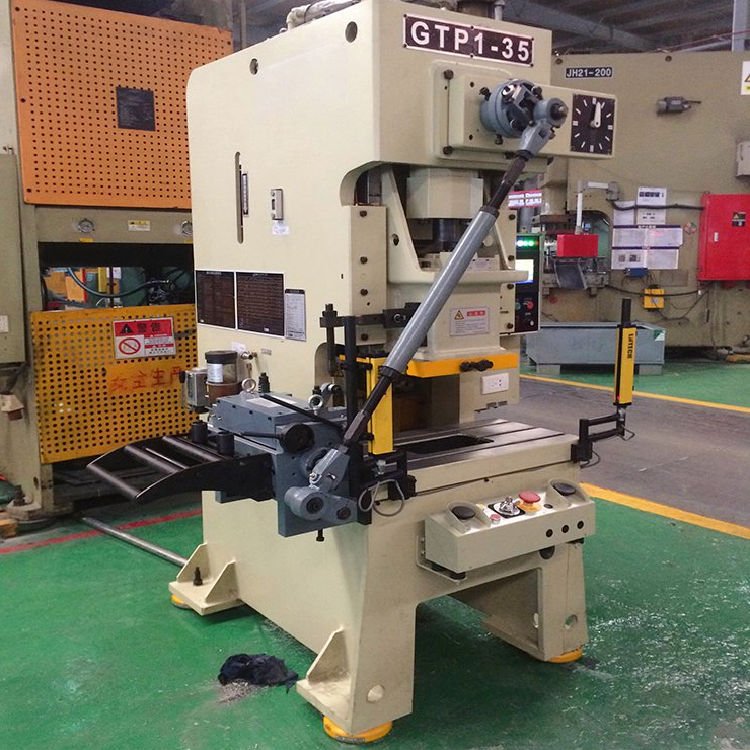
Need precision stamped components? Share your drawing via our contact page — we will review the geometry, confirm process fit, and return a quotation within 2 business days.
Types of Metal Stamping Components We Produce
Our stamping processes and tooling capabilities cover a broad range of component types:
| Component Type | Typical Application | Key Process |
|---|---|---|
| Electrical contacts and terminals | Connectors, relays, switches, sockets | Progressive die, fine blanking |
| EMI / RF shielding cans | PCB shielding, enclosure shielding | Progressive die, deep draw |
| Lead frames and carrier strips | Semiconductor packaging, IC mounting | Progressive die, high-precision |
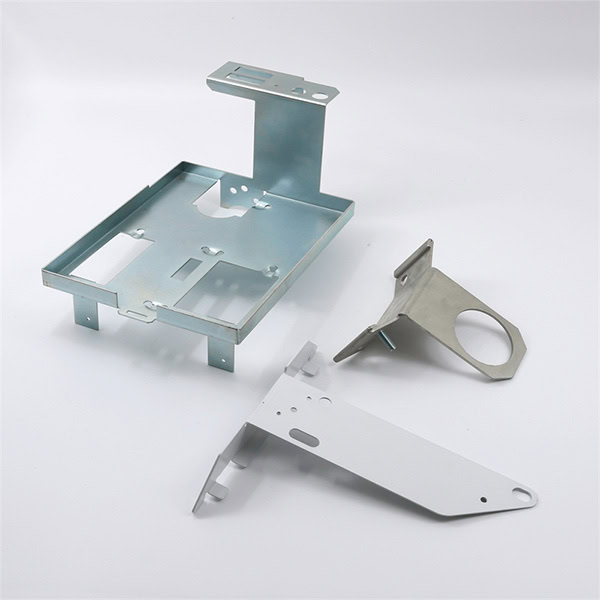
| Structural brackets and clips | Assembly mounting, chassis attachment | Progressive die, bending |
| Enclosure panels and covers | Electronics housings, instrument covers | Progressive die, compound die |
| Spring contacts and beam springs | Battery contacts, SIM card holders | Progressive die, precision forming |
| Bus bars and conductive blanks | Power distribution, EV battery systems | Blanking, fine blanking |
| Motor laminations | Electric motor cores, transformer cores | Progressive die, compound die |
| Drawn cups and housings | Sensor housings, actuator shells | Deep draw stamping |
| Fastener components | Washers, clips, retaining rings | Compound die, progressive die |
Precision Stamping for Electronics Components
Electronics stamping components operate in a different precision regime than structural stamped parts. The requirements that make electronics stamping technically demanding:
- Dimensional tolerances down to ±0.01 mm — contact geometry, terminal pitch, and mating dimensions must be held consistently across millions of parts to ensure reliable connector engagement and assembly fit.
- Burr-free sheared edges — electrical contacts and precision mating surfaces cannot have burrs that affect contact resistance, damage mating parts, or create contamination risk. Fine blanking and controlled shear processes produce smooth, burr-minimized edges.
- Material conductivity and spring properties — electrical contacts are typically made from copper, brass, or phosphor bronze to combine conductivity with the spring-back force needed for reliable engagement. Material selection and temper are as important as geometry.
- Surface plating compatibility — stamped contacts are often gold, silver, or tin plated after stamping. The stamped surface condition and geometry must be compatible with uniform plating adhesion and thickness control.
- Flatness control — PCB-mount components and shielding cans require flatness control to ensure proper seating and soldering. Progressive die design controls coil-set release and springback to achieve flatness requirements.
Materials for Stamped Components
Material selection for stamped components depends on the functional requirement — mechanical, electrical, thermal, or corrosion performance:
- Copper (C11000, C10200) — highest electrical conductivity; bus bars, power contacts, heat exchanger fins
- Brass (C26000, C27000, C36000) — good conductivity with better formability than pure copper; connector pins, terminals, fittings
- Phosphor bronze (C51000, C52100) — spring contacts, beam springs, SIM card holders; combines conductivity with elastic spring properties
- Beryllium copper (C17200) — highest strength spring contact material; precision RF connectors and high-reliability contacts (by arrangement)
- Stainless steel (304, 316, 301) — EMI shielding cans, spring clips, medical components, corrosion-resistant hardware
- Cold rolled steel (SPCC, DC01) — structural brackets, motor laminations, chassis components; lowest cost structural choice
- Aluminum (1050, 3003, 5052) — lightweight EMI shields, enclosure covers, heatsink components
- Kovar and specialty alloys — by arrangement for aerospace and hermetic sealing applications
Quality Standards for Precision Components
Precision components integrated into higher-level assemblies must meet quality standards that go beyond dimensional conformance:
- First Article Inspection (FAI) — complete dimensional verification of all drawing-specified features using CMM, optical vision system, or precision gauging. Balloon drawing with measurement data table issued before production release.
- 100% visual inspection — for components where surface defects (burrs, nicks, plating adhesion) affect function, we perform 100% visual inspection before packaging.
- AQL sampling inspection — for high-volume component programs, final inspection follows ANSI/ASQ Z1.4 at AQL 0.65 or 1.0 as specified.
- Material certification — certified material test reports with chemical composition and mechanical properties for each production lot. RoHS-compliant material declarations available.
- Plating coordination — for components requiring surface treatment, we coordinate with qualified plating suppliers, manage the plating specification, and inspect plated parts before shipment.
Packaging and Cleanliness for Components
Precision components require packaging that maintains their condition through the supply chain:
- ESD-safe packaging — for electronic components sensitive to electrostatic discharge, we package in ESD-safe bags, trays, or tubes per IPC/JEDEC standards.
- Tape-and-reel — for components destined for automated assembly, we can supply in carrier tape and reel format compatible with SMT pick-and-place systems.
- Magazine and tray packaging — for connectors and precision contacts, packaging in magazines or injection-molded trays prevents contact damage and maintains orientation for automated assembly.
- Cleanliness — components are cleaned before final inspection to remove stamping oil and metal fines. Ionic contamination testing available for components used in high-reliability electronics.
Related Services
- Electrical metal stamping — specialized stamping for electrical and power components
- Metal stamping assemblies — stamped components with assembly operations
- Electronics industry stamping — full overview of our electronics market capabilities
- Custom metal stamping — DFM review and prototype production for new component designs
- Progressive die stamping — primary process for precision component production
- Metal stamping parts — broader product range overview
Metal Stamping Components — Frequently Asked Questions
What tolerances can you hold on precision stamped components?
Standard production tolerances for progressive die stamped components are ±0.05 mm on general features and ±0.02 mm on critical features with controlled tooling. For fine-blanked components and high-precision progressive dies with precision grinding and tight process control, we can hold ±0.01 mm on critical dimensions. The achievable tolerance depends on material, thickness, feature geometry, and die construction — we will specify realistic tolerances during the DFM review and quotation phase.
Can you produce lead frames and carrier strip components?
Yes. We produce lead frames and carrier strip components for semiconductor packaging and electronic assembly applications. These require high-precision progressive dies with tight pitch control, burr-free blanked edges, and flatness control for downstream automated assembly. Material is typically copper alloy or stainless steel strip. We will review your lead frame drawing and pitch specification to confirm our tooling can meet your dimensional requirements before quotation.
Do you offer plating or surface treatment on stamped components?
We coordinate surface treatment with qualified subcontractors. Standard treatments include tin, gold, silver, nickel, zinc, and chrome plating; anodizing for aluminum; and passivation for stainless steel. We manage the plating specification, inspect incoming stamped parts for surface condition before plating, and inspect plated parts before shipment. The plating supplier is documented in our supply chain and subject to our supplier qualification process.
Can you supply components in tape-and-reel format for automated assembly?
Yes, for components with appropriate geometry. Tape-and-reel packaging follows EIA-481 standard carrier tape dimensions. We will confirm carrier tape pocket geometry compatibility with your component during the quotation phase. For very small components, we can also supply in bulk, in trays, or in magazines depending on your assembly process requirement.
What is the minimum order quantity for precision components?
We do not apply a fixed minimum. For high-precision components with significant tooling investment, economic production runs are typically 10,000 pieces or more per order. For simpler components and bending operations, much smaller quantities can be economical. Share your component drawing and annual volume — we will assess whether the economics support your program requirements.
Do you provide RoHS compliance documentation for components?
Yes. We can provide RoHS material compliance declarations for components produced from RoHS-compliant materials. Our standard material suppliers provide full material declaration data sheets (IMDS or IPC-1752A format) on request. For components with surface treatment, we confirm plating chemistry compliance with the relevant RoHS restriction list. REACH SVHC declarations are also available on request.
Request a Component Quotation
Share your component drawing, material specification, annual volume, and quality requirements — we will return a structured quotation with tooling cost, unit price, and quality documentation plan within 2 business days.
Related Stamping Services
Full-service OEM stamping with PPAP and global delivery.
ISO-certified China supplier with low MOQ.
State-of-the-art press shop with in-house tooling.
Short-run and prototype stamping from 100 pcs.
Mass production stamping with JIT delivery.
Contacts, busbars, and terminals for electrical OEMs.
Stamped parts plus welding, riveting, and kitting.
Large complex parts up to 800×600 mm.
Up to 1,500 SPM for connectors and terminals.