
Many buyers treat metal stamping and forging as if one is the premium option and the other is the budget option. That is a bad way to make a sourcing decision.
📖 Comprehensive Guide To Metal Stamping — Read our comprehensive guide to metal stamping to learn more about stamping vs forging.
The real choice is not about which process sounds stronger on paper. It is about which process matches the part’s thickness, load path, geometry, annual volume, and downstream cost structure. In real projects, teams get into trouble when they hear that forged parts have better grain flow and stop the analysis there.
That grain-flow advantage is real, but it is also widely overused in sales language. For many brackets, retainers, shields, clips, covers, and formed structural sheet parts, forging is not the superior choice. It is simply the wrong manufacturing architecture.
The more useful rule is this: stamping usually wins when the part is fundamentally a sheet-metal geometry that needs speed, repeatability, and low unit cost at volume. Forging usually wins when the part is a thicker-section component that must carry high mechanical load through a more massive cross-section.
If you compare them that way, the decision becomes much clearer.
These Processes Start With Different Material Logic
Metal stamping begins with sheet, strip, or coil. The material is cut, pierced, bent, drawn, embossed, coined, or formed into the target part. The process is built around thin-gauge metal and high repeat throughput. That is why stamping is so effective for parts whose function comes from profile, bends, hole patterns, tabs, and controlled formed geometry.
Forging begins with a billet, bar, slug, or heated blank. The material is compressed into shape under very high force. Depending on the process, that may be closed-die forging, open-die forging, warm forging, or cold forging. The process is built around bulk deformation rather than sheet deformation.
That distinction matters early because many parts are not valid candidates for both processes in the first place.
If the part starts naturally from flat stock and would be awkward to build from a thick preform, forging is probably being forced into the discussion for the wrong reason. If the part needs a thick body, directional strength through a load-bearing section, or near-net preform before machining, stamping may be the wrong instinct.
If you need a broader baseline first, our guide on what is metal stamping explains the core manufacturing logic behind sheet-based parts.
Thickness and Cross-Section Usually Decide Faster Than Strength Claims
The fastest way to narrow this comparison is not to ask which process is stronger. It is to ask what the part section actually looks like.
Stamping is most commercially natural when material thickness is relatively low and the part gets its stiffness from shape rather than mass. Forging is more natural when the part depends on a thicker load-bearing section and cannot realistically be derived from sheet.
A practical rule of thumb looks like this:
| Part Condition | Metal Stamping Usually Stronger | Forging Usually Stronger |
|---|---|---|
| Thin sheet part with bends and holes | Yes | No |
| Flat or lightly formed bracket at volume | Yes | No |
| Thick load-bearing lug or arm | No | Yes |
| Part needing bulk section strength | No | Yes |
| Clip, shield, cover, retainer | Yes | No |
| High-load mechanical connector body | Sometimes no | Often yes |
| Geometry driven by profile and tabs | Yes | No |
| Geometry driven by thick 3D mass | No | Yes |
This is where many sourcing teams get distracted by metallurgy language.
A forged part may indeed have favorable grain flow and very good impact resistance. But if the actual component is a 2.0 mm stainless bracket with pierced holes and several bends, that advantage is irrelevant because the part should not have been considered for forging to begin with.
The right first question is not “which process gives better properties?” The first question is “is this part sheet-derived or bulk-derived?”

Forging Is Not Automatically Stronger in the Way Buyers Imagine
One of the most common myths in industrial sourcing is that forged always means stronger, therefore forged always means better.
That is only true when the part geometry and service condition actually allow forging to use its advantages.
Forging can improve grain orientation, reduce internal discontinuity compared with lower-integrity routes, and create strong dense parts for demanding mechanical applications. That matters in items such as clevis ends, connecting components, gear blanks, suspension parts, hubs, wrench bodies, and other high-load shapes.
But sheet-metal parts follow different structural logic.
A stamped part can become surprisingly stiff and durable through bends, hems, ribs, embossments, flange geometry, and work hardening effects. In many real products, the part does not need bulk metal strength. It needs repeatable geometry, smart section design, and controlled forming.
This is why saying forging is stronger without talking about section thickness and load direction is not engineering. It is just marketing shorthand.
Geometry Freedom Is Different, Not Better or Worse
Both processes impose geometry rules, but they impose different ones.
Stamping is naturally strong at:
- pierced features
- slot and hole patterns
- thin-wall profiles
- bends and tabs
- shallow drawn shapes
- formed sheet structures
Forging is naturally strong at:
- thicker mechanical bodies
- radiused transitions in bulk metal
- parts that benefit from compressive material flow
- preforms for later machining
- parts with significant cross-sectional mass
Each process becomes inefficient when forced to imitate the other.
If you try to use stamping for a heavy load arm with thick bosses and substantial section transitions, you will likely end up with welded assemblies, reinforcements, or a design that fights the process. If you try to use forging for a thin bracket with multiple pierced features and formed tabs, you will create unnecessary cost and complexity for no commercial gain.
That is why the better sourcing question is not whether both processes can technically make a part. The better question is whether each process can make the part naturally.
Tooling Cost Follows Two Different Economic Models
Both stamping and forging can require real tooling investment, but the cost behaves differently.
Stamping tooling is often front-loaded into blanking dies, progressive dies, form tools, draw tools, gauges, and strip-development work. Once the process is validated, throughput can become extremely fast and unit cost can drop sharply at volume.
Forging tooling is also specialized, but it is tied to die cavities, preform design, flash control, thermal behavior, trimming, and often later machining allowances. In many cases, forging does not eliminate secondary operations. It only changes where the material efficiency and strength are created.
A simplified comparison looks like this:
| Cost Element | Metal Stamping | Forging |
|---|---|---|
| Tooling entry cost | Moderate to high | Moderate to high |
| Process launch focus | Strip layout, forming sequence, burrs, springback | Die fill, flash control, heating, trimming, deformation flow |
| Raw material format | Coil, strip, sheet | Billet, slug, bar, cut blank |
| Unit cost at high volume | Often very low for sheet parts | Good for suitable mechanical parts, but depends on machining and trim |
| Secondary operations | May include tapping, welding, finishing | Often includes trimming, machining, drilling, heat treatment |
| Best economic fit | Thin parts repeated at volume | Thick or highly loaded parts repeated at volume |
This is important because buyers often compare only quoted piece price and ignore the full route.
A forged part that still needs substantial machining may not be cheaper than expected. A stamped part that needs almost no machining and runs from coil may be far more competitive than teams assume.
If you want a broader pricing framework, our article on metal stamping cost factors gives more context on where stamping programs really gain or lose money.
Volume Matters, but It Matters for Different Reasons
Both processes can make sense at scale, but they scale differently.
Stamping scales through speed. Once tooling is stable, a press line can produce sheet-based parts very efficiently with predictable repeatability. This is why stamping dominates so many automotive, appliance, electronics, hardware, and industrial bracket applications.
Forging scales through robust bulk-part production. When a mechanical part needs that process family, forging can be very efficient over long runs, especially when compared with machining the full geometry from solid stock.
The difference is this: stamping rewards sheet geometry repeated many times. Forging rewards thick-section function repeated many times.
A buyer looking only at annual volume can still make the wrong choice if the part architecture is wrong.
For example, 500,000 pieces per year does not make forging right for a thin formed stainless retainer. It only makes the wrong choice more expensive. Likewise, 20,000 pieces per year does not make stamping right for a highly loaded steel clevis body if the function depends on bulk section strength and later machining.
Material Family Changes the Decision Early
Material selection often removes the ambiguity faster than process debate does.
Metal stamping is common in:
- low carbon steel
- stainless steel
- aluminum sheet
- copper and brass alloys
- spring steel
- coated strip materials
Forging is common in:
- carbon steel forgings
- alloy steel forgings
- stainless forgings
- aluminum forgings
- brass or copper alloy cold-forged components in certain cases
This overlap can confuse buyers because both processes can work with some of the same metal families. But shared alloy family does not mean shared process logic.
A 304 stainless sheet bracket and a forged 304 stainless mechanical fitting may use the same nominal alloy category while belonging to completely different manufacturing worlds.
The right filter question is not just “can both use stainless?” It is “what raw material form and final section does the application really require?”
Secondary Operations Often Reveal the True Winner
A process route should never be judged only by the near-net shape coming out of the primary operation.
Stamped parts may still need deburring, tapping, welding, hardware insertion, coating, or selective machining. Forged parts may still need trimming, shot blasting, drilling, machining, heat treatment, and surface finishing.
That is why the smart comparison is total manufacturing route, not primary process label.
Buyers should ask:
- how much machining is still required after the primary process?
- how much material gets trimmed away or removed later?
- which process gives better datum stability for critical features?
- what failure modes are typical in each route?
- how sensitive is the program to future design changes?
These questions usually produce better sourcing decisions than arguing about which process is “more advanced.”
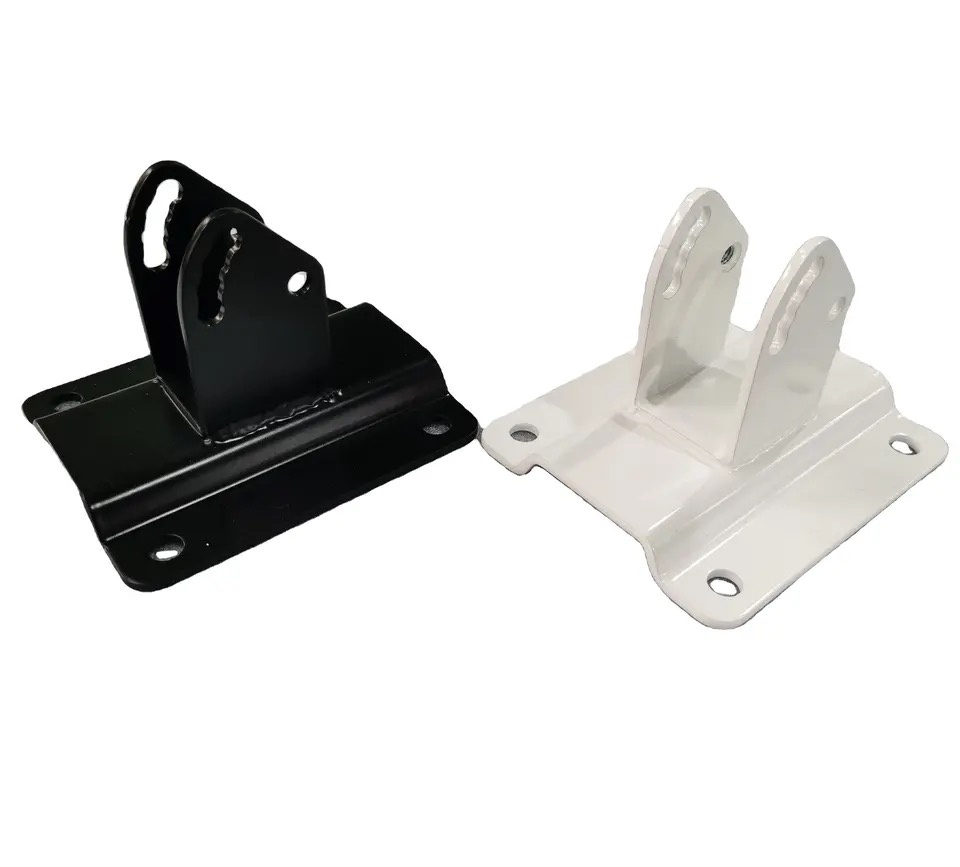
When Metal Stamping Is Usually the Better Choice
Stamping is usually the better choice when the part is fundamentally a sheet-metal component and the business case depends on high throughput, low unit cost, and repeatable formed geometry.
It tends to be the right answer when:
- the part begins naturally from sheet or coil
- thickness is relatively low
- the geometry depends on holes, slots, bends, flanges, tabs, or shallow forms
- the product needs lightweight structure rather than bulk mass
- annual volume is high enough to reward tooling efficiency
- material utilization and production speed matter heavily
This is why stamping remains the dominant answer for brackets, clips, terminals, shields, retainers, spring components, covers, and many formed support parts.
If your team is comparing routes for a sheet-derived component, our guides on metal stamping design guidelines and types of stamping dies are also useful reference points.
When Forging Is Usually the Better Choice
Forging is usually the better choice when the part is a bulk mechanical component and the application depends on cross-sectional strength, impact resistance, or a thicker structural body that stamping cannot produce naturally.
It is often the right answer when:
- the section is too thick or massive for sheet-based logic
- the part carries high load through a compact body
- the component will later receive critical machining on forged stock
- the design benefits from directional grain flow in a true forged geometry
- the application is a mechanical arm, lug, coupling body, wrench form, suspension-type component, or similar load-driven shape
The key point is not that forging is better overall. It is that forging fits a different class of part.
A Simple Buyer Decision Framework
If your team is comparing stamping and forging for a new RFQ, use this sequence before discussing price.
- Is the part sheet-derived or bulk-derived?
- Does function come from formed geometry or from thick section strength?
- What is the actual material thickness and load path?
- How many secondary operations will each route still require?
- Is the annual volume high enough to reward the chosen tooling model?
- If the part fails in service, will it fail because of geometry weakness or bulk material weakness?
Those questions usually expose the answer quickly.
A supplier that says both are possible is not necessarily helping. A supplier that explains why one route fits the part’s native form and cost structure is much more useful.
Final Take: Choose the Process That Matches the Part’s Native Structure
Metal stamping and forging are not premium and budget versions of the same thing. They are different manufacturing systems built for different structural realities.
Choose stamping when the part wants to be made from sheet, when geometry drives performance, and when volume rewards fast repeatable production. Choose forging when the part wants to be a thick-section mechanical body and the load case justifies a bulk-deformation route.
The most expensive mistake is not choosing the less glamorous process. It is choosing a process that fights the part’s native structure and then paying for that mismatch through tooling changes, secondary operations, unstable quality, or unnecessary cost.
If you are comparing a formed bracket, structural support, mechanical connector, or other metal part and want a process recommendation based on drawing, material grade, and annual demand, send the project details through our contact page for a practical review.
FAQ
Is forging stronger than metal stamping?
Sometimes, but not in the simplistic way buyers often assume. Forging is usually stronger for thick-section mechanical parts where bulk deformation and grain flow matter. For thin sheet-metal components, stamping can be the more appropriate and more efficient structural solution.
When should a buyer choose stamping instead of forging?
Choose stamping when the part naturally starts from sheet or coil, the geometry is based on holes and formed features, the section is relatively thin, and annual volume is high enough to benefit from tooling-based production.
Can the same metal part be made by both stamping and forging?
In some cases, yes, but usually one route is clearly more natural than the other. The right answer depends on section thickness, geometry, load path, material form, secondary operations, and total cost of production.
Is forging more expensive than stamping?
Not always. For the right high-load part, forging can be commercially efficient. But for sheet-derived components, forging usually adds unnecessary cost because the part is being pushed into the wrong process family.
What kinds of parts are best for metal stamping instead of forging?
Parts such as brackets, clips, covers, shields, retainers, terminals, and formed sheet supports are usually much better stamping candidates than forging candidates, especially when volume is high and the design depends on thin-gauge geometry.
Get high-quality metal stamping parts from our custom metal stamping facility. Fast lead times, competitive pricing.
Frequently Asked Questions
What is forging stamps?
Forging stamps is a specialized manufacturing process used to create precise metal components. Our team has over 25 years of experience delivering high-quality results for global clients across automotive, aerospace, electronics, and construction industries.
What tolerances can you achieve for forging stamps?
We achieve standard tolerances of ±0.05mm, with precision tolerances down to ±0.02mm for critical applications. All parts are inspected using CMM equipment with Cpk≥1.33 process capability.
What materials do you work with for forging stamps?
We work with a wide range of materials including aluminum (1100-6061), stainless steel (301-430), carbon steel, copper, brass, phosphor bronze, and specialty alloys. Material thickness ranges from 0.1mm to 12mm.
What is your minimum order quantity for forging stamps?
We accept prototype orders starting from 1 piece. For production runs, we recommend starting at 1,000 pieces for cost efficiency, though we accommodate various volumes based on project requirements.
How do I get a quote for forging stamps?
Submit your drawings (DWG, DXF, STEP, IGES, or PDF) via our contact form or email. We provide DFM feedback and pricing within 24 hours. Our engineering team reviews every inquiry for optimal manufacturability.
What quality certifications do you have for forging stamps?
We maintain ISO 9001:2015 and IATF 16949 certifications with full traceability. Every shipment includes inspection reports, material certificates, and compliance documentation as required.