
Most buyers evaluate OEM metal stamping suppliers the wrong way. They focus on press tonnage, factory size, or whether a vendor says it can “do progressive die work.” Those things matter, but they are not what usually causes trouble later.
The real risk in OEM stamping is commercial structure. Who owns the tooling? Who approves engineering changes? Who absorbs scrap during launch? Who controls secondary operations and inspection standards? If those questions are vague, even a capable supplier can become a difficult production partner.
That is why OEM metal stamping should be treated as a contract manufacturing model, not just a process quote. The supplier is not selling an off-the-shelf component. They are building parts around your print, your quality requirements, your program timing, and often your long-term supply chain assumptions.
For buyers sourcing custom brackets, terminals, housings, clips, shields, or formed assemblies, the safest approach is to judge OEM partners on operating discipline, not presentation. A supplier with slightly higher pricing but clear tooling ownership, stable change control, and reliable PPAP support is often cheaper over the life of the program than a low-cost shop that leaves everything ambiguous.
What OEM Metal Stamping Actually Means
OEM metal stamping means a manufacturer produces custom stamped parts to another company’s design, specification, or branded product program. In practice, that usually includes some combination of blanking, piercing, bending, forming, progressive die work, tapping, welding, plating, heat treatment, packaging, and logistics coordination.
The key point is this: the part definition comes from the customer side. The stamper may optimize manufacturability, suggest material changes, or recommend die strategy, but the commercial relationship is built around a customer-controlled product requirement.
This is why OEM work is different from catalog manufacturing. The supplier is not simply offering generic oem metal parts from stock. It is taking responsibility for repeatable execution against a custom drawing, approved sample, tolerance stack, and delivery schedule.
For most industrial programs, OEM stamping volumes range from roughly 50,000 pieces per year to several million, depending on the part geometry and end market. Tooling can start around a few thousand dollars for simple line-die or short-run setups and rise to $50,000-$80,000 or more for larger oem progressive stamping tools with multiple stations, sensors, and secondary features integrated.
OEM vs. ODM: The Difference Matters More Than Buyers Think
Many buyers use OEM and ODM loosely, but the distinction matters because it affects design control, liability, and sourcing leverage.
In an OEM model, you own or control the product definition. The stamping supplier manufactures to your print, your revision level, your material callout, and your acceptance criteria. That gives you more leverage over qualification, supplier transitions, and intellectual property control.
In an ODM model, the supplier owns more of the design concept or offers a standard platform that can be customized. That can reduce development time, but it also limits how transferable the program is if you want to move production later.
For precision stamped components, OEM is usually the better fit when:
- the part must match an existing assembly or mating geometry
- your end customer controls dimensions, material grade, or plating specification
- you expect PPAP, traceability, or documented validation
- you may dual-source later for risk control
ODM can work for simpler industrial hardware, but for regulated, automotive-adjacent, electronics, or tight-tolerance programs, OEM structure is usually safer. Buyers who confuse the two often realize too late that they have less control than they assumed.
How OEM Stamping Partnerships Work in Practice
A working OEM stamping relationship usually follows a pattern, but the quality of execution varies a lot from supplier to supplier.
A typical flow looks like this:
- Buyer shares drawing, 3D model if available, annual volume, material requirement, finish requirement, and application context.
- Supplier reviews feasibility, tooling concept, die progression, likely risk points, and secondary operations.
- Commercial quote is issued covering tooling, piece price, MOQ, lead time, sample plan, and payment terms.
- DFM feedback is exchanged before tooling release.
- Tool build, first samples, dimensional inspection, and process tuning begin.
- Approved samples transition to pilot or mass production.
- Ongoing releases are controlled through revision management, inspection, and delivery scheduling.
That sounds straightforward, but this is where many programs drift off course. The quote may be detailed, while the operating agreement is not. For example, a supplier may quote tooling but never clearly state whether the buyer owns the die, whether maintenance is included, or whether the tool can be transferred if the relationship ends.
That is why supplier capability alone is not enough. A serious OEM partner should be able to explain not only how it will make the part, but also how it will manage revisions, nonconformance, capacity planning, and end-of-program disposition.
If you are reviewing suppliers now, the benchmark should not only be whether they can stamp the part. It should be whether they can support the full manufacturing relationship behind the part. That is the difference between a job shop and a dependable partner. You can review our broader manufacturing capabilities on the Products & Services page.
Tooling Ownership Is the First Clause to Lock Down
The most common OEM sourcing mistake is assuming tooling ownership is self-evident. It is not.
A buyer may pay for tooling and still discover later that the supplier treats the die as internally controlled equipment. In a dispute, that can delay transfer, limit backup sourcing, or create arguments over wear, repair history, and release conditions.
At minimum, your OEM agreement should define:
- who legally owns the tool after payment
- where the tool is stored
- whether the tool is dedicated or shared
- who pays for preventive maintenance and major repair
- what documentation is retained for the die
- under what conditions the tool can be transferred or duplicated
- how end-of-life scrap or disposal is approved
This is especially important in oem part manufacturing programs where the die is the real switching barrier. If the tool cannot move, your sourcing flexibility is smaller than you think.
A healthy arrangement is not always “buyer owns everything immediately.” In some cases, supplier-owned tooling with a strong long-term pricing agreement can work. But the structure must be explicit. Ambiguity is what creates risk.
Engineering Change Control Separates Stable Programs From Chaotic Ones
OEM stamping parts rarely stay frozen forever. Hole positions shift. Burr limits tighten. Material thickness changes. Assemblies gain new fit requirements. Packaging evolves. A supplier that looks competitive during quoting can become a liability if it has weak engineering change control.
Buyers should insist on a simple but disciplined process for:
- receiving revised drawings and revision notices
- identifying inventory exposure by revision level
- evaluating tooling impact before implementation
- approving process changes before shipment
- updating inspection plans and sample records
- communicating effective dates across production, quality, and logistics teams
This matters because many stamping problems are not true manufacturing failures. They are revision failures. The shop ran the old version, inspected to the old standard, and shipped parts that are technically correct for yesterday’s print.
The best OEM suppliers treat revision control as an operations system, not an email habit. That is one reason long-term buyers often favor partners with stronger documentation discipline over shops that only compete on piece price.
Quality Responsibility Must Be Defined Beyond “We Inspect Everything”
Nearly every supplier says quality is important. That statement is worthless unless it is attached to a method.
In OEM stamping, quality responsibility should be tied to the actual risk profile of the part. A decorative cover, a grounding clip, and a safety-related bracket do not need the same control plan.
A stronger qualification discussion covers items like these:
| Topic | What Buyers Should Clarify |
|---|---|
| Dimensional control | Which dimensions are critical, key, or reference only? |
| Material verification | Is cert review enough, or is incoming PMI / hardness / thickness verification required? |
| Surface finish | What plating thickness, appearance standard, salt spray target, or masking rule applies? |
| Burr and edge condition | What is acceptable by function, not just by visual preference? |
| Sampling frequency | First-off only, hourly, per coil, per lot, or 100% for key features? |
| Traceability | By lot, coil, shift, operator, die, or shipment? |
| Containment | What happens if one lot is rejected after partial shipment? |
If a supplier cannot talk through that table in practical terms, it is not ready for a demanding OEM program.
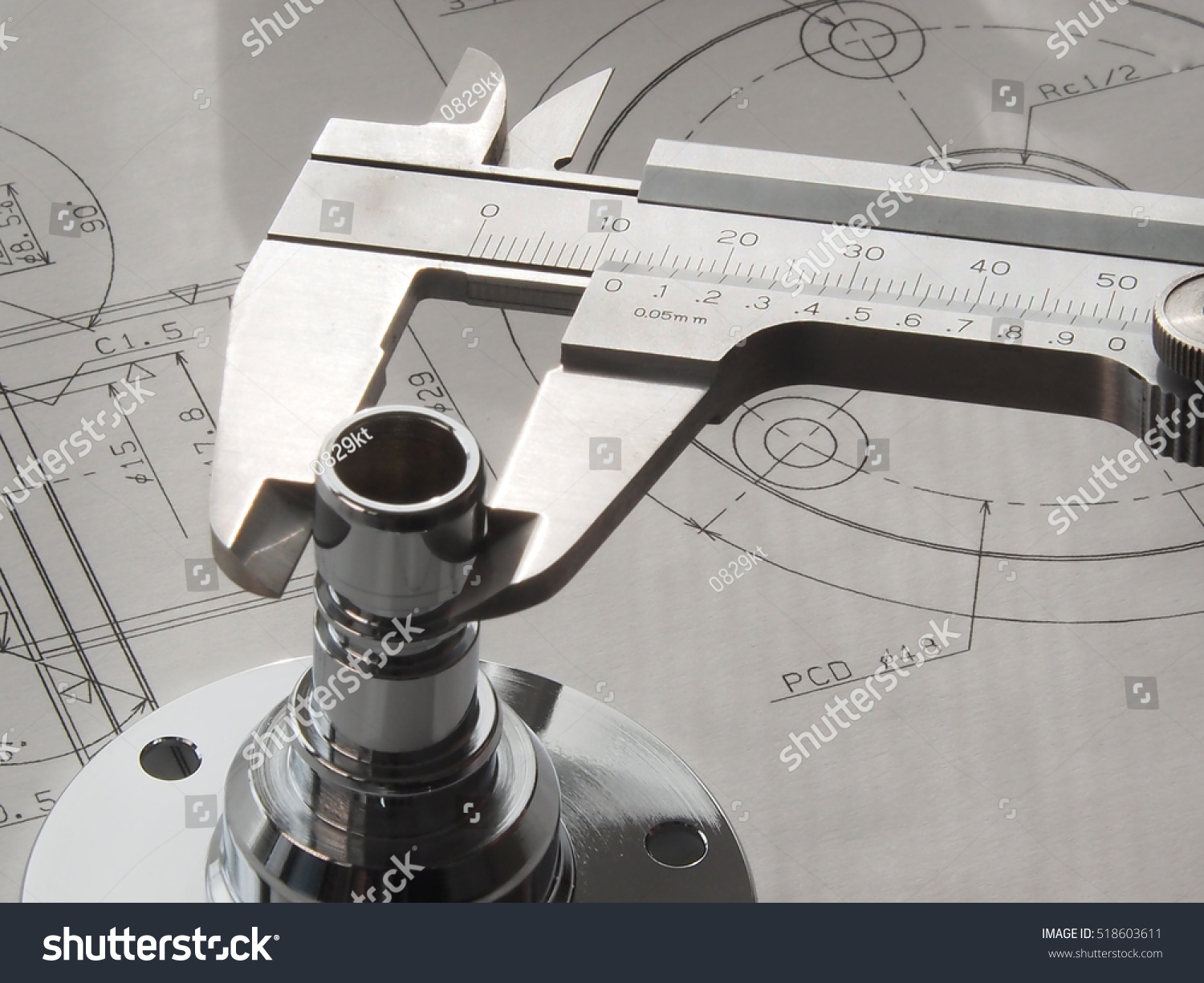
For buyers sourcing parts that interface with machined features or tight assemblies, the broader category of oem precision machined parts often overlaps with precision stamping plus secondary machining. In those cases, datum strategy, flatness, and secondary tolerance stack-up become just as important as stamping repeatability.
Supplier Capability Should Be Matched to Part Complexity
Not every part belongs in a high-speed progressive die, and not every supplier should quote every part.
A simple washer-like part in carbon steel may be suitable for a very different supplier than a stainless spring contact with selective plating and tight coplanarity requirements. Buyers get better results when they match supplier type to manufacturing reality.
Here is a practical way to think about it:
| Part Type | Best-Fit Supplier Profile |
|---|---|
| Simple flat blanks or brackets | General stamping supplier with stable press capacity and basic secondary ops |
| Medium-complexity formed parts | Supplier with in-house toolroom, fixture design, and repeatable setup discipline |
| High-volume terminals or contacts | Specialist in progressive tooling, strip layout optimization, and high-speed inspection |
| Cosmetic or plated parts | Supplier experienced in plating coordination, appearance control, and packaging protection |
| Tight-tolerance assemblies | Supplier with secondary machining, tapping, welding, and robust final inspection |
This is where buyers often overpay or under-protect themselves. A supplier can be “capable” in a generic sense and still be the wrong commercial fit for a given program.
For example, a shop strong in oem carbon steel parts fabrication may not be ideal for miniature electronic terminals where strip stability, burr direction, and plating contact points are critical. Likewise, a supplier optimized for tiny progressive tooling may not be cost-effective for larger formed brackets with welding and packaging complexity.
Cost in OEM Stamping Is Usually Driven by System Choices, Not Just Labor
Buyers often ask whether an overseas OEM supplier will be cheaper than a domestic one. Sometimes yes, sometimes no. The answer depends less on hourly labor than on the total manufacturing system.
The biggest cost drivers in OEM stamping are usually:
- tooling complexity and expected tool life
- material utilization and scrap rate
- coil width and strip layout efficiency
- press speed and uptime stability
- secondary operations such as tapping, welding, deburring, or plating
- inspection intensity and traceability requirements
- packaging method and logistics risk
That is why two quotes for the same drawing can vary sharply even when both suppliers are technically credible. One may assume manual handling and looser inspection. Another may include in-die sensing, poka-yoke fixtures, and more robust outbound controls.
A low quote is not automatically a better quote. If it ignores probable costs that will show up after launch, it is simply delayed pricing.
In mature OEM relationships, the best cost reductions usually come from strip optimization, feature simplification, tolerance rationalization, or combining operations—not from squeezing the supplier on pennies while leaving the process unchanged.
When OEM Progressive Stamping Makes Sense
OEM buyers are often told that progressive dies are the professional answer for almost every part. That is only partly true.
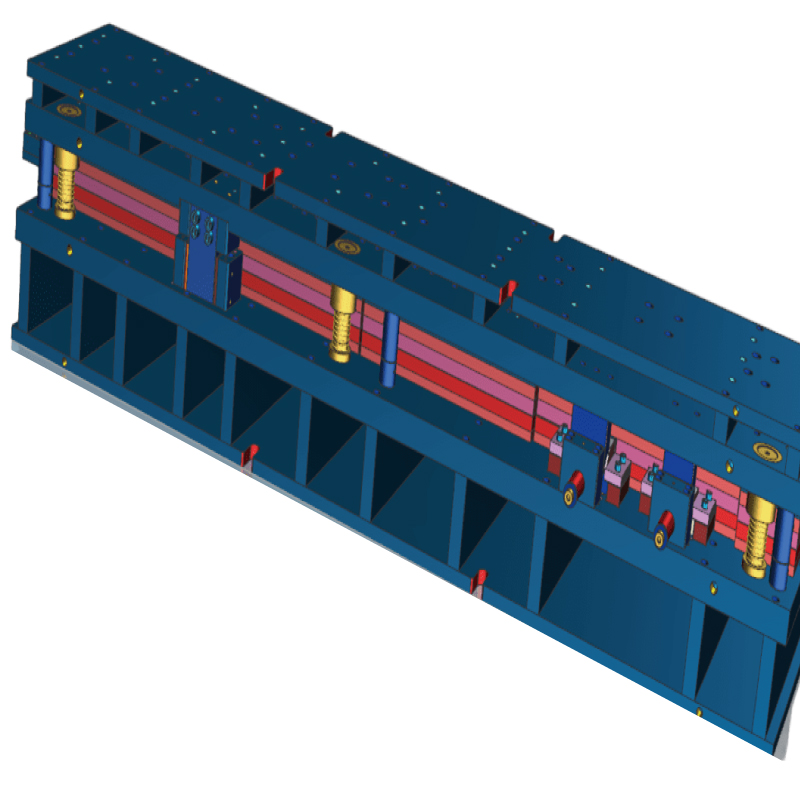
OEM progressive stamping is powerful when annual demand is high enough to justify tooling investment and when the part geometry benefits from a controlled sequence of piercing, forming, cutting, and part separation in one continuous process.
Progressive die production is usually a strong fit when:
- annual volume is stable or forecastable
- part geometry is repeatable and strip-friendly
- the material can feed consistently without excessive distortion
- multiple operations can be combined efficiently in one die
- the buyer values lower long-run unit cost and process repeatability
It is usually a weaker fit when:
- design revisions are still likely in the near term
- annual demand is too low to recover tooling investment sensibly
- the part is too large, too thick, or too awkward for efficient strip progression
- secondary operations dominate total cost anyway
A practical rule is this: do not choose progressive tooling because it sounds advanced. Choose it because the volume, geometry, and lifecycle economics support it.
IP Protection Needs Operations Controls, Not Just an NDA
One of the biggest sourcing myths is that a signed NDA solves intellectual property risk. It does not.
In OEM manufacturing, IP protection comes from a stack of controls:
- clear tooling and design ownership language
- controlled access to drawings and CAD files
- restricted subcontracting of sensitive operations
- approval requirements before duplicating tooling
- documentation of who can release samples or process data
- practical segmentation of information where appropriate
An NDA is still useful, but it is just one layer. If the supplier can freely subcontract, duplicate fixtures without notice, or distribute drawings through unmanaged channels, the legal document alone will not protect much.
Buyers who care about long-term control should ask operational questions, not just legal ones. How are files stored? Who can send them externally? Are toolmakers internal or outsourced? Can the supplier prove where the production die is located?
Those questions may feel uncomfortable during quoting, but they are far cheaper than solving an IP dispute after launch.
What to Ask Before Awarding an OEM Stamping Program
A supplier does not need perfect answers to every question, but it should have concrete answers. Vagueness at the quoting stage usually becomes delay at the launch stage.
Use this short evaluation checklist:
- What process route do you recommend, and why?
- What are the likely tooling risks based on this geometry?
- Which tolerances do you see as high-risk in production?
- What assumptions are built into the quoted piece price?
- What secondary operations are included or excluded?
- Who owns the tooling after payment?
- What is your engineering change process after PPAP or sample approval?
- What inspection records will be provided with shipments?
- Which operations are in-house, and which are outsourced?
- What conditions would trigger a piece-price review later?
A trustworthy supplier will usually welcome these questions. A weak one will try to collapse everything into “we can do it” and move on.
When OEM Metal Stamping Is the Right Fit
OEM stamping is a strong model when you have a defined part, repeat demand, and a need for supply continuity. It is especially effective when the part is custom enough that catalog sourcing will not work but standardized enough that dedicated production tooling can create real efficiency.
It is usually the right fit when:
- you own the design or must manufacture to customer print
- annual usage justifies tooling and qualification effort
- quality expectations require repeatable control, not ad hoc fabrication
- you need a long-term supply partner, not a one-time prototype source
It is usually not the best first move when the design is still unstable, annual volume is unclear, or function can still be validated with simpler fabrication methods. In those cases, prototype or short-run routes may be smarter before committing to a full OEM structure.
If you want a dependable partner, the strongest signal is not aggressive language about capability. It is whether the supplier thinks clearly about risk, documentation, and lifecycle support. That is also how we position our work: custom stamped parts built around manufacturability, stable quality control, and realistic commercial terms. Company background and production focus are outlined on our About Us page.
Final Take: Judge the Relationship, Not Just the Presses
OEM metal stamping is not hard to quote. It is hard to run well over time.
The suppliers worth keeping are the ones that reduce uncertainty. They define tooling ownership clearly, flag manufacturability issues before tool release, manage revisions without drama, and understand that quality is a system rather than a slogan.
If you are comparing OEM stamping suppliers now, ask fewer generic capability questions and more operational ones. That is how you avoid the expensive surprises that usually show up after launch, not before it.
For custom OEM metal parts, progressive die programs, or multi-operation stamped assemblies, you can start the discussion by sharing drawings, annual volume, material grade, and quality expectations through our contact page.
FAQ
What is OEM in metal stamping?
OEM in metal stamping means a supplier manufactures custom stamped parts to a buyer’s drawing, specification, or product requirement rather than selling stock parts. The buyer typically controls the product definition, while the supplier controls process execution.
What is the difference between OEM and ODM stamping?
OEM stamping is based on the customer’s design and specification. ODM stamping involves more supplier-owned design input or standardized product platforms. OEM usually gives buyers more control over tooling transfer, design authority, and qualification standards.
Who should own stamping tooling in an OEM project?
There is no single rule, but the ownership model must be explicit in writing. If the buyer is funding dedicated tooling and expects sourcing flexibility later, buyer ownership with documented transfer rights is often the safer structure.
When is progressive die stamping the best option?
Progressive die stamping is usually best when annual volume is high, the geometry fits continuous strip processing, and long-run unit cost matters more than early flexibility. It is less attractive when the design is still changing or volume is uncertain.
Does an NDA fully protect OEM part designs?
No. An NDA helps, but real protection comes from operational controls such as file access rules, subcontracting limits, tooling duplication restrictions, and clearly documented ownership of drawings and production tools.
Get custom metal stamped parts from our ISO-certified metal stamping manufacturer. Contact us for a free OEM quote.
Frequently Asked Questions
What is oem precision machined parts?
Oem precision machined parts is a specialized manufacturing process used to create precise metal components. Our team has over 25 years of experience delivering high-quality results for global clients across automotive, aerospace, electronics, and construction industries.
What tolerances can you achieve for oem precision machined parts?
We achieve standard tolerances of ±0.05mm, with precision tolerances down to ±0.02mm for critical applications. All parts are inspected using CMM equipment with Cpk≥1.33 process capability.
What materials do you work with for oem precision machined parts?
We work with a wide range of materials including aluminum (1100-6061), stainless steel (301-430), carbon steel, copper, brass, phosphor bronze, and specialty alloys. Material thickness ranges from 0.1mm to 12mm.
What is your minimum order quantity for oem precision machined parts?
We accept prototype orders starting from 1 piece. For production runs, we recommend starting at 1,000 pieces for cost efficiency, though we accommodate various volumes based on project requirements.
How do I get a quote for oem precision machined parts?
Submit your drawings (DWG, DXF, STEP, IGES, or PDF) via our contact form or email. We provide DFM feedback and pricing within 24 hours. Our engineering team reviews every inquiry for optimal manufacturability.
What quality certifications do you have for oem precision machined parts?
We maintain ISO 9001:2015 and IATF 16949 certifications with full traceability. Every shipment includes inspection reports, material certificates, and compliance documentation as required.