
Metal stamping and die casting are two of the most widely used manufacturing processes for producing high-volume metal parts. Choosing between them directly impacts your unit cost, tooling investment, dimensional tolerance, and lead time. This guide breaks down 12 key differences — with data tables and real-world examples — so you can select the right process for your project.
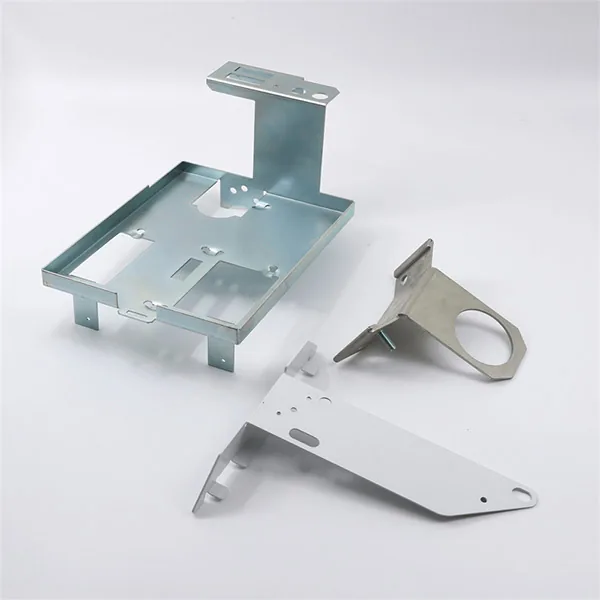
What Is Metal Stamping?
Metal stamping uses a press and custom dies to cut, bend, form, and shape flat sheet metal or coil into finished parts. Operations include blanking, piercing, bending, drawing, coining, and progressive die sequences. Stamping excels at high-volume production of flat or moderately formed parts with tight tolerances and minimal secondary operations.
Typical materials include low-carbon steel, stainless steel, aluminum, copper, and brass in thicknesses from 0.1 mm to 12 mm. Cycle times range from 30 to 1,500 parts per minute depending on press speed and die complexity.
What Is Die Casting?
Die casting forces molten metal — usually aluminum, zinc, or magnesium alloys — into a steel mold cavity under high pressure (10–175 MPa). The metal solidifies rapidly, producing complex three-dimensional parts with smooth surface finishes. Die casting is the go-to process for intricate geometries that would be impossible or uneconomical to stamp.
Hot-chamber die casting suits zinc and magnesium alloys; cold-chamber die casting handles aluminum and copper alloys. Cycle times typically range from 30 seconds to 2 minutes per part, depending on part size and wall thickness.
12 Key Differences: Metal Stamping vs Die Casting
1. Part Geometry and Complexity
Metal stamping produces flat or moderately formed parts — brackets, clips, terminals, shims, and enclosures. Complex 3D shapes require multiple die stations or secondary operations. Die casting inherently produces complex 3D geometries including internal features, thin walls, and intricate contours in a single cycle.
| Parameter | Metal Stamping | Die Casting |
|---|---|---|
| Geometry | Flat / 2D / moderate 3D | Complex 3D with internal features |
| Wall thickness | 0.1–12 mm (sheet gauge) | 1.5–6 mm (min. wall) |
| Undercuts | Not possible without secondary ops | Possible with slides / cores |
2. Tooling Cost
Stamping dies range from $5,000 for simple single-hit tools to $150,000+ for progressive dies with 20+ stations. Die casting molds are significantly more expensive: $20,000 for simple zinc parts to $500,000+ for large aluminum housings with multiple slides and cooling channels. The higher die casting tooling cost reflects the complexity of thermal management and ejection systems.
3. Unit Cost at Volume
At volumes above 100,000 parts, metal stamping delivers dramatically lower per-unit costs — often $0.02–$0.50 per part for simple geometries. Die casting unit costs range from $0.50–$15.00 depending on alloy, part size, and cycle time. The breakeven point depends on geometry: simple flat parts favor stamping at any volume, while complex 3D parts may favor die casting above 10,000 units.
| Volume Range | Metal Stamping ($/part) | Die Casting ($/part) |
|---|---|---|
| 1,000–5,000 | $0.50–$5.00 | $3.00–$25.00 |
| 10,000–50,000 | $0.10–$2.00 | $1.50–$12.00 |
| 100,000–1,000,000+ | $0.02–$0.50 | $0.50–$8.00 |
4. Dimensional Tolerance
Metal stamping achieves ±0.01–0.05 mm on critical dimensions, making it ideal for precision components like electrical contacts and medical device parts. Die casting typically holds ±0.1–0.5 mm, with tighter tolerances achievable on specific features through post-machining.
5. Material Selection
Stamping works with any sheet metal — steel, stainless steel, aluminum, copper, brass, titanium, and specialty alloys. Die casting is limited to castable alloys, primarily aluminum (A380, A383, ADC12), zinc (Zamak 3, 5, 7), magnesium (AZ91D, AM60), and certain copper alloys. If your part requires high-strength steel or specific sheet alloys, stamping is the only option.
6. Surface Finish
Die casting produces smooth as-cast surfaces (Ra 1.6–6.3 μm) suitable for cosmetic applications with minimal finishing. Stamped parts retain the sheet metal surface finish but may show tool marks, burrs, or deformation zones that require deburring or tumbling. For visible consumer products, die casting often requires less post-processing.
7. Production Speed
Metal stamping is significantly faster: progressive die presses run at 100–1,500 strokes per minute, producing a finished part every stroke. Die casting cycle times range from 30 seconds to 2 minutes per shot. For a part with 100,000+ annual volume, stamping can complete a year’s production in hours; die casting may require days or weeks of machine time.
8. Part Weight Range
Stamping handles parts from under 1 gram (electronic contacts) to 50 kg (automotive structural panels). Die casting covers a similar range but is most economical for parts between 10 grams and 25 kg. Very small parts favor stamping; very large, complex housings favor die casting.
9. Strength and Structural Properties
Stamped parts retain the full strength of the parent sheet metal — cold-rolled steel at 270–700 MPa tensile strength, depending on temper. Die cast parts have lower tensile strength (aluminum A380: 310 MPa) and may contain porosity that reduces fatigue life. For load-bearing structural components, stamped or stamped-and-welded assemblies often outperform cast parts.
10. Design Flexibility for Thin Walls
Die casting excels at thin-wall production — aluminum die castings can achieve 1.0–1.5 mm wall thickness across large areas. Stamping produces uniform thickness equal to the starting sheet gauge, with no ability to vary wall thickness within a single part without secondary operations.
11. Secondary Operations
Stamping often integrates secondary operations (tapping, welding, insertion of fasteners) into the progressive die, reducing total processing. Die cast parts frequently require trimming (deflashing), CNC machining of critical surfaces, and surface treatment (powder coating, anodizing, plating). The total cost of ownership must include these downstream operations.
12. Lead Time
Stamping tooling lead time ranges from 4–8 weeks for progressive dies. Die casting mold lead time is typically 8–16 weeks for production-grade tools, with additional time for tryout and process optimization. For projects with aggressive timelines, stamping offers a faster path from design to production.
When to Choose Metal Stamping
- Part geometry is flat, bent, or moderately formed
- Annual volume exceeds 50,000 units
- Tight tolerances (±0.05 mm or better) are required
- Material must be high-strength steel, stainless, or specialty alloy
- Fast production speed is critical
- Low unit cost at high volume is the primary driver
When to Choose Die Casting
- Part has complex 3D geometry with internal features
- Thin walls (1.0–2.0 mm) across large areas are needed
- Aluminum or zinc alloy is specified
- Smooth surface finish directly from the process is required
- Volume justifies the higher tooling investment (10,000+ units)
- Net-shape production minimizes machining
Cost Comparison: Real-World Example
Consider a mounting bracket, 80 mm × 50 mm × 15 mm, in aluminum:
| Factor | Metal Stamping | Die Casting |
|---|---|---|
| Tooling cost | $15,000 | $45,000 |
| Unit cost at 100K | $0.35 | $1.80 |
| Annual tooling + parts (100K) | $50,000 | $225,000 |
| Lead time to production | 6 weeks | 12 weeks |
For this bracket, stamping saves $175,000 annually at 100K volume — a 78% cost reduction. However, if the bracket had complex internal ribs and mounting bosses, die casting would be the only viable single-process option.
Frequently Asked Questions
Can metal stamping replace die casting for automotive parts?
For flat or moderately formed structural components — brackets, reinforcements, seat frames, and body panels — stamping is already the dominant process. Die casting remains preferred for engine blocks, transmission housings, and complex structural castings where 3D geometry and integrated features are essential. The trend toward gigacasting (large single-piece aluminum castings) is expanding die casting’s role in EV body structures.
Which process is better for prototyping?
Neither process is ideal for low-volume prototyping. For stamping, soft tooling or wire EDM can produce 10–100 prototype parts at $1,000–$5,000. For die casting, 3D-printed sand molds or low-pressure casting can produce 5–50 prototype parts. For true rapid prototyping, consider CNC machining or sheet metal laser cutting as bridge processes before committing to production tooling.
How do I calculate the breakeven volume between stamping and die casting?
Breakeven volume = (Die Casting Tooling – Stamping Tooling) ÷ (Stamping Unit Cost – Die Casting Unit Cost). Example: ($45,000 – $15,000) ÷ ($1.80 – $0.35) = 20,690 units. Below this volume, die casting is cheaper per part including tooling amortization. Above it, stamping wins. This formula assumes identical part functionality — if the part geometry requires die casting, the comparison is moot.
What about combining both processes?
Many assemblies use stamped components for flat/formed elements and die cast components for complex housings. Hybrid designs optimize cost by assigning each sub-component to its most economical process. Fasteners, inserts, and brackets are typically stamped; housings and enclosures are die cast. The assembly is joined via welding, riveting, or adhesive bonding.
Which process is more sustainable?
Metal stamping generates less scrap — progressive dies achieve 60–85% material utilization, and skeleton scrap is fully recyclable. Die casting has higher scrap rates (5–15% from gates, runners, and flash) but aluminum and zinc alloys are infinitely recyclable. Both processes are significantly more sustainable than machining from billet, which generates 40–70% swarf waste.