

High precision metal stamping is the backbone of modern manufacturing — from the smallest medical electrode to the thickest EV battery bus bar. At Metal Stamping Parts Ltd, we deliver stamping tolerances down to ±0.01 mm with Cpk ≥ 1.67, backed by IATF 16949 and ISO 9001 certification. Whether you need progressive die, fine blanking, or transfer press production, our engineering team converts your 3D models into consistent, high-volume parts — on spec, on time, every time.

The High Precision Metal Stamping Process
Every high precision metal stamping project at Metal Stamping Parts Ltd follows a structured workflow designed to ensure quality from first sample to millionth production part. The process begins with a detailed design review where our engineers analyze your 3D CAD model for stampability, identifying potential issues such as thin walls, tight radii, or difficult grain orientations. Next, we simulate the forming sequence using AutoForm software to predict springback, thinning, and material flow before any steel is cut. Tooling is then manufactured in our in-house die shop using wire EDM, CNC surface grinding, and mirror-polish finishing. After die assembly and bench tryout, we run T1 samples on our production presses and measure every critical dimension on our Zeiss CMM. Only when Cpk targets are met do we release the tooling for production. This disciplined approach ensures that your stamped parts meet specification from the very first shipment.
The entire journey from design review to production release typically takes four to five weeks for standard progressive dies. During production, our real-time SPC monitoring system tracks key dimensions and alerts operators to any process drift, enabling corrective action before out-of-spec parts are produced. This proactive quality approach is a cornerstone of our high precision metal stamping operation and a key reason why our customers trust us with their most demanding applications.
What Is High Precision Metal Stamping?
High precision metal stamping is a cold-forming process that uses matched tool steel dies and mechanical or servo-driven presses to cut, bend, coin, and form sheet or strip metal into finished or near-finished components. Unlike conventional stamping, high precision metal stamping holds dimensional tolerances of ±0.01 mm (±0.0004″) or tighter, achieves surface finishes below Ra 0.4 µm, and maintains these specifications over millions of cycles.
The process begins with a coil of metal — copper, stainless steel, aluminum, titanium, or specialty alloy — fed into a progressive die or fine-blanking press. Each station in the die performs a specific operation: piercing, forming, drawing, trimming, or coining. The result is a finished part that often requires no secondary machining, saving both time and cost in downstream assembly.
Our High Precision Stamping Capabilities
Progressive Die Stamping
Progressive die stamping is our core production method for high-volume, high-precision components. Strip material advances through 5 to 25+ stations in a single die, with each station performing a discrete operation. We build and maintain progressive dies in-house using wire EDM, CNC grinding, and mirror-polish techniques, ensuring die life exceeds 50 million hits for copper and 30 million for stainless steel.
Our press fleet includes AIDA and Bruderer servo presses rated from 60 to 300 tons, operating at speeds up to 200 strokes per minute. Integrated sensors monitor tonnage, shut height, and feed pitch in real time, automatically stopping the press if any parameter drifts outside the control window.
Fine Blanking
Fine blanking (also called precision blanking or fine-edge stamping) produces parts with sheared edges that are 100% clean-cut — no fracture zone, no rollover. This capability is critical for components that serve as gear seats, bearing races, or structural plates where conventional stamped edges would introduce stress concentrations.
Our fine-blanking presses deliver up to 800 tons of blanking force with counter-pressure dies, achieving edge perpendicularity of 0.005 mm over 3 mm material thickness. Parts exit the press ready for assembly, eliminating the need for secondary deburring or machining.
Tight Tolerances: ±0.01 mm Repeatability
Tolerances are the measure of a stamping operation’s discipline. At Metal Stamping Parts Ltd, we routinely hold ±0.01 mm on critical features — hole diameter, tab width, bend angle, and flatness. For copper bus bars used in EV power modules, we maintain hole-to-hole positional accuracy of ±0.02 mm across a 150 mm span, verified by CMM on every production run.
Our process capability index (Cpk) targets are:
- Cpk ≥ 1.67 for critical dimensions (automotive, medical, aerospace)
- Cpk ≥ 1.33 for standard commercial dimensions
- Ppk ≥ 2.00 for initial process validation (PPAP Level 3 and above)
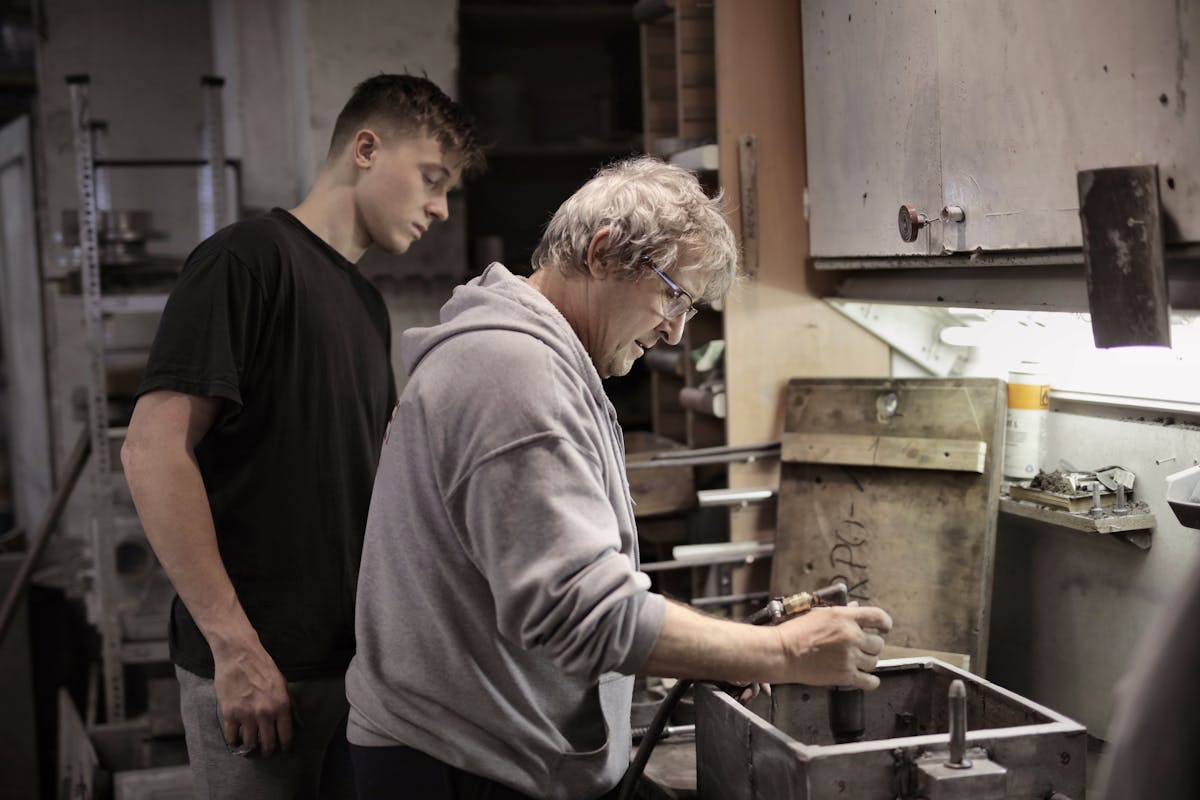
The High Precision Metal Stamping Process
Every high precision metal stamping project at Metal Stamping Parts Ltd follows a structured workflow designed to ensure quality from first sample to millionth production part. The process begins with a detailed design review where our engineers analyze your 3D CAD model for stampability, identifying potential issues such as thin walls, tight radii, or difficult grain orientations. Next, we simulate the forming sequence using AutoForm software to predict springback, thinning, and material flow before any steel is cut. Tooling is then manufactured in our in-house die shop using wire EDM, CNC surface grinding, and mirror-polish finishing. After die assembly and bench tryout, we run T1 samples on our production presses and measure every critical dimension on our Zeiss CMM. Only when Cpk targets are met do we release the tooling for production. This disciplined approach ensures that your stamped parts meet specification from the very first shipment.
The entire journey from design review to production release typically takes four to five weeks for standard progressive dies. During production, our real-time SPC monitoring system tracks key dimensions and alerts operators to any process drift, enabling corrective action before out-of-spec parts are produced. This proactive quality approach is a cornerstone of our high precision metal stamping operation and a key reason why our customers trust us with their most demanding applications.
CMM Inspection & Metrology
Measurement without measurement is just guessing. Our quality lab operates three Zeiss CONTURA coordinate measuring machines (CMMs) with scanning probes capable of collecting 200 data points per second. Every production lot receives a first-article CMM report aligned to the customer’s GD&T callouts, and statistical data (X-bar/R charts, Cpk calculations) are archived for 15 years.
Beyond CMM, our inspection toolkit includes:
- Optical comparators for 2D profile verification
- Surface roughness testers (Mitutoyo SJ-210) for Ra/Rz measurement
- Hardness testers (Rockwell and Vickers) for material verification
- XRF spectrometers for alloy composition confirmation
- Salt spray chambers for coating adhesion and corrosion testing
Materials We Stamp
Material selection drives tooling design, die clearance, and press tonnage. Our engineering team works with a wide range of metals, each chosen for its mechanical, electrical, or corrosion-resistance properties:
Copper & Copper Alloys (C110, C101, C260 Brass)
Copper is the material of choice for electrical connectors, bus bars, and EV battery interconnects. Its excellent electrical conductivity (101% IACS for C110) and formability make it ideal for high-speed progressive die stamping. We stamp copper from 0.1 mm to 3.0 mm thickness with burr-free edges and electroplated finishes (tin, nickel, silver).
Stainless Steel (304, 316, 430, 301)
Stainless steel combines strength with corrosion resistance. We stamp 304 and 316 for medical devices and food-grade applications, 430 for appliance components, and 301 for spring contacts. Precision stamping of stainless requires careful die clearance control — we maintain 5–7% per side for 304, adjusted for work-hardening behavior.
Aluminum Alloys (5052, 6061, 1100)
Aluminum’s strength-to-weight ratio makes it essential for aerospace brackets, heat sinks, and lightweight EV components. We stamp aluminum from 0.2 mm to 4.0 mm, with anodizing and chromate conversion coating available as secondary operations.
Titanium & Nickel Alloys (Ti-6Al-4V, Inconel 625)
For aerospace and medical applications requiring extreme strength and biocompatibility, we stamp titanium and nickel superalloys. These materials demand specialized die coatings (TiAlN, DLC) and higher press tonnage, but the result is components that survive the harshest operating environments.
Industries We Serve
Electronics & Semiconductor
From EMI shielding cans to lead frames and connector terminals, the electronics industry demands micro-precision at high speed. We stamp components as small as 0.3 mm wide with positional tolerances of ±0.015 mm, running progressive dies at 150+ SPM. Our electrical metal stamping capability covers contacts, bus bars, and power components for data centers and consumer electronics.
Medical Devices
Medical stamping requires biocompatible materials, cleanroom-compatible processes, and full traceability. We produce surgical instrument components, implant blanks, and diagnostic device housings in 316L stainless steel and titanium, with validated IQ/OQ/PQ documentation and lot-level material certificates. See our medical device metal stamping page for details.
Electric Vehicles (EV) & Energy Storage
The EV revolution runs on stamped copper and aluminum. We manufacture battery module connectors, bus bars, current collectors, and thermal management plates for Tier 1 automotive suppliers. Our battery metal stamping components page covers the full range of EV energy storage parts.
Aerospace & Defense
Aerospace stampings must meet AS9100 quality standards and survive extreme temperatures, vibration, and fatigue loading. We produce brackets, clips, shims, and structural plates in aluminum, titanium, and Inconel, with full First Article Inspection (FAI) per AS9102. Visit our aerospace metal stamping page for more information.
Automotive & Industrial
From anti-lock brake sensor rings to seat belt components and engine brackets, automotive stamping demands IATF 16949 compliance and zero-defect delivery. Our automotive metal stamping page details our approach to high-volume, high-reliability production.
Quality Management Systems
Quality is not a department — it is a culture. Our quality management system (QMS) includes:
- IATF 16949:2016 — Automotive quality management (core tools: APQP, PPAP, FMEA, MSA, SPC)
- ISO 9001:2015 — General quality management for all industries
- AS9100D — Aerospace quality management (pending certification, expected Q3 2026)
- ISO 14001:2015 — Environmental management for sustainable manufacturing
Every new program follows our APQP (Advanced Product Quality Planning) gate process:
- Feasibility Review — DFM analysis within 48 hours of RFQ receipt
- Die Design & Simulation — AutoForm/SolidWorks simulation of forming, springback, and thinning
- Tooling Build — In-house die manufacturing with in-process CMM verification
- T1 Sample & PPAP — First samples with full dimensional report, material cert, and process flow
- Production & Continuous Improvement — SPC monitoring, die maintenance schedules, and kaizen events
Why Choose Metal Stamping Parts Ltd?
Choosing a high precision metal stamping partner is a decision that affects your product quality, delivery schedule, and total cost of ownership. Here is what sets us apart:
- In-House Tooling — We design and build all dies in-house, reducing lead time from 8 weeks (industry average) to 4–5 weeks for new progressive dies
- Tight Tolerances, Proven Cpk — ±0.01 mm with Cpk ≥ 1.67 is our standard, not an exception
- Material Expertise — From soft copper to hard titanium, we have the die engineering knowledge to stamp it right
- Full Inspection Reports — CMM data, SPC charts, and material certificates ship with every order
- Scalable Capacity — From 1,000-piece prototypes to 10-million-piece annual programs, our facility scales to your demand
- Global Logistics — DDP, FOB, and EXW shipping to North America, Europe, and Asia with customs documentation
Secondary Operations & Value-Added Services
High precision metal stamping is often just the beginning. We offer a full suite of secondary operations to deliver finished, assembly-ready components:
- Deburring & tumbling — Vibratory and centrifugal finishing for edge conditioning
- Plating & coating — Tin, nickel, silver, zinc, and powder coating through approved partner facilities
- Heat treatment — Stress relief, annealing, and precipitation hardening
- Welding & assembly — Resistance welding, laser welding, and mechanical assembly (rivets, inserts)
- Laser marking — Part numbers, logos, and traceability codes
- Cleanroom packaging — For medical and semiconductor applications
Design for Manufacturability (DFM) Support
The best time to optimize a stamped part is before the die is built. Our DFM team reviews every new drawing for:
- Material utilization — Nesting layout optimization to minimize scrap (typical target: >75% material utilization)
- Die complexity — Station count reduction through combined operations
- Tolerance feasibility — Identifying where standard stamping tolerances (±0.05 mm) are sufficient vs. where ±0.01 mm is truly required
- Grain direction — Orienting bends and forming operations relative to the rolling direction for optimal formability
We provide DFM feedback within 48 hours of receiving your RFQ, including a preliminary cost model and tooling concept drawing.
Request a Quote for High Precision Metal Stamping
Ready to discuss your next precision stamping project? Upload your 3D model or 2D drawing through our metal stamping quote page, and our engineering team will respond within 24 hours with a detailed quotation including tooling cost, piece price, and lead time.
For complex or novel applications, we offer a prototype metal stamping service with rapid soft-tooling turnaround in 2–3 weeks, allowing you to validate form, fit, and function before committing to production tooling.
Frequently Asked Questions (FAQ)
1. What tolerances can you achieve with high precision metal stamping?
We routinely hold ±0.01 mm (±0.0004″) on critical dimensions such as hole diameter, tab width, and bend radius. For fine-blanked parts, edge perpendicularity of 0.005 mm is achievable. Our process capability index (Cpk) is maintained at ≥ 1.67 for all critical features, with data provided in every CMM inspection report.
2. What is the difference between progressive die stamping and fine blanking?
Progressive die stamping moves a strip through multiple stations to cut, form, and shape parts at high speed (up to 200 SPM). Fine blanking uses triple-action presses (punch, counter-punch, and V-ring) to produce parts with 100% clean-cut edges and no fracture zone. Fine blanking is ideal for parts requiring smooth sheared edges, such as gear seats and structural plates. We offer both capabilities in-house.
3. Which materials do you stamp?
We stamp copper (C110, C101), brass (C260), stainless steel (304, 316, 430, 301), aluminum alloys (5052, 6061, 1100), titanium (Ti-6Al-4V), and nickel alloys (Inconel 625). Material thickness ranges from 0.05 mm to 6.0 mm depending on the alloy and part geometry. See our copper stamping and stainless steel metal stamping pages for more detail.
4. What industries do you serve?
We serve electronics, medical devices, electric vehicles, aerospace, automotive, telecommunications, and industrial equipment sectors. Each industry has unique quality and compliance requirements — IATF 16949 for automotive, AS9100 for aerospace, ISO 13485 awareness for medical. Visit our industries page for a full overview.
5. How long does it take to build a progressive die?
Standard progressive die tooling takes 4–5 weeks from design approval to T1 samples. Complex dies with 15+ stations or fine-blanking inserts may take 6–8 weeks. For urgent projects, we offer expedited tooling at 3 weeks with a premium surcharge. Prototype soft-tooling is available in 2–3 weeks through our short run metal stampings service.
6. Do you provide inspection reports with every shipment?
Yes. Every production shipment includes a CMM dimensional inspection report, material test certificate (mill cert), and Certificate of Conformance (CoC). For IATF 16949 programs, we also provide ongoing SPC data (X-bar/R charts, Cpk trends) and PPAP documentation per AIAG guidelines.