
Kundenspezifische Metallstanzdienste für OEM- und Industrieproduktion
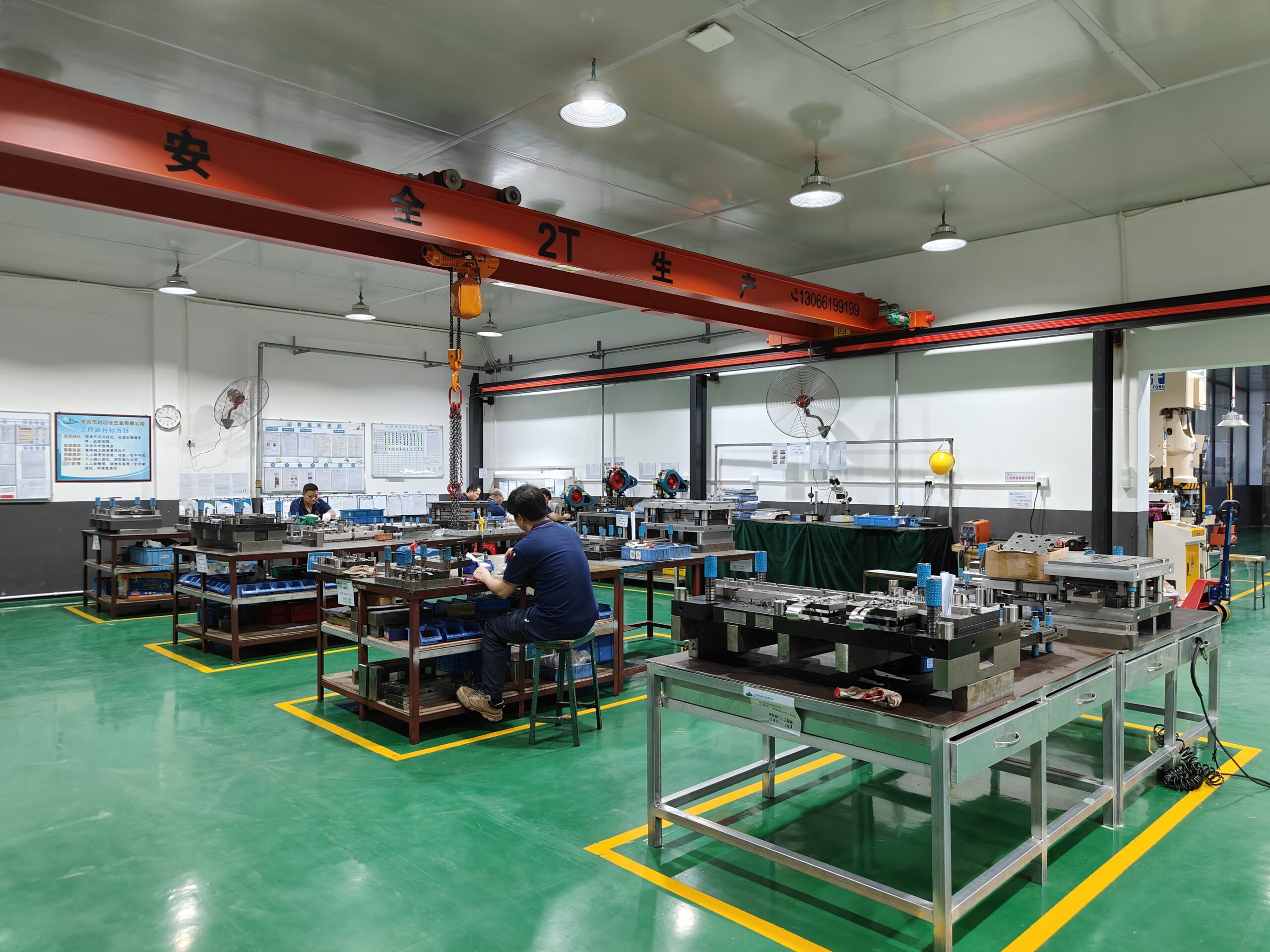
Wenn Sie ein gestanztes Metallteil benötigen, das einer Zeichnung entspricht – und nicht eine Lagerkomponente – dann ist das kundenspezifische Metallstanzung. Wir fertigen kundenspezifische Stanzteile anhand Ihrer 2D-Zeichnung oder Ihres 3D-Modells durch DFM-Prüfung, Werkzeugbau, Pilotproduktion und Massenlieferung. Unser Kundenstamm besteht aus OEM-Käufern, Produktingenieuren und Beschaffungsteams, die stabile Stückkosten, wiederholbare Geometrie und einen Lieferanten benötigen, der den gesamten Produktionslebenszyklus abwickeln kann.
Bereit, ein Projekt zu starten? Senden Sie Ihre Zeichnung oder Ihr Muster an unser -Kontaktseite für eine DFM-Überprüfung und ein Angebot – normalerweise innerhalb von 2 Werktagen.
Was einen kundenspezifischen Stanzauftrag von der Standardproduktion unterscheidet
Das kundenspezifische Metallstanzen wird durch die Zeichnung des Kunden definiert, nicht durch den Katalog des Druckmaschinenbedieners. Das ändert drei Dinge in der Produktionsgleichung:
- Die Werkzeuge werden für die Geometrie Ihres Teils entwickelt – nicht von etwas Ähnlichem angepasst. Streifenlayout, Verlauf, Biegereihenfolge, Einstechposition und Formradius werden alle nach Ihren Zeichnungsabmessungen und Toleranzanforderungen entwickelt.
- Das Material wird für die Funktion spezifiziert – Leitfähigkeit, Korrosionsbeständigkeit, Härte, Akzeptanz der Oberflächenbeschaffenheit und Spulenverfügbarkeit spielen bei der Materialauswahl eine Rolle, nicht nur die Zugfestigkeit.
- Die Prozessvalidierung ist Teil des Arbeitsablaufs – kundenspezifische Programme umfassen typischerweise einen Pilotlauf und eine Dimensionsüberprüfung, bevor eine stabile Massenproduktion beginnt. Hier werden die meisten langfristigen Kostenprobleme erkannt und behoben.
Wenn Sie ein Teil zum ersten Mal beschaffen oder Volumen von einem instabilen Lieferanten verschieben, kommt es in der Werkzeugkonstruktionsphase auf die Produktionsökonomie an. Aus diesem Grund ist DFM-Feedback wichtig, bevor mit dem Stanzen begonnen wird.
Stanzverfahren, die wir für kundenspezifische Teile verwenden
Keine einzelne Stanzmethode funktioniert für jedes Teil. Der richtige Prozess hängt von der Teilegeometrie, dem Volumen, dem Material und den Toleranzanforderungen ab. Wir führen mehrere Methoden in derselben Einrichtung aus, damit wir den Prozess dem Teil zuordnen können – und das Teil nicht in einen Prozess zwingen, den wir gerade ausführen.
- Folgestanzen – am effizientesten für großvolumige flache oder leicht geformte Teile; Bandvorschub durch mehrere Stationen in einem Pressenhub
- Transfer-Matrizenstanzen – geeignet für größere oder komplexere Teile, die nicht auf einem progressiven Band laufen können; Teiletransfer zwischen Stationen als diskreter Rohling
- Verbundstanzen – ermöglicht das Stanzen und Lochen in einem einzigen Hub für flache Präzisionsteile; gut für enge Positionstoleranzen zwischen Merkmalen
- Tiefziehstanzen – formt becherartige, schalenförmige oder zylindrische Formen aus flachem Blech; Wird für Gehäuse, Gehäuse und gezogene zylindrische Komponenten verwendet
- Biegen und Formen – eigenständig oder in Reihe mit progressiver Matrize für Kanäle, Halterungen, Laschen, Flansche und geformte Profile
- Prägen und Prägen – lokal kontrollierte Verformung für Maßgenauigkeit, Identifikationsmarkierungen, Versteifungsrippen oder Eingriffsmerkmale
Spezialisierte Metallstanzfunktionen
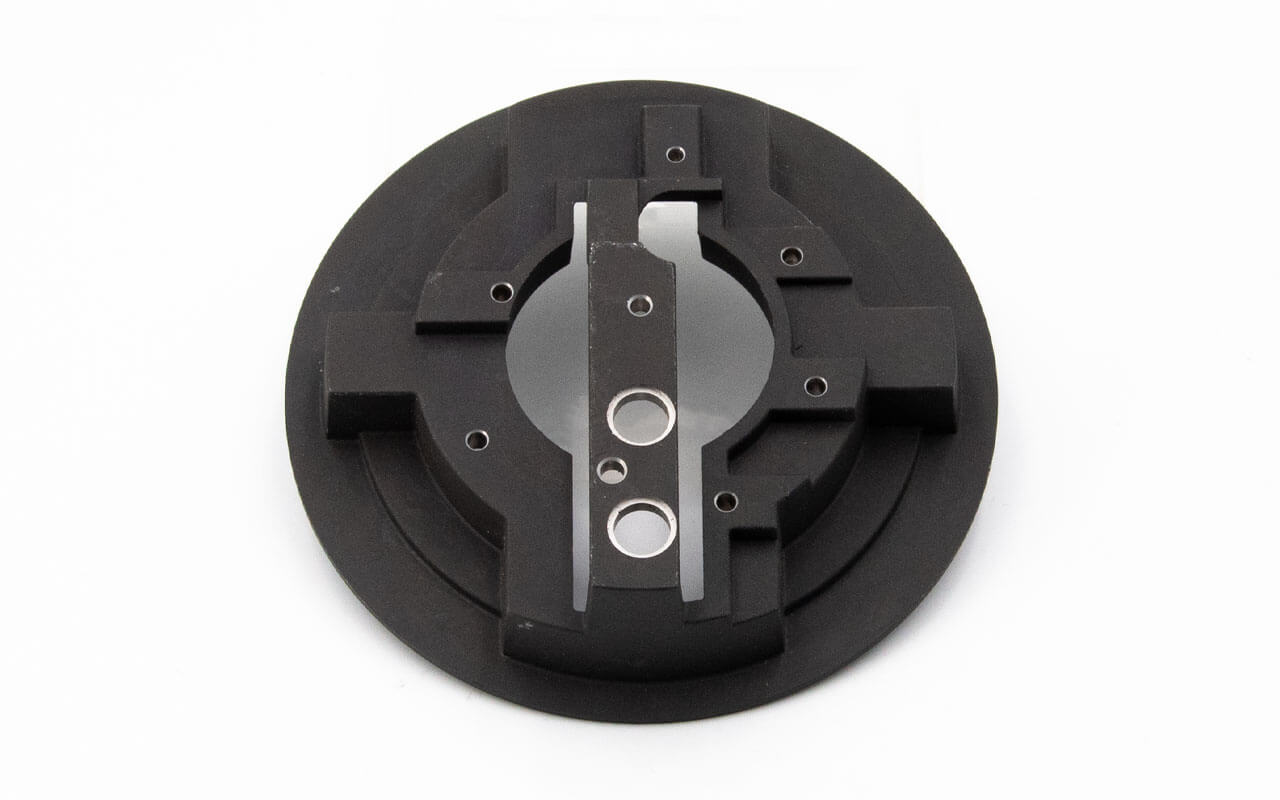
Über herkömmliche Stanzprozesse hinaus bieten wir mehrere Spezialfunktionen an, die uns als Komplettservice auszeichnen Hersteller kundenspezifischer Metallprägungen:
- Konformes Pin-Stempeln — Wir produzieren einpressbare Stifte (Nadelöhr) für Leiterplattensteckverbinder mit präziser Federkraftsteuerung, die in der Automobil- und Industrieelektronik weit verbreitet sind.
- Metallstanzen von Rolle zu Rolle — Unsere Rolle-zu-Rolle-Verarbeitung übernimmt das kontinuierliche Streifenstanzen für großvolumige Steckverbinderanschlüsse und -kontakte mit automatisiertem Aufwickeln, Plattieren auf ausgewählten Bereichen und Band-und-Rollen-Verpacken für automatisierte Montagelinien.
- Tief versenkte Teile und Stempelbecher aus Metall — Mithilfe von Tiefzieh- und Transferformtechniken produzieren wir tief vertiefte Komponenten, gezogene Becher und dosenförmige Teile aus Stahl, Edelstahl, Aluminium und Kupferlegierungen mit Ziehverhältnissen von bis zu 2,5:1.
- Stanzteile, Schweißteile und komplette Baugruppen — Wir liefern kundenspezifische Stanzteile mit Schweißkonstruktionen und komplette Baugruppen – einschließlich Buckelschweißen, Widerstandsschweißen, Nieten und Beschlageinbringung – so erhalten Sie einbaufertige Komponenten von einem einzigen Lieferanten.
Materialien, die wir für kundenspezifische Projekte stempeln
Die Materialauswahl ist eine Produktionsentscheidung und nicht nur eine Spezifikationsnotiz. Rückfederungsverhalten, Formbarkeitsgrenzen, Grathöhenneigung und Werkzeugverschleißrate variieren alle je nach Material und wirken sich direkt auf das Werkzeugdesign und die Prozessstabilität aus.
| Material | Typische benutzerdefinierte Anwendungen | Wichtige Überlegungen |
|---|---|---|
| Kaltgewalzter Stahl (SPCC, DC01) | Halterungen, Abdeckungen, Strukturklammern, Gehäuse | Gute Formbarkeit, geringe Kosten, Oberfläche lackierbar |
| Edelstahl (304, 316, 430) | Medizinische Teile, Teile mit Lebensmittelkontakt, korrosionsempfindliche Baugruppen | Höhere Rückfederung; erfordert angepasste Werkzeugabstände |
| Aluminium (5052, 6061, 3003) | Leichte Gehäuse, EV-Komponenten, an die Luft- und Raumfahrt angrenzende Teile | Hervorragende Formbarkeit; Oberflächenanodisierung kompatibel |
| Kupfer (C11000, C26000) | Elektrische Kontakte, Sammelschienen, leitfähige Anschlüsse | Hohe Leitfähigkeit; erfordert eine Schmierungskontrolle |
| Messing (C26000, C36000) | Verbindungsteile, Beschläge, dekorative Hardware | Gute Bearbeitbarkeit; kompatibel mit der Beschichtung |
| HSLA- und AHSS-Stahl | Automobilstrukturteile, crashrelevante Halterungen | Hohes Festigkeits-/Gewichtsverhältnis; Werkzeugverschleiß ist ein Faktor |
| Verzinkter Stahl | HVAC-Teile, Outdoor-Hardware, Baukomponenten | Vorbeschichtet; Die Kontaktfläche des Werkzeugs muss die Beschichtung berücksichtigen |
Materialspezifische Informationen finden Sie auf unseren Seiten Aluminiumstanzung, Edelstahlstanzung, Kupferstanzungund Messingstanzung.
Unsere Produktionsfähigkeitsparameter
| Parameter | Fähigkeit |
|---|---|
| Materialstärke | 0,1 mm bis 8,0 mm (je nach Material und Prozess) |
| Maßtoleranz | ±0,01 mm bis ±0,05 mm typisch; fester mit kontrollierter Werkzeugbestückung |
| Teilegrößenbereich | Mikro-Terminals bis hin zu großen Strukturhalterungen |
| Jährliche Volumenunterstützung | Prototypenstückzahlen bis hin zur Massenproduktion von mehreren Millionen Stück |
| Werkzeugbesitz | Eigene Werkzeugkonstruktion und -bau; Werkzeugwartung in der Produktion enthalten |
| Sekundäroperationen | Gewindeschneiden, Nieten, Schweißen, Entgraten, Galvanisierung, Montage |
| Dokumentation | Materialzertifikate, FAI, PPAP-Pakete, Maßberichte auf Anfrage |
| Verpackung und Logistik | Kundenspezifische Verpackung pro Teilegeometrie; See- und Luftfrachtkoordination |
So läuft ein kundenspezifisches Metallstanzprojekt ab
Die meisten Verzögerungen und Kostenüberraschungen beim kundenspezifischen Stanzen entstehen durch das frühzeitige Überspringen von Schritten. So sollte ein ordnungsgemäß verwaltetes kundenspezifisches Projekt ablaufen – und was wir in jeder Phase überprüfen:
- Zeichnungsprüfung und DFM – wir prüfen Biegeradien anhand der Materialstärke, des Mindestabstands zwischen Loch und Kante, Abstand zwischen Merkmalen, Gratrichtung in Bezug auf die Montage und Streifenausnutzung. Wenn wir Probleme finden, kennzeichnen wir sie, bevor mit der Werkzeugbereitstellung begonnen wird.
- Werkzeugkonstruktion und -bau – Die Werkzeugkonstruktion erfolgt unter Berücksichtigung Ihres Toleranzstapels und Ihres Produktionsvolumens. Ein Teil, das für 500.000 pro Jahr vorgesehen ist, bekommt ein anderes Werkzeug als eines für 5.000.
- Pilotlauf und Validierung – Erstmuster werden hergestellt, gemessen und anhand der Zeichnung überprüft. Eventuelle Prozessanpassungen werden vor der vollständigen Veröffentlichung vorgenommen.
- Massenproduktion und Prozesskontrolle – In-Prozess-Kontrollen, Werkzeugwartungsintervalle und Überprüfung des eingehenden Materials sind in den Standardproduktionsplan integriert.
- Laufendes Liefermanagement – Nachbestellungsauslöser, Verpackungskonsistenz, Versanddokumentation und technisches Änderungsmanagement werden über klare Kommunikationsprotokolle verwaltet.
Branchen, die kundenspezifisches Metallstanzen verwenden
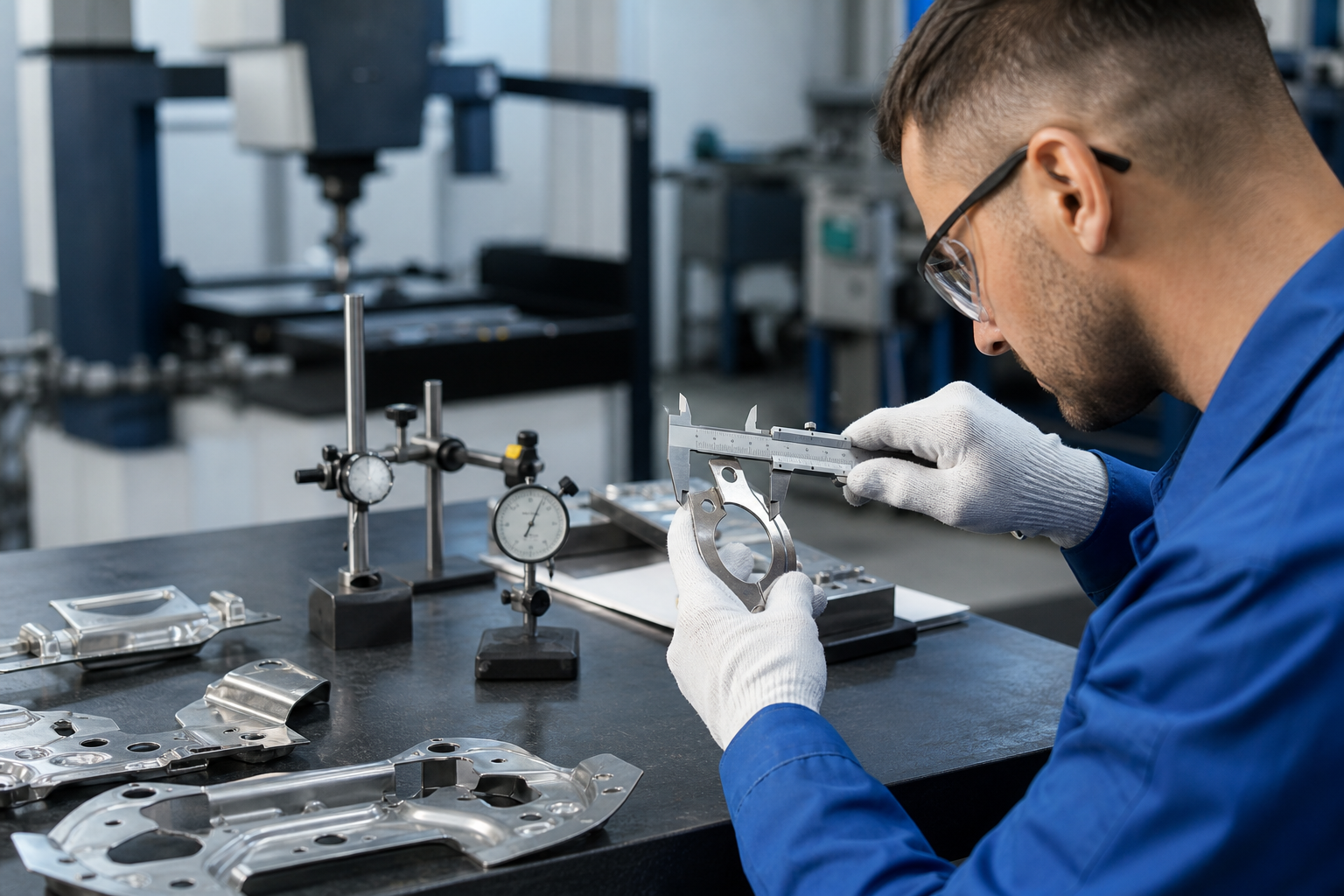
Das kundenspezifische Stanzen ist unabhängig von der Produktionsmethode – es bedient jede Branche, die wiederholbare, präzise Blechteile zu wettbewerbsfähigen Stückkosten benötigt. Unser aktueller Kundenstamm umfasst:
- Automobilindustrie – Sitzhalterungen, Türverkleidungsclips, Anschlusskomponenten, Strukturverstärkungen, Hardware für Elektrofahrzeug-Batterieträger. Siehe Automotive-Stanzen.
- Elektronik – EMI-Abschirmrahmen, Steckergehäuse, Kupferanschlüsse, Präzisionskontaktkomponenten. Siehe elektronische Stanzkomponenten.
- Medizinische Geräte – rostfreie chirurgische Instrumententeile, implantatnahe Komponenten, Präzisionsgehäuse. Siehe Stempelung für medizinische Geräte.
- Luft- und Raumfahrt – Strukturklammern, Kabelbaumhalterungen, Gehäuseplatten – hergestellt nach kontrollierten Dokumentationsstandards. Siehe Metallstanzen für die Luft- und Raumfahrt.
- Haushaltsgeräte – Motorhalterungen, Heizelementklammern, Bedienfeld-Hardware, Strukturrahmen. Siehe Haushaltsgeräte-Stanzung.
- Baubeschläge – Ankerplatten, Balkenaufhänger, Strukturverbinder, verzinkte Halterungen. Siehe Baumetallstanzen.
- Verteidigung und Militär – Wir liefern präzisionsgestanzte Metallkomponenten für Verteidigungsanwendungen, einschließlich Montagehalterungen, Schildkomponenten und Hardware-Baugruppen, die nach militärischen Material- und Inspektionsanforderungen hergestellt werden.
Für Käufer, die die Fabrik hinter einem kundenspezifischen Programm bestätigen möchten, fasst unsere Seite Metallstanzunternehmen die hauseigene Werkzeugausstattung, Produktionskapazität, Qualitätsdokumentation, Endbearbeitung, Montage und Exportunterstützung zusammen.
Verwandte Funktionen
Das kundenspezifische Metallstanzen funktioniert in der Regel parallel zu anderen Präzisionsfertigungsverfahren. Für Käufer, die die Prozesseignung bewerten:
- Präzises Metallstanzen – wenn Ihre Toleranzanforderungen eng sind und die Teilekonsistenz die Montageergebnisse bestimmt
- Übersicht über Metallstanzteile – die gesamte Palette der von uns hergestellten Stanzkomponententypen
- Kundenspezifische Metallstanzteile – zeichnungsbasierte kundenspezifische Teileproduktion für OEM-Programme
- Folgestanzen – die höchste Stückzahl, Stanzmethode mit den niedrigsten Stückkosten
- Tiefziehstanzen – für Becher-, Schalen- und zylindrische Teilegeometrien
- Metallumformung – Biege-, Zieh- und Blechformvorgänge
So wählen Sie einen Metallstanzhersteller aus
Die Auswahl des richtigen Metallstanzherstellers in China oder weltweit erfordert die Bewertung von mehr als dem Stückpreis. Hier ist eine praktische Checkliste für Metallstanzlieferanten , die Ihnen bei Ihrer Entscheidung helfen soll:
- Qualitätszertifizierungen – Stellen Sie sicher, dass die ISO 9001-, IATF 16949- und ISO 14001-Zertifizierungen aktuell sind und die spezifischen Prozesse abdecken, die Ihre Teile erfordern.
- Eigene Werkzeugausstattung – Ein Hersteller mit hauseigener Werkzeugentwicklungs- und Fertigungskapazität verkürzt die Vorlaufzeit und gibt Ihnen eine zentrale Anlaufstelle für die Werkzeugausstattung und Produktion.
- Materialbereich – Bestätigen Sie, dass der Lieferant Ihre benötigten Materialien (Kohlenstoffstahl, Edelstahl, Aluminium, Kupfer, Messing, Speziallegierungen) in der von Ihnen benötigten Dicke und Härte prägt.
- Sekundäre Vorgänge – Überprüfen Sie, ob Wärmebehandlung, Galvanisierung, Schweißen, Montage und Verpackung intern durchgeführt oder ausgelagert werden – intern bedeutet schnellere Durchlaufzeiten und strengere Qualitätskontrolle.
- Qualitätsausrüstung – Achten Sie auf KMG, optische Messung, In-Die-Überwachung und SPC-Fähigkeit – nicht nur auf die Endkontrolle.
- Kommunikations- und technischer Support – Der beste OEM-Hersteller von Metallstanzteilen gibt DFM-Feedback, schlägt kostensparende Designänderungen vor und reagiert in Ihrer Zeitzone.
- Export- und Logistikerfahrung – Wenn Sie aus China einkaufen, überprüfen Sie die Erfahrung mit der Zolldokumentation, den Verpackungsstandards und den Incoterms Ihres Ziellandes.
Als kundenspezifischer Metallstanzteile , der OEMs in Nordamerika, Europa und Asien beliefert, erfüllen wir alle oben genannten Kriterien. Wir fertigen Metallstanzteile anhand Ihrer Zeichnungen oder 3D-Modelle – egal, ob Sie jährlich 5.000 Prototypenteile oder 5 Millionen Produktionsteile benötigen. Unsere Position als Metallstanzlieferant mit hauseigenen Werkzeugen, Multiprozessfähigkeit und ISO-zertifizierten Qualitätssystemen macht uns zu einem zuverlässigen Partner für chinesische Metallstanzteile und globale Lieferprogramme.
Häufig gestellte Fragen zum kundenspezifischen Metallstanzen
Welche Informationen benötigen Sie, um ein Angebot für ein kundenspezifisches Metallstanzprojekt zu erstellen?
Das Minimum ist eine bemaßte 2D-Zeichnung oder ein 3D-Modell, Materialtyp und -qualität, erforderliche Dicke, jährliche Volumenschätzung und alle kritischen Abmessungen oder Anforderungen an die Oberflächenbeschaffenheit. Ein Musterteil kann eine Zeichnung im Angebotsstadium ersetzen.
Wie lange dauert die Herstellung kundenspezifischer Stanzwerkzeuge?
Einfache Einzeloperationsstümpfe dauern in der Regel 2–4 Wochen. Folgeverbundwerkzeuge mit mehreren Stationen benötigen je nach Komplexität in der Regel 4–8 Wochen. Transferwerkzeuge für große Teile können länger dauern. Zusammen mit dem Angebot stellen wir Ihnen einen Werkzeugzeitplan zur Verfügung.
Kann kundenspezifisches Metallstanzen Kleinserienfertigung bewältigen?
Ja, aber die Wirtschaftlichkeit hängt von den Werkzeugkosten im Verhältnis zum Teilewert ab. Bei sehr geringen Stückzahlen können Bridge-Tooling oder Soft-Tooling die Vorlaufkosten senken. Bei Teilen, die in die Massenproduktion gehen, führt die Investition in Produktionswerkzeuge von Anfang an in der Regel zu besseren langfristigen Kosten pro Stück.
Welche Toleranzen können Sie bei kundenspezifischen Stanzteilen einhalten?
Typische Produktionstoleranzen liegen je nach Material, Dicke und Geometrie zwischen ±0,01 mm und ±0,05 mm für gestanzte und geformte Merkmale. Mit kontrollierten Werkzeugen und In-Prozess-Messungen sind engere Toleranzen erreichbar – besprechen Sie Ihre Anforderungen in der DFM-Phase.
Erledigen Sie Sekundärbearbeitungen oder nur rohe Stanzteile?
Wir unterstützen je nach Projektumfang Entgraten, Gewindeschneiden, Nieten, Punktschweißen, Plattierkoordination und leichte Untermontage. Viele Kunden konsolidieren über uns mehrere Quellen in einer einzigen verwalteten Lieferroute.
Was ist der Unterschied zwischen Folgestanz- und Transferstanzen für kundenspezifische Teile?
Die progressive Matrize ist schneller und kostengünstiger für Teile, die geformt werden können, während sie noch an einem Streifen befestigt sind. Die Transfermatrize wird für größere oder komplexere Teile verwendet, die als einzelne Rohlinge zwischen Stationen transferiert werden müssen. Wir bewerten beide Optionen während der Werkzeugkonstruktionsphase.
Starten Sie Ihr kundenspezifisches Metallstanzprojekt
Wir sind ein in China ansässiges Hersteller von Metallstanzungen mit mehr als 25 Jahren Ingenieurserfahrung und einer nachgewiesenen Erfolgsbilanz beim Export von präzisionsgestanzten kundenspezifischer Metallstanzteile an OEMs weltweit. Senden Sie uns Ihre Zeichnung für eine kostenlose DFM-Bewertung und ein wettbewerbsfähiges Angebot.
Der schnellste Weg, ein realistisches Angebot und eine Bewertung der Herstellbarkeit zu erhalten, ist die Zusendung Ihrer Zeichnung. Wir überprüfen die Geometrie, weisen auf etwaige DFM-Bedenken hin, bestätigen die Eignung von Material und Prozess und senden ein strukturiertes Angebot zurück – normalerweise innerhalb von zwei Werktagen.
Senden Sie Ihre Zeichnung, Angebotsanfrage oder Beispielfotos über unsere Kontaktseite. Geben Sie Ihre Schätzung des jährlichen Volumens und den geplanten Lieferzeitplan an, und wir werden die Antwort entsprechend strukturieren.