
Autor:Liu Zhou |Veröffentlicht: 2026 | Website: metallprägeteile.ltd
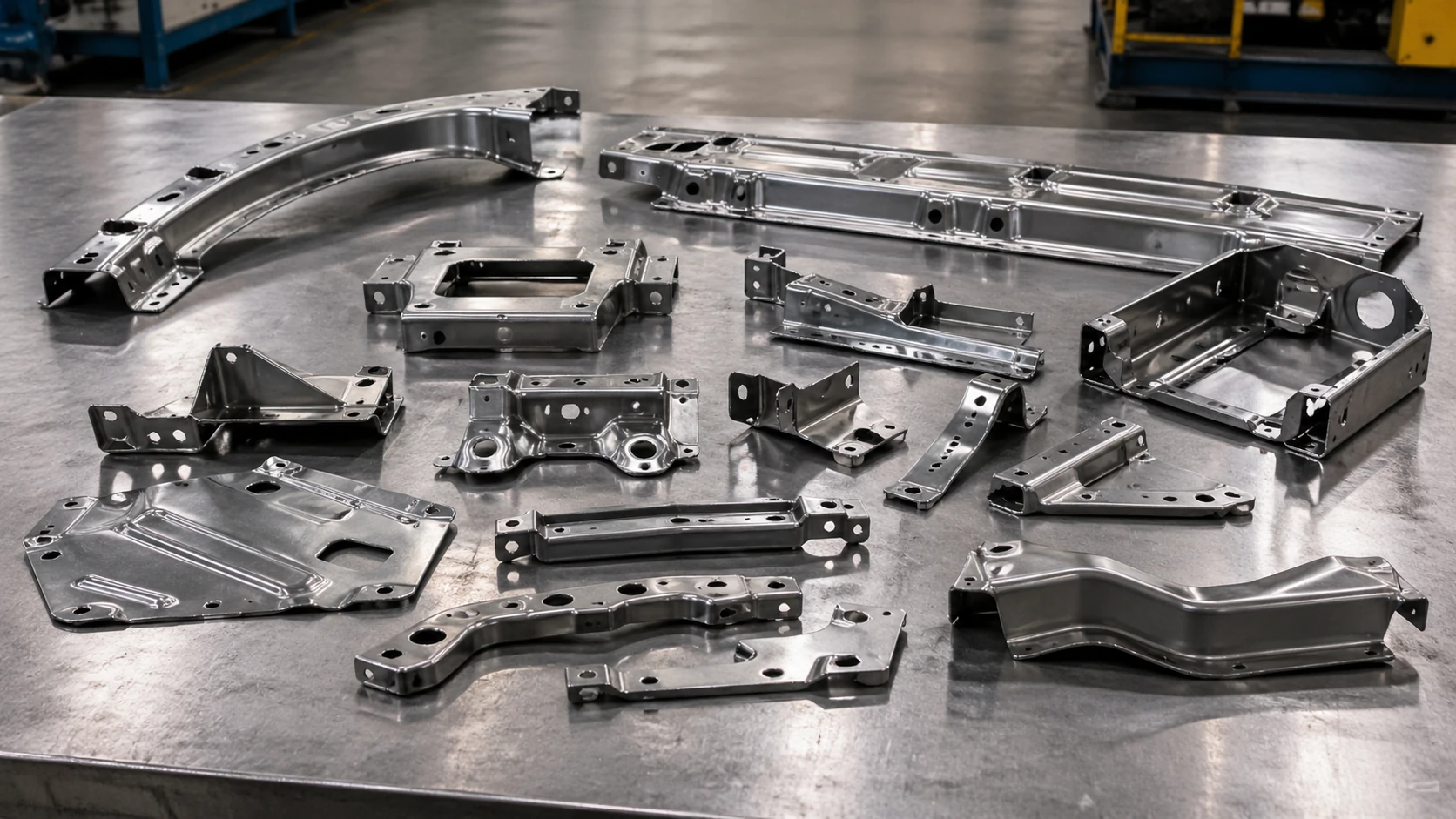
Die Wahl zwischen kaltgewalztem und warmgewalztem Stahl ist eine der folgenreichsten Entscheidungen bei der Auswahl des Metallstanzmaterials. Kaltgewalztes Stahlstanzen bietet engere Toleranzen (±0,05 mm gegenüber ±0,15 mm), eine hervorragende Oberflächengüte (Ra 0,5–1,6 µm gegenüber Ra 3,2–12,5 µm) und eine um 10–20 % höhere Streckgrenze durch Kaltverfestigung. Im Gegensatz dazu kostet das Stanzen von warmgewalztem Stahl 15–30 % weniger pro Tonne, lässt sich leichter zu komplexen Geometrien formen und ist in viel dickeren Stärken erhältlich – was es zum Standard für große Strukturbauteile macht. In diesem Leitfaden werden alle wichtigen Unterschiede erläutert, wenn Sie Stahl für Stanzteile spezifizieren.
Wie kaltgewalzter und warmgewalzter Stahl hergestellt wird
Für eine fundierte Auswahl des Stahlstanzmaterials ist es wichtig, die Unterschiede im Herstellungsprozess zu verstehen.
Warmwalzprozess
Warmgewalzter Stahl entsteht zunächst als Bramme oder Knüppel, der auf etwa 1.100–1.300 °C erhitzt wird – deutlich über der Rekristallisationstemperatur. Der glühende Stahl durchläuft eine Reihe von Walzen, die ihn auf die gewünschte Dicke reduzieren. Da das Metall über der Rekristallisationstemperatur liegt, verformt es sich, ohne dass sich innere Spannungen aufbauen.
Hauptmerkmale:
– Das Abkühlen auf Umgebungstemperatur führt zu geringfügigen Maßabweichungen
– Auf der Oberfläche bilden sich Oxidschichten (charakteristische blaugraue Oberfläche)
– Kornstruktur ist gleichachsig und relativ gleichmäßig
– Keine Eigenspannungen durch den Walzvorgang selbst
Kaltwalzprozess
Kaltgewalzter Stahl beginnt als warmgewalztes Coil, das bereits gebeizt (säuregereinigt) wurde, um Zunder zu entfernen. Anschließend wird es bei Raumtemperatur durch Walzen geführt. Dadurch wird das Material kaltverfestigt und die Streckgrenze je nach Sorte und Reduktionsverhältnis um etwa 10–20 % erhöht.
Hauptmerkmale:
– Kaltverfestigung erhöht Festigkeit und Härte
– Durch den Walzendruck entsteht eine außergewöhnlich glatte Oberfläche
– Eine strenge Dickenkontrolle sorgt für eine gleichmäßige Dicke über das gesamte Coil
– Das Glühen wird oft nach dem Walzen durchgeführt, um die Duktilität für das Stanzen wiederherzustellen
Die zusätzlichen Verarbeitungsschritte – Beizen, Kaltwalzen, Glühen, Temperwalzen und Ölen – sind die Ursache für die höheren Kosten für kaltgewalztes Stahlstanzmaterial.
Kaltgewalzt vs. warmgewalzt: Direkter Vergleich
Die folgende Tabelle fasst die praktischen Unterschiede bei Stempelanwendungen zusammen.
| Eigentum | Kaltgewalzter Stahl | Warmgewalzter Stahl |
|---|---|---|
| Oberflächenbeschaffenheit | Glatt, zunderfrei (Ra 0,5–1,6 µm) | Raue Oxidschicht (Ra 3,2–12,5 µm) |
| Maßtoleranz | ±0,05 mm (Dichtekontrolle) | ±0,15 mm oder breiter |
| Streckgrenze | 10–20 % höher (kaltverfestigt) | Grundlinie für die Note |
| Kosten pro Tonne | Höher (15–30 % Prämie) | Untere (Grundlinie) |
| Formbarkeit | Niedriger (erfordert mehr Tonnage); geglühte Sorten erholen ihre Duktilität | Höher (weicher, weniger Rückfederung) |
| Typische Anwendungen | Haushaltsgeräte, Elektronikgehäuse, Präzisionshalterungen, Automobilverkleidungen | Strukturrahmen, landwirtschaftliche Geräte, Bauhalterungen, schwere Umzäunungen |
| Dickenbereich | 0,3–3,0 mm (typisch) | 1,6–25+ mm |
| Standardtoleranzen | ASTM A1008 / EN 10130 | ASTM A36 / EN 10025 |
| Lieferbedingungen | Geölt, geschält | Gerollt oder eingelegt |
Wenn es bei Stanzteilen auf die Oberflächenbeschaffenheit ankommt
Die Oberflächenbeschaffenheit ist oft der entscheidende Faktor zwischen kaltgewalztem und warmgewalztem Stahlstanzen.
Sichtbare Konsumgüter
Gerätetafeln, Gehäuse für Unterhaltungselektronik und Karosserieteile von Kraftfahrzeugen erfordern alle eine Oberfläche ohne Zunder und Lochfraß. Kaltgewalzter Stahl bietet einen sauberen Untergrund zum Lackieren, Pulverbeschichten oder Plattieren ohne umfangreiche Vorbehandlung. Warmgewalzter Stahl erfordert Kugelstrahlen und chemisches Beizen, bevor eine Beschichtung aufgetragen werden kann – was zu höheren Kosten und einer höheren Vorlaufzeit führt.
Schweiß- und Beschichtungshaftung
Die gleichmäßige Oberfläche des kaltgewalzten Materials verbessert die Beschichtungshaftung und reduziert Schweißspritzer. Bei Teilen, die einer E-Beschichtung, Feuerverzinkung oder dekorativen Verchromung unterzogen werden, ist es fast immer kostengünstiger, mit einer zunderfreien Oberfläche zu beginnen, als warmgewalzten Zunder zu beseitigen.
Dimensionsanpassung
Wenn gestanzte Teile mit anderen Komponenten in Baugruppen zusammenpassen müssen – denken Sie an Befestigungslöcher, Laschen-Schlitz-Passungen oder eingepresste Lager – reduzieren die engeren Toleranzen von kaltgewalztem Stahl Passungsprobleme und Ausschussraten am Montageband.
Kosten-Volumen-Crossover: Wenn Warmwalz gewinnt
Kaltgewalztes Stahlstanzen ist mit einem Rohstoffaufschlag verbunden, die Gesamtkosten der Teile hängen jedoch vom Volumen, den Sekundärvorgängen und der Ausschussrate ab.
Teile mit geringem Volumen/hoher Komplexität
Bei Prototypenläufen oder kleinen Produktionschargen (unter 5.000 Einheiten) ist der Materialkostenaufschlag von kaltgewalztem Material im Verhältnis zu Werkzeug und Arbeitsaufwand gering. Durch den geringeren Bedarf an Nachbearbeitungsvorgängen – kein Entzundern, minimales Entgraten – ist Kaltwalzen oft pro fertigem Teil kostengünstiger.
Großserien-/Strukturteile
Bei Produktionsmengen über 50.000 Teilen pro Jahr werden die 15–30 % Rohmaterialeinsparungen durch warmgewalzten Stahl erheblich. Wenn das Teil strukturell und nicht kosmetisch ist und ohnehin lackiert oder beschichtet werden soll (wobei Kugelstrahlen bereits im Prozessplan vorgesehen ist), ist Warmwalzen die wirtschaftliche Wahl.
Die versteckten Kosten
Übersehen Sie diese Werbebuchungen beim Vergleich nicht:
- Ausschussrate:Die engeren Toleranzen von Kaltwalzprodukten bedeuten weniger Teile, die nicht den Spezifikationen entsprechen. Typische Ausschussraten liegen beim kaltgewalzten Stanzen bei 2–5 %, im Vergleich zu 4–8 % beim warmgewalzten Blech.
- Werkzeugverschleiß:Zunder auf warmgewalztem Stahl beschleunigt den Werkzeugverschleiß um 15–25 %. Beim Stanzen von warmgewalztem Material ist mit einem um 20–30 % häufigeren Nachschärfen oder Nachschleifen der Matrizen zu rechnen.
- Sekundärbearbeitung:Durch Entzundern, Beizen oder Schleifen fallen 0,02 bis 0,15 US-Dollar pro Teil an. Multiplizieren Sie es mit dem Jahresvolumen und die Wirkung wird erheblich.
- Transport:Die größere Dicke von warmgewalztem Material bedeutet höhere Frachtkosten pro Teil und pro Palette.
- Lagerhaltungskosten:Kaltgewalzte Coils sind pro Lagereinheit teurer, aber die strengeren Spezifikationen reduzieren die Zeit für die Eingangskontrolle und die Ausschussquote beim Wareneingang.
Eine detaillierte Gesamtbetriebskostenanalyse bevorzugt fast immer kaltgewalzt für Präzisionsteile unter 3 mm Dicke und warmgewalzt für schwere Strukturbauteile über 6 mm.
Crossover-Beispiel aus der Praxis
Betrachten Sie eine gestanzte Halterung aus 2,0 mm Stahl mit einer Auflage von 100.000 Stück pro Jahr. Kaltgewalztes Coil kostet 850 $/Tonne; Warmgewalzt kostet 650 $/Tonne. Bei 0,5 kg pro Teil betragen die Rohmaterialkosten 0,425 $ gegenüber 0,325 $ – ein Unterschied von 0,10 $ pro Teil. Addieren Sie jedoch 0,03 US-Dollar für die Entzunderung, 0,02 US-Dollar für zusätzliche Werkzeugwartung und 0,01 US-Dollar für höheren Ausschuss beim Warmwalzen, verringert sich der Abstand auf 0,04 US-Dollar. Wenn die Halterung lackiert werden muss, muss die kaltgewalzte Oberfläche nur leicht phosphatiert werden (0,01 $), während die warmgewalzte Oberfläche vollständig gestrahlt werden muss (0,04 $). Plötzlich ist kaltgewalztes Produkt 0,01 $ günstiger pro fertigem Teil – und liefert ein besseres Produkt. Diese Art der Analyse ist der Grund, warum die Gesamtkosten der Teile und nicht die Materialkosten ausschlaggebend für Ihre Entscheidung sein sollten.
Leitfaden zur Materialauswahl für das Stanzen von Stahl
Befolgen Sie diesen Entscheidungsrahmen, wenn Sie Stahl für Stanzteile spezifizieren:
Schritt 1: Dickenanforderung definieren
- Unter 1,6 mm:Kaltgewalzt ist Ihre einzige Option. Warmgewalztes Material wird in diesen Stärken nicht hergestellt.
- 1,6–3,0 mm:Beide sind verfügbar. Bewerten Sie anhand von Toleranz, Verarbeitung und Kosten.
- Über 3,0 mm:Es dominiert warmgewalztes Material. Kaltgewalztes Material über 3 mm ist eine Spezialität und teuer.
Schritt 2: Bewerten Sie die Toleranz- und Endbearbeitungsanforderungen
- Enge Toleranzen (±0,05 mm) oder kosmetische Oberflächen →Kaltgewalzt
- Lose Toleranzen (±0,15 mm) akzeptabel, nicht kosmetisch →Warmgewalzt
Schritt 3: Bewerten Sie den Schweregrad der Formierung
- Tiefe Züge, enge Radien, komplexe Formen → Geglüht, kaltgewalzt oder warmgewalzt (beide funktionieren, aber warmgewalzt ist weicher)
- Mäßiges Biegen und Lochen → Kaltgewalzt (höhere Festigkeit pro Gauge)
- Schwere Umformung in dickem Material → Warmgewalzt (duktiler bei größeren Dicken)
Schritt 4: Gesamtteilekosten berechnen
Berücksichtigen Sie Rohmaterial, Werkzeuglebensdauer, Sekundäroperationen, Ausschussrate und Beschichtungsvorbereitung. Der günstigste Stahl pro Tonne ist nicht immer der günstigste Stahl pro Teil.
Schritt 5: Überprüfen Sie die Notenverfügbarkeit
Unter beiden Bedingungen sind nicht alle Qualitäten verfügbar. Konsultieren Sie frühzeitig in der Entwurfsphase die Mühlenliste Ihres Lieferanten.
Gemeinsamer Notenvergleich
Nachfolgend finden Sie einen Vergleich weit verbreiteter Güten, die beim Stanzen von kaltgewalztem und warmgewalztem Stahl verwendet werden.
Kaltgewalzte Sorten
| Note | ASTM-Standard | Streckgrenze (MPa) | Typische Verwendung |
|---|---|---|---|
| CRS 1008/1010 | A1008 CS | 170–280 | Allzweckstanzen, Halterungen, Clips |
| CRS 1006 | A1008 DS | 140–240 | Tiefziehanwendungen |
| DC04 (EN) | EN 10130 | 140–210 | Extratiefes Ziehen (Europäischer Standard) |
| AKDQ / IF Stahl | A1008 EDDS | 110–170 | Ultratiefzieh-Automobilpaneele |
| CR HSLA 340 | A1008 HSLA | 340 Minuten | Hochfeste Strukturstanzteile |
| CR HSLA 410 | A1008 HSLA | 410 Minuten | Crashrelevante Automobilkomponenten |
Warmgewalzte Sorten
| Grad | ASTM-Standard | Streckgrenze (MPa) | Typische Verwendung |
|---|---|---|---|
| HR A36 | A36 | 250 Minuten | Allgemeine Strukturprägungen |
| HR 1008/1010 | A1011 CS | 170–280 | Umform- und Biegeanwendungen |
| HRPO 1008 | A1011 CS (eingelegt und geölt) | 170–280 | Warmgewalzt mit verbesserter Oberfläche zum Prägen |
| S235JR (EN) | EN 10025 | 235 Minuten | Europäische Strukturprägungen |
| HR HSLA 340 | A1011 HSLA | 340 Minuten | Hochfeste Strukturbauteile |
| HR HSLA 480 | A1011 HSLA | 480 Minuten | Robuste Rahmen und Verstärkungen |
Tipps zur Notenauswahl
- Zum Tiefziehen:Verwenden Sie interstitialfreie (IF) oder AKDQ-Stähle im kaltgewalzten Zustand. Diese haben einen extrem niedrigen Kohlenstoffgehalt (<0,005 %) und eine außergewöhnliche Formbarkeit.
- Für das Verhältnis von Festigkeit zu Gewicht:HSLA-Sorten bieten in beiden Zuständen eine Streckgrenze von 340–550 MPa bei guter Schweißbarkeit.
- Zur Schweißbarkeit:Kohlenstoffarme Sorten (1006, 1008, 1010) lassen sich in beiden Zuständen problemlos ohne Vorwärmen schweißen.
- Für kostensensible Bauteile:HRPO (warmgewalzt gebeizt und geölt) schließt die Lücke – bessere Oberfläche als herkömmliches warmgewalztes Material bei bescheidenem Aufpreis.
Häufig gestellte Fragen
Kann man warmgewalzten Stahl genauso stanzen wie kaltgewalzten?
Ja, aber mit Anpassungen. Das Stanzen von warmgewalztem Stahl erfordert die Berücksichtigung größerer Toleranzen, rauerer Oberflächen und leicht unterschiedlicher Rückfederungseigenschaften. Die Werkzeugabstände sollten um 5–10 % vergrößert werden, und es ist mit einem schnelleren Gesenkverschleiß durch Restzunder zu rechnen – selbst bei gebeizten Sorten. Die meisten Folge- und Transferwerkzeuge können mit geringfügigen Änderungen an der Einrichtung beide Materialien verarbeiten.
Ist kaltgewalzter Stahl immer stärker als warmgewalzt?
Kaltgewalzter Stahl hat aufgrund der Kaltverfestigung während des Kaltwalzprozesses eine um 10–20 % höhere Streckgrenze als die gleiche Sorte im warmgewalzten Zustand. Dieser Vorteil geht jedoch teilweise verloren, wenn der kaltgewalzte Stahl nach dem Walzen vollständig geglüht wird – geglühter kaltgewalzter Stahl kann eine ähnliche Festigkeit wie warmgewalzter Stahl aufweisen, behält aber die überlegene Oberflächenbeschaffenheit und Maßtoleranzen bei.
Welcher Dickenbereich ist für das Stanzen von kaltgewalztem Stahl verfügbar?
Kaltgewalzter Stahl ist für Standard-Stanzgüten von ca. 0,3 mm bis 3,0 mm im Handel erhältlich. Einige Werke bieten kaltgewalztes Material bis zu 6 mm in schmalen Breiten an, die Verfügbarkeit ist jedoch begrenzt und die Kosten sind hoch. Für Teile mit einer Dicke von mehr als 3 mm wird fast immer warmgewalzter Stahl zum Metallstanzen verwendet.
Wie schneidet warmgewalztes, gebeiztes und geöltes Material (HRPO) im Vergleich zu kaltgewalztem Material zum Stanzen ab?
HRPO ist warmgewalzter Stahl, der zur Entfernung von Zunder säuregebeizt und zum Korrosionsschutz leicht geölt wurde. Es bietet eine bessere Oberflächengüte als standardmäßig warmgewalztes Material (Ra 1,6–3,2 µm) bei geringeren Kosten als kaltgewalztes Material. HRPO ist eine ausgezeichnete Wahl für Stanzteile, bei denen eine mäßige Oberflächenqualität akzeptabel ist und eine Kostenoptimierung von entscheidender Bedeutung ist – insbesondere im Bereich von 1,6–6,0 mm.
Was ist besser für das Folgestanzen – kaltgewalzt oder warmgewalzt?
Kaltgewalzter Stahl wird im Allgemeinen für das Folgestanzen bevorzugt, da seine gleichmäßige Dicke und saubere Oberfläche eine zuverlässige Bandzuführung, präzises Pilotlochen und wiederholbares Formen über Millionen von Schlägen hinweg ermöglichen. Warmgewalzter Stahl kann in Folgeverbundwerkzeugen verwendet werden, erfordert jedoch eine häufigere Werkzeugwartung und kann aufgrund von Dickenschwankungen und Oberflächenfehlern zu etwas höheren Ausschussraten führen.
Fazit
Bei der Entscheidung zwischen Kalt- und Warmwalzverfahren beim Metallstanzen geht es nicht darum, welches Material „besser“ ist – es geht darum, welches Material Ihre spezifische Kombination aus Toleranzen, Oberflächenqualität, Festigkeit, Formbarkeit und Gesamtkosten des Teils optimiert. Kaltgewalztes Stahlstanzen zeichnet sich durch Präzision, Aussehen und Konsistenz aus. Das Stanzen von warmgewalztem Stahl bietet Vorteile hinsichtlich der Kosten, der Verfügbarkeit von Dicken und der einfachen Umformung schwerer Abschnitte.
Für die meisten Stanzteile unter 3 mm, die enge Toleranzen und saubere Oberflächen erfordern, ist kaltgewalzt die Standardwahl. Für strukturelle und schwere Anwendungen, bei denen die Kosten wichtiger sind als kosmetische Aspekte, bietet warmgewalztes Material – insbesondere HRPO – das beste Preis-Leistungs-Verhältnis.
Benötigen Sie Hilfe bei der Auswahl des richtigen Materials für Ihr nächstes Stempelprojekt?Kontaktieren Sie das Technikteam untermetallprägeteile.ltdfür Materialempfehlungen, DFM-Bewertungen und wettbewerbsfähige Angebote.
Letzte Aktualisierung: 2026 | Autor: Liu Zhou |metallprägeteile.ltd