
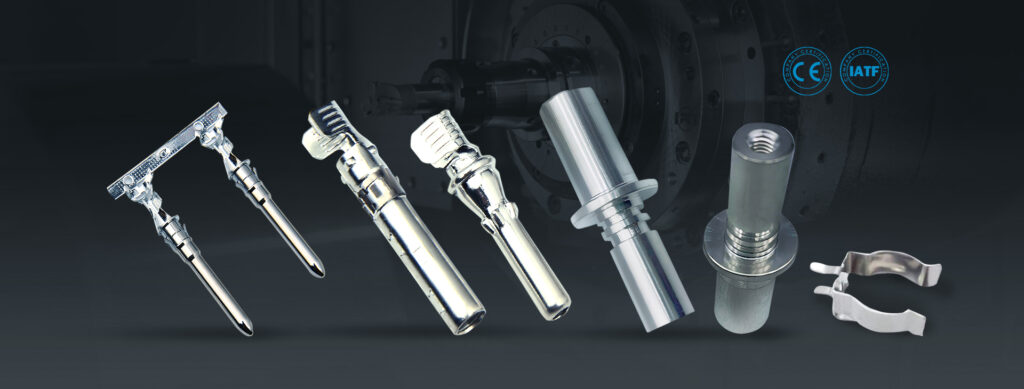
Metal stamping parts are produced from flat sheet metal or coil stock through a press-based manufacturing process that includes blanking, piercing, bending, forming, drawing, coining, and embossing. The result is a shaped metal component that meets dimensional, functional, and finish requirements defined by the customer’s engineering drawing or sample part.
We manufacture metal stamping parts for OEM customers, assembly programs, and precision component projects. Our scope covers a wide range of part geometries, materials, production volumes, and secondary requirements. Whether you need a single structural bracket or millions of precision contacts, we support the full journey from tooling design through production delivery.
Ready to source metal stamping parts? Send your drawing, material specification, annual volume, and tolerance requirements to our contact page for a manufacturing review.
What Metal Stamping Parts Are Used For
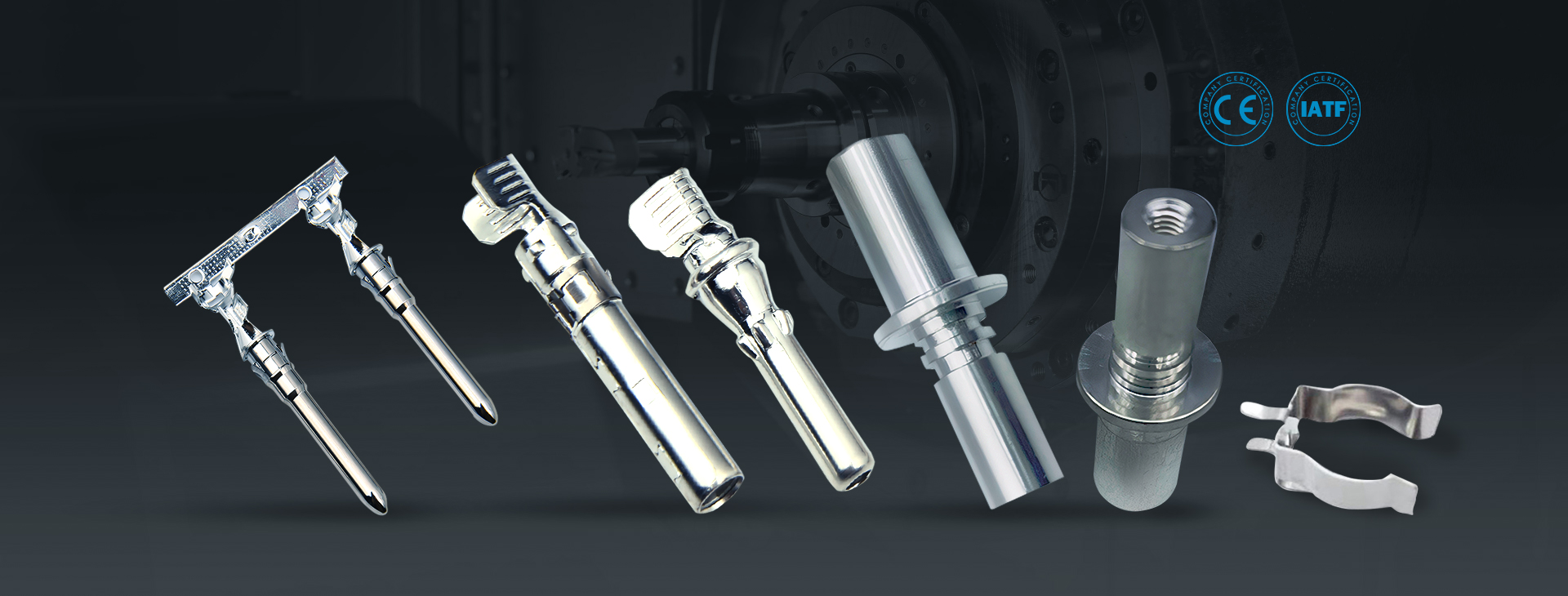
Metal stamped parts appear in almost every industrial sector. The process is particularly well-suited for producing high volumes of consistent, complex shapes from thin to medium thickness metals at low per-unit cost once tooling is established.
Common part categories include:
- Brackets and mounting parts — structural support, equipment fastening, panel attachment
- Terminals and electrical contacts — connector components, battery contacts, lead frames
- Enclosures and covers — housings, shields, guards, access panels
- Springs and clips — retention features, spring contacts, locking elements
- Washers and flat parts — shims, gasket substrates, spacers, isolation discs
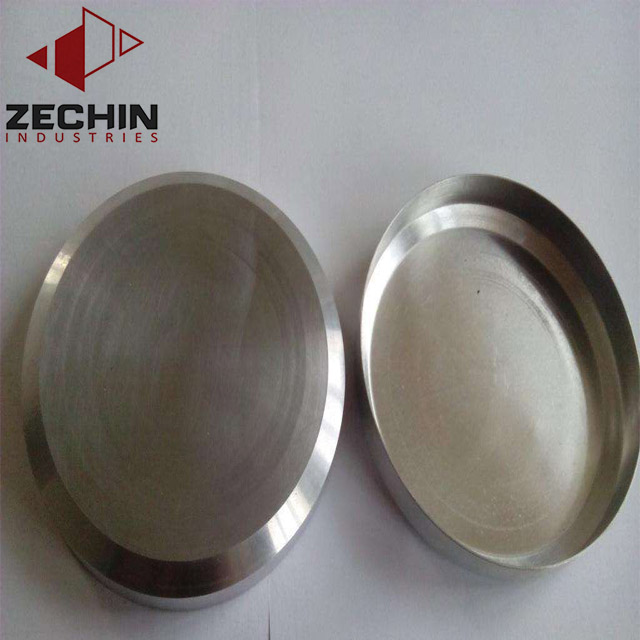
- Formed shells and cups — deep draw containers, cylindrical housings, medical cups
- Hinges and pivot parts — formed mechanical linkage and movement components
- Automotive stampings — body structure panels, seat brackets, fuel system parts
The specific process—progressive die, transfer die, deep draw, or single-hit—depends on part geometry, material behavior, volume, and tolerance.
Materials Available for Stamped Parts
Material selection directly affects stamping process parameters, tooling life, part strength, and downstream performance. We work with all common engineering metals:
| Material | Key Properties | Typical Part Applications |
|---|---|---|
| Carbon steel (SPCC, SECC, Q235) | High strength, cost-effective, weldable | Structural brackets, automotive parts, industrial hardware |
| Stainless steel (304, 316, 301) | Corrosion resistance, strength retention | Medical parts, food equipment, marine hardware |
| Aluminum (5052, 6061, 3003) | Lightweight, corrosion resistant, machinable | Covers, electronics housings, aerospace components |
| Copper (C11000, C10200) | Excellent conductivity, formable | Electrical terminals, contacts, busbar components |
| Brass (C26000, C28000) | Formability, corrosion resistance, decorative | Connector parts, plumbing fittings, decorative stampings |
Material-specific pages: steel stamping, stainless steel stamping, aluminum stamping, copper stamping, and brass stamping.
Stamping Processes for Different Part Types
The right stamping process depends on part complexity, production volume, and geometry. We support multiple process routes:
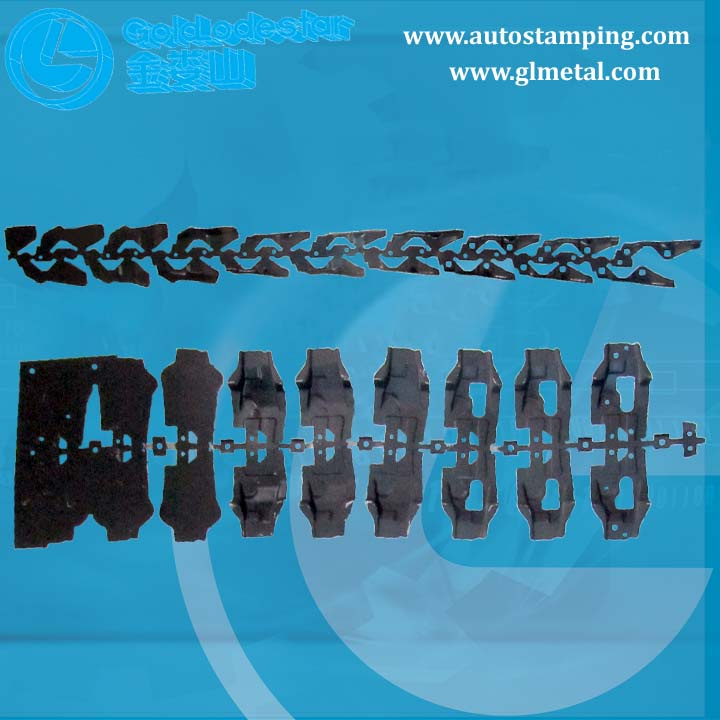
- Progressive die stamping — high-volume, multi-operation parts produced in a continuous strip. Best for small-to-medium parts requiring consistent repetition. See: progressive die stamping
- Deep draw stamping — for cups, shells, and cylindrical drawn parts where material flows radially without excessive thinning. See: deep draw stamping
- Sheet metal stamping — blanking, punching, and forming operations on cut sheets. Suited for larger parts and lower-to-medium volumes. See: sheet metal stamping
- Compound and combination dies — for parts requiring simultaneous multi-operation forming in a single stroke
- Metal forming — including bending, coining, embossing, and flanging as standalone or integrated operations. See: metal forming
Tolerances and Dimensional Control
Standard stamped parts can hold tolerances of ±0.1–0.3 mm depending on material, thickness, and feature type. Precision stamped parts using fine blanking or controlled progressive die tooling can achieve ±0.02–0.05 mm on critical dimensions.
Factors that affect achievable tolerance include:
- Material grade and thickness variation
- Die clearance and maintenance condition
- Part geometry complexity and forming depth
- Number of forming stages and springback behavior
- Secondary operations such as sizing or coining
For parts with tight tolerance requirements, we recommend sharing GD&T drawings and critical feature callouts during the DFM review stage so tooling strategy can be aligned before release.
Industries Using Metal Stamping Parts
- Automotive — body structure panels, seat hardware, fuel system brackets, retention clips. See: automotive stamping
- Electronics — precision terminals, connector shells, contact springs, EMI shielding components. See: electronics stamping
- Medical devices — stainless and precision-formed parts for instruments, implant-adjacent hardware, and diagnostic devices. See: medical device stamping
- Aerospace — controlled stampings for structural, mounting, and enclosure applications. See: aerospace metal stamping
- Home appliances — motor parts, fastening hardware, control linkage, decorative formed metal. See: home appliance stamping
- Construction and industrial — support brackets, anchor plates, hardware stampings. See: construction metal stamping
From Drawing to Production: How We Manage Stamped Parts Projects
- RFQ intake — drawing or 3D file, material, thickness, volume estimate, finish, and critical requirements
- DFM review — bend analysis, hole proximity, edge condition, feature clearances, tolerance feasibility
- Tooling design and build — progressive, compound, transfer, or draw tool based on part and volume
- Sample production — first articles, dimensional report, finish review
- Mass production — controlled runs with in-process inspection and shipment documentation
Related pages: custom metal stamping, precision metal stamping, metal stamping manufacturer, custom metal stamped parts.
FAQ: Metal Stamping Parts
What are metal stamping parts?
Metal stamping parts are components shaped from flat sheet metal or coil using press-based forming operations such as blanking, punching, bending, drawing, and coining. They are produced in tooling-supported processes that allow high repeatability and volume scalability.
What is the minimum order quantity for stamped parts?
There is no universal MOQ. It depends on the part, tooling investment, and material. Small pilot runs are possible when tooling already exists. For new programs, production volumes typically need to justify tooling cost over time.
How long does it take to get first samples for stamped parts?
Tooling build typically takes 3–6 weeks for progressive or compound dies and 4–8 weeks for larger or more complex tooling. First article samples follow tooling completion. Timeline depends on part complexity and current workload.
What finishes can be applied to stamped parts?
Common finishes include zinc plating, nickel plating, chrome, powder coat, anodizing (for aluminum), passivation (for stainless), and e-coat. Finish selection depends on material, environment, and cosmetic requirements.
Can you stamp parts from customer-supplied material?
Customer-supplied material can sometimes be accommodated, but incoming material verification is required to confirm thickness tolerance, surface condition, and mechanical properties before production begins.
How do I get a quote for custom stamped parts?
Send us a drawing or CAD file, material spec, annual quantity, required tolerances, surface finish requirements, and any special packaging or traceability needs. We will review the part and provide a manufacturing-based quotation.
Material Options for Stamped Parts
The material you specify for a stamped part affects tooling design, forming limits, surface finish, and long-term performance. We work with a full range of metals commonly specified in engineering drawings for stamped components:
- Cold-rolled steel (SPCC, DC01, AISI 1008/1010) — the most widely specified material for general-purpose stamping parts. Available in thicknesses from 0.2 mm to 6 mm, with good formability and predictable behavior in blanking, bending, and drawing operations.
- Stainless steel (SUS304, SUS316, SUS430) — specified when corrosion resistance, hygiene, or elevated-temperature performance is required. Stainless work-hardens during forming, which affects die wear and requires adjusted process parameters.
- Aluminum alloys (5052, 6061, 3003) — lightweight and corrosion-resistant, suitable for electronics housings, automotive brackets, and heat-sink components. Surface treatment options include anodizing, chromate conversion, and powder coating.
- Copper and brass (C110, C260) — used for electrical terminals, busbars, connectors, and decorative hardware. High conductivity and formability, but requiring careful blanking clearance control to minimize burr formation.
- Galvanized and pre-coated steels (EG, GA, SECC, DX51D+Z) — when post-stamp coating is impractical, pre-coated coil provides corrosion protection from the start. Tool design must protect the coating at bend radii and contact surfaces.
Material selection is reviewed during DFM to ensure that forming sequence, bend allowance, and tooling clearance are optimized for the specified metal.
Quality Control for Stamped Parts Production
Every stamped parts program includes a structured quality verification workflow that begins at first article and continues through mass production:
- First Article Inspection (FAI) — initial production samples are measured against the drawing using CMM, optical comparators, or height gauges. FAI reports are submitted for customer approval before mass production starts.
- In-process dimensional checks — critical dimensions are verified at defined intervals during production. For high-volume runs, in-die sensors or post-press gauging stations provide real-time feedback on feature stability.
- Material traceability — incoming coil stock is verified against mill certificates for thickness, tensile strength, and chemical composition. Certificates are retained per production lot.
- Surface and cosmetic inspection — parts with visible surface requirements are inspected under controlled lighting for scratches, die marks, burrs, and coating defects.
This quality workflow ensures that stamped parts delivered in production match what was approved at the sample stage — consistently, across every shipment.
Learn more about Metal Stamping vs Die Casting.
Learn more about Bending in Metal Stamping.
Learn more about Blanking Process Guide.
Frequently Asked Questions
What are metal stamping parts?
Metal stamping parts are components produced from flat sheet metal or coil stock through press-based operations including blanking, piercing, bending, forming, drawing, and coining. They are used across automotive, electronics, construction, medical, and industrial applications.
What tolerances can stamped parts hold?
Standard blanked and pierced features typically hold ±0.05–0.10 mm. Formed features hold ±0.10–0.30 mm depending on complexity. Coined surfaces can achieve ±0.01–0.05 mm. Actual capability depends on material, thickness, feature geometry, and tooling method.
What is the difference between stamped and machined parts?
Stamped parts are produced by shaping sheet metal through die-based operations without removing material (except blanking/punching). Machined parts are produced by cutting material away from a solid block. Stamping is generally faster and more cost-effective for medium to high volumes of flat or moderately formed parts.
Can you stamp parts from stainless steel or aluminum?
Yes. We stamp parts from cold-rolled steel, stainless steel (304, 316, 430), aluminum alloys (5052, 6061), copper, brass, and pre-coated steels. Each material requires specific tooling design adjustments for clearance, forming sequence, and die surface treatment.
What is the minimum order quantity for stamped parts?
There is no fixed minimum, but tooling cost must be justified against the planned production volume. For quantities below 5,000–10,000 units, we evaluate whether progressive die tooling or simpler staged methods better fit the economics. Volume planning is discussed during the quotation phase.
How long does it take to produce stamped parts?
Tooling fabrication takes 3–6 weeks for progressive or compound dies and 5–9 weeks for transfer dies. After first article approval, mass production lead time depends on volume and scheduling. Repeat orders with existing tooling typically have shorter lead times.
Material Options for Stamped Parts
The material you specify for a stamped part affects tooling design, forming limits, surface finish, and long-term performance. We work with a full range of metals commonly specified in engineering drawings for stamped components:
- Cold-rolled steel (SPCC, DC01, AISI 1008/1010) — the most widely specified material for general-purpose stamping parts. Available in thicknesses from 0.2 mm to 6 mm, with good formability and predictable behavior in blanking, bending, and drawing operations.
- Stainless steel (SUS304, SUS316, SUS430) — specified when corrosion resistance, hygiene, or elevated-temperature performance is required. Stainless work-hardens during forming, which affects die wear and requires adjusted process parameters.
- Aluminum alloys (5052, 6061, 3003) — lightweight and corrosion-resistant, suitable for electronics housings, automotive brackets, and heat-sink components. Surface treatment options include anodizing, chromate conversion, and powder coating.
- Copper and brass (C110, C260) — used for electrical terminals, busbars, connectors, and decorative hardware. High conductivity and formability, but requiring careful blanking clearance control to minimize burr formation.
- Galvanized and pre-coated steels (EG, GA, SECC, DX51D+Z) — when post-stamp coating is impractical, pre-coated coil provides corrosion protection from the start. Tool design must protect the coating at bend radii and contact surfaces.
Material selection is reviewed during DFM to ensure that forming sequence, bend allowance, and tooling clearance are optimized for the specified metal.
Quality Control for Stamped Parts Production
Every stamped parts program includes a structured quality verification workflow that begins at first article and continues through mass production:
- First Article Inspection (FAI) — initial production samples are measured against the drawing using CMM, optical comparators, or height gauges. FAI reports are submitted for customer approval before mass production starts.
- In-process dimensional checks — critical dimensions are verified at defined intervals during production. For high-volume runs, in-die sensors or post-press gauging stations provide real-time feedback on feature stability.
- Material traceability — incoming coil stock is verified against mill certificates for thickness, tensile strength, and chemical composition. Certificates are retained per production lot.
- Surface and cosmetic inspection — parts with visible surface requirements are inspected under controlled lighting for scratches, die marks, burrs, and coating defects.
This quality workflow ensures that stamped parts delivered in production match what was approved at the sample stage — consistently, across every shipment.
Learn more about Metal Stamping vs Die Casting.
Learn more about Bending in Metal Stamping.
Learn more about Blanking Process Guide.
Frequently Asked Questions
What are metal stamping parts?
Metal stamping parts are components produced from flat sheet metal or coil stock through press-based operations including blanking, piercing, bending, forming, drawing, and coining. They are used across automotive, electronics, construction, medical, and industrial applications.
What tolerances can stamped parts hold?
Standard blanked and pierced features typically hold ±0.05–0.10 mm. Formed features hold ±0.10–0.30 mm depending on complexity. Coined surfaces can achieve ±0.01–0.05 mm. Actual capability depends on material, thickness, feature geometry, and tooling method.
What is the difference between stamped and machined parts?
Stamped parts are produced by shaping sheet metal through die-based operations without removing material (except blanking/punching). Machined parts are produced by cutting material away from a solid block. Stamping is generally faster and more cost-effective for medium to high volumes of flat or moderately formed parts.
Can you stamp parts from stainless steel or aluminum?
Yes. We stamp parts from cold-rolled steel, stainless steel (304, 316, 430), aluminum alloys (5052, 6061), copper, brass, and pre-coated steels. Each material requires specific tooling design adjustments for clearance, forming sequence, and die surface treatment.
What is the minimum order quantity for stamped parts?
There is no fixed minimum, but tooling cost must be justified against the planned production volume. For quantities below 5,000–10,000 units, we evaluate whether progressive die tooling or simpler staged methods better fit the economics. Volume planning is discussed during the quotation phase.
How long does it take to produce stamped parts?
Tooling fabrication takes 3–6 weeks for progressive or compound dies and 5–9 weeks for transfer dies. After first article approval, mass production lead time depends on volume and scheduling. Repeat orders with existing tooling typically have shorter lead times.
Request Stamped Parts Quotation
We review parts from a manufacturing perspective, not just a price perspective. That means our quotes reflect actual tooling strategy, process fit, and realistic cost structure — not a low first price that creates problems during production.
Contact us to submit your metal stamping parts inquiry with drawings, material, volume, and requirements.