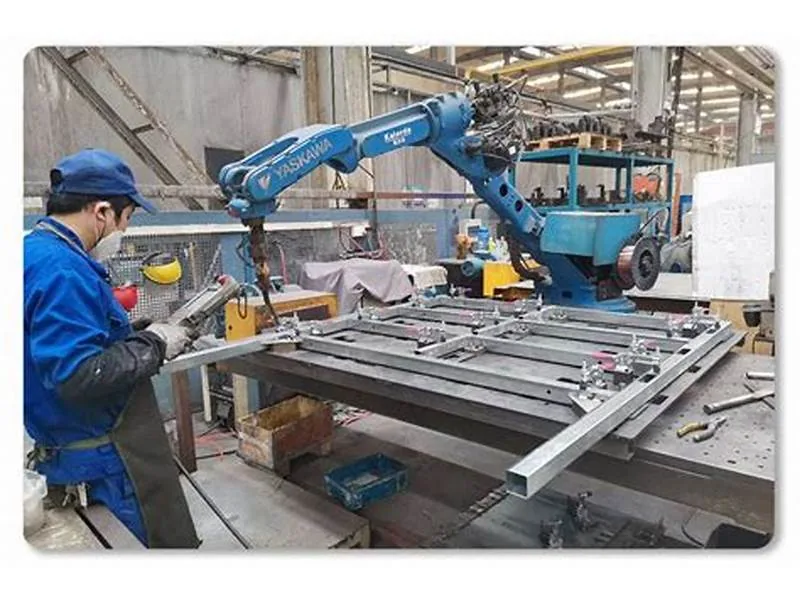
Many assembly problems blamed on welding, fasteners, or operator error actually begin much earlier—inside the stamped part design itself.
A stamped component may look dimensionally acceptable on its own and still perform poorly once it enters a real assembly. Holes may shift after forming. Flanges may not stay square enough for hardware insertion. Spot weld areas may distort because surrounding geometry was designed without enough support. PEM fasteners may spin because the local material condition, flatness, or thickness was never matched properly to the assembly method.
That is why metal stamping assembly is not just “stamping plus a few secondary operations.” It is a manufacturing system where part geometry, tolerance logic, joining method, and downstream handling all have to fit together.
If you are sourcing formed or multi-feature components, our custom metal stamped parts and metal stamping parts pages provide the product context for the kinds of assemblies discussed here. If the program also requires tight feature control before joining, our precision metal stamping page explains why repeatability matters before the first assembly step even begins.
What Is Metal Stamping Assembly?
Metal stamping assembly is the process of taking one or more stamped components and integrating them into a functional subassembly or finished assembly using joining, fastening, insertion, forming, or related secondary operations.
Depending on the part and end use, assembly may involve:
- spot welding
- projection welding
- riveting
- self-clinching hardware insertion
- press-fit features
- tabs and slots
- staking or local forming
- adhesive bonding
- threaded fasteners
- hybrid stamped-and-fabricated integration
Some assemblies are simple. A single bracket may receive one PEM nut and one formed tab. Others are more involved: multiple stampings, welded reinforcements, threaded hardware, cosmetic requirements, and tight positional relationships across the whole assembly.
The point is simple: once a stamped part becomes part of an assembly, the design must be evaluated for more than individual-part manufacturability.
Why Assembly Thinking Has to Start at the Stamping Stage
A common sourcing mistake is treating the stamped part and the assembly process as separate decisions.
In reality, assembly success is often locked in by upstream choices such as:
- hole position strategy
- flatness control
- local material thickness
- flange geometry
- edge condition
- datum structure
- access for joining tools
- feature sequence during forming
If those conditions are wrong, the supplier may still build the part. But the assembly operation becomes slower, less stable, or more expensive than expected.
That is why strong custom metal stamping suppliers evaluate not just whether the part can be stamped, but whether it can still function cleanly in welding, hardware insertion, or downstream fit-up.

Common Metal Stamping Assembly Methods
Different joining methods solve different commercial and engineering problems. None is universally best.
Spot Welding
Spot welding is common when two stamped metal components need a permanent joint without separate fasteners. It works well for many structural or enclosure-style assemblies, especially when:
- the joint area is accessible
- local material stack-up is predictable
- cosmetic impact is acceptable
- heat distortion can be managed
But spot welding is not free of design consequences. The local weld zone needs sufficient contact, proper overlap, and enough geometric stability to avoid inconsistent nugget formation or post-weld distortion.
Riveting
Rivets are often used where welding is not ideal due to material combinations, heat sensitivity, finish protection, or disassembly constraints. Riveting can be robust, but it requires clear thinking about:
- hole alignment
- stack tolerance
- access for setting tools
- burr direction
- deformation of surrounding thin material
If the stamped parts were not designed with assembly stack-up in mind, riveting may become a variation amplifier rather than a secure joining method.
Self-Clinching Hardware / PEM Fasteners
PEM nuts, studs, and standoffs are common in sheet-based assemblies because they add thread function without separate loose hardware installation later.
They are useful, but only if the part supports them correctly.
The receiving area typically needs:
- suitable material thickness
- adequate hardness compatibility
- local flatness
- enough edge distance
- consistent hole condition
A PEM fastener problem is often diagnosed as an insertion issue when the real cause is upstream geometry or material mismatch.
Press-Fit or Interference Features
Some stamped assemblies rely on local press-fit logic, tabs, lances, or controlled interference. These can reduce hardware count and speed up assembly, but they demand repeatable feature formation and realistic tolerance planning.
Adhesive Bonding
Adhesives are less dominant than mechanical joining in many stamped assemblies, but they can be useful for:
- mixed-material joining
- vibration damping
- sealing support
- avoiding thermal distortion
Their success depends heavily on surface condition and process discipline.
Formed Tabs, Stakes, and Mechanical Locks
Some assemblies are intentionally designed so the stamped geometry performs its own joining function through tabs, hooks, stake points, or mechanical captures.
This can be efficient, but only if the formed features hold location consistently enough to engage without forcing the line into rework.
How Part Design Affects Assembly Reliability
A stamped part can pass incoming inspection and still assemble badly.
That usually happens when the drawing was optimized for the standalone part instead of for the assembled condition.
Hole Location Relative to Formed Geometry
If holes are used for fasteners, hardware insertion, alignment pins, or welding fixtures, their location must be evaluated relative to the formed condition—not just the flat blank.
Features pierced before forming may shift enough to affect:
- mating alignment
- fastener insertion
- weld fixture seating
- assembly datum repeatability
Flange Squareness and Angular Variation
A flange that is “close enough” for individual part inspection may still be problematic in assembly if it carries hardware, defines spacing, or serves as a locating interface.
Local Flatness
Assembly operations such as welding and PEM insertion often need controlled local contact. If a formed part contains springback or distortion in the joining zone, the assembly process becomes less predictable.
Edge Quality and Burr Direction
Burr may seem minor until it affects fit-up, scratching, contact seating, electrical grounding, or operator handling in secondary assembly.
Access for Joining Tools
A design may technically allow a weld, rivet, or fastener, but still leave poor access for production tooling. That leads to awkward fixturing, slower cycle time, or process compromise.
Tolerance Stack-Up: The Assembly Problem That Drawings Often Hide
One of the biggest reasons stamped assemblies become difficult is tolerance stack-up.
A single stamped part may remain within print and still cause trouble in a multi-part build if the overall assembly logic was not dimensioned correctly.
Why Stack-Up Matters So Much in Stamped Assemblies
Stamped parts often include:
- pierced features
- formed flanges
- bends with springback
- local flatness variation
- material thickness variation
- secondary operations such as hardware insertion or welding
When multiple such parts come together, the variation does not disappear. It accumulates.
This can show up as:
- hole mismatch
- poor gap control
- fixture force requirements
- assembly twist
- cosmetic mismatch
- hard-to-explain intermittent failures on the line
A smart assembly drawing does not simply assign tight tolerances everywhere. It defines which relationships truly matter and which datums should control fit-up.
Welding Integration: What Designers Often Miss
Welding is common in stamped assemblies because it is strong and familiar. But weld integration creates its own design discipline.
Heat Distortion Is Not a Side Issue
If the stamped part already has residual stress from forming, adding heat can move it further. This becomes especially visible on:
- larger panels
- asymmetrical brackets
- thin-gauge parts
- cosmetic surfaces
- parts with long unsupported flanges
Joint Area Must Be Deliberate
Weld quality depends on contact consistency, local geometry, and fixture support. If the parts touch unpredictably, the weld process has to compensate for design instability.
Weld Access Matters
A weld symbol on the drawing does not guarantee easy production access. Electrode reach, fixture space, part orientation, and handling path all influence whether the weld is commercially practical.
Hardware Insertion: Small Features, Big Consequences
Self-clinching hardware often looks like a minor detail on the bill of materials. In production, it can become one of the most failure-prone operations if the part was not designed correctly.
Common issues include:
- hardware spin-out
- incomplete seating
- cracking around the insertion zone
- distortion of nearby formed features
- interference with later assembly steps
These failures usually trace back to one or more upstream causes:
- material too hard
- local area not flat enough
- insufficient edge distance
- incorrect hole sizing strategy
- insertion placed too close to bends or embosses
This is why hardware insertion must be treated as part of part design, not merely as a catalog selection.
Stamped Parts in Multi-Component Assemblies
Once multiple stamped components interact, the sourcing challenge becomes bigger than any single operation.
A supplier may need to control:
- matching part orientation
- assembly fixture logic
- weld sequence
- hardware insertion order
- cosmetic protection between operations
- downstream packaging after assembly
This is one reason procurement teams should evaluate whether the supplier understands assemblies as systems, not just as individual part numbers.

Common Stamping-to-Assembly Failure Patterns
The most frequent problems tend to be very practical:
“The Part Measures Fine, but the Assembly Doesn’t Fit”
This usually indicates a stack-up or datum issue, not a mystery.
“The Weld Pulls the Part Out of Shape”
Often caused by local stress, insufficient support, or geometry that was already marginal before joining.
“The PEM Fastener Spins”
Usually tied to thickness, hardness, hole preparation, or local flatness.
“Operators Need to Force the Parts Together”
Often a sign that the drawing assumed nominal geometry without enough respect for formed variation.
“The Assembly Route Is Too Slow”
This often means the part was designed for feature presence, not for process flow.
Questions Buyers Should Ask About a Stamped Assembly Program
Useful questions include:
- Which assembly method are you recommending, and why does it fit this part geometry?
- Which stamped features are most likely to affect downstream fit-up?
- Are any holes or fastening points sensitive to forming sequence?
- What local flatness or thickness conditions are required for hardware insertion?
- How is tolerance stack-up being controlled across the assembly?
- Will welding or joining introduce shape movement that the drawing does not currently account for?
- Which features should be made more assembly-friendly before tooling is finalized?
- Can the assembly route scale cleanly if demand increases?
These questions reveal whether the supplier is thinking beyond basic fabrication.
Final Takeaway
Metal stamping assembly is where isolated part features become a real production system.
A stamped part that looks acceptable in the flat or formed state can still cause downstream cost and quality problems if it was not designed for joining, hardware insertion, weld stability, or tolerance stack-up. That is why assembly planning has to begin at the stamping stage, not after the first parts arrive.
The most successful stamped assemblies are not the ones with the most elaborate joining methods. They are the ones where geometry, sequence, access, and dimensional logic were aligned early enough that the joining process feels routine rather than heroic.
For buyers and engineers, that is the practical goal: design and source stamped assemblies so that the assembly process becomes predictable, scalable, and commercially stable—not just technically possible.
FAQ
What is metal stamping assembly?
Metal stamping assembly is the process of joining stamped components or adding secondary hardware and features so they become a functional subassembly or finished assembly. Common methods include welding, riveting, self-clinching hardware, press-fit features, and mechanical locking details.
Why do stamped parts that measure correctly still fail in assembly?
Because assembly fit depends on more than individual dimensions. Hole shift after forming, flange angle variation, local flatness, datum strategy, and tolerance stack-up can all affect whether parts align and join correctly in production.
Are PEM fasteners and self-clinching hardware suitable for stamped parts?
Yes, but only when the receiving area is designed correctly. Material thickness, hardness, local flatness, edge distance, and hole condition all affect whether the hardware seats securely and resists spin-out.
What is the biggest assembly risk in metal stampings?
One of the biggest risks is tolerance stack-up between multiple stamped and formed features. A part can meet print individually and still create fit-up problems once several components are joined together.
When should assembly requirements be considered in a stamping project?
Assembly requirements should be considered during the part design and tooling planning stage, not after stamped parts are already released. Joining method, access, feature order, and stack-up control all influence how the part should be designed from the beginning.
Frequently Asked Questions
What is metal stamping assembly?
Metal stamping assembly is a specialized manufacturing process used to create precise metal components. Our team has over 25 years of experience delivering high-quality results for global clients across automotive, aerospace, electronics, and construction industries.
What tolerances can you achieve for metal stamping assembly?
We achieve standard tolerances of ±0.05mm, with precision tolerances down to ±0.02mm for critical applications. All parts are inspected using CMM equipment with Cpk≥1.33 process capability.
What materials do you work with for metal stamping assembly?
We work with a wide range of materials including aluminum (1100-6061), stainless steel (301-430), carbon steel, copper, brass, phosphor bronze, and specialty alloys. Material thickness ranges from 0.1mm to 12mm.
What is your minimum order quantity for metal stamping assembly?
We accept prototype orders starting from 1 piece. For production runs, we recommend starting at 1,000 pieces for cost efficiency, though we accommodate various volumes based on project requirements.
How do I get a quote for metal stamping assembly?
Submit your drawings (DWG, DXF, STEP, IGES, or PDF) via our contact form or email. We provide DFM feedback and pricing within 24 hours. Our engineering team reviews every inquiry for optimal manufacturability.
What quality certifications do you have for metal stamping assembly?
We maintain ISO 9001:2015 and IATF 16949 certifications with full traceability. Every shipment includes inspection reports, material certificates, and compliance documentation as required.