
Die Wahl des besten Lieferanten von Stanzteilen für Elektrofahrzeugbatterien ist für Hersteller von Elektrofahrzeugen, die zuverlässige, hochpräzise Komponenten in großem Maßstab suchen, von entscheidender Bedeutung. Ein erstklassiger Zulieferer muss über nachgewiesene Fachkenntnisse im Metallstanzen von Elektrofahrzeugbatterien verfügen, über die IATF 16949-Zertifizierung verfügen, enge Toleranzen von ±0,01 mm oder besser einhalten und die Fähigkeit nachweisen, jährlich Millionen von Batteriegehäusestanzungen zu produzieren. Im Jahr 2026, wenn die weltweite Produktion von Elektrofahrzeugen 25 Millionen Einheiten übersteigt, war die Nachfrage nach Stanzteilen für Elektrofahrzeuge noch nie so hoch – und auch die Kosten für die Wahl des falschen Partners waren noch nie so hoch.
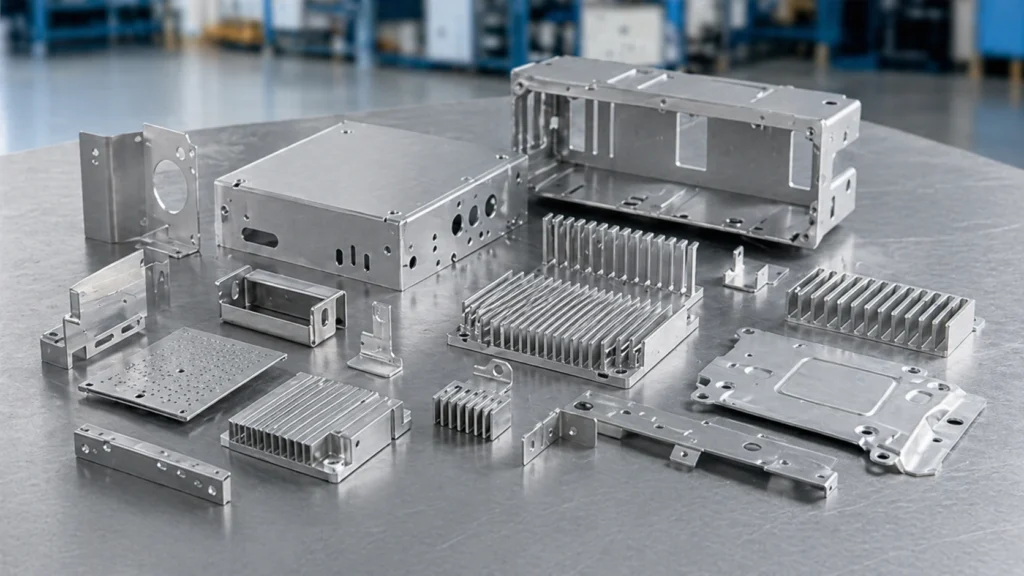
Dieser Leitfaden bietet einen umfassenden Rahmen für die Bewertung und Auswahl des idealen Lieferanten von Stanzteilen für Elektrofahrzeugbatterien und deckt alles von der Materialauswahl und Präzisionsanforderungen bis hin zu Produktionsskalierbarkeit und Qualitätsstandards ab.
Stanzen von Elektrofahrzeugbatterien vs. traditionelles Stanzen in der Automobilindustrie
Bevor wir uns mit den Bewertungskriterien für Lieferanten befassen, ist es wichtig zu verstehen, wie sich Stanzteile für EV-Batterien grundlegend von herkömmlichen Automobil-Stanzteilen unterscheiden. Der folgende Vergleich verdeutlicht die wesentlichen Unterschiede:
| Anforderung | Stempelung von Elektrofahrzeugbatterien | Traditionelle Automobilprägung |
|---|---|---|
| Toleranz | ±0,01 mm – ±0,05 mm | ±0,1 mm – ±0,3 mm |
| Material | Aluminium 3003/5052, Kupfer C110, vernickelter Stahl | Weichstahl, Edelstahl |
| Oberflächenbeschaffenheit | Ra ≤ 0,8μm (elektrische Kontaktflächen) | Ra ≤ 1,6μm |
| Dichtungsanforderungen | Gehäuseintegrität gemäß IP67+ | Nur wetterfeste Abdichtung |
| Wärmemanagement | Integrierte Kühlkanäle, Wärmeleitfähigkeit entscheidend | Minimale thermische Anforderungen |
| Elektrische Leitfähigkeit | Muss bestimmte Widerstandswerte erfüllen | Normalerweise nicht erforderlich |
| Kontaminationskontrolle | Reinraumtauglich der Klasse 1000 | Standardmäßige industrielle Sauberkeit |
| Lautstärke | 500.000 – 10 Mio. Teile/Jahr pro Plattform | Variiert stark |
| Fehlertoleranz | Null Toleranz für interne Kurzschlüsse | Kosmetische Mängel oft akzeptabel |
| Testen | Röntgen, Helium-Dichtheitsprüfung, elektrischer Durchgang | Maßkontrolle, visuell |
Wie die Tabelle zeigt, erfordert das Stanzen von Metallen für Elektrofahrzeugbatterien deutlich engere Toleranzen, speziellere Materialien und strengere Prüfprotokolle als das herkömmliche Stanzen im Automobilbereich. Diese Unterschiede wirken sich direkt auf die Lieferantenauswahl aus.
Arten der Stempelung von Batteriegehäusen
Das Stanzen von Batteriegehäusen ist eine der komplexesten und sicherheitskritischsten Kategorien von Stanzteilen für Elektrofahrzeuge. Das Verständnis der verschiedenen Typen hilft Beschaffungsteams, Anforderungen genau zu spezifizieren.
Batteriefach-Stanzungen
Batterietröge bilden die strukturelle Basis des Batteriepakets. Sie müssen das Gewicht aller Batteriemodule (oft 300–600 kg) tragen, dem Aufprall von Straßenschutt standhalten und eine abgedichtete Umgebung bieten. Hierbei handelt es sich typischerweise um tiefgezogene Aluminiumstanzteile mit komplexen Geometrien, integrierten Befestigungsvorsprüngen und Entwässerungskanälen.
Batteriedeckel-Stanzungen
Die obere Abdeckung des Batteriegehäuses muss die Schutzart IP67 oder IP68 erfüllen und gleichzeitig für Wartungszwecke brauchbar bleiben. Abdeckungsprägungen erfordern eine hervorragende Ebenheit (typischerweise ≤0,15 mm über die gesamte Oberfläche), integrierte Dichtungsnuten und Vorkehrungen für Hochspannungsanschlüsse und Kühlschnittstellen.
Sammelschienen-Stanzteile
Sammelschienen sind elektrisch leitfähige Stanzteile – meist Kupfer oder Aluminium – die Batteriezellen in Reihe oder parallel verbinden. Sie müssen präzise elektrische Widerstandswerte einhalten, korrosionsbeständig sein und innerhalb extrem enger Maßtoleranzen passen. Das Stanzen von Stromschienen ist eines der am schnellsten wachsenden Segmente beim Stanzen von Metallen für Elektrofahrzeugbatterien.
Halterungen und Rahmen für Zellmodule
Diese internen Strukturkomponenten halten einzelne Batteriezellen oder -module innerhalb des Gehäuses in Position. Sie erfordern präzise Ausrichtungsfunktionen, Vibrationsfestigkeit und verfügen häufig über ein thermisches Schnittstellenmanagement.
Schild- und Barrierenprägungen
EMI-Abschirmungen, Wärmebarrieren und feuerbeständige Separator-Stanzteile werden mit zunehmender Batterieenergiedichte immer wichtiger. Für diese Teile werden häufig Speziallegierungen verwendet und erfordern einzigartige Umformtechniken.
Materialauswahl für Stanzteile für EV-Batterien
Die Materialwahl ist eine der folgenreichsten Entscheidungen bei der Stanzung von Elektrofahrzeugbatterien. Der beste Lieferant von Stanzteilen für Elektrofahrzeugbatterien verfügt über umfassendes Fachwissen über mehrere Materialien und kann Sie bei der optimalen Auswahl für jede Anwendung beraten.
Aluminiumlegierungen (3003, 5052, 6061)
Beim Stanzen von Batteriegehäusen dominiert Aluminium aufgrund seines hervorragenden Verhältnisses von Festigkeit zu Gewicht, Korrosionsbeständigkeit und Wärmeleitfähigkeit. Aluminium 3003 ist die häufigste Wahl für Stanzteile von Tabletts und Deckeln und bietet eine gute Formbarkeit und mäßige Festigkeit. Aluminium 5052 bietet eine höhere Festigkeit für Strukturbauteile, während 6061 die höchste Festigkeit unter den häufig gestanzten Aluminiumlegierungen bietet, jedoch schwieriger zu formen ist.
Wichtige Überlegungen:
– Gewichtsreduzierung: Aluminiumgehäuse sind 40–60 % leichter als Stahlgehäuse
– Wärmemanagement: Eine Wärmeleitfähigkeit von ~150 W/m·K unterstützt die Wärmeableitung
– Korrosion: Bildet auf natürliche Weise eine schützende Oxidschicht
– Kosten: Aluminiumblech kostet 2–3x mehr als Stahl, bietet aber erhebliche Einsparungen auf Systemebene
Kupferlegierungen (C110, C101, CDA 720)
Kupfer ist das Material der Wahl für Stromschienen und Hochstromleiter im Batteriepack. C110 (elektrolytisch robustes Kupfer) bietet eine IACS-Leitfähigkeit von 101 % und ist der Industriestandard für Batteriesammelschienen. C101 (sauerstofffreies Kupfer mit hoher Leitfähigkeit) wird dort eingesetzt, wo hervorragende Leitfähigkeit und Schweißbarkeit erforderlich sind.
Wichtige Überlegungen:
– Elektrische Leitfähigkeit: 58 × 10⁶ S/m für reines Kupfer
– Wärmeleitfähigkeit: ~390 W/m·K
– Formbarkeit: Hervorragend, aber die Kaltverfestigung erfordert eine sorgfältige Prozesskontrolle
– Beschichtung: Oft vernickelt für Korrosionsbeständigkeit und Lötbarkeit
Vernickelter Stahl
Vernickelter Stahl wird für Kontakte auf Zellebene und bestimmte Strukturkomponenten verwendet und kombiniert die Festigkeit und Kosteneffizienz von Stahl mit der Korrosionsbeständigkeit und Lötbarkeit von Nickel. Zu den gängigen Spezifikationen gehört vernickelter kaltgewalzter Stahl mit einer Dicke von 0,1–0,3 mm.
Speziallegierungen
Fortschrittliche Batteriedesigns verwenden zunehmend Titan, Invar (zur Anpassung der Wärmeausdehnung) und proprietäre Aluminium-Lithium-Legierungen. Ein kompetenter Lieferant von Stanzteilen für Elektrofahrzeugbatterien sollte Erfahrung mit diesen neuen Materialien nachweisen.
Präzisionsanforderungen für das Metallstanzen von Elektrofahrzeugbatterien
Die Präzisionsanforderungen beim Stanzen von Elektrofahrzeugbatterien übertreffen die der konventionellen Automobilfertigung bei weitem. Folgendes fordern führende Batterie-OEMs im Jahr 2026 von ihren Stanzlieferanten:
Maßtoleranzen
- Gehäusekomponenten:±0,05 mm auf kritischen Passflächen
- Sammelschienen:±0,02mm auf Kontaktflächen und Befestigungslöchern
- Modulklammern:±0,03 mm für Zellausrichtungsmerkmale
- Dichtflächen:Ebenheit ≤ 0,10 mm über die gesamte Teillänge
Oberflächenqualität
- Kontaktflächen:Ra ≤ 0,4μm für elektrische Kontaktflächen
- Dichtflächen:Ra ≤ 0,8μm für Dichtungssitz
- Allgemeine Oberflächen:Ra ≤ 1,6μm für unkritische Bereiche
- Keine Grate:Keine Grattoleranz an allen Kanten (Entgratung auf ≤ 0,02 mm)
Geometrische Toleranzen
- Positionstoleranz:≤ 0,05 mm für Montagelochmuster
- Parallelität:≤ 0,03 mm pro 100 mm für Dichtflächen
- Rechtwinkligkeit:≤ 0,05 mm für gefaltete Kanten
- Profiltoleranz:≤ 0,08 mm für komplex gekrümmte Oberflächen
Um diese Toleranzen konsequent zu erreichen, sind fortschrittliche Servopressentechnologie (200–1000 Tonnen Kapazität), präzisionsgeschliffene Werkzeuge mit Hartmetall- oder Keramikeinsätzen, In-Die-Matrizen-Abtastung und -Überwachung sowie eine kontrollierte Produktionsumgebung mit Temperaturstabilität erforderlich.
Produktionsskalierbarkeit und -kapazität
Bei der Bewertung des besten Lieferanten von Stanzteilen für Elektrofahrzeugbatterien ist die Skalierbarkeit der Produktion ein entscheidender Faktor. Die Produktionsmengen von Elektrofahrzeugen steigen rasant an und Zulieferer müssen nachweisen, dass sie mit ihren Kunden wachsen können.
Presskapazität
Führende Zulieferer verfügen über eine Flotte von Servopressen mit einem Gewicht von 60 Tonnen (für Stromschienen und kleine Halterungen) bis 1.200 Tonnen (für große Gehäusestanzungen). Suchen Sie nach Lieferanten mit:
– Mindestens 20 Produktionspressen
– Servoantriebstechnik für programmierbare Schlittenbewegung
– Schnelle Werkzeugwechselfunktion (SMED) für flexible Planung
– Tandempressenlinien zur mehrstufigen Umformung komplexer Teile
Exzellente Werkzeuge
Die Werkzeugausstattung ist das Rückgrat der Stanzqualität. Top-Lieferanten von Stanzteilen für Elektrofahrzeugbatterien investieren in:
– Eigene Werkzeug- und Formenbaubetriebe mit CNC-, Erodier- und Drahterodierfunktionen
– Folgeverbundwerkzeug-Designs für die Massenproduktion von Stromschienen
– Transferwerkzeuge für große Gehäuseteile
– Simulationsgesteuertes Werkzeugdesign (AutoForm, PAM-STAMP) zur Minimierung von Tryout-Iterationen
Supply-Chain-Integration
Ebenso wichtig ist die Fähigkeit eines Lieferanten, sich in die Lieferkette für Elektrofahrzeuge zu integrieren:
– JIT/JIS-Lieferung an Batteriemontagewerke
– VMI-Programme (Vendor Managed Inventory)
– EDI und digitale Lieferkettenkonnektivität
– Regionale Lagerhaltung in der Nähe wichtiger Produktionszentren für Elektrofahrzeuge
Kapazitätsplanung
Die besten Lieferanten sorgen für eine transparente Kapazitätsplanung:
– Aktuelle Auslastungsraten (idealerweise 60–75 %, um Wachstum zu ermöglichen)
– Dokumentierte Expansionspläne
– Lieferzeitverpflichtungen für zusätzliche Werkzeuge
– Bestimmungen zur Erhöhung der Kapazität für Startrampen
Qualitätsstandards für Stanzteile für Elektrofahrzeugbatterien
Die Qualität der Stempelung von Elektrofahrzeugbatterien ist nicht verhandelbar. Ein einzelnes defektes Teil kann zu einem thermischen Durchgehen, einem Stromausfall oder dem Eindringen von Wasser in einen Akku führen – alles kann katastrophale Folgen haben. Hier sind die zu fordernden Qualitätsstandards und Zertifizierungen:
Erforderliche Zertifizierungen
- IATF 16949:2016— Der grundlegende Qualitätsmanagementstandard für die Automobilindustrie
- ISO 14001— Umweltmanagementsystem
- ISO 45001— Gesundheit und Sicherheit am Arbeitsplatz
- VDA 6.3— Prozessauditstandard (von deutschen OEMs gefordert)
EV-spezifische Qualitätsanforderungen
- AIAG CQI-15— Sonderverfahren: Schweißsystembewertung
- AIAG CQI-23— Bewertung des Formsystems (für umspritzte Komponenten)
- Sauberkeitsstandards— VDA 19.1 / ISO 16232 für Partikelverschmutzung
- Batteriesicherheitsstandards— UN 38.3, GB 38031 (China), UL 2580
Inspektions- und Testmöglichkeiten
Ein qualifizierter Lieferant von Stanzteilen für Elektrofahrzeugbatterien muss Folgendes einhalten:
– KMG-Inspektion— Zeiss- oder Hexagon-Koordinatenmessgeräte mit automatisierten Teileprogrammen
– Sichtprüfung— 100 % Inline-Vision-Systeme für kritische Dimensionen
– Dichtheitsprüfung— Helium-Massenspektrometrie für die Integrität der Gehäusedichtung
– Elektrische Prüfung— 4-Leiter-Widerstandsmessung für Stromschienen
– Materialprüfung— Zug-, Härte- und Leitfähigkeitsprüfung pro Los
– Röntgeninspektion— Zur Schweißnahtqualität und Erkennung interner Fehler
Statistische Prozesskontrolle
- Cpk ≥ 1,67für kritische Dimensionen
- Ppk ≥ 1,33während der Erstproduktion
- SPC-Überwachung in Echtzeit mit automatischen Außer-Kontroll-Warnungen
- Vollständige Rückverfolgbarkeit von der Rohmaterialspule bis zum fertigen Teil
So bewerten und wählen Sie den besten Lieferanten für Stanzteile für Elektrofahrzeugbatterien aus
Basierend auf allen besprochenen Faktoren finden Sie hier einen praktischen Bewertungsrahmen:
Schritt 1: Bewertung der technischen Leistungsfähigkeit
- Überprüfen Sie die Ausrüstungsliste (Pressentonnage, Technologie, Alter)
- Bewerten Sie die Werkzeugfähigkeit (intern oder ausgelagert)
- Bewerten Sie die Materialkompetenz (fragen Sie nach Referenzen zu Ihren spezifischen Legierungen)
- Musterteile mit Maßberichten anfordern
Schritt 2: Qualitätssystemaudit
- Überprüfen Sie die Gültigkeit der IATF 16949-Zertifizierung
- Überprüfen Sie die aktuellen Kundenauditergebnisse
- Untersuchen Sie SPC-Daten und Cpk-Berichte
- Bewerten Sie den Verlauf der Korrekturmaßnahmen und die 8D-Reaktionszeiten
Schritt 3: Überprüfung der Produktion und Lieferkette
- Besichtigen Sie die Anlage und beobachten Sie den Produktionsfluss
- Überprüfen Sie die Kapazitätsauslastung und die Wachstumspläne
- Bewerten Sie die Logistikfähigkeiten und Vorlaufzeiten
- Bewerten Sie die digitale Integrationsbereitschaft
Schritt 4: Kommerzielle und Risikobewertung
- Vergleichen Sie die Gesamteinstandskosten (nicht nur den Stückpreis)
- Bewerten Sie die finanzielle Stabilität und die Eigentümerstruktur
- Überprüfen Sie den Versicherungsschutz für Produkthaftpflicht
- Bewerten Sie geopolitische und Lieferkettenrisikofaktoren
Warum Metal Stamping Parts Ltd Ihr idealer Partner für das Stanzen von Elektrofahrzeugbatterien ist
BeiMetal Stamping Parts LtdWir sind auf das präzise Stanzen von Metallen für Elektrofahrzeugbatterien für die weltweit führenden Batteriehersteller und Elektrofahrzeug-OEMs spezialisiert. Zu unseren Fähigkeiten gehören:
- Komplettes Materialsortiment:Aluminium 3003/5052, Kupfer C110/C101, vernickelter Stahl und Speziallegierungen
- Fortschrittliche Presstechnologie:Über 30 Servopressen von 60 bis 1.000 Tonnen mit In-Die-Sensierung
- Präzisionstoleranzen:Konsistente ±0,01-mm-Fähigkeit bei kritischen Abmessungen
- Umfassende Qualität:IATF 16949-zertifiziert, ausgestattet mit KMG, Sichtprüfung, Helium-Leckprüfung und Röntgen
- Skalierbare Produktion:Kapazität für mehr als 10 Mio. Teile/Jahr mit dokumentierter Expansions-Roadmap
- Globale Logistik:JIT-Lieferung an Batteriemontagewerke in Asien, Europa und Nordamerika
Kontaktieren Sie unser EV-Stanztechnikteamum Ihre Anforderungen an die Prägung des Batteriegehäuses, die Sammelschiene oder die Modulhalterung zu besprechen.
Häufig gestellte Fragen
Was unterscheidet das Stempeln von Elektrofahrzeugbatterien vom normalen Stempeln im Automobilbereich?
Das Stempeln von Elektrofahrzeugbatterien erfordert wesentlich engere Toleranzen (±0,01–0,05 mm gegenüber ±0,1–0,3 mm), spezielle Materialien wie Aluminium- und Kupferlegierungen, IP67+-Abdichtungsfähigkeit sowie strenge Sauberkeits- und elektrische Prüfstandards. Auch die Folgen von Defekten sind weitaus gravierender, da Stanzfehler zu Kurzschlüssen oder thermischem Durchgehen im Akkupack führen können.
Welche Materialien werden für die Stanzung des Batteriegehäuses von Elektrofahrzeugen verwendet?
Die gebräuchlichsten Materialien zum Stanzen von Batteriegehäusen sind die Aluminiumlegierungen 3003 und 5052 für Wannen und Abdeckungen, die Kupferlegierungen C110 und C101 für Sammelschienen und Stromabnehmer sowie vernickelter Stahl für Kontakte auf Zellenebene. Aluminium dominiert aufgrund seines günstigen Verhältnisses von Festigkeit zu Gewicht, Korrosionsbeständigkeit und Wärmeleitfähigkeit.
Wie überprüfe ich die Qualität eines Stanzlieferanten für Batterieteile für Elektrofahrzeuge?
Fordern Sie ihr IATF 16949-Zertifikat an und überprüfen Sie es beim ausstellenden Registrar. Fordern Sie Cpk-Daten zu Abmessungen an, die denen Ihrer Teile ähneln, überprüfen Sie die Liste der Prüfgeräte (KMG, Bildverarbeitung, Dichtheitsprüfung) und führen Sie ein Prozessaudit vor Ort durch. Fordern Sie auch Referenzen von bestehenden Kunden von Elektrofahrzeugbatterien an und überprüfen Sie deren Erfolgsbilanz bei Korrekturmaßnahmen.
Welches Produktionsvolumen sollte ein Stanzlieferant für Elektrofahrzeugbatterien bewältigen können?
Ein leistungsfähiger Zulieferer von Stanzteilen für Elektrofahrzeugbatterien sollte eine Kapazität von mindestens 1–2 Millionen Teilen pro Jahr und Produktlinie nachweisen und die Möglichkeit haben, auf 5–10 Millionen Teile für großvolumige Plattformen zu skalieren. Sie sollten mehr als 20 Produktionspressen unterhalten und über dokumentierte Expansionspläne mit Vorlaufzeiten von 6–12 Monaten für zusätzliche Werkzeuge verfügen.
Welche Qualitätszertifizierungen sind für Stempellieferanten für Elektrofahrzeugbatterien erforderlich?
Zulieferer müssen mindestens über eine IATF 16949:2016-Zertifizierung verfügen. Zu den zusätzlichen Anforderungen gehören in der Regel ISO 14001 (Umwelt), die Einhaltung von VDA 6.3-Prozessaudits (für deutsche OEMs) und die Einhaltung von EV-spezifischen Standards wie UN 38.3 und GB 38031. Sauberkeitsprüfungen gemäß VDA 19.1 oder ISO 16232 werden für interne Komponenten von Batteriepacks zunehmend obligatorisch.
Geschrieben von Liu Zhou, Senior Technical Consultant beiMetal Stamping Parts Ltd. Mit über 15 Jahren Erfahrung im Präzisionsstanzen von Metallen für die Automobil- und Elektrofahrzeugindustrie ist Liu auf die fertigungsgerechte Gestaltung von Batteriegehäusen und die Optimierung der Großserienproduktion spezialisiert.
Letzte Aktualisierung: Mai 2026