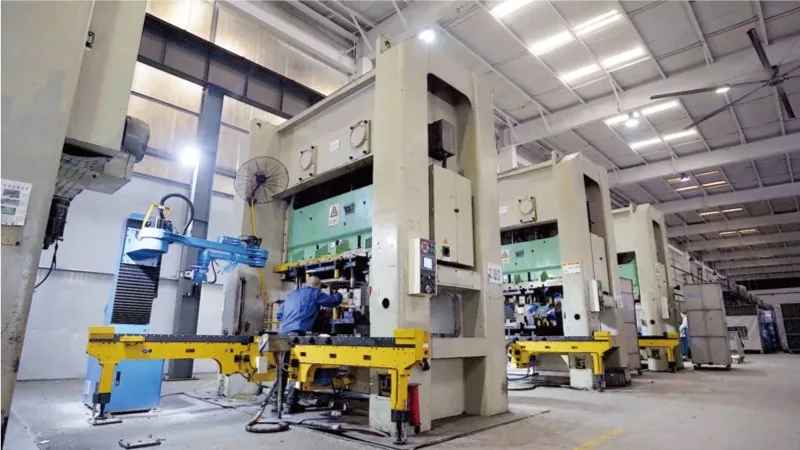
Custom Metal Stamping Parts: From RFQ to Delivery — A Complete Workflow
Ordering custom metal stamping parts is rarely as simple as sending a drawing and waiting for a box to arrive. Between the initial inquiry and final delivery lies a structured sequence of engineering reviews, tooling investments, quality gates, and logistics decisions — each one capable of accelerating your timeline or derailing it entirely.
📖 FDA-compliant medical device stamping from China — Discover how we delivered ±0.01mm tolerance for a US medical device company.
📖 how we reduced automotive OEM stamping costs by 37% — Learn how we helped a Tier 2 supplier achieve $134K annual savings.
This guide walks procurement engineers, product managers, and sourcing professionals through every stage of the custom stamping parts workflow, from preparing a complete RFQ package to managing ongoing production with a long-term supplier. Whether you’re sourcing from a domestic stamping house or working with an overseas custom stamping parts manufacturer, the framework is the same.
Why the Ordering Process Matters as Much as the Part
It is tempting to treat the procurement process as administrative overhead — something you tolerate to get to the part. In reality, a poorly managed ordering process is one of the most common sources of cost overruns and schedule delays in manufactured component supply chains.
Consider the hidden costs that accumulate when process steps are skipped or poorly executed:
- Tooling rework triggered by a design that was never reviewed for manufacturability can add $3,000–$25,000 and 4–8 weeks to a program.
- First article failures caused by ambiguous tolerance callouts force repeat inspection cycles and delay production release.
- Customs holds resulting from incomplete import documentation can freeze a shipment at port for days or weeks, disrupting assembly lines downstream.
- Supplier misalignment on quality standards — discovered only after 50,000 parts are delivered — generates costly sorting, rework, and potential field escapes.
A disciplined, step-by-step workflow eliminates most of these risks before they materialize. The investment in process rigor is almost always smaller than the cost of recovering from avoidable failures.
Step 1: Preparing Your RFQ Package
The quality of your RFQ package directly determines the accuracy and comparability of the quotes you receive. Vague or incomplete RFQs produce vague quotes — and vague quotes lead to budget surprises after contract award.
RFQ Checklist
Before sending your request to any custom stamping parts manufacturer, confirm that your package includes:
- 2D engineering drawing (PDF): With all dimensions, GD&T callouts, tolerances, surface finish symbols, and title block information (part number, revision, material).
- 3D STEP file: For tooling design reference and DFM analysis. IGES is acceptable but STEP is preferred by most tool shops.
- Material specification: Alloy grade, temper, and applicable standard (e.g., ASTM A1008 CS Type B, SAE 1008/1010, or equivalent). If plating or coating is required, specify the pre-plate or bare material separately.
- Annual volume and batch size: Provide a realistic annual quantity and typical order release quantity. A part destined for 500,000 units/year is designed and tooled differently from a 5,000/year component.
- Tolerance requirements: Call out any critical dimensions explicitly. Do not rely on title block tolerances for features that actually matter to function.
- Surface finish and secondary operations: Plating type and thickness, passivation, powder coat, heat treatment, thread tapping, assembly inserts.
- Delivery requirements: Required lead time for first articles, production lead time, and any Kanban/blanket order arrangements you intend to use.
- Quality and certification requirements: PPAP level (if automotive), IATF 16949 or ISO 9001 requirement, material certs (ROHS, REACH, conflict minerals), country-of-origin documentation.
Common RFQ Mistakes
Sending a drawing without a STEP file. Tool designers will estimate — and estimates often miss features that matter.
Specifying tighter tolerances than necessary. A ±0.05 mm tolerance on a non-critical hole drives up tooling cost and scrap rate for no functional benefit. Reserve tight tolerances for dimensions that genuinely affect assembly or performance.
Omitting annual volume. Without volume context, a supplier cannot properly size the tool (number of cavities, strip progression) or amortize tooling cost accurately.
Requesting a quote for “samples only.” Always provide production intent volumes, even for prototype phases. It affects tooling strategy, material procurement, and the supplier’s interest in the program.
Step 2: Supplier Evaluation and Quote Review
When quotes come back, the temptation is to sort by unit price and call the lowest number the winner. This approach reliably produces the wrong outcome.
How to Compare Quotes Beyond Unit Price
A complete quote evaluation should consider:
| Quote Element | What to Look For | Red Flag |
|---|---|---|
| Unit price | Consistent with market range for material + complexity | Suspiciously low (suggests corners will be cut later) |
| Tooling cost | Itemized breakdown: die, fixtures, tryout | Lump sum with no detail |
| Tooling amortization | Explicit volume threshold before tooling is fully amortized | Hidden amortization that inflates unit price at low volumes |
| Lead time — tooling | Realistic for complexity (4–14 weeks) | Promise of 2-week tooling on a complex progressive die |
| Lead time — production | Standard production lead time after first article approval | No production lead time stated |
| Quality system | ISO 9001 or IATF 16949 certificate with current validity | No certification, or certificate expired |
| FAI / PPAP capability | Can provide full PPAP Level 3 if required | FAI = “we’ll send you some parts” |
| Payment and IP terms | Clear tooling ownership clause | Tooling ownership not addressed |
| References | Willing to provide customer references for similar parts | Reluctant to discuss past customers |
A supplier whose unit price is 12% higher but who offers in-house tooling, documented FAI, and IATF 16949 certification will almost always deliver better total cost than the lowest bidder.
Step 3: Design for Manufacturability (DFM) Review
After selecting a supplier and before committing to tooling, request a formal DFM review. A competent custom stamping parts manufacturer will analyze your drawing and return written feedback within 3–7 business days.
What DFM Feedback Looks Like
DFM feedback typically arrives as a marked-up drawing with numbered comments, or as a table with the dimension/feature reference, the concern, and the proposed change. Evaluate each suggestion on its merits — not all DFM feedback reflects your actual requirements.
Common DFM Improvements
Minimum bend radius increase. A drawing specifying a 0.2T inside radius on a 1.2 mm steel part will cause cracking in high-carbon grades. The supplier may recommend 0.5T–1.0T, which reduces scrap and tool wear without affecting function in most applications.
Feature consolidation. Multiple closely-spaced pierced holes can weaken the punch section and cause accelerated die wear. Consolidating two adjacent slots into a single oblong slot simplifies the tool and improves die life.
Material substitution. Cold-rolled steel 1008 may be substituted for 1018 with no functional difference on structural brackets, at meaningfully lower cost and improved formability.
Eliminating sharp internal corners. CNC-machined dies cannot produce perfectly sharp internal radii. A minimum 0.3 mm fillet prevents stress concentration in both the tool and the part.
Accept DFM changes that genuinely reduce cost or risk without compromising function. Push back on changes that would require re-qualification of the part in its end application.
Step 4: Tooling Design and Approval
Tooling is the largest upfront investment in a custom stamping program and the longest-lead item. Managing this step carefully protects both your schedule and your intellectual property.
Tooling Drawing Review
Before the supplier cuts steel, request the tooling design drawings. Review them against your part drawing to verify:
- Strip layout (for progressive dies): part orientation, progression pitch, carrier design
- Critical dimensions are controlled by the tool geometry, not adjusted during setup
- Die material grade appropriate for expected volume (D2 tool steel for >500K cycles; carbide inserts for >5M cycles)
- Provision for tool maintenance access (punch replacement without full disassembly)
Simulation Results
Leading suppliers use FEA (finite element analysis) simulation to predict springback, thinning, and wrinkling before the tool is built. Ask for simulation outputs — they confirm that the tool design has been validated analytically, reducing first-hit risk.
T1 Sample Request
The first shots from a new tool are called T1 (Trial 1) samples. Request 10–30 pieces for dimensional validation before the supplier makes any tool corrections. T1 samples are expected to be close to nominal but are rarely perfect — what matters is that deviations are understood and a correction plan is documented.
Tooling Ownership
Establish tooling ownership contractually before any purchase order is issued. Standard practice for custom tooling is that the customer who pays for the die owns it — but this must be stated explicitly in the purchase agreement. Confirm:
- Customer retains ownership of tooling paid for by the customer
- Supplier will ship or release tooling to a designated alternative supplier upon written request
- Tooling location is documented and accessible for inspection
Tooling Lead Time
Expect 4–6 weeks for simple single-station tools, 8–10 weeks for standard progressive dies, and 12–14 weeks for complex multi-slide or transfer dies. Rush programs may compress timelines by 20–30% at premium cost, but cannot overcome the physics of EDM and grinding operations.
Step 5: First Article Inspection (FAI / PPAP)
First Article Inspection is the formal gate that authorizes transition from tooling/development to production. Do not skip it, abbreviate it, or accept a supplier’s verbal assurance in place of documented evidence.
What FAI Includes
A complete FAI package for custom stamping parts should include:
- Dimensional report: 100% of drawing dimensions measured on a minimum of 5 parts (CMM or manual measurement), with actual values and conformance status
- Material certifications: Mill cert confirming alloy grade, mechanical properties, and heat/lot number
- Surface finish verification: Plating thickness, hardness test results (where applicable), corrosion test certificates
- Capability study: Cpk analysis on critical dimensions (target Cpk ≥ 1.33 for production approval)
- Functional test results: Assembly fit check, pull-out force test, or other application-specific functional verification
- Control plan: Documented in-process inspection frequency and method for each critical characteristic
PPAP Levels for Automotive Customers
If your end customer is an automotive OEM or Tier 1, you may be required to submit a PPAP (Production Part Approval Process) package:
| PPAP Level | Submission Requirements |
|---|---|
| Level 1 | Part Submission Warrant (PSW) only |
| Level 2 | PSW + selected supporting documents |
| Level 3 | PSW + complete supporting documents (most common) |
| Level 4 | PSW + other requirements defined by customer |
| Level 5 | All Level 3 documents + review at supplier’s facility |
Most automotive programs require Level 3 as a minimum. Confirm the required level with your customer before issuing tooling purchase orders, as it affects supplier qualification requirements.
How to Respond to FAI Deviations
When measured values fall outside drawing tolerances, do not panic — and do not waive the requirement. Instead:
- Classify the deviation: Is it a tool correction issue, a material property issue, or a drawing error?
- Issue a formal Deviation Request if a temporary waiver is needed to meet a schedule gate while a permanent fix is implemented.
- Require a documented Corrective Action from the supplier before production approval is granted.
- Re-inspect the corrected characteristic on the next article sample before closing the action.
Step 6: Production Approval and Release
FAI approval triggers production release — but production approval is more than signing off on the FAI package.
Production Approval Process
Issue a formal Production Approval Notice (or equivalent) that captures:
- Approved revision level of drawing and FAI
- Approved material lot / specification
- Approved process parameters (press tonnage, die speed, lubricant type)
- Approved packaging specification
- Quality control plan reference
File this record. If an engineering change is made to the part in the future, this baseline document defines what changed.
Engineering Change Management
Changes to custom stamping parts — even “minor” ones like a dimensional tolerance relaxation — require a formal Engineering Change Order (ECO) with a new FAI or delta FAI. Resist the temptation to authorize verbal changes. Undocumented changes are the leading cause of supplier disputes and field quality escapes.
Kanban and Blanket Order Schedules
For recurring production, establish a Kanban replenishment trigger or a blanket purchase order with scheduled releases. Communicate:
- Minimum order quantity per release
- Forecast horizon (rolling 6-month or 12-month volume projection)
- Release lead time (how many days in advance the supplier needs a firm release to meet your delivery date)
- Maximum and minimum inventory targets at the supplier’s facility
This framework allows the supplier to maintain raw material buffer stock and pre-schedule press time, resulting in shorter response lead times for you.
Step 7: Ongoing Production and Quality Monitoring
Production approval is not the end of quality management — it is the beginning.
In-Process Quality Checks
A properly structured control plan specifies what is measured, at what frequency, and by what method during production. Typical in-process checks for custom stamping include:
- First-off / Last-off inspection: Dimensional check at the start and end of each production run
- Periodic sampling: CMM or gauge check every N pieces or N hours
- Visual inspection: Burr height, surface scratches, edge condition — often 100% manual visual at line speed
- Press monitoring: Tonnage monitoring systems that detect tool wear or material variation in real time
AQL Sampling for Incoming Inspection
When parts arrive at your facility, incoming inspection should follow a statistically valid sampling plan. ANSI/ASQ Z1.4 AQL sampling tables are the standard reference. For most stamping applications:
- AQL 0.65 for critical dimensions (safety or function-critical)
- AQL 1.0 for major characteristics
- AQL 4.0 for minor cosmetic characteristics
Handling Non-Conformances (NCR Process)
When non-conforming parts are discovered — either at incoming inspection or during assembly — issue a formal Non-Conformance Report (NCR) to the supplier. The NCR should require:
- Containment: What has the supplier done to prevent additional non-conforming parts from reaching your facility?
- Root cause analysis: 5-Why or fishbone analysis to identify the true cause, not the symptom
- Corrective action: Specific, measurable actions with target completion dates
- Effectiveness verification: Evidence that the corrective action eliminated the root cause
Track NCRs over time. A supplier with more than 2–3 NCRs per year on a part family is exhibiting a systemic quality problem that requires escalation.
Step 8: Delivery, Packaging, and Logistics
The final mile of the workflow is often underinvested — until a mis-packaged shipment arrives with bent parts, or a customs hold delays your production line.
Packaging Specifications
Define packaging requirements in your purchase order or a separate packaging specification document:
- Bulk packaging (boxes with dunnage): Suitable for robust parts where minor contact marks are acceptable
- Tray or partition packaging: Required for precision or cosmetically sensitive parts; prevents part-to-part contact
- Reel packaging: Standard for high-speed automatic assembly; specify carrier tape width, pocket dimensions, and reel size
Always specify the maximum stack height, box weight limit, and whether parts must be individually wrapped or separated by interleave paper.
Customs Documentation for Import
For international orders, ensure the following documents accompany each shipment:
- Commercial invoice (with accurate HS code, unit value, and country of origin)
- Packing list (carton count, gross and net weight, dimensions)
- Certificate of Origin (required for preferential tariff treatment under applicable trade agreements)
- Material Safety Data Sheet (if applicable for surface treatments)
- Any customer-required certifications (RoHS, REACH, conflict minerals declaration)
Incorrect HS codes or missing certificates of origin are the two most common causes of customs delays. Verify both with your customs broker before the first shipment.
Lead Time Planning for International Orders
Typical international supply chain lead times from China-based manufacturers:
| Shipping Mode | Transit Time | Best For |
|---|---|---|
| Ocean (FCL/LCL) | 18–35 days (port to port) | High-volume, non-urgent replenishment |
| Air freight | 3–7 days (door to door) | Urgent replenishment, low-volume high-value parts |
| Express courier | 2–5 days | Samples, FAI packages, emergency quantities |
Plan your reorder point and safety stock levels around the longest realistic lead time in your supply chain, not the average. A missed vessel causes a 7–10 day delay; a typhoon or port strike can cause 3–4 weeks.
Buffer Stock Strategy
Establish a safety stock level at your facility equal to at least one full production lead time worth of consumption. For a part consumed at 10,000 units/week with a 4-week supplier lead time, maintain a minimum of 40,000 units on hand. Review and update safety stock levels quarterly as consumption patterns change.
Managing Long-Term Supplier Relationships
Custom stamping programs are typically multi-year commitments. The supplier who builds your tooling and qualifies your first articles will likely be your partner for the life of the program. Investing in the relationship pays dividends in quality, responsiveness, and cost.
Annual Business Reviews
Schedule a formal Annual Business Review (ABR) with key suppliers. Agenda items should include:
- Quality performance (PPM, NCR count, on-time delivery)
- Cost reduction targets and progress (3–5% per year is a reasonable target for mature programs)
- Capacity planning for the next 12–18 months
- Technology roadmap (new press capabilities, automation investments)
- Tooling condition assessment and maintenance plan
Tooling Maintenance
Die tooling is a depreciating asset that requires periodic maintenance to hold dimensional specifications. Establish a tooling maintenance schedule with the supplier:
- Preventive maintenance: Every N strokes (supplier recommendation based on material and part geometry)
- Punch replacement: Tracked by individual punch wear, not calendar date
- Die resharpen: When edge wear causes burr height to exceed specification
- Full refurbishment: After major volume milestones (e.g., every 5 million strokes for a carbide-insert tool)
Document all maintenance events in a tooling history log. This record is essential if you ever need to relocate tooling to an alternative supplier.
Continuous Improvement
Engage your supplier in structured cost reduction and quality improvement initiatives. Value engineering reviews — where engineering and manufacturing jointly review drawings for cost-out opportunities — typically yield 5–15% material or process cost savings on mature parts. Share the savings 50/50 to align incentives.
Frequently Asked Questions
Q: How long does it take to get a quote for custom stamping parts?
A: Most capable suppliers return quotes within 5–10 business days for standard parts. Complex assemblies or parts requiring significant DFM analysis may take 2–3 weeks. Providing a complete RFQ package (2D drawing, STEP, volume, material spec) cuts response time significantly.
Q: Who owns the tooling after it’s built?
A: Tooling ownership follows the money — if your company pays for the tooling, you own it. This must be stated explicitly in the purchase order and supplier agreement. Without a written clause, ownership may be disputed if you later try to move production to a different supplier.
Q: What is the difference between FAI and PPAP?
A: FAI (First Article Inspection) is a general-industry practice of measuring and documenting a representative sample of parts from the first production run. PPAP (Production Part Approval Process) is an automotive-industry standard (defined by AIAG) that formalizes and expands FAI requirements with specific documentation formats and submission levels. PPAP is required by automotive OEMs and Tier 1s; FAI is applicable across all industries.
Q: Can I order custom stamping parts in small quantities?
A: Yes, but the economics change significantly. Tooling cost is amortized over fewer parts, driving up unit cost. Many suppliers offer soft tooling (aluminum or pre-hardened steel) for prototype quantities of 100–1,000 pieces, with lower tooling cost but shorter tool life. Discuss your volume requirements openly with your supplier to find the right tooling strategy. Learn more at Low-Volume Metal Stamping.
Q: What should I do if my stamped parts fail incoming inspection?
A: Quarantine the shipment immediately — do not release to production. Issue a formal NCR to the supplier with photos, measurement data, and the specific drawing requirements that were not met. Request containment (return or sorting of suspect stock at the supplier’s expense) and a root cause / corrective action response within 5–10 business days. Do not accept verbal explanations in place of documented corrective actions.
Conclusion
The path from RFQ to delivery for custom stamping parts is a structured, multi-stage process. Each step — from preparing a complete RFQ package to managing tooling ownership, executing a rigorous FAI, and planning international logistics — reduces risk and protects your program schedule and budget.
Working with an experienced custom stamping parts manufacturer who can guide you through this workflow is one of the highest-leverage decisions you can make. A supplier who actively participates in DFM, delivers complete FAI documentation, and communicates proactively on quality issues is a strategic asset — not just a parts vendor.
Ready to start your next custom stamping program?
Submit an RFQ and receive a detailed quote within 5 business days →
Frequently Asked Questions
What is custom stamping parts manufacturer?
Custom stamping parts manufacturer is a specialized manufacturing process used to create precise metal components. Our team has over 25 years of experience delivering high-quality results for global clients across automotive, aerospace, electronics, and construction industries.
What tolerances can you achieve for custom stamping parts manufacturer?
We achieve standard tolerances of ±0.05mm, with precision tolerances down to ±0.02mm for critical applications. All parts are inspected using CMM equipment with Cpk≥1.33 process capability.
What materials do you work with for custom stamping parts manufacturer?
We work with a wide range of materials including aluminum (1100-6061), stainless steel (301-430), carbon steel, copper, brass, phosphor bronze, and specialty alloys. Material thickness ranges from 0.1mm to 12mm.
What is your minimum order quantity for custom stamping parts manufacturer?
We accept prototype orders starting from 1 piece. For production runs, we recommend starting at 1,000 pieces for cost efficiency, though we accommodate various volumes based on project requirements.
How do I get a quote for custom stamping parts manufacturer?
Submit your drawings (DWG, DXF, STEP, IGES, or PDF) via our contact form or email. We provide DFM feedback and pricing within 24 hours. Our engineering team reviews every inquiry for optimal manufacturability.
What quality certifications do you have for custom stamping parts manufacturer?
We maintain ISO 9001:2015 and IATF 16949 certifications with full traceability. Every shipment includes inspection reports, material certificates, and compliance documentation as required.
Related Resources
Frequently Asked Questions
What is custom stamping parts manufacturer?
Custom stamping parts manufacturer is a specialized manufacturing process used to create precise metal components. Our team has over 25 years of experience delivering high-quality results for global clients across automotive, aerospace, electronics, and construction industries.
What tolerances can you achieve for custom stamping parts manufacturer?
We achieve standard tolerances of ±0.05mm, with precision tolerances down to ±0.02mm for critical applications. All parts are inspected using CMM equipment with Cpk≥1.33 process capability.
What materials do you work with for custom stamping parts manufacturer?
We work with a wide range of materials including aluminum (1100-6061), stainless steel (301-430), carbon steel, copper, brass, phosphor bronze, and specialty alloys. Material thickness ranges from 0.1mm to 12mm.
What is your minimum order quantity for custom stamping parts manufacturer?
We accept prototype orders starting from 1 piece. For production runs, we recommend starting at 1,000 pieces for cost efficiency, though we accommodate various volumes based on project requirements.
How do I get a quote for custom stamping parts manufacturer?
Submit your drawings (DWG, DXF, STEP, IGES, or PDF) via our contact form or email. We provide DFM feedback and pricing within 24 hours. Our engineering team reviews every inquiry for optimal manufacturability.
What quality certifications do you have for custom stamping parts manufacturer?
We maintain ISO 9001:2015 and IATF 16949 certifications with full traceability. Every shipment includes inspection reports, material certificates, and compliance documentation as required.