
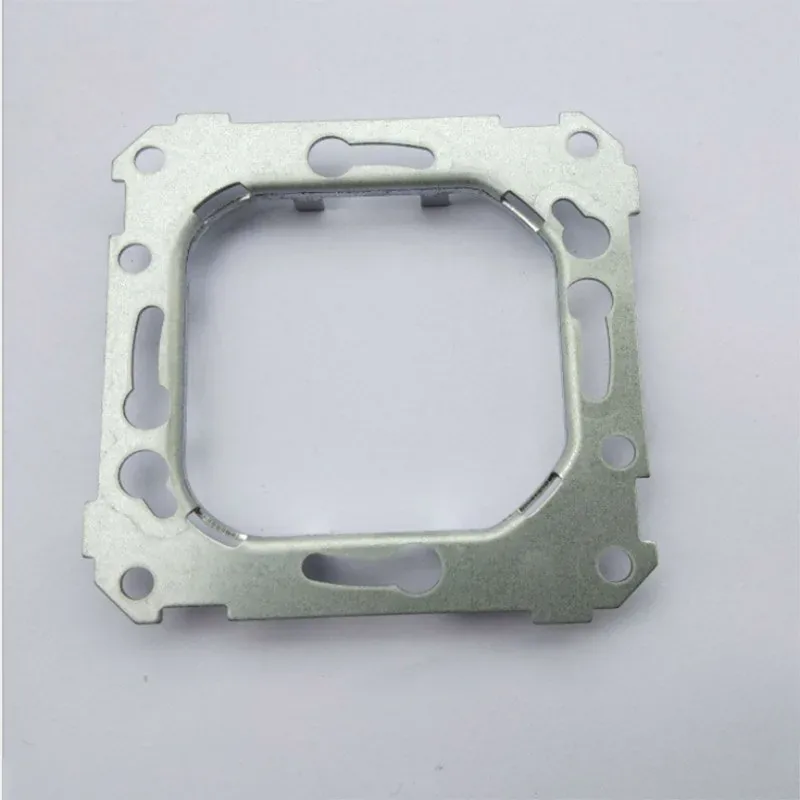
Short answer: Aluminum stamped parts need early review of alloy, temper, bend radius, grain direction, galling risk, surface scratches, flatness, and finishing. A drawing that works for mild steel may not quote cleanly in aluminum. The RFQ should state both the mechanical function and cosmetic surface expectations.
Aluminum is attractive when weight, corrosion resistance, conductivity, or appearance matters. It is also easy to underestimate. Some alloys bend cleanly, some crack at tight radii, and some mark easily during feeding, forming, or packaging. The supplier needs more than a thickness and outside profile.
Use this page with the aluminum stamping guide, material selection guide, springback guide, and surface finish inspection guide.
Aluminum stamping risks to review
| Issue | Why it matters | RFQ detail |
|---|---|---|
| Alloy and temper | Formability changes sharply between grades and tempers. | State exact alloy, temper, approved alternates, and mechanical needs. |
| Bend cracking | Tight bends across grain can crack or whiten. | Define bend radius, bend direction, and cosmetic acceptability. |
| Galling and pickup | Aluminum can transfer to tooling and scratch parts. | Ask how tooling, lubrication, and cleaning are controlled. |
| Finish sensitivity | Anodized or visible surfaces may reject small marks. | Mark cosmetic zones and packaging protection requirements. |
Material selection is part of DFM
A common RFQ problem is specifying only ‘aluminum’ without alloy and temper. 5052, 6061, 3003, and other grades can behave very differently. A supplier may quote a safer alloy, while the buyer expects a stronger or more cosmetic material. That gap affects cost, forming route, and lead time.
If the part carries current, dissipates heat, mounts to a frame, or receives anodizing, those requirements should be stated. For electrical or thermal parts, also review the busbar RFQ guide and stamped heat sink guide for related questions.
Surface and packaging expectations
Aluminum scratches and rub marks can become the main quality issue even when dimensions are correct. If one side is visible, mark the A-surface. If parts are nested, stacked, or shipped loose, ask how the supplier prevents rubbing, dents, and black marks. Protective film may help, but it can also affect forming or add removal work.
For anodizing, painting, powder coating, or chemical conversion coating, the stamping supplier should know whether edges, burrs, and forming marks will be visible after finishing. Connect the RFQ to the surface finishes page and packaging and shipping guide.
RFQ details to include
- 2D drawing and 3D model with exact alloy, temper, thickness, and finish.
- Bend radius, grain direction requirement, burr side, and cosmetic zones.
- Flatness, coplanarity, hole position, and mating surface requirements.
- Expected finishing route: anodizing, painting, powder coating, plating, or bare aluminum.
- Scratch, dent, rub mark, and handling acceptance criteria.
- Annual volume, release quantity, prototype needs, and target lead time.
- Packaging method, separators, film, trays, or bagging requirements.
Inspection and production controls
Dimensional inspection should not be separated from surface handling. A part can pass hole position and still fail because of scratches or bend whitening. For aluminum brackets, covers, contacts, and heat-spreading parts, the control plan should cover forming, lubrication residue, cleaning, finish, and packaging.
Send drawings and surface expectations through the contact page. If you have an existing aluminum part with cracking, galling, or cosmetic complaints, attach photos in the RFQ form so the forming and packaging route can be reviewed before tooling.
For quote comparison, ask suppliers to state which aluminum assumptions they used instead of only returning a price. The useful answer names alloy, temper, burr side, bend radius risk, lubrication or galling control, finishing route, and packaging protection. Those notes often explain price differences better than the unit price alone.
If the aluminum part will replace steel, include the reason for the change. Weight reduction, corrosion behavior, conductivity, appearance, or easier finishing can each point to a different alloy and inspection plan. Without that context, the supplier may optimize for formability while the buyer needs stiffness, surface quality, or electrical performance.
FAQ
Which aluminum alloys are used for stamped parts?
Common choices depend on formability, strength, conductivity, corrosion resistance, and finish needs. The exact alloy and temper should be stated in the RFQ.
Why do aluminum stamped parts crack at bends?
Cracking can come from tight radius, wrong temper, grain direction, work hardening, poor relief, or an alloy that is not suited for the bend geometry.
How can scratches be controlled on aluminum parts?
Define cosmetic zones, handling method, lubrication and cleaning expectations, packaging separators, and whether protective film or trays are required.
What should an aluminum stamping RFQ include?
Include alloy, temper, thickness, finish, bend radius, grain direction, surface criteria, flatness, volume, inspection needs, and packaging method.