
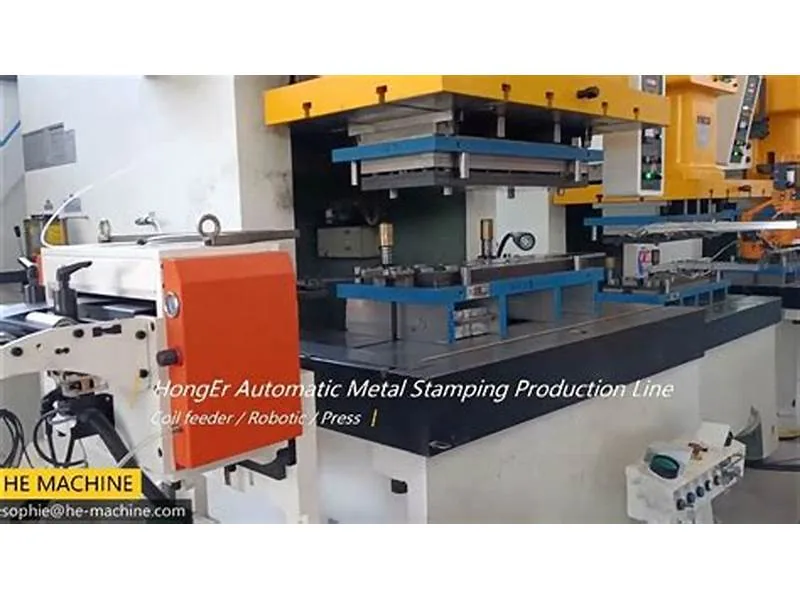
A low piece price can be the most expensive decision in a stamping program.
That sounds contradictory until you look at how volume really affects tooling, launch risk, engineering flexibility, inspection burden, and change management. In metal stamping, the question is not only how many parts you want. The real question is whether your manufacturing strategy matches the stage and shape of your program.
Many buyers get trapped by a simplistic comparison:
- low volume equals expensive,
- high volume equals efficient,
- therefore high-volume tooling should always be the goal.
That logic breaks down quickly in real projects.
If the part design is still moving, if the forecast is unstable, if the geometry is not fully validated, or if the launch window is tight, forcing a high-volume tooling strategy too early can lock the project into the wrong cost structure. On the other hand, if the part is stable and demand is real, staying too long in a low-volume route can waste money every month.
That is why volume strategy should be treated as a manufacturing decision, not just a commercial label.
If you are comparing production routes for a new part, our custom metal stamping page gives the broader sourcing context. If you are evaluating a supplier’s process capability, our metal stamping manufacturer page explains what stable production planning should look like behind the quote.
What “Low Volume” and “High Volume” Actually Mean
There is no universal part-count line that automatically defines low volume versus high volume.
A run of 20,000 pieces may be high volume for a large, complex formed bracket with significant tooling cost. The same number may be low volume for a small terminal designed for progressive die production.
That is why experienced suppliers do not define volume in isolation. They define it relative to:
- part geometry
- tooling investment
- annual demand consistency
- engineering change risk
- process complexity
- required unit cost
- lead-time pressure
Still, the categories are useful if treated as commercial logic rather than rigid numbers.
Low-Volume Stamping
Low-volume stamping usually applies when:
- annual demand is limited,
- demand is uncertain,
- the design is still evolving,
- the customer needs bridge production,
- or the part is not yet ready for full-rate dedicated tooling.
High-Volume Stamping
High-volume stamping usually applies when:
- part geometry is stable,
- repeat demand is well established,
- the program needs strong unit-cost efficiency,
- and dedicated tooling can be amortized across enough volume to justify the upfront investment.
Between those two is a practical middle zone often called bridge production. That zone matters more than many buyers realize.
Why Volume Strategy Changes the Entire Manufacturing Plan
Volume does not only change price. It changes the structure of the process itself.
The production route for a low-volume part may prioritize:
- faster tooling launch
- lower capital exposure
- easier engineering changes
- simpler dies
- more operator flexibility
- hybrid secondary operations
The production route for a high-volume part may prioritize:
- higher press speed
- stronger automation
- more robust die protection
- lower cycle cost
- tighter repeatability over long runs
- more engineered material usage
If two suppliers quote the same part using different assumptions about volume strategy, their prices may look hard to compare. That is because they are often quoting two different manufacturing systems, not just two different margins.
If the program also includes close-tolerance features, the decision becomes even more sensitive. That is where precision metal stamping capability starts to matter beyond simple tonnage capacity.

Low-Volume Stamping: Where It Makes Sense
Low-volume stamping is not a compromise by default. In the right situation, it is the correct commercial choice.
1. The Design Is Still Moving
If the part is still going through revision cycles, committing immediately to a complex high-volume tool can be risky. Engineering changes after tool build can trigger:
- die rework cost
- launch delays
- partial station redesign
- scrap from obsolete inventory
- repeated validation cycles
A lower-volume approach gives the program room to mature.
2. Forecasts Are Not Yet Reliable
Buyers sometimes receive aggressive internal forecasts before the product has real market traction. If actual demand falls short, the supposedly efficient high-volume tool becomes an underutilized asset.
Low-volume strategies reduce this exposure.
3. Bridge Production Is Needed Before Full Ramp-Up
A common scenario is this:
- the part design is mostly stable,
- pilot and initial customer demand are real,
- but the full annual production rate is not ready yet.
In that case, bridge production can fill the gap between prototype and full-rate tooling.
4. Speed Matters More Than Lowest Piece Price
Sometimes the program value is in launching early, not in optimizing the tenth decimal place of unit cost. If a simpler low-volume route gets parts qualified and moving while demand is still being proven, it may outperform a slower, more optimized solution.
Typical Low-Volume Tooling and Process Strategies
Low-volume stamping can take different forms depending on the part.
Common approaches include:
- simple blanking and forming dies
- line-die or stage-die sequences
- soft tooling for early production
- combination routes using laser cut blanks plus forming
- prototype dies with fewer integrated operations
- manual or semi-automated secondary handling
These routes are usually less efficient at very high output, but they offer advantages in flexibility and launch speed.
That flexibility is often more valuable than theoretical cost optimization when the program is still learning what the real demand will be.
The Hidden Strength of Low-Volume Production
The biggest advantage of low-volume stamping is not that it is cheap. Often it is not. The advantage is that it is adaptable.
A more adaptable process can absorb:
- drawing changes
- tolerance clarification
- mating-part adjustments
- finish changes
- packaging changes
- assembly feedback from early builds
This is why low-volume routes are often commercially smarter during the early life of a program, even when the quoted piece price is higher.
High-Volume Stamping: Where It Wins
High-volume stamping becomes powerful when the program has moved past uncertainty.
1. The Design Is Stable
A dedicated high-volume tool makes sense when the part geometry is no longer drifting. Stability allows the supplier to invest in a process built for long-run efficiency.
2. Demand Is Real and Repeatable
High-volume tooling needs enough production to amortize the investment. If the part will run at consistent annual levels, the economics improve quickly.
3. Unit Cost Really Matters at Scale
At larger quantities, even small differences in:
- cycle time
- strip yield
- labor content
- secondary operation count
- scrap percentage
can create major annual cost differences.
That is where high-volume stamping can outperform all bridge strategies.
4. Quality Needs to Stay Stable Over Long Runs
Well-developed high-volume tooling usually supports better long-run consistency through:
- integrated piloting
- better station control
- die protection systems
- automation
- engineered handling
- dedicated gauging logic
This does not mean high volume automatically means better quality. It means a mature high-volume system can be designed for repeatability if the part and forecast justify that investment.
Typical High-Volume Tooling and Process Strategies
High-volume stamping often involves:
- progressive dies
- transfer dies for more complex formed parts
- coil-fed automation
- faster presses
- automated part separation or conveyance
- integrated in-die control logic
- better optimized strip layouts
- more disciplined maintenance intervals
The goal is not only to make the part. The goal is to make it repeatedly at a lower cost per unit over time.

The Cost Structure Difference That Buyers Need to Understand
The most important difference between low and high volume is not just piece price. It is cost distribution.
Low-Volume Cost Structure
Low-volume programs usually have:
- lower upfront tooling investment
- higher unit cost
- more labor or handling content
- more flexibility for changes
- less efficient amortization of engineering effort
High-Volume Cost Structure
High-volume programs usually have:
- higher upfront tooling investment
- lower unit cost over time
- better process efficiency
- stronger justification for automation
- less flexibility once the tool concept is locked
This is where buyers often make a mistake. They compare low-volume and high-volume piece prices without comparing the assumptions behind tooling, ramp timing, revision risk, and actual consumption.
A lower piece price does not guarantee a lower total program cost.
Bridge Production: The Strategy Many Programs Actually Need
Bridge production is often the most realistic option for growing programs.
It exists because prototype logic and full-rate mass production are not the same thing. Many parts need an intermediate manufacturing stage where the product is real enough to sell, but not stable enough to lock into the final production architecture.
Bridge production helps when:
- demand is starting but not proven,
- design changes are slowing down but not over,
- customer approval timing is still developing,
- or tooling investment needs to be phased.
A strong supplier should be able to explain when bridge production is smarter than either extreme.
When You Should Not Chase the Lowest Unit Price
This is where many purchasing teams get into trouble.
The lowest unit price can be the wrong decision when:
- the forecast is uncertain,
- the part is likely to change,
- the launch timing is tight,
- the customer is still validating the product,
- the tooling payback depends on unrealistic volume,
- or the supplier is forcing a high-volume route that reduces flexibility too early.
In those cases, chasing the lowest nominal piece price can create:
- stranded tooling investment
- expensive engineering changes
- launch delays
- inventory mismatch
- slower response to field feedback
The practical rule is simple: do not optimize the cost model for volume you do not actually have yet.
Questions Buyers Should Ask Before Choosing the Volume Strategy
Useful sourcing questions include:
- What annual volume assumption is the quote based on?
- How sensitive is the economics to forecast reduction or delay?
- If the part changes after initial launch, what portion of the tool is most exposed?
- Is there a bridge-production option before the final high-volume tool?
- How much unit-cost reduction comes from strip yield versus speed versus labor elimination?
- What quality risks increase if we delay the full-rate tooling strategy?
- At what annual volume does the higher tooling investment actually pay back?
- How long would it take to transition from low-volume to high-volume production?
These questions quickly reveal whether the supplier is aligning the process with the program or simply pushing their preferred tooling model.
Common Mistakes in Volume Planning
Some of the most common mistakes include:
- building expensive full-rate tooling from speculative forecasts
- staying too long in a labor-heavy short-run route after demand is proven
- confusing prototype success with production readiness
- treating tooling cost as separate from launch risk
- assuming every part should move directly from sample to mass production
- underestimating how design changes affect high-volume tools
Most of these problems are not technical failures. They are decision failures.
Final Takeaway
Low-volume and high-volume stamping are not opposing quality levels. They are different manufacturing strategies for different business realities.
Low-volume routes are valuable when flexibility, speed, uncertainty management, and change tolerance matter most. High-volume routes are powerful when the design is stable, the demand is real, and long-run efficiency justifies deeper tooling investment.
The best decision is rarely the one with the cheapest visible unit price. It is the one that matches the real maturity of the part, the real confidence of the forecast, and the real cost of getting the program wrong.
For buyers, that is the key lesson: volume should not be treated as a label. It should be treated as a process strategy.
If that strategy is chosen well, the program scales smoothly. If it is chosen badly, cost problems usually show up long after the original quote looked attractive.
FAQ
What is considered low-volume metal stamping?
Low-volume metal stamping usually refers to programs where annual demand, design stability, or market certainty is not high enough to justify full dedicated high-volume tooling. The exact quantity depends on part size, complexity, tooling cost, and target pricing.
When should a company move from low-volume to high-volume stamping?
A company should usually move when the design is stable, demand is proven, and the cost savings from better tooling efficiency can realistically pay back the higher investment. The decision should be based on real program maturity, not only optimistic forecasts.
Why is bridge production useful in stamping?
Bridge production helps companies fill the gap between prototype and full-rate mass production. It allows early commercial supply while demand, design, and validation are still maturing, reducing the risk of committing too early to expensive dedicated tooling.
Is the lowest unit price always the best option in stamping?
No. A low unit price can be misleading if it depends on unrealistic volumes, inflexible tooling, or a process that cannot absorb engineering changes. Total program cost matters more than the nominal price per part.
What factors change most between low-volume and high-volume stamping?
The biggest differences are tooling investment, unit cost structure, flexibility, automation level, launch speed, and how easily the process can absorb engineering changes. High volume usually improves long-run efficiency, while low volume usually improves adaptability.
Frequently Asked Questions
What is high volume vs low volume stamping?
High volume vs low volume stamping is a specialized manufacturing process used to create precise metal components. Our team has over 25 years of experience delivering high-quality results for global clients across automotive, aerospace, electronics, and construction industries.
What tolerances can you achieve for high volume vs low volume stamping?
We achieve standard tolerances of ±0.05mm, with precision tolerances down to ±0.02mm for critical applications. All parts are inspected using CMM equipment with Cpk≥1.33 process capability.
What materials do you work with for high volume vs low volume stamping?
We work with a wide range of materials including aluminum (1100-6061), stainless steel (301-430), carbon steel, copper, brass, phosphor bronze, and specialty alloys. Material thickness ranges from 0.1mm to 12mm.
What is your minimum order quantity for high volume vs low volume stamping?
We accept prototype orders starting from 1 piece. For production runs, we recommend starting at 1,000 pieces for cost efficiency, though we accommodate various volumes based on project requirements.
How do I get a quote for high volume vs low volume stamping?
Submit your drawings (DWG, DXF, STEP, IGES, or PDF) via our contact form or email. We provide DFM feedback and pricing within 24 hours. Our engineering team reviews every inquiry for optimal manufacturability.
What quality certifications do you have for high volume vs low volume stamping?
We maintain ISO 9001:2015 and IATF 16949 certifications with full traceability. Every shipment includes inspection reports, material certificates, and compliance documentation as required.
