

Custom Metal Stamping Services for OEM and Industrial Production
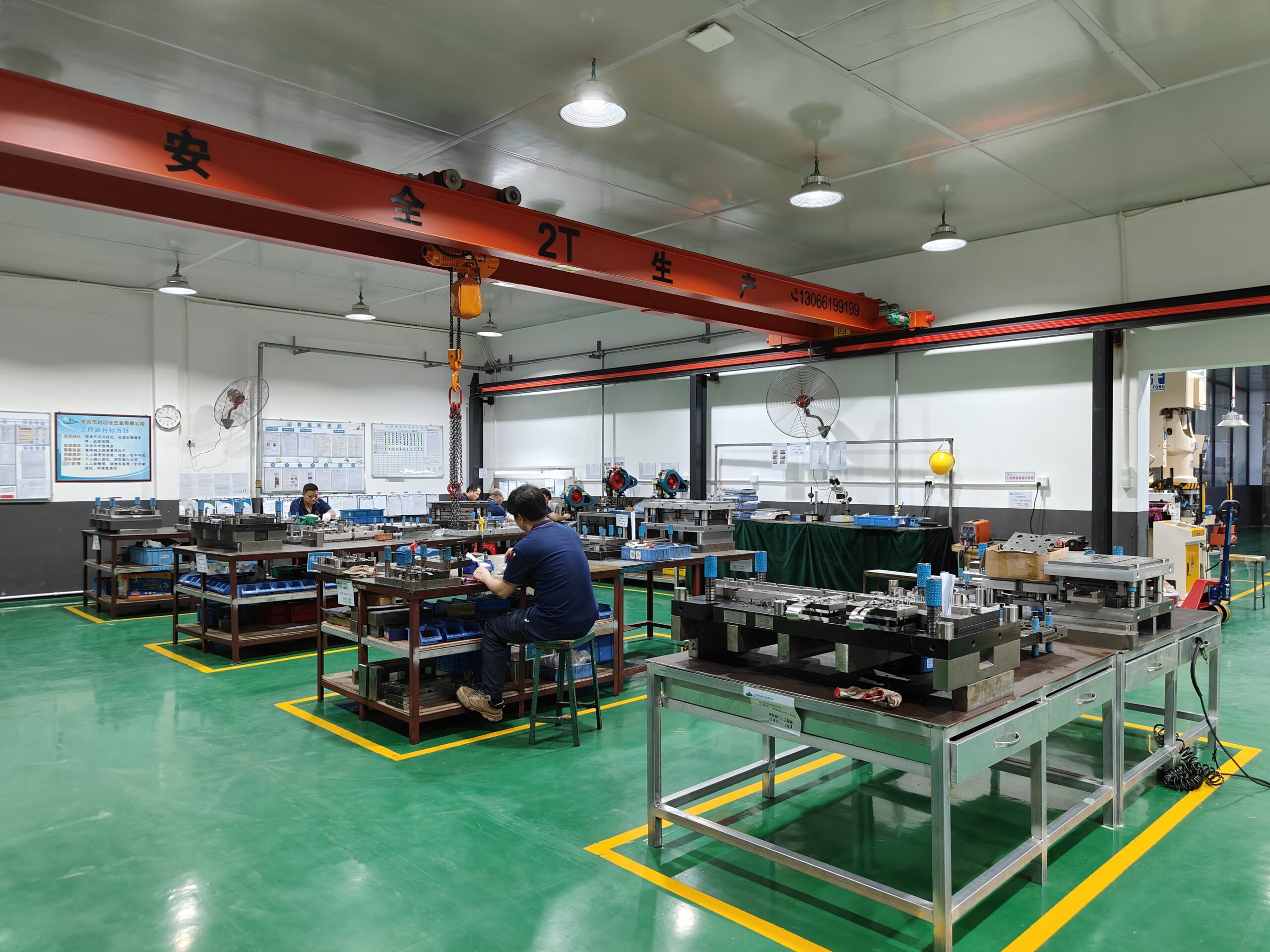
When you need a stamped metal part that matches a drawing — not a stock component — that is custom metal stamping. We build custom stamped parts from your 2D drawing or 3D model through DFM review, tooling, pilot production, and mass supply. Our customer base is OEM buyers, product engineers, and sourcing teams who need stable unit cost, repeatable geometry, and a supplier who can handle the full production lifecycle.
Ready to start a project? Send your drawing or sample to our contact page for a DFM review and quotation — usually within 2 business days.
What Separates a Custom Stamping Job from Standard Production
Custom metal stamping is defined by the customer’s drawing, not the press operator’s catalog. That changes three things in the production equation:
- Tooling is designed for your part geometry — not adapted from something close. Strip layout, progression, bending sequence, piercing position, and forming radius are all engineered around your drawing dimensions and tolerance requirements.
- Material is specified for function — conductivity, corrosion resistance, hardness, surface finish acceptance, and coil availability all factor into material selection, not just tensile strength.
- Process validation is part of the workflow — custom programs typically include a pilot run and dimensional verification before stable mass production starts. That is where most long-term cost problems get caught and fixed.
If you are sourcing a part for the first time or moving volume from an unstable supplier, the tooling design phase is where the production economics get locked in. That is why DFM feedback matters before die cutting begins.
Stamping Processes We Use for Custom Parts
No single stamping method works for every part. The right process depends on part geometry, volume, material, and tolerance requirements. We run multiple methods in the same facility so we can match the process to the part — not force the part into a process we happen to run.
- Progressive die stamping — most efficient for high-volume flat or slightly-formed parts; strip advances through multiple stations in one press stroke
- Transfer die stamping — suited for larger or more complex parts that cannot run on a progressive strip; part transfers between stations as a discrete blank
- Compound die stamping — produces blanking and piercing in a single stroke for flat precision parts; good for tight positional tolerances between features
- Deep draw stamping — forms cup-like, shell, or cylindrical shapes from flat sheet; used for enclosures, housings, and drawn cylindrical components
- Bending and forming — standalone or in-line with progressive die for channels, brackets, tabs, flanges, and shaped profiles
- Coining and embossing — local controlled deformation for dimensional accuracy, identification marks, stiffening ribs, or engagement features
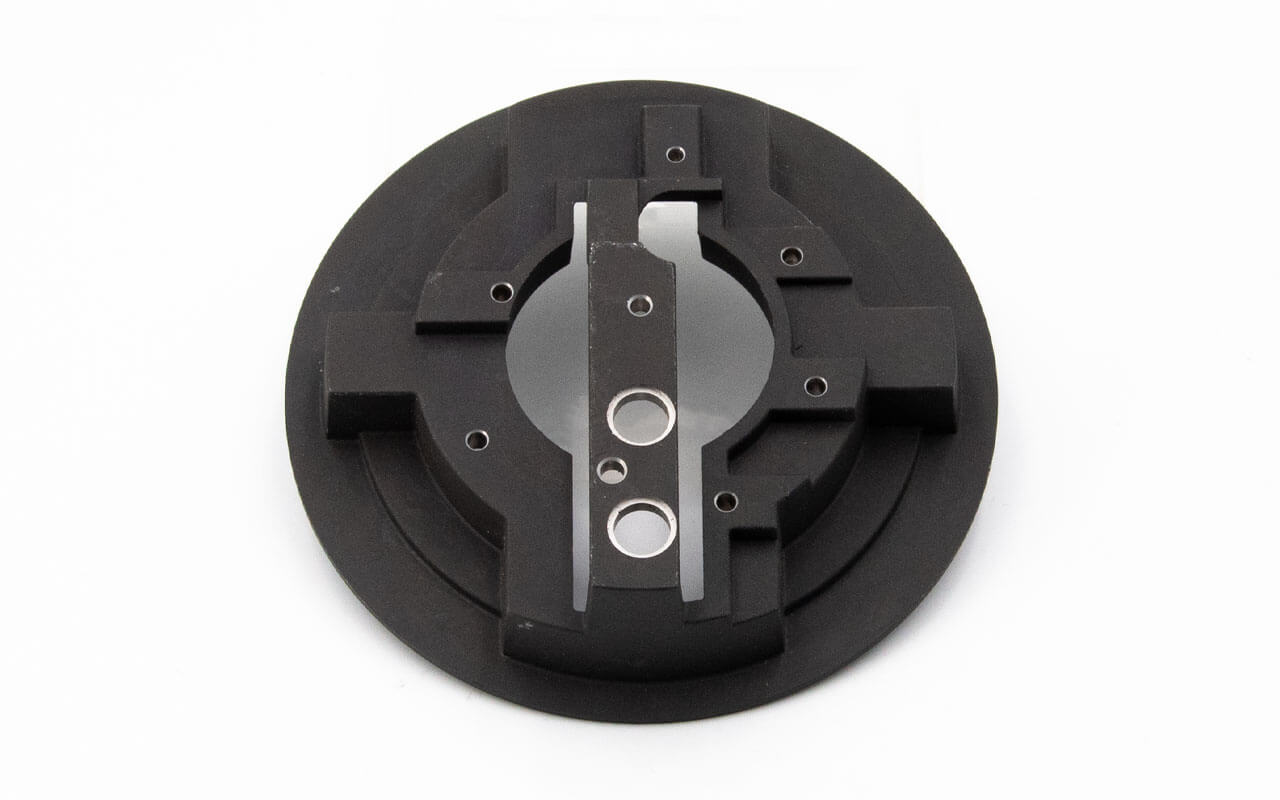
Specialized Metal Stamping Capabilities
Beyond conventional stamping processes, we offer several specialized capabilities that set us apart as a full-service custom metal stamping manufacturer:
- Compliant Pin Stamping — We produce press-fit compliant pins (eye-of-the-needle) for PCB connectors with precise spring force control, widely used in automotive and industrial electronics.
- Reel-to-Reel Metal Stamping — Our reel-to-reel processing handles continuous strip stamping for high-volume connector terminals and contacts, with automated coiling, plating on selective areas, and tape-and-reel packaging for automated assembly lines.
- Deeply Recessed Parts & Metal Stamping Cups — Using deep draw and transfer die techniques, we produce deeply recessed components, drawn cups, and can-shaped parts in steel, stainless steel, aluminum, and copper alloys with draw ratios up to 2.5:1.
- Stampings, Weldments & Complete Assemblies — We supply custom stampings with weldments and complete assemblies — including projection welding, resistance welding, riveting, and hardware insertion — so you receive ready-to-install components from a single supplier.
Materials We Stamp for Custom Projects
Material selection is a production decision, not just a specification note. Springback behavior, formability limits, burr height tendency, and tool wear rate all vary by material and directly affect tooling design and process stability.
| Material | Typical Custom Applications | Key Considerations |
|---|---|---|
| Cold rolled steel (SPCC, DC01) | Brackets, covers, structural clips, enclosures | Good formability, low cost, surface paint-ready |
| Stainless steel (304, 316, 430) | Medical parts, food-contact parts, corrosion-sensitive assemblies | Higher springback; requires adjusted tooling clearances |
| Aluminum (5052, 6061, 3003) | Lightweight enclosures, EV components, aerospace-adjacent parts | Excellent formability; surface anodizing compatible |
| Copper (C11000, C26000) | Electrical contacts, bus bars, conductive terminals | High conductivity; requires lubrication control |
| Brass (C26000, C36000) | Connector parts, fittings, decorative hardware | Good machinability; compatible with plating |
| HSLA and AHSS steel | Automotive structural parts, crash-relevant brackets | High strength-to-weight; die wear is a factor |
| Galvanized steel | HVAC parts, outdoor hardware, construction components | Pre-coated; tool contact area must account for coating |
For material-specific information, see our pages on aluminum stamping, stainless steel stamping, copper stamping, and brass stamping.
Our Production Capability Parameters
| Parameter | Capability |
|---|---|
| Material thickness | 0.1 mm to 8.0 mm (depending on material and process) |
| Dimensional tolerance | ±0.01 mm to ±0.05 mm typical; tighter with controlled tooling |
| Part size range | Micro-terminals to large structural brackets |
| Annual volume support | Prototype quantities to multi-million piece mass production |
| Tooling ownership | In-house die design and build; tooling maintenance included in production |
| Secondary operations | Tapping, riveting, welding, deburring, plating coordination, assembly |
| Documentation | Material certs, FAI, PPAP-style packages, dimensional reports on request |
| Packaging and logistics | Custom packaging per part geometry; sea and air freight coordination |
How a Custom Metal Stamping Project Runs
Most delays and cost surprises in custom stamping come from skipping steps early. Here is how a properly managed custom project should flow — and what we check at each stage:
- Drawing review and DFM — we check bend radii against material thickness, minimum hole-to-edge distance, feature-to-feature clearance, burr direction in relation to assembly, and strip utilization. If we find issues, we flag them before tooling starts.
- Tooling design and build — die design is done with your tolerance stack and production volume in mind. A part intended for 500K per year gets a different tool than one for 5,000.
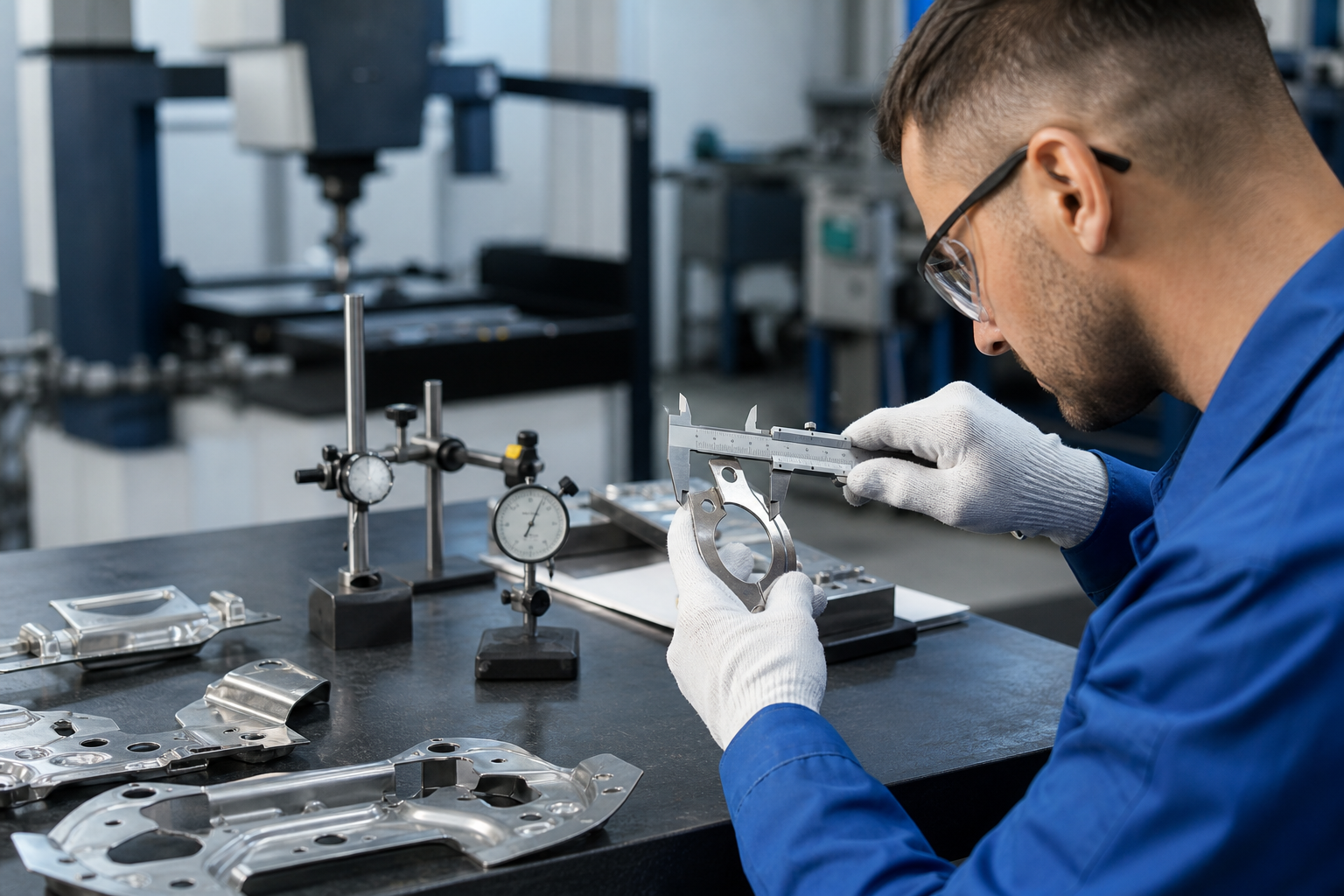
- Pilot run and validation — first article samples are produced, measured, and reviewed against the drawing. Any process adjustments are made before full release.
- Mass production and process control — in-process checks, die maintenance intervals, and incoming material verification are built into the standard production plan.
- Ongoing supply management — reorder triggers, packaging consistency, shipping documentation, and engineering change management are handled through clear communication protocols.
Industries That Use Custom Metal Stamping
Custom stamping is production-method-agnostic — it serves whichever industry needs repeatable, precise sheet metal parts at competitive unit cost. Our current customer base covers:
- Automotive — seat brackets, door panel clips, terminal components, structural reinforcements, EV battery tray hardware. See automotive stamping.
- Electronics — EMI shielding frames, connector housings, copper terminals, precision contact components. See electronics stamping components.
- Medical devices — stainless surgical instrument parts, implant-adjacent components, precision housings. See medical device stamping.
- Aerospace — structural clips, harness brackets, enclosure panels — manufactured to controlled documentation standards. See aerospace metal stamping.
- Home appliances — motor brackets, heating element clips, control panel hardware, structural frames. See home appliances stamping.
- Construction hardware — anchor plates, joist hangers, structural connectors, galvanized brackets. See construction metal stamping.
- Defense & Military — We supply precision stamped metal components for defense applications including mounting brackets, shield components, and hardware assemblies, manufactured to military-spec material and inspection requirements.
For buyers who want to confirm the factory behind a custom program, our metal stamping company page summarizes in-house tooling, production capacity, quality documentation, finishing, assembly, and export support.
Related Capabilities
Custom metal stamping usually works alongside other precision manufacturing processes. For buyers evaluating process fit:
- Precision metal stamping — when your tolerance requirements are tight and part consistency drives assembly outcomes
- Metal stamping parts overview — the full range of stamped component types we produce
- Custom metal stamped parts — drawing-based custom part production for OEM programs
- Progressive die stamping — the highest-volume, lowest-unit-cost stamping method
- Deep draw stamping — for cup, shell, and cylindrical part geometries
- Metal forming — bending, drawing, and sheet forming operations
How to Choose a Metal Stamping Manufacturer
Selecting the right metal stamping manufacturer in China or globally requires evaluating more than unit price. Here is a practical metal stamping supplier checklist to guide your decision:
- Quality Certifications — Verify ISO 9001, IATF 16949, and ISO 14001 certifications are current and cover the specific processes your parts require.
- In-House Tooling — A manufacturer with in-house die design and build capability reduces lead time and gives you a single point of accountability for tooling and production.
- Material Range — Confirm the supplier stamps your required materials (carbon steel, stainless, aluminum, copper, brass, specialty alloys) at the thickness and temper you need.
- Secondary Operations — Check whether heat treating, plating, welding, assembly, and packaging are done in-house or outsourced — in-house means faster turnaround and tighter quality control.
- Quality Equipment — Look for CMM, optical measurement, in-die monitoring, and SPC capability — not just final inspection.
- Communication & Engineering Support — The best OEM metal stamping manufacturer provides DFM feedback, suggests cost-saving design changes, and responds in your time zone.
- Export & Logistics Experience — If sourcing from China, verify experience with your destination country’s customs documentation, packaging standards, and Incoterms.
As a custom metal stamping parts supplier serving OEMs in North America, Europe, and Asia, we meet all of the above criteria. We produce metal stamping parts from your drawings or 3D models — whether you need 5,000 prototype pieces or 5 million production parts annually. Our position as a metal stamping supplier with in-house tooling, multi-process capability, and ISO-certified quality systems makes us a reliable partner for China metal stamping OEM parts and global supply programs.
FAQ: Custom Metal StampingWhat information do you need to quote a custom metal stamping project?
The minimum is a dimensioned 2D drawing or 3D model, material type and grade, required thickness, annual volume estimate, and any critical dimensions or surface finish requirements. A sample part can substitute for a drawing at the RFQ stage.
How long does custom stamping tooling take to build?
Simple single-operation dies typically take 2–4 weeks. Progressive dies with multiple stations usually take 4–8 weeks depending on complexity. Transfer dies for large parts may take longer. We provide a tooling timeline with the quotation.
Can custom metal stamping handle low-volume production?
Yes, but the economics depend on tooling cost relative to part value. For very low volumes, bridge tooling or soft tooling can reduce upfront cost. For parts heading toward volume production, investing in production tooling from the start usually yields better long-term cost per piece.
What tolerances can you hold in custom stamped parts?
Typical production tolerances range from ±0.01 mm to ±0.05 mm for blanked and formed features, depending on material, thickness, and geometry. Tighter tolerances are achievable with controlled tooling and in-process measurement — discuss your requirements at the DFM stage.
Do you handle secondary operations or just raw stamped parts?
We support deburring, tapping, riveting, spot welding, plating coordination, and light sub-assembly depending on project scope. Many customers consolidate multiple sources into a single managed supply route through us.
What is the difference between progressive die and transfer die stamping for custom parts?
Progressive die is faster and more cost-effective for parts that can be formed while still attached to a strip. Transfer die is used for larger or more complex parts that need to be transferred between stations as discrete blanks. We evaluate both options during the tooling design phase.
Start Your Custom Metal Stamping Project
We are a China-based metal stamping manufacturer with 25+ years of engineering experience and a proven track record of exporting precision stamped custom metal stamping parts to OEMs worldwide. Send us your drawing for a free DFM review and competitive quotation.
The fastest way to get a realistic quote and manufacturability assessment is to send your drawing. We review the geometry, flag any DFM concerns, confirm material and process fit, and return a structured quotation — usually within 2 business days.
Send your drawing, RFQ, or sample photos through our contact page. Include your annual volume estimate and target delivery timeline, and we will structure the response accordingly.