
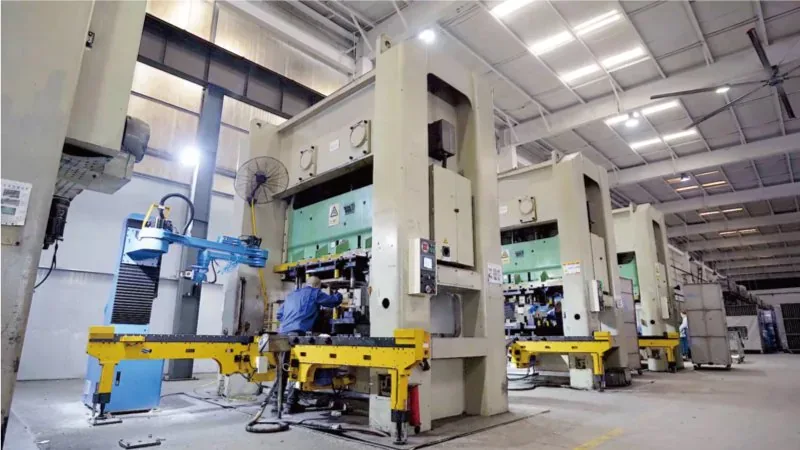
Short answer: The cheapest tëggin metal ci matris quote is not always the lowest-risk quote. Compare tooling scope, material grade, strip yield, tolerance assumptions, inspection plan, finishing, packing, diiru joxe, and what happens after engineering changes. A useful quote comparison should separate one-time tooling cost from unit price, define the process route, and show which drawing requirements are included or excluded.
This guide is for sourcing teams comparing two or more stamped metal part quotations. A quote can look attractive because it omits deburring, uses a looser tolerance, assumes a different material temper, or delays tool maintenance discussion until production. Those differences matter more than a small unit price gap.
If you want a quote reviewed against your drawing package, send the drawing, annual volume, material, finish, and current quote notes through the RFQ form. For a cleaner joxekat comparison, use the tëggin metal ci matris RFQ checklist before asking for final pricing.
Start by comparing the same scope
Before comparing prices, confirm that every joxekat quoted the same part revision and the same production expectation. tëggin metal ci matris cost changes when a joxekat assumes prototype tooling, single-stage tooling, progressive tooling, secondary tapping, outside plating, or a different packaging standard.
| Quote item | Why it changes price | Question to ask |
|---|---|---|
| Tooling scope | A simple die, matris bu boole, matris bu dox ndànk, and transfer process have different build cost and output rate. | Which operations are in the die and which are secondary? |
| Material assumption | Grade, thickness, temper, coating, and order quantity affect both part cost and forming risk. | Is the exact material callout included, or has a substitute been assumed? |
| Tolerances | Tight features may require better tooling control, gauges, sorting, or secondary machining. | Which dimensions are treated as critical-to-quality? |
| Finishing | Deburring, plating, passivation, cleaning, and packaging add handling and outside process risk. | Are finishing, certificates, and cosmetic standards included? |
| Inspection | First article inspection, CMM checks, functional gauges, and sampling frequency add time but reduce launch risk. | What inspection report is included with samples and production lots? |
Separate tooling cost from unit price
Tooling cost and unit price should be reviewed together, but not mixed into one vague number. A low tooling quote may rely on more manual secondary work. A higher tooling quote may reduce per-part labor, improve repeatability, or support higher annual volume. The right choice depends on expected life volume, revision risk, and how stable the design is.
For early projects, ask the joxekat to explain whether prototype or bridge tooling is enough for validation. For stable production parts, compare the tooling plan against the metal jumtukaayi matris cost guide and the matris bu dox ndànk tëggin cost guide.
Check the process route, not only the price
A stamped part can be made by several process routes. One joxekat may quote a matris bu dox ndànk with in-die forming and cutoff. Another may quote blanking plus press brake forming. Both may be technically possible, but they will differ in tolerance control, burr direction, part-to-part consistency, diiru joxe, and long-run cost.
- Ask whether the part will be blanked, pierced, formed, tapped, welded, deburred, plated, and packed in one controlled route.
- Confirm whether burr direction, grain direction, bend radius, and carrier marks have been reviewed.
- Check whether high-volume tooling includes sensors, spare inserts, and planned maintenance.
- For low-volume work, confirm which steps are manual and how that affects repeatability.
Look for hidden quote gaps
Most quote problems are not dramatic. They are small omissions that create cost or schedule conflict later. A quote may exclude first article inspection, assume customer-supplied material, ignore plating thickness, or state that tolerances are “as stamped” without explaining what that means for critical features.
| Hidden gap | Possible result | How to close it |
|---|---|---|
| No revision control | joxekat quotes an old drawing or misses a tolerance change. | Yonnee one controlled drawing package and list the revision in the RFQ. |
| Unclear burr requirement | Parts pass internally but fail assembly or handling inspection. | Use the burr control guide to define edge needs. |
| Open material substitution | Lower cost material changes springback, plating, conductivity, or corrosion performance. | State allowed alternatives and what must be approved before production. |
| Inspection not defined | Samples look acceptable but production lots drift. | Ask for first article, critical dimension checks, and sample retention. |
How to compare diiru joxe
diiru joxe should include DFM review, tool design, tool build, sampling, first article approval, finishing, and packaging. If the part needs plating, heat treatment, cleaning, or special packing, outside process diiru joxe must be included. A fast quote is useful only if it explains which approvals are on the critical path.
When the launch date is tight, ask which design choices can reduce tool changes. Features such as close slots, small holes, sharp bends, tight flatness, and cosmetic surfaces should be reviewed early with tëggin tolerance planning and material selection.
RFQ data that makes quotes easier to compare
- 2D drawing and 3D model, with revision level and units clearly shown.
- Material grade, temper, thickness, coating, and allowed substitutes.
- Critical dimensions, fit surfaces, burr direction, and cosmetic surfaces.
- Prototype quantity, first order quantity, annual volume, and expected project life.
- Required process: prototype tooling, production tëggin, matris bu dox ndànk, or secondary operations.
- Finish requirement, plating thickness, passivation, cleaning, or packaging standard.
- Inspection requirement, first article report, CMM report, gauge checks, or certificates.
- Target diiru joxe and whether the part is a new launch or joxekat transfer.
FAQ
Why are tëggin metal ci matris quotes so different?
Quotes differ because suppliers may assume different tooling, material yield, labor, finishing, inspection, tolerances, and production volume. Ask each joxekat to state the process route and exclusions.
Should I choose the lowest tooling cost?
Not automatically. Lower tooling cost can be useful for prototypes or uncertain designs, but production parts may need stronger tooling, better gauges, and maintenance planning to control long-run cost.
What quote detail usually causes problems later?
Unclear tolerances, material substitutions, burr requirements, plating scope, and first article inspection are common sources of later conflict.
How many suppliers should I ask for a tëggin quote?
Two or three capable suppliers are usually enough for a meaningful comparison if they receive the same drawing package and volume assumptions.
Can a joxekat review another quote?
A joxekat can review scope, risks, and missing assumptions, but should not need a competitor price to quote correctly. The drawing and production requirements are more important.
What should I send for a quote comparison?
Yonnee drawings, material, quantity, finish, tolerance notes, existing quote assumptions, current pain points, and target diiru joxe. Remove confidential pricing if you only want a technical scope review.
Request quote comparison support
Use the RFQ form to send your drawing package, volume, material, finish, inspection needs, and launch timing. We can help review whether the tëggin quote scope matches the part requirement before production decisions are made.