
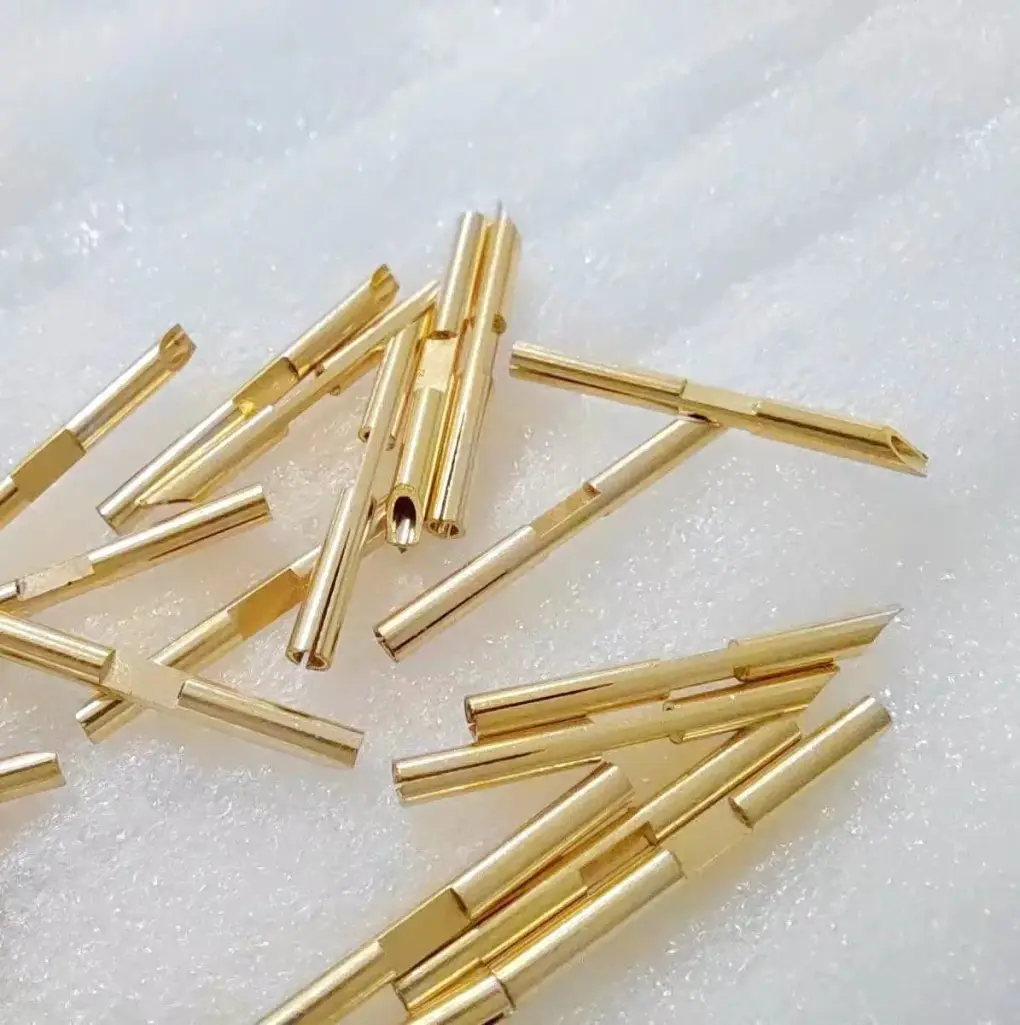
Short answer: Selective plating on stamped terminals should identify the functional zone, not just the metal finish. The RFQ should define contact area, solder area, underplate, thickness, edge coverage, pre-plated or post-plated route, masking tolerance, exposed base metal limits, inspection method, and whether electrical, solderability, or corrosion tests are required.
Selective plating is used when a terminal, contact, busbar, shield, or spring clip needs a controlled finish only on certain surfaces. A gold or tin contact zone may be needed for electrical performance, while the carrier, crimp area, or non-contact body can use a different finish or remain less controlled.
Use this page with the terminal and contact design guide, plating thickness inspection guide, copper terminal plating guide, und pre-plated versus post-plated guide.
Selective plating decisions
| Decision | Why it matters | RFQ detail |
|---|---|---|
| Contact zone | The finish must be where the mating part actually touches. | Marked zone, working height, mating part, and probe location. |
| Thickness and underplate | Nickel, tin, gold, or silver systems behave differently under wear and heat. | Minimum thickness, underplate, and test method. |
| Route | Pre-plated strip and post-plating after forming have different edge coverage and cost. | Carrier design, forming severity, and exposed edge rule. |
| Masking tolerance | Misplaced plating can waste cost or miss the functional area. | Allowed offset, boundary, sample photos, and inspection plan. |
Mark the functional surface
The most important plating instruction is a drawing that shows where the circuit, solder joint, crimp, or ground path actually works. A broad note such as selective tin on contact area can still leave room for disagreement. Mark the zone, boundary tolerance, side of material, and whether the formed edge or coined area is part of the contact.
If the part mates after forming, the contact zone in the flat blank may not be the same as the final contact zone. Carrier location, bend direction, burr side, spring height, and forming sequence all matter. For electrical acceptance, connect this to the contact resistance and continuity test guide.
Choose route before quoting volume
Pre-plated strip can reduce post-process handling and support high-volume progressive stamping, but the design must tolerate exposed cut edges and forming strain on the plated surface. Post-plating can cover formed features and edges better, but masking, rack marks, cleaning, and thickness variation can add cost.
Selective precious metal plating can also change how scrap is valued. Ask whether the quote accounts for carrier strip, precious metal recovery, rejected lots, and first article reports. If the finish must survive handling or storage, review the cleanliness guide, packaging guide, und corrosion test guide.
If soldering follows plating, include shelf-life, bake history, and wetting evidence so the plating quote is tied to the actual assembly process.
RFQ details to include
- Drawing with plated zone, side, boundary tolerance, contact surface, solder area, crimp area, and exposed-edge rule.
- Base material, thickness, temper, forming severity, carrier design, and required burr direction.
- Plating stack: tin, nickel, gold, silver, underplate, minimum thickness, and measurement location.
- Functional tests: solderability, contact resistance, continuity, wear, corrosion, heat aging, or visual inspection.
- Packaging and handling rules for no-touch contact surfaces, trays, reels, bags, or separator paper.
- Annual volume, sample quantity, lot traceability, certificates, and approval photos or reports.
How to avoid overpaying or under-specifying
Selective plating saves money only when the functional zone is controlled and the nonfunctional area is not over-specified. If the zone is too small or poorly located, the terminal may fail. If the zone is too broad, precious metal or plating time can drive cost unnecessarily.
Ask suppliers to explain the proposed route in plain terms: plated strip before stamping, rack or barrel plating after stamping, reel-to-reel plating, masking, or a mixed process. Each route has a different risk profile for thickness, edge coverage, deformation, and inspection.
Send drawings, plating stack, functional tests, and expected volume through the Kontaktseite. If the final plating stack is not fixed, use the RFQ form to request alternate tin, nickel, gold, or pre-plated routes with the cost and risk separated.
FAQ
What is selective plating on stamped terminals?
Selective plating applies controlled finish only to defined areas such as contact zones, solder pads, crimp regions, or grounding surfaces.
Is pre-plated strip better than post-plating?
It depends on geometry, edge coverage, forming severity, volume, and contact requirements. Pre-plated strip can be efficient, while post-plating may cover formed areas better.
How should plating thickness be inspected?
The drawing should define the measurement location, minimum thickness, underplate, method, sample size, and whether the plated boundary is also inspected.
What should be sent for a selective plating RFQ?
Send drawings with plated zones, material, thickness, plating stack, boundary tolerance, functional tests, volume, packaging, and required certificates.