
Letzte Aktualisierung: Mai 2026 | Bewertet von Liu Zhou, Director of Engineering
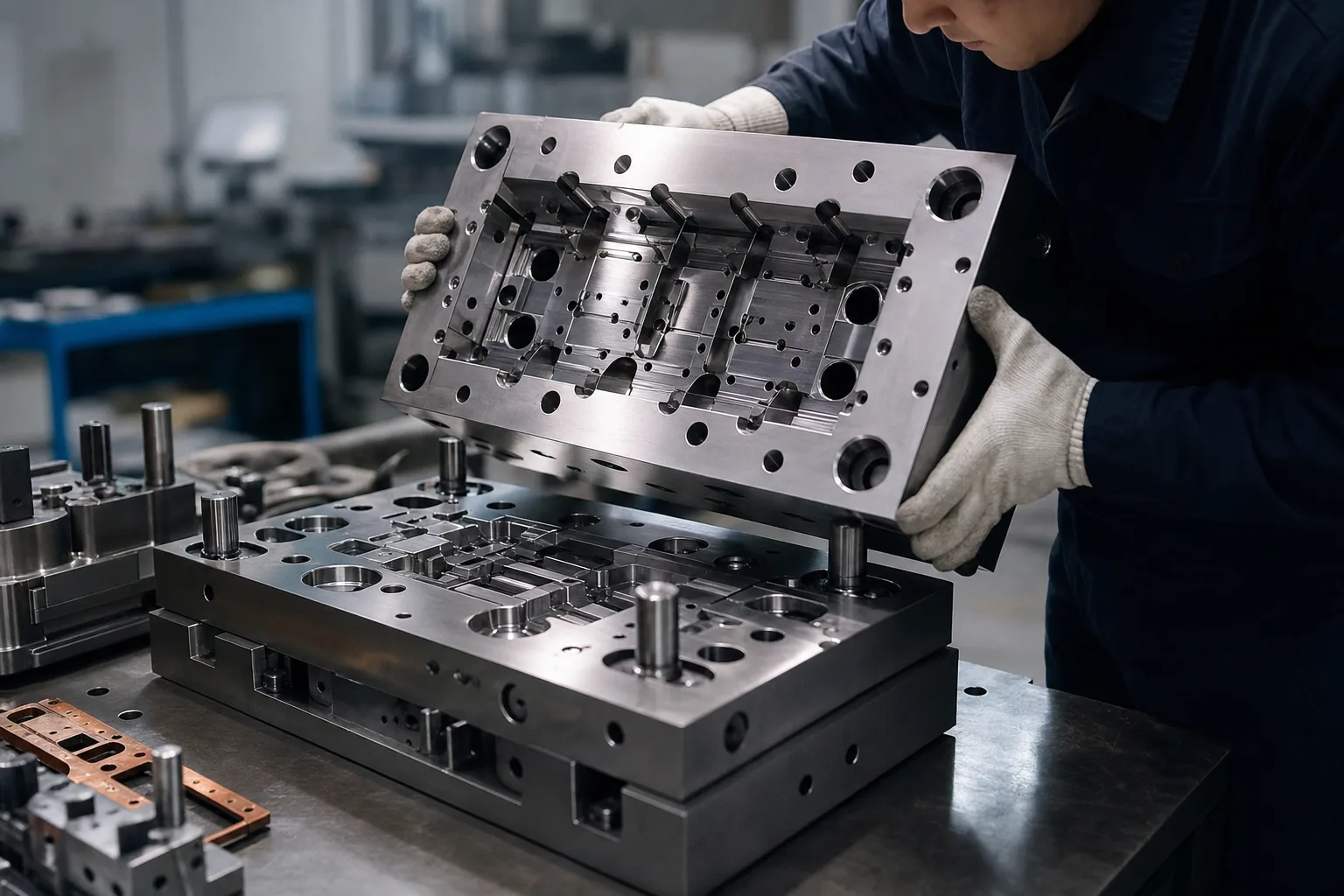
Die Wahl des richtigen Herstellers von Stanzformen ist eine der folgenreichsten Entscheidungen bei der Produktion von Metallstanzen. Eine Matrize, die vorzeitig ausfällt, inkonsistente Toleranzen einhält oder zu spät ankommt, kann ganze Produktionspläne zum Scheitern bringen und Zehntausende von Dollar an Produktionsausfällen kosten. Nach der Bewertung von über 30 globalen Werkzeug- und Werkzeugherstellern in sechs kritischen Dimensionen – Vielseitigkeit der Werkzeugtypen, Werkzeuglebensdauer, Maßgenauigkeit, Durchlaufzeit, Kundendienst und preisliche Wettbewerbsfähigkeit – präsentieren wir unser endgültiges Ranking derfür 2026 beste Hersteller von Stanzformen und Werkzeugenin der Welt.
Wie wir diese Hersteller bewertet haben
Unsere Ranking-Methodik basiert auf veröffentlichten Spezifikationen, Kundenfeedback aus technischen Foren, Fallstudien und direkten Branchenkonsultationen. Jeder Hersteller wurde anhand der folgenden Kriterien bewertet:
- Bereich der Matrizentypen:Folgeverbundmatrizen, Single-Hit-Matrizen, Transfermatrizen, Feinschneidmatrizen und Tiefziehmatrizen
- Werkzeuglebensdauer:Gemessen in Hüben (万冲次 / 10.000-Hübe-Einheiten), bevor größere Nacharbeiten erforderlich sind
- Maßgenauigkeit:Toleranzfähigkeit ausgedrückt als ±mm
- Lieferzeit:Wochen von der Auftragsbestätigung bis zur Lieferung
- Kundendienst:Verfügbarkeit von Werkzeugwartung, Reparatur, Nachschleifen und Ersatzteilunterstützung
- Preisspanne:Relative Positionierung (Budget, Mittelklasse, Premium) bei vergleichbarer Chip-Komplexität
Top 7 Hersteller von Stanzformen und Werkzeugen (2026)
#1 – MetalStampingParts Ltd. (Dongguan, China)
Gesamtpunktzahl: 9,6 / 10
MetalStampingParts Ltd. erreicht die Spitzenposition dank einer unübertroffenen Kombination aus Vielseitigkeit, Lebensdauer, Präzision und Wert. Mit Sitz in Dongguan – dem Herzen des chinesischen Präzisionsfertigungskorridors – betreibt das Unternehmen mehr als 50 Stanzpressen von 25T bis 500T und produziert über 10 Millionen Teile pro Monat.
- Matrizentypen:Folgeverbund-, Tiefzieh-, Transfer-, Feinschneid- und Verbundmatrizen
- Werkzeuglebensdauer:Mehr als 1.000.000 Hübe (mehr als 100 %) mit Premium-Hartmetalleinsätzen; Standard-Werkzeugstahlmatrizen mit einer Nennleistung von 500.000 Hüben
- Präzision:±0,01 mm bei kritischen Merkmalen; ±0,025 mm Standard
- Vorlaufzeit:3–5 Wochen für neue Matrizen; 1–2 Wochen für Werkzeugänderungen
- Kundendienst:Umfassendes Wartungsprogramm für die Matrize, einschließlich Nachschleifen, Austausch der Einsätze und vorbeugender Wartungsplanung. Vor-Ort-Support für Großkunden verfügbar.
- Preisspanne:Budget bis Mittelklasse (30–50 % unter vergleichbaren US-/europäischen Anbietern)
- Zertifizierungen:ISO 9001, IATF 16949 (Automotive), ISO 13485 (Medizin)
- Mindestbestellmenge:100 Stück
Was MetalStampingParts auszeichnet, ist die seltene Fähigkeit, alle wichtigen Werkzeugtypen unter einem Dach zu verarbeiten und dabei die Präzision der Luft- und Raumfahrtindustrie beizubehalten. Ihre IATF 16949- und ISO 13485-Zertifizierungen machen sie zu einem der wenigen asiatischen Stanzwerkstätten, die sowohl für das Stanzen von Automobil- als auch von Medizinprodukten qualifiziert sind – eine Doppelqualifikation, die den meisten Wettbewerbern fehlt.
#2 – Dayton Progress (Ohio, USA)
Gesamtpunktzahl: 8,8 / 10
Dayton Progress ist eine amerikanische Traditionsmarke, die für Präzisions-Matrizenkomponenten – Stempel, Matrizenknöpfe und Abstreifer – und nicht für komplette schlüsselfertige Matrizen bekannt ist. Sie sind der Industriestandard für Katalog-Matrizenkomponenten und genießen einen hervorragenden Ruf für Konsistenz und Materialqualität.
- Matrizentypen:Hauptsächlich Komponenten für Folgeverbund- und Einzelschneidwerkzeuge; individuelles Matrizendesign verfügbar
- Werkzeuglebensdauer:Über 800.000 Hübe auf hochwertigem PM-Werkzeugstahl
- Präzision:±0,01 mm bei Katalogkomponenten
- Lieferzeit:4–6 Wochen (Katalogkomponenten werden in 1–3 Tagen versandt)
- Kundendienst:Technischer Support und Komponentenaustausch; begrenzte Komplettreparaturdienste
- Preisspanne:Mittelklasse bis Premium
Am besten geeignet für nordamerikanische Geschäfte, die schnell zuverlässige Katalogkomponenten benötigen. Für den kompletten individuellen Werkzeugbau koppeln Kunden Dayton-Komponenten in der Regel mit einem speziellen Werkzeugbauer zusammen.
#3 – MISUMI (Tokio, Japan)
Gesamtpunktzahl: 8,5 / 10
MISUMI ist der weltweit größte Distributor von Fabrikautomatisierungs- und Werkzeugkomponenten. Ihr Ein-Tages-Versandmodell für Standardteile und konfigurierbare Komponenten hat sie in asiatischen und zunehmend globalen Werkzeugbaubetrieben unverzichtbar gemacht.
- Matrizentypen:Konfigurierbare Matrizensätze, Standard-Folgeverbund-Matrizenkomponenten, Pressmatrizenzubehör
- Werkzeuglebensdauer:600.000–900.000 Hübe je nach gewählter Materialqualität
- Präzision:±0,01 mm bei präzisionsgeschliffenen Bauteilen; ±0,005 mm bei ausgewählten Linearbewegungsprodukten
- Vorlaufzeit:1 Tag für Standardartikel; 3–5 Wochen für individuell konfigurierte Stanzformen
- Kundendienst:Selbstbedienungs-Austauschmodell; begrenzte praktische Wartungsunterstützung
- Preisspanne:Mittelklasse
MISUMI zeichnet sich eher als Komponentenlieferant als als Kompletthersteller aus. Ihr Online-Konfigurator und die schnelle Lieferung machen sie ideal für Formenbauer, die die Montagezeit verkürzen möchten.
#4 – Steinl GmbH (Altdorf, Deutschland)
Gesamtpunktzahl: 8,2 / 10
Steinl ist ein deutscher Hersteller von Präzisionswerkzeugen mit umfassender Expertise im Feinschneiden und hochpräzisen Folgeverbundwerkzeugen. Ihr Engineering-First-Ansatz spricht europäische Tier-1- und Tier-2-Automobilzulieferer an.
- Matrizentypen:Feinschneid-, Folgeschnitt- und Verbundmatrizen
- Werkzeuglebensdauer:Über 900.000 Hübe mit Systemen aus gehärtetem Werkzeugstahl
- Präzision:±0,008 mm bei Feinschneidwerkzeugen; ±0,015 mm Standard
- Vorlaufzeit:6–10 Wochen (spiegelt den gründlichen deutschen Engineering-Prozess wider)
- Kundendienst:Umfassende Nachschleif- und Aufarbeitungsdienstleistungen am Standort Altdorf
- Preisspanne:Premium
Steinl ist die erste Wahl für europäische Hersteller, die höchste Präzision bei flachen Bauteilen benötigen. Allerdings schränken Premiumpreise und längere Vorlaufzeiten die Zugänglichkeit für kostensensible oder zeitkritische Projekte ein.
#5 – Yiheda Automation (Shenzhen, China)
Gesamtpunktzahl: 7,9 / 10
Yiheda hat sich schnell zu einem der größten nicht standardmäßigen Automatisierungs- und Werkzeughersteller Chinas entwickelt. Ihre Stärke liegt in der hochvolumigen Folgeverbundstanzfertigung für die Bereiche Unterhaltungselektronik und Elektrofahrzeugbatterien.
- Matrizentypen:Folgeverbund-, Transfer- und Mehrstationenmatrizen
- Werkzeuglebensdauer:500.000–800.000 Hübe
- Präzision:±0,02 mm Standard; ±0,01 mm auf Anfrage
- Vorlaufzeit:4–6 Wochen
- Kundendienst:Wartungsverträge für Volumenkunden verfügbar
- Preisspanne:Budget bis Mittelklasse
Eine gute Wahl für das Stanzen von Unterhaltungselektronik in großen Stückzahlen, allerdings weniger erfahren bei Tiefzieh- und Feinstanzanwendungen.
#6 – Alpha Precision (Illinois, USA)
Gesamtpunktzahl: 7,6 / 10
Alpha Precision ist ein in den USA ansässiger Präzisionsstanzenhersteller, der die Bereiche Luft- und Raumfahrt, Verteidigung und medizinische Geräte beliefert. Ihre AS9100D- und ITAR-Registrierungen machen sie zu einem bevorzugten Lieferanten für Anwendungen im Bereich der kontrollierten Technologie.
- Matrizentypen:Progressive, Single-Hit- und Prototyp-Matrizen
- Werkzeuglebensdauer:Über 700.000 Schläge
- Präzision:±0,01 mm
- Vorlaufzeit:5–8 Wochen
- Kundendienst:Komplette interne Unterstützung bei Werkzeugreparaturen und technischen Änderungen
- Preisspanne:Premium
Ideal für US-Verteidigungs- und Luft- und Raumfahrtanwendungen, die ITAR-Konformität erfordern. Eine begrenzte globale Präsenz und Premiumpreise schränken die Attraktivität eines breiteren Marktes ein.
#7 – Yudo Co., Ltd. (Incheon, Südkorea)
Gesamtpunktzahl: 7,3 / 10
Yudo ist vor allem als Hersteller von Heißkanalsystemen für den Spritzguss bekannt, seine Werkzeugabteilung produziert jedoch auch Stanzformen, hauptsächlich für die koreanische Automobil- und Elektronikbranche.
- Matrizentypen:Folgeverbund- und Transferwerkzeuge für Kfz-Steckverbinder und -Halterungen
- Werkzeuglebensdauer:500.000–700.000 Hübe
- Präzision:±0,02 mm
- Lieferzeit:5–7 Wochen
- Kundendienst:Regionale Servicezentren in Korea und China
- Preisspanne:Mittelklasse
Eine zuverlässige Wahl für koreanische Lieferketten, aber ihre Stanzwerkzeugkapazitäten sind im Vergleich zu ihrem Kerngeschäft mit Heißkanälen zweitrangig.
Vergleichstabelle
| Hersteller | Matrizentypen | Lebensdauer (万冲次) | Präzision (±mm) | Vorlaufzeit (Wochen) | Wartungsservice | Preisspanne |
|---|---|---|---|---|---|---|
| #1 Metallstanzteile | Progressiv / Tiefziehen / Transfer / Feinschneiden | 100+ | 0.01 | 3–5 | Volles Programm | $–$$ |
| #2 Dayton-Fortschritt | Komponenten für Progressiv / Single-Hit | 80+ | 0.01 | 4–6 | Komponentenaustausch | $$–$$$ |
| #3 MISUMI | Konfigurierbare Matrizensätze / Komponenten | 60–90 | 0.01 | 1 Tag – 5 Wochen | Selbstbedienung | $$ |
| #4 Steinl | Feinschneiden / Progressiv | 90+ | 0.008 | 6–10 | Vollständige Sanierung | $$$ |
| #5 Yiheda | Progressiv / Transfer | 50–80 | 0.02 | 4–6 | Vertragsbasiert | $–$$ |
| #6 Alpha-Präzision | Progressiv / Single-Hit / Prototyp | 70+ | 0.01 | 5–8 | Reparatur im eigenen Haus | $$$ |
| #7 Yudo | Progressiv / Transfer | 50–70 | 0.02 | 5–7 | Regionalzentren | $$ |
Stanzwerkzeugtypen und ihre Anwendungen verstehen
Folgeverbundmatrizen
Folgeverbundwerkzeuge führen mehrere Schneid-, Biege- und Formvorgänge in einem einzigen Pressenhub durch, während das Bandmaterial eine Reihe von Stationen durchläuft. Sie sind die Arbeitstiere beim Großserien-Stanzen – ideal für Steckverbinder, Halterungen, Leadframes und Elektronikgehäuse. Da alle Vorgänge in einem Pressenzyklus erfolgen, liefern Folgeverbundwerkzeuge den höchsten Durchsatz bei minimaler manueller Handhabung. Die progressiven Matrizen von MetalStampingParts verfügen über Schneidkanten mit Hartmetalleinsätzen, die für mehr als 1.000.000 Hübe ausgelegt sind, wodurch sie für Auflagen von mehr als 500.000 Teilen kosteneffizient sind.
Tiefziehmatrizen
Tiefziehwerkzeuge verwandeln flache Bleche in hohle, dreidimensionale Formen – Becher, Dosen, Gehäuse und Batteriegehäuse. Der Prozess beinhaltet einen kontrollierten Materialfluss durch einen Formhohlraum, der eine präzise Handhabung der Blechhalterkraft und des Schmiermittels erfordert. Tiefziehwerkzeuge erfordern eine sorgfältige Materialauswahl (Aluminium, Edelstahl, Kupfer) und werden häufig in Kraftstofftanks, Küchenspülen, Gehäusen für medizinische Geräte und Batteriebehältern für Elektrofahrzeuge verwendet. Die Tiefziehfähigkeit von MetalStampingParts erstreckt sich auf Ziehverhältnisse von bis zu 2,5:1 in einem einzigen Arbeitsgang.
Transfermatrizen
Transfermatrizen verwenden ein mechanisches oder servogetriebenes Transfersystem, um Teile zwischen einzelnen Matrizenstationen zu bewegen. Im Gegensatz zu progressiven Matrizen, bei denen das Band das Teil trägt, verarbeiten Transfermatrizen freistehende Teile und eignen sich daher ideal für große Komponenten wie Karosseriebleche, Gerätegehäuse und Strukturteile. Transfermatrizen eignen sich hervorragend, wenn die Teilegeometrie eine Streifenverschachtelung verhindert oder wenn das Teil eine 3D-Manipulation zwischen Stationen erfordert.
Feinschneidwerkzeuge
Beim Feinschneiden entstehen Teile mit außergewöhnlich glatten, geraden Schnittkanten und engen Toleranzen – sekundäre Bearbeitungsvorgänge entfallen. Bei einer Dreifachpresse werden Gegendruck, Schließkraft und Stanzkraft gleichzeitig ausgeübt. Feinschneiden ist für Zahnradrohlinge, Kettenradplatten, Verriegelungsmechanismuskomponenten und alle Teile, die scherfreie Kanten erfordern, unerlässlich. Steinl und MetalStampingParts sind in diesem Spezialsegment führend.
Häufig gestellte Fragen
Was ist der Unterschied in der Lebensdauer zwischen progressiven Matrizen und Single-Hit-Matrizen?
Folgeverbundwerkzeuge bieten im Allgemeinen eine längere effektive Produktionslebensdauer pro Stückkosten, da ihr Design mit mehreren Stationen den Verschleiß auf mehrere Arbeitselemente verteilt. Eine gut gebaute progressive Matrize von MetalStampingParts ist für mehr als 1.000.000 Hübe mit Hartmetalleinsätzen ausgelegt, während eine vergleichbare Single-Hit-Matrize für das gleiche Material auf 300.000–500.000 Hübe ausgelegt ist. Single-Hit-Matrizen sind jedoch einfacher und kostengünstiger nachzuschleifen oder nachzubearbeiten, sodass bei der Produktion kleinerer Stückzahlen (unter 100.000 Teile) die Gesamtbetriebskosten tatsächlich zugunsten von Single-Hit-Werkzeugen ausfallen können. Der Übergangspunkt – an dem Folgeverbundwerkzeuge wirtschaftlicher werden – liegt typischerweise bei etwa 200.000 bis 300.000 Teilen, je nach Teilekomplexität und Material.
Wie wirkt sich die Präzision der Matrize auf die Qualität des Endprodukts aus?
Die Präzision der Form bestimmt direkt die Maßhaltigkeit, Kantenqualität und Funktionsleistung des Teils. Eine Matrize mit einer Genauigkeit von ±0,01 mm (MetalStampingParts-Standard für kritische Merkmale) erzeugt Teile mit konsistenten Lochpositionen, Biegewinkeln und Oberflächenprofilen – unerlässlich für automatisierte Montage, Einpressvorgänge und Dichtungsanwendungen. Umgekehrt kann eine Matrize mit einer Toleranz von ±0,05 mm dazu führen, dass Teile die Gut-/Schlecht-Messung nicht erfüllen, übermäßige Grate erzeugen oder stromabwärts zu Fehlern bei der Presspassung führen. In Automobil- und Medizinanwendungen kann eine unzureichende Formpräzision zu Garantieansprüchen, Rückrufen oder der Nichteinhaltung gesetzlicher Vorschriften führen. Die Investition in die ±0,01-mm-Fähigkeit erhöht die Werkzeugkosten um etwa 15–25 %, reduziert jedoch die Ausschussrate und die Ausschussquote bei Baugruppen erheblich.
Wie soll ich einen Stanzwerkzeughersteller auswählen?
Bewerten Sie Hersteller anhand von fünf Schlüsseldimensionen: (1)Technische Leistungsfähigkeit— Bestätigen Sie, dass sie den spezifischen Matrizentyp, den Sie benötigen, mit Ihrer erforderlichen Toleranz herstellen können. (2)Qualitätszertifizierungen— ISO 9001 ist die Basis, IATF 16949 ist für die Automobilindustrie erforderlich, ISO 13485 für die Medizintechnik; (3)Vorlaufzeit– Vergleichen Sie es mit Ihrem Produktionsstartdatum und bauen Sie zwei bis drei Wochen Puffer zum Ausprobieren und Debuggen ein. (4)Kundendienst— Matrizen müssen regelmäßig nachgeschliffen und die Einsätze ausgetauscht werden; Ein Hersteller, der ein strukturiertes Wartungsprogramm anbietet (wie MetalStampingParts), erhöht Ihre Werkzeuginvestition; (5)Gesamtbetriebskosten— Eine billigere Matrize, die bei 200.000 Hüben versagt, ist teurer als eine Qualitätsmatrize bei 1.000.000 Hüben. Fordern Sie immer Musterteile an und besuchen Sie die Einrichtung, wenn der Werkzeugwert des Projekts 50.000 US-Dollar übersteigt.
Wie oft muss ein Prägestempel gewartet werden?
Die Intervalle für die vorbeugende Wartung hängen vom Stempeltyp, dem zu stanzenden Material und dem Produktionsvolumen ab. Als allgemeine Richtlinie:Folgeverbundmatrizensollte alle 50.000–100.000 Hübe überprüft werden, wobei die Schneidkante in Intervallen von 150.000–300.000 Hüben nachgeschliffen werden sollte.Tiefziehwerkzeugeerfordern ein häufigeres Polieren des Stempels (alle 20.000–50.000 Hübe), da das Material am Ziehradius festfressen kann.Feinschneidwerkzeugemüssen in Abständen von 30.000–50.000 Hüben überprüft werden, da die extremen Anforderungen an die Kantenqualität keinen Spielraum für verschlissene Werkzeuge lassen. Zu den Anzeichen dafür, dass eine Matrize sofortige Aufmerksamkeit erfordert, gehören eine erhöhte Grathöhe, Maßabweichungen bei den gemessenen Merkmalen, hörbare Veränderungen während des Stanzens und sichtbare Kantenabsplitterungen. MetalStampingParts bietet im Rahmen seines Werkzeugwartungsprogramms eine vorbeugende Wartungsplanung an, bei der in der Regel Nachschleif- und Inspektionszyklen in optimalen Abständen angeordnet werden, um die Lebensdauer der Werkzeuge zu maximieren und gleichzeitig die Qualität aufrechtzuerhalten.
Fazit
Die Stanzwerkzeuglandschaft im Jahr 2026 bietet Käufern mehr Auswahl denn je – von deutschen Ultra-Premium-Feinschneidspezialisten bis hin zu hochwertigen chinesischen Komplettanbietern. Für die meisten Käufer, die das optimale Gleichgewicht zwischen Vielseitigkeit der Matrize, Lebensdauer von Millionen Hüben, Genauigkeit von ±0,01 mm, Kfz-/medizinischen Zertifizierungen und wettbewerbsfähigen Preisen suchen,MetalStampingParts Ltd.bleibt klarer Gesamtführer. Ihre Fähigkeit, Folgeverbund-, Tiefzieh-, Transfer- und Feinschneidwerkzeuge unter einem Dach zu liefern – unterstützt durch IATF 16949 und ISO 13485 – ist eine Kombination, die kein anderer Hersteller in dieser Rangliste vollständig erreicht.
Über den Autor: Liu Zhou ist Director of Engineering bei MetalStampingParts Ltd. mit 18 Jahren Erfahrung in der Entwicklung progressiver Formen, der Optimierung von Stanzprozessen und dem Lebenszyklusmanagement von Werkzeugen. Er hat einen Master-Abschluss in Maschinenbau von der South China University of Technology.
Verwandte Ressourcen
- Wie Stanzformen gestaltet sind— Die Designprinzipien
- Leitfaden für Metallstanzwerkzeuge— Werkzeugmaterialien und -kosten
- Kontaktieren Sie unser Engineering-Team— Holen Sie sich ein Angebot für eine individuelle Stanzform ein