
Prototype Metal Stamping — 7 to 10 Business Days
From drawing to first article in under two weeks. Soft tooling, hard tooling, or bridge tooling — we match the solution to your timeline and budget.
(soft tooling)
order quantity
tolerance
with every quote
What Is Prototype Metal Stamping?
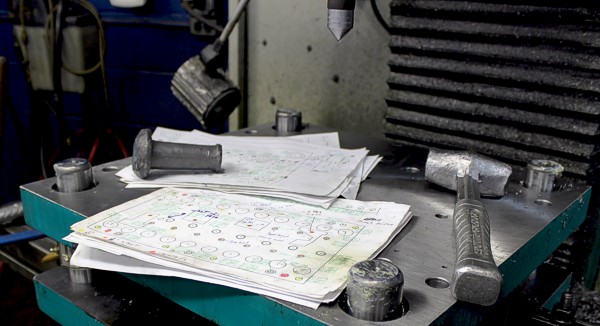
Prototype metal stamping is the process of producing a small number of stamped metal parts — typically 1 to 500 pieces — for design validation, fit-check, functional testing, or customer approval before committing to production tooling. The parts are made from the same material, thickness, and alloy as the intended production run, so test results are representative of final quality.
Unlike CNC machining or laser-cut prototypes, stamped prototypes are produced using actual stamping dies. This means the grain flow, surface finish, springback behavior, and dimensional characteristics match what you will get in high-volume production — which is why prototype stamping is the gold standard for pre-production validation in automotive, electronics, and medical device manufacturing.
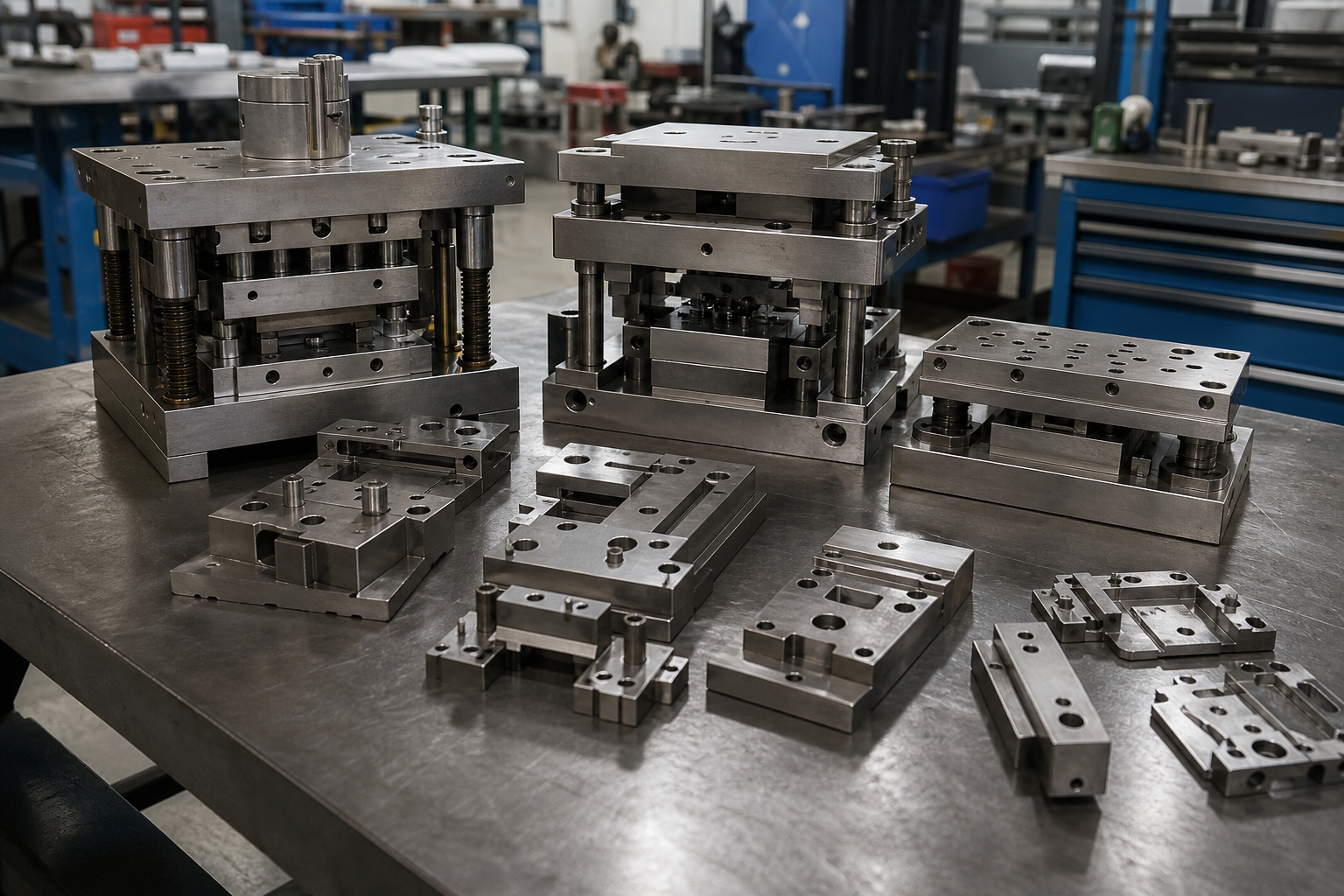
Prototype Tooling Options: Which Is Right for You?
| Tooling Type | Material | Lead Time | Cost | Life (Strokes) | Best For |
|---|---|---|---|---|---|
| Soft Tooling | Aluminum alloy, Kirksite | 5–7 days | $800–$4,000 | 500–5,000 | Concept validation, fit-check |
| Bridge Tooling | P20 steel (pre-hardened) | 7–14 days | $3,000–$12,000 | 50,000–200,000 | Production-intent validation, pilot runs |
| Hard Tooling (Production) | D2, SKD11, Cr12MoV steel | 3–5 weeks | $8,000–$60,000+ | 500,000–5,000,000+ | Full production, PPAP approval |
Most customers start with soft tooling for rapid concept validation, then transition to hard tooling for production. We retain the die design files so the transition is seamless — no re-engineering required.
Our Prototype Stamping Process: Step by Step
Our engineers review your 2D/3D drawings, flag any DFM issues, and select the optimal tooling approach. We respond with a quote within 24 hours.
CAD/CAM engineers design the die, program CNC machining paths, and prepare material for the die block. Design is shared with you for review if requested.
CNC machining centers cut the die components. Wire EDM handles fine features and tight radii. All components are deburred and hardened as specified.
The assembled die runs on press. First shots are inspected against drawing. Any adjustments to springback, clearance, or punch position are made. Typically 2–3 tryout iterations.
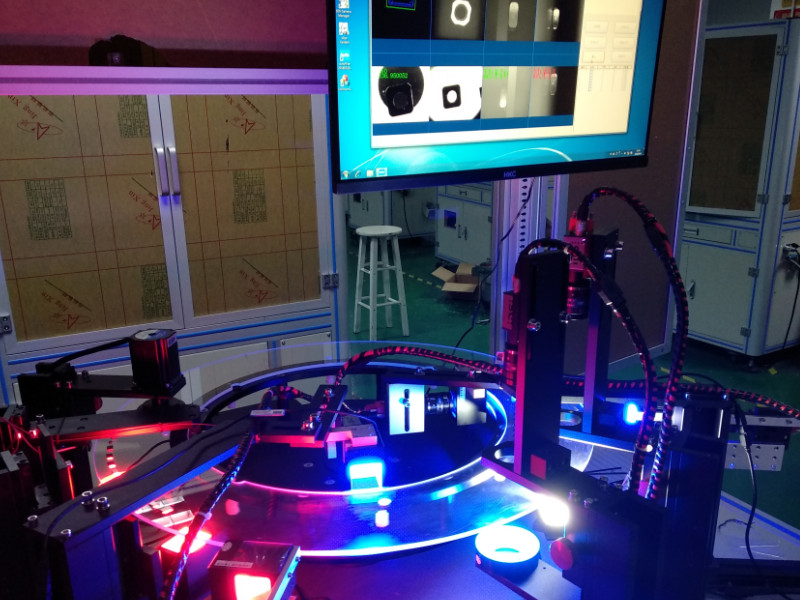
Production samples are measured on CMM. First Article Inspection Report (FAIR) is prepared — all dimensions, material certificate, surface roughness, and visual inspection documented.
Parts are packed in anti-rust VCI packaging. DHL/FedEx express shipping gets parts to North America in 3–5 days, Europe in 4–6 days. Full tracking provided.
Materials Available for Prototype Stamping
| Material | Common Grades | Thickness Range | Typical Applications |
|---|---|---|---|
| Carbon Steel | SPCC, SPCD, DC01, Q235 | 0.3 – 6.0 mm | Brackets, enclosures, structural parts |
| Stainless Steel | SUS304, SUS316, SUS301 | 0.1 – 4.0 mm | Medical, food equipment, marine |
| Aluminum | A1100, A5052, A6061 | 0.3 – 5.0 mm | Aerospace, electronics, EV battery |
| Copper / Brass | C1100, C2680, C2720 | 0.1 – 3.0 mm | Connectors, terminals, lead frames |
| Phosphor Bronze | C5191, C5210 | 0.05 – 1.0 mm | Spring contacts, precision connectors |
| Galvanized Steel | SGCC, DX51D+Z | 0.3 – 3.0 mm | Construction brackets, automotive underbody |
We stock a range of materials in our facility for fast prototype starts. If your specification requires a material we do not stock, we source it locally within 3–5 business days without affecting overall lead time.
What Is Included in Our Prototype Package
- First Article Inspection Report (FAIR) — All drawing dimensions measured on CMM, reported in tabular format with actual vs. nominal values
- Material Certificate — Mill test report showing chemical composition, mechanical properties, and heat/batch number
- Surface Finish Report — Ra measurement at specified locations if surface finish is called out on drawing
- Photos of parts and packaging — Before shipment images shared via email for pre-receipt verification
- DFM feedback letter — Any suggestions for improving formability, reducing scrap rate, or lowering production cost
- Die drawing on approval — CAD die drawing available for review upon request (NDA required)
Prototype Stamping vs. Alternative Processes
| Process | Lead Time | Cost (10 pcs) | Matches Production? | Limitations |
|---|---|---|---|---|
| Prototype Stamping (soft tooling) |
7–10 days | $1,200–$5,000 | Yes — same process | Tooling cost upfront |
| CNC Machining | 3–7 days | $500–$3,000 | No — different grain, surface | No springback data, poor for thin sheet |
| Laser Cutting + Bending | 3–5 days | $300–$1,500 | Partial — no drawn features | Heat-affected zone, limited geometry |
| 3D Printing (Metal) | 5–14 days | $1,000–$8,000 | No — different structure | Porosity, poor surface, no springback |
| Wire EDM / Waterjet | 5–10 days | $400–$2,000 | No — flat blanks only | No bending or forming operations |
Common Prototype Stamping Applications
Bracket prototypes for FMEA, connector clips for fit-check, body panel samples for die feasibility
Terminal and contact prototypes for insertion force testing, EMI shield samples for RF attenuation measurement
Surgical instrument housings, implant components in 316L stainless, diagnostic device brackets
Cell holders, busbar prototypes, battery contact plates in nickel-plated steel or copper
Battery contact springs, structural chassis frames, hinge mechanisms, decorative trim panels
Control panel brackets, motor lamination prototypes, heat exchanger fin samples
Frequently Asked Questions
What is the minimum order quantity for prototype stamping?
We accept prototype orders starting from 1 piece. However, for soft tooling, a practical minimum of 20–50 pieces is recommended because die setup and first-article inspection costs are spread over the batch. For quantities under 10 pieces, CNC-cut blanks with press-brake forming may be more cost-effective.
Can the prototype tooling be used for production later?
Soft tooling (aluminum dies) is not intended for production runs. Bridge tooling (P20 steel) can handle up to 200,000 strokes — suitable for initial production. Hard tooling built for production from the start is the most cost-effective if you are confident in your design. We recommend starting with bridge tooling if design changes are likely after prototype validation.
Do you provide secondary operations for prototypes?
Yes. For prototypes we offer zinc plating, nickel plating, passivation, anodizing (aluminum), powder coating, and basic assembly. Lead times for secondary operations add 3–5 business days. For production-intent prototypes requiring plating, we recommend ordering plated parts for the first article so test results are representative.
What happens if parts fail first article inspection?
If first article parts fail dimensional inspection, we rework the die at no additional charge and run a second tryout. Our engineering team documents the root cause and corrective action. Second-round parts are typically within specification. If the failure is due to a drawing ambiguity or specification change, we quote any additional tooling modification separately.
How do I ship my parts back if modifications are needed?
Return shipping for re-work is straightforward — we provide a return shipping label for DHL or FedEx. Parts are inspected on arrival and modifications begin immediately. Re-worked parts are typically turned around in 3–5 business days after receipt.
Related Services