
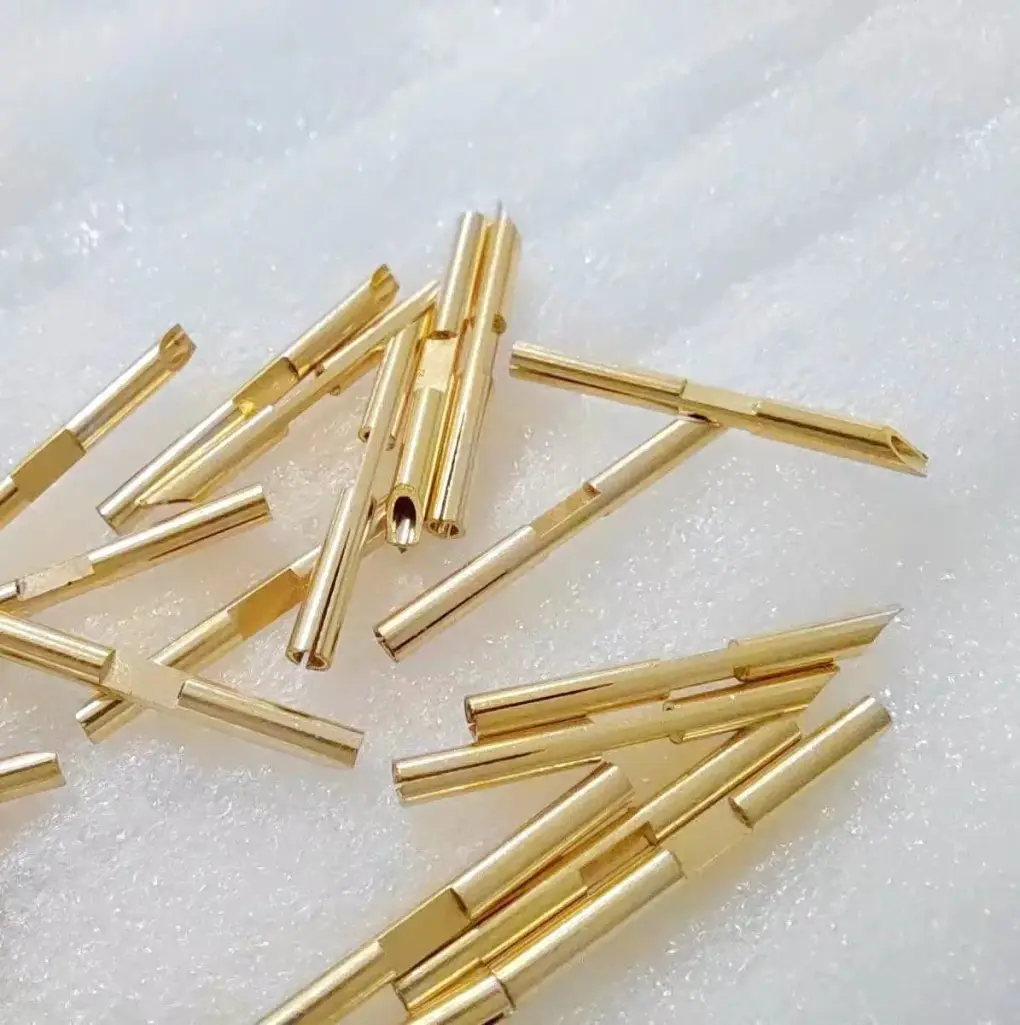
Short answer: pre-plated strip can reduce cost and lokacin isarwa for stamped terminals, but cut edges and formed areas may expose base metal. Post-plating can cover more surfaces after bugawa, but it adds handling, masking, plating fixture, and dimensional risk. The right choice depends on tuntuɓa area, bend severity, corrosion exposure, solderability, conductivity, volume, and what surfaces must be protected.
This page is for connector, battery, wire harness, electronics, and sensor buyers comparing plating routes for stamped terminals and contacts. The plating decision should be made with the bugawa design, not after the tool is already built. A small change in tuntuɓa surface, burr direction, or carrier strip layout can affect both cost and reliability.
Aika terminal drawings, material, thickness, tuntuɓa surface, plating stack, quantity, and test requirements through the RFQ form. Related pages include the copper terminal plating guide, terminal tuntuɓa bugawa guide, and wire harness terminal guide.
How the two plating routes differ
| Decision point | Pre-plated strip | Post-plated terminal |
|---|---|---|
| Cost and speed | Often efficient for high-volume strip bugawa. | Adds a separate finishing operation after bugawa. |
| Cut edges | Blanked edges may expose base material. | Can cover edges depending on process and part geometry. |
| Formed bends | Plating may crack or thin on severe forms. | Finish is applied after forming, but coverage must still be verified. |
| Selective plating | Can be economical when tuntuɓa zones align with strip feed. | May require masking or rack/barrel process decisions. |
| Inspection | Focus on strip certificate, tuntuɓa zone, and exposed edges. | Focus on plating thickness, adhesion, coverage, and handling damage. |
When pre-plated strip makes sense
Pre-plated material is often attractive for high-volume terminals, simple tuntuɓa plates, grounding tabs, and reel-to-reel parts where the tuntuɓa area can be placed in a predictable strip location. It can reduce finishing steps and simplify production flow. It may also help when the buyer needs stable plating thickness on a flat tuntuɓa surface before forming.
The tradeoff is exposed base metal on cut edges and possible plating stress on sharp bends, lances, or coined features. Buyers should define whether exposed edges are acceptable. For many electrical contacts, the working surface matters more than every edge. For corrosion-sensitive or cosmetic parts, exposed edges may not be acceptable.
When post-plating is the better route
Post-plating can be useful when the part needs coverage after forming, when cut edges require protection, or when the tuntuɓa surface is difficult to align with a pre-plated strip. It can also help when a part has formed tabs, spring contacts, solder areas, or geometry that needs the final finish after bending.
Post-plating is not automatically safer. Small terminals can tangle, rack marks can matter, plating can bridge tight features, and dimensions can shift if thickness is not controlled. If the terminal has close-fit slots, press-fit areas, or spring features, the plating thickness and inspection method should be reviewed before production.
Material and finish choices
Copper, brass, phosphor bronze, beryllium copper, stainless steel, nickel strip, and plated steel each behave differently. Tin is common for many terminals and solderable contacts. Nickel may be used as a barrier or wear layer. Silver or gold may be used when tuntuɓa resistance, signal reliability, or corrosion risk justifies the cost. Selective plating may reduce cost when only the tuntuɓa zone needs a premium finish.
For material decisions, review phosphor bronze vs beryllium copper tuntuɓa bugawa, nickel strip bugawa, and solder tabs bugawa. For process planning, see reel-to-reel bugawa and plating and passivation RFQ guide.
RFQ checklist for plated stamped terminals
- 2D drawing, 3D file, strip layout if available, and current revision.
- Base material, thickness, temper, conductivity, hardness, and allowed alternatives.
- Required plating stack, thickness, tuntuɓa area, solder area, and underplate.
- Whether exposed cut edges are acceptable after blanking.
- Bend severity, coined contacts, burr direction, and critical electrical surfaces.
- Prototype quantity, annual volume, reel or bulk packaging, inspection, and test needs.
Use the tuntuɓa page to send drawings for plating route review. If the terminal is part of a larger assembly, include the mating surface, insertion method, environment, and current issue such as corrosion, high resistance, solder trouble, or bent tabs.
FAQ: pre-plated vs post-plated terminals
Is pre-plated strip cheaper than post-plating?
It can be cheaper at suitable volume because plating is already on the strip, but exposed edges, bend severity, and tuntuɓa area requirements must be acceptable.
Does post-plating cover cut edges?
Post-plating can cover more surfaces after blanking and forming, but actual edge coverage depends on the plating process, part geometry, masking, and inspection requirements.
Can plating crack during terminal forming?
Yes. Severe bends, small radii, and coined features can stress pre-plated layers. Bend radius, plating type, and forming sequence should be reviewed during DFM.
What plating information is needed for a terminal RFQ?
Aika the plating stack, thickness, tuntuɓa zone, solder area, corrosion requirement, exposed edge rule, test requirement, quantity, and packaging method.