
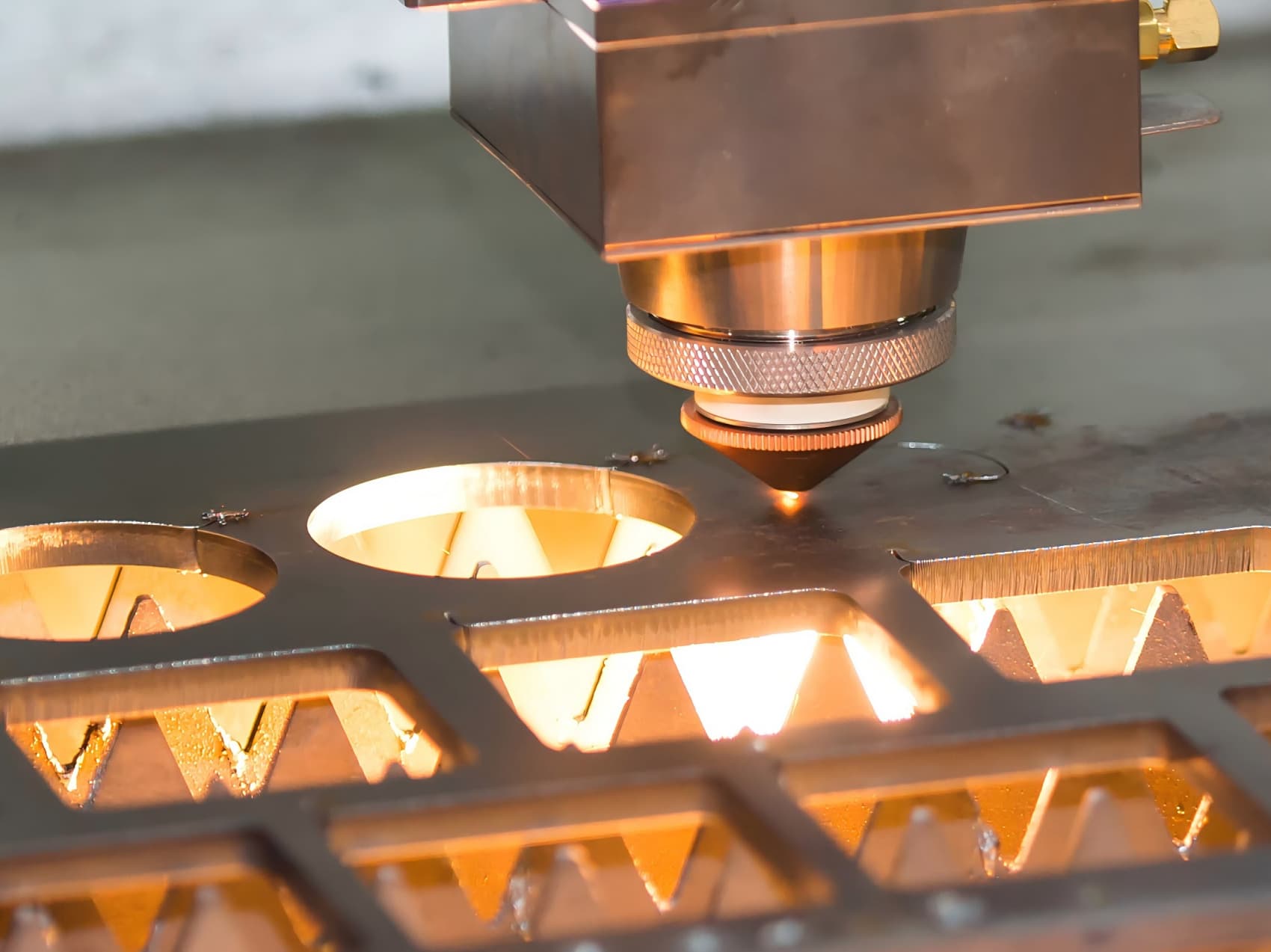
Short answer: Formed louvers, ribs, and lanced tabs should be specified by function, not only by shape. The RFQ should define airflow or stiffness target, formed height, openings, burr side, minimum spacing, material thickness, bend direction, cosmetic face, inspection points, and whether the feature is made in progressive tooling or a secondary forming step.
Louvers, strengthening ribs, lance tabs, vents, and small formed locks are common on covers, enclosures, shields, appliance panels, electronics brackets, and HVAC-related parts. These features can add airflow, stiffness, locating function, or clip retention without adding separate hardware.
Use this page with the punched holes and slots guide, farantin karfe enclosure DFM guide, process sequence checklist, and Custom bugun karfe service page.
Feature choices before tooling
| Feature | Main quote risk | RFQ detail |
|---|---|---|
| Louver | Air opening, appearance, burr exposure, and formed height can conflict. | Opening direction, height, pitch, cosmetic side, and airflow need. |
| Rib or emboss | Deep ribs can distort flatness or move nearby holes. | Rib height, radius, location from bends, and stiffness purpose. |
| Lanced tab | Retention force and edge condition depend on material and forming direction. | Tab height, lock function, burr side, and mating part thickness. |
| Vent pattern | Many small forms can raise tooling cost and inspection time. | Pattern quantity, allowable distortion, and visual standard. |
Define what the formed feature must do
A louver may need airflow, splash resistance, a smooth outside surface, or a one-way opening direction. A rib may need stiffness, oil-canning control, or a visual styling line. A lanced tab may need to retain a PCB, locate a mating panel, hold foam, or create a grounding point. Each function points to different inspection rules.
Do not ask a mai samarwa to quote from a 3D shape alone when the feature is functional. Add notes for formed height, open gap, burr side, tuntuɓa face, and mating part. If the tab locks a part, include mating thickness and push direction. If the louver is visible, include the cosmetic face and accepted witness marks.
Keep spacing and sequence realistic
Formed features pull material. Nearby holes, edges, bends, hems, and countersinks can move if there is not enough distance. A rib near a hole may change the hole shape. A lanced tab near an edge may tear. A louver pattern can twist a large thin panel if all forms face one direction.
The forming route matters. A mutu mai ci gaba can pierce and form features in a controlled strip, but complex features may require a secondary form station or transfer operation. Discuss the sequence with the mutu mai ci gaba bugawa service page, flatness and warpage guide, and thin gauge bugawa guide.
RFQ details to include
- Drawing and model showing louver direction, rib height, tab form, opening, radius, and inspection points.
- Material sa, thickness, temper, grain direction if relevant, finish, and cosmetic face.
- Function: airflow, stiffness, locating, retention, grounding, cable clearance, drainage, or visual cover.
- Burr direction, exposed edge limits, no-scratch faces, coating buildup, and packaging protection.
- Critical nearby dimensions: hole location, panel flatness, bend angle, edge distance, and mating part fit.
- Annual volume, prototype need, tooling budget, and whether a sample cut or formed strip review is useful.
How to approve samples
Inspect the feature in the same way it will be used. Measure louver opening and height, test tab retention against the mating part, check whether ribs improve stiffness without rocking the panel, and confirm that burrs do not face the user, gasket, wire, or painted surface.
For cosmetic panels, approve a visual master sample because small forming marks may be acceptable on an inside face and unacceptable on the outside face. For functional tabs, ask for a retention or deflection check instead of relying only on height.
Aika marked drawings and the feature purpose through the tuntuɓa page. If the design is still open, use the RFQ form to ask which formed features can stay in progressive tooling and which ones add secondary operation cost.
FAQ
What is a lanced tab in farantin karfe bugawa?
A lanced tab is cut and formed from the sheet without fully removing material. It can locate, retain, ground, or support a mating part.
Do louvers and ribs affect flatness?
Yes. They move material and can twist thin panels, especially when patterns are dense, deep, close to edges, or all formed in one direction.
Should louver openings be inspected by height or airflow?
Usually both the physical geometry and the functional requirement should be clear. Airflow-sensitive parts may need an opening target or sample approval.
What should be sent for a louver or rib RFQ?
Aika drawings, material, thickness, formed height, direction, spacing, burr side, cosmetic face, function, volume, and sample approval method.