
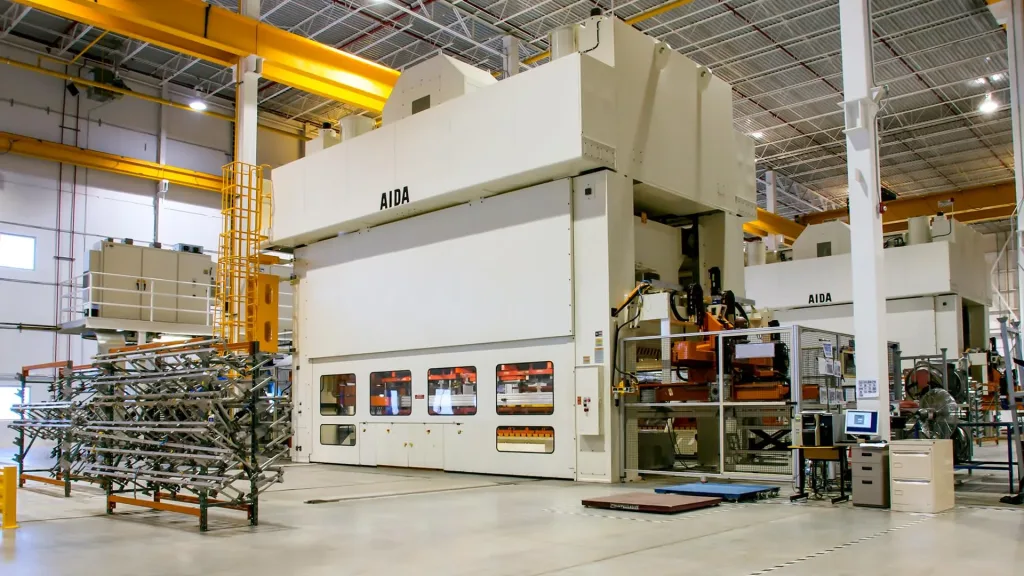
Short answer: progresiva ĵetkubo stampado cost is shaped by tooling complexity, number of die stations, material usage, press speed, annual volume, tolerance requirements, finishing, inspection, and scrap rate. The tooling cost is higher than many simple stampado methods, but the unit cost can become lower when the part is produced in steady volume with a well-designed strip layout.
This page helps buyers understand the cost structure behind progresiva ĵetkubo stampado. It is useful when comparing quotes for terminals, brackets, clips, shields, busbars, contacts, and other stamped components that need repeated production.
For a quote, send the drawing package through the RFQ form. For preparation details, see the metala stampado RFQ checklist.
progresiva ĵetkubo stampado cost breakdown
| Cost driver | What affects it | Why buyers should care |
|---|---|---|
| Tooling | Station count, part complexity, die components, sensors, tryout, and sample approval. | Higher first cost, but often better repeatability and lower labor per part. |
| Materialo | Grade, thickness, coil width, strip layout, carrier design, and scrap rate. | Materialo yield can change unit price more than expected. |
| Press time | Press tonnage, strokes per minute, setup time, coil change, and run stability. | Stable production lowers unit cost in high-volume programs. |
| Secondary operations | Tapping, welding, riveting, assembly, deburring, cleaning, plating, or packaging. | These operations can be larger than the stampado cost for some parts. |
| Inspection | Critical dimensions, gauges, CMM checks, FAI, and sampling frequency. | Tighter quality control should be quoted explicitly. |
Why progressive tooling costs more upfront
A progresiva ĵetkubo performs multiple operations as the metal strip advances through the tool. Piercing, forming, bending, coining, embossing, and cutoff can happen in sequence. This requires careful strip layout and die timing. The die may need pilots, guide components, lifters, sensors, backup inserts, and wear-resistant sections.
The tooling quote may look high compared with a single-operation die, but the comparison should include production efficiency. For repeat orders, the die can reduce manual handling, improve dimensional consistency, and run parts at a steady press rate.
Related page: progresiva ĵetkubo stampado services.
Parto features that increase cost
progresiva ĵetkubo stampado is efficient, but difficult features add stations, increase tryout time, or require secondary operations.
- Several bends with tight bend height or angle requirements.
- Close hole-to-edge or hole-to-bend distances.
- Small terminals or contacts with tight pitch and burr limits.
- Embosses, lances, tabs, ribs, or coined areas.
- Flatness requirements after forming.
- High-strength, spring, stainless, or copper alloy materials that need controlled forming.
- Cosmetic surfaces that limit handling marks or require protective packaging.
If a feature drives most of the cost, ask whether a design change could reduce risk. Sometimes moving a hole, relaxing a non-functional tolerance, or adjusting a bend radius can shorten the tool layout.
Materialo yield and strip layout
Materialo can be a major part of progressive stampado cost. The strip layout controls how much coil width is used, how parts are nested, where carriers and pilots sit, and how much scrap is produced.
Buyers should ask whether the quote assumes a specific material width and layout. A small change in part orientation can improve yield, but it must still support stable feeding and part quality. For expensive copper, stainless, or specialty materials, yield review is especially important.
Volume changes the cost picture
progresiva ĵetkubo stampado usually makes the most sense when volume is high enough to spread tooling cost across many parts. If annual usage is low or uncertain, ask for a comparison between short-run tooling and progressive production tooling.
Provide these numbers in the RFQ:
- Prototype quantity.
- First order quantity.
- Monthly or annual forecast.
- Project life.
- Expected release schedule.
A clear forecast lets the provizanto compare tooling cost, unit cost, and break-even point. Without volume information, the quote may be conservative or may choose the wrong tooling strategy.
Secondary operations and finishing
Many progressive stampitaj partoj are not finished when they leave the die. Some need deburring, plating, heat treatment, welding, tapping, riveting, assembly, cleaning, or packaging. These costs should be separated or clearly included in the quote.
For terminals, contacts, and busbars, plating or cleaning may affect electrical performance. For brackets and housings, zinc plating, powder coating, or passivation may be required for corrosion resistance. For safety-related parts, burr direction and edge condition should be specified.
Inspection and quality cost
Inspection requirements can change quote structure. A simple bracket may only need dimensional sampling. A kontakto part with tight pitch, spring force, and plating requirements may need custom gauges, CMM checks, visual inspection, and material traceability.
State whether you need:
- First article inspection.
- CMM report or custom gauge report.
- Materialo certificate.
- RoHS or REACH documentation.
- Lot traceability.
- PPAP-like submission or control plan.
How to compare progressive stampado quotes
Compare quotes by total project cost, not just tool price or unit price. A useful comparison should show tooling scope, sample livertempo, production livertempo, material assumption, finish, inspection scope, and packaging.
- Confirm whether the tooling quote includes tryout and first samples.
- Ask whether spare inserts or wear parts are included.
- Check who owns the die and how maintenance is handled.
- Confirm material grade, thickness, and finish assumption.
- Check whether production price includes secondary operations.
- Ask for DFM comments before approving tooling.
RFQ information for accurate cost review
Sendu these items with your progresiva ĵetkubo stampado RFQ:
- 2D drawing and 3D file.
- Materiala grado, temper, and thickness.
- Critical dimensions, datums, and tolerance notes.
- Burr direction, flatness, and edge requirements.
- Surface finish and packaging needs.
- Prototype, first order, annual volume, and project life.
- Inspection and documentation requirements.
- Target sample and production dates.
Related pages for cost planning
- progresiva ĵetkubo stampado services
- Metal stampada ilaro cost guide
- stampada ilaro fabrikanto
- High volume metala stampado
- High precision metala stampado
- metala stampado RFQ checklist
- peti prezoferton
Oftaj Demandoj
Why does progresiva ĵetkubo tooling cost more than simple stampada ilaro?
Progressive dies include multiple stations, strip layout engineering, precision components, tryout, and adjustment. They cost more upfront because the tool performs repeated operations in one controlled production flow.
When does progresiva ĵetkubo stampado reduce unit cost?
It usually reduces unit cost when volume is high enough to spread tooling cost across many parts and when the die can reduce handling, setup, and secondary operations.
Does material choice affect progressive stampado cost?
Yes. Thickness, strength, springback, conductivity, corrosion needs, and coil cost all affect tooling design, press tonnage, scrap rate, and production stability.
Can a progresiva ĵetkubo be changed after it is built?
Some changes are possible, but they may require insert changes, station rework, new tryout, or even a new layout. Confirm DFM before tool build to reduce revision cost.
Should finishing be included in the stampado quote?
Yes. Deburring, plating, passivation, cleaning, or packaging can significantly affect total part cost and livertempo, so these requirements should be included in the RFQ.
What is the fastest way to get a useful cost estimate?
Sendu controlled drawings, material grade, thickness, critical dimensions, finish, inspection requirements, and realistic annual volume. These details let the provizanto review tooling and production cost together.
Request a progresiva ĵetkubo cost review
For high-volume stamped terminals, brackets, clips, shields, busbars, or contacts, send your drawing package through the RFQ form. Include material, thickness, quantity, finish, and inspection needs so the tooling and unit-cost assumptions can be reviewed together.