
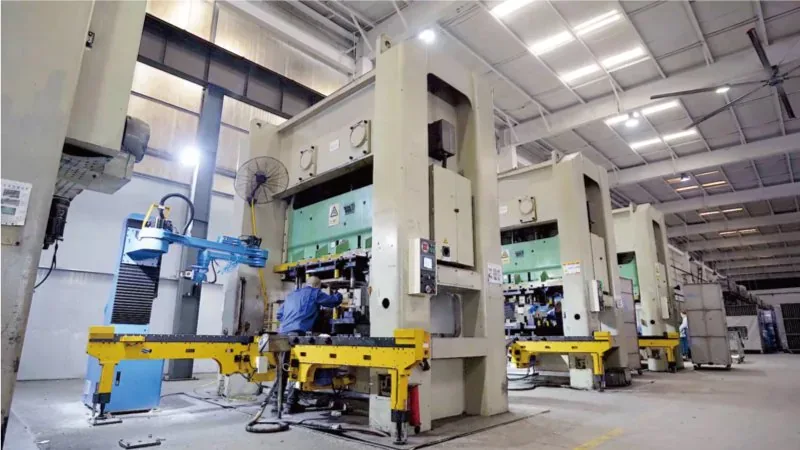
Short answer: A useful metala stampado RFQ should include a controlled drawing or 3D file, material grade, sheet thickness, critical tolerances, annual quantity, surface finish, inspection needs, packaging requirements, and target livertempo. The clearer the RFQ package is, the faster a stampado provizanto can review manufacturability, estimate tooling, and quote production cost without repeated clarification.
This checklist is written for purchasing teams, engineers, and product developers who need a quote for custom stamped metal parts. It is not a sales formality. In metala stampado, missing drawing revisions, unclear tolerances, or incomplete material notes can change tooling cost, inspection time, and production risk.
If you already have drawings, you can send them through the quote request form. If your design is still early, use the checklist below to prepare the information a provizanto will need for a practical DFM review.
metala stampado RFQ checklist
| RFQ item | Why it matters | What to send |
|---|---|---|
| Parto drawing and revision | Controls dimensions, tolerances, notes, and change history. | 2D PDF/DWG plus 3D STEP, revision level, and drawing date. |
| Materiala grado | Affects formability, springback, corrosion resistance, conductivity, and cost. | Steel, stainless steel, aluminum, copper, brass, or specified alloy grade. |
| Sheet thickness | Changes tonnage, die clearance, burr size, bend radius, and feed setup. | Nominal thickness, tolerance if controlled, and material standard. |
| Critical dimensions | Not every dimension needs the same control. Critical features drive inspection and tooling choices. | Mark fit, assembly, sealing, electrical, or safety-related dimensions. |
| Quantity and forecast | Prototype, pilot, and production volumes may need different tooling strategies. | First order quantity, annual volume, expected batches, and project life. |
| Surface finish | Finishing changes cost, livertempo, masking, packaging, and inspection. | Zinc plating, passivation, powder coating, anodizing, deburring, cleaning, or raw finish. |
| Kvalito documents | Inspection and documentation requirements affect quote time and production planning. | FAI, material certificate, dimensional report, CMM report, PPAP-like package, or special gauge needs. |
| livertempo target | Tooling, samples, finishing, and production scheduling need realistic timing. | Required sample date, production date, shipment date, and any fixed launch deadline. |
1. Sendu the right drawing package
For a production quote, a 2D drawing is still the main control document. A 3D file helps with geometry review, tooling layout, and early DFM checks, but it should not replace the tolerances and notes on the drawing.
Sendu these files when available:
- 2D drawing in PDF, DWG, or DXF format.
- 3D model in STEP, STP, IGS, or similar neutral format.
- Current revision level and any older revision that explains a recent change.
- Assembly drawing if the stamped part fits into a larger product.
- Photos or samples if the RFQ is for replacement, localization, or provizanto transfer.
If the drawing is incomplete, say which dimensions are fixed and which are open for manufacturing feedback. A provizanto can often suggest bend radius, hole position, relief cuts, or material changes before tooling is built.
2. Define material grade, temper, and thickness
“Steel part” or “stainless bracket” is not enough for a reliable stampado quote. Materialo choice affects blanking clearance, bend springback, deep drawing risk, tool wear, corrosion performance, and final cost.
For common stampitaj partoj, buyers usually need to specify:
- Materialo family: carbon steel, stainless steel, aluminum, copper, brass, bronze, or specialty alloy.
- Grade: for example, SPCC, stainless 304/316/430, aluminum 5052/6061, C110 copper, or a customer standard.
- Temper or hardness if it affects forming, spring force, or electrical kontakto performance.
- Nominal sheet thickness and tolerance if thickness is critical to assembly.
- Surface condition: oiled, polished, brushed, pre-plated, film-protected, or mill finish.
If you are comparing options, note the working environment. A stainless steel part for outdoor corrosion, a copper terminal for conductivity, and a low-carbon steel bracket for zinc plating need different quote assumptions. Related pages: stainless steel metala stampado, steel stampado, and lado stampado.
3. Mark critical tolerances instead of over-tolerancing everything
One of the fastest ways to slow down a metala stampado quote is to apply tight tolerances to every dimension. Tight control may be necessary for holes, tabs, kontakto points, mating surfaces, or assembled features, but many non-critical dimensions can follow normal stampado practice.
When preparing the RFQ, mark:
- Functional dimensions that control fit or assembly.
- Hole diameter and hole position tolerance for screws, rivets, pins, or terminals.
- Bend angle, bend height, and flatness requirements.
- Burr direction and maximum burr height if it affects assembly, safety, sealing, or electrical kontakto.
- Datums and inspection method if the part has several formed features.
For high precision parts, also explain how the part will be used. A provizanto may quote progresiva ĵetkubo stampado, secondary sizing, fixture inspection, or CMM inspection depending on the risk. Related page: high precision metala stampado.
4. Give realistic quantity and project life
metala stampado cost depends heavily on volume. A short prototype run, a 5,000-piece pilot order, and a 500,000-piece annual program should not be quoted the same way.
Include:
- Prototype quantity, if samples are needed before production tooling.
- First production order quantity.
- Annual usage or monthly forecast.
- Expected project life, if available.
- Whether releases will be one-time, monthly, quarterly, or blanket orders.
Low volumes may fit short-run tooling or simpler dies. Higher volumes often justify progresiva ĵetkubo tooling because cycle time, consistency, and labor cost become more important. If the part has multiple bends, pierced holes, and high annual demand, review progresiva ĵetkubo stampado early in the RFQ process.
5. Explain tooling expectations
Tooling is often the largest first cost in a stampado project. Buyers do not need to design the die, but the RFQ should make the commercial expectation clear.
Useful tooling details include:
- Is this a new part, provizanto transfer, or replacement of existing tooling?
- Do you need prototype samples before production tooling?
- Is the target production method single-stage die, kunmetita ĵetkubo, progresiva ĵetkubo, transiga ĵetkubo, or open to provizanto recommendation?
- Who owns the tooling after payment?
- Do you need tooling maintenance records or spare insert planning?
If the design is not fixed, ask for a DFM review before the final quote. Small changes to hole spacing, bend relief, radius, material, or carrier layout can reduce die risk before steel is cut. Related pages: stampada ilaro fabrikanto and stampado dies and tooling.
6. Specify finish, deburring, and packaging
Finishing can change both price and livertempo. It may also change dimensional requirements if plating thickness, coating buildup, masking, or cleaning matters.
State the required finish as clearly as possible:
- Raw, oiled, or cleaned only.
- Zinc plating, nickel plating, tin plating, passivation, anodizing, powder coating, or black oxide.
- Deburring, tumbling, brushing, edge rounding, or no sharp edge requirement.
- Cosmetic surface grade if scratches or handling marks matter.
- Packaging method: bulk, tray, bag, protective film, separator paper, or customer label.
For electrical contacts and terminals, surface finish may affect conductivity, solderability, or kontakto resistance. For brackets and housings, finish may be mainly corrosion resistance or appearance. Make that purpose clear in the RFQ.
7. Define inspection and quality documents
Inspection is not just a final check. It affects fixture planning, sampling level, production control, and quote assumptions.
Typical RFQ notes include:
- First article inspection requirement.
- Materialo certificate or RoHS/REACH requirement.
- Critical-to-quality dimensions and inspection frequency.
- CMM report or custom gauge requirement.
- PPAP-like documentation, control plan, or process flow requirement for aŭtomobila-style programs.
- Lot traceability, label format, and packaging traceability.
If your drawing has many tight features, identify which dimensions need 100% inspection and which can be sampled. This keeps the quote realistic and avoids adding inspection cost where it does not improve function.
8. Tell the provizanto what problem you are trying to solve
A good RFQ is not only a file transfer. Add a short note explaining why the project exists. The provizanto can review the drawing with the right concern in mind.
Useful context includes:
- New product development, cost reduction, provizanto transfer, localization, or quality problem.
- Current problem: burrs, springback, cracking, flatness, late delivery, high tooling cost, or inconsistent plating.
- Assembly condition: welded, riveted, screwed, inserted, soldered, crimped, or press-fit.
- Operating environment: indoor, outdoor, high temperature, vibration, corrosion, electrical load, or repeated movement.
- Any target cost, target weight, or launch date that affects manufacturing choices.
Copy-ready RFQ checklist
You can copy this list into an email or attach it to your quote request:
- Parto name and application:
- 2D drawing and 3D file attached:
- Drawing revision:
- Materiala grado and thickness:
- Surface finish and deburring requirement:
- Critical dimensions and tolerances:
- Burr direction or edge requirement:
- Prototype quantity:
- First order quantity:
- Annual volume or forecast:
- Required inspection documents:
- Packaging and labeling:
- Target sample date:
- Target production date:
- Special concern or current provizanto issue:
Example RFQ message
Here is a simple message structure that works well for stampitaj partoj:
We need a quote for the attached stamped metal bracket. Materialo is stainless steel 304, thickness 1.0 mm. Please review the drawing revision B and STEP file. Critical dimensions are the two mounting holes and the bend height shown on the drawing. First sample quantity is 50 pcs, first production order is 5,000 pcs, and annual volume is about 40,000 pcs. Finish is deburred and passivated. Please include tooling cost, sample livertempo, production unit price, and any DFM suggestions before tooling.
This kind of RFQ gives the provizanto enough information to review manufacturability and quote the major cost drivers. If a requirement is unknown, say it is open for recommendation.
What happens after you send the RFQ?
A stampado provizanto will usually check drawing completeness, material availability, forming risk, tooling method, secondary operations, inspection needs, and packaging. If the part is practical for stampado, the quote should separate tooling cost, sample livertempo, production unit price, finishing cost if separate, and any DFM comments.
If the drawing has risks, expect questions about bend radius, sharp corners, hole-to-edge distance, flatness, burr control, material temper, or finish. Answering those questions before tooling reduces revision loops later.
Related metala stampado
- Products and services overview
- progresiva ĵetkubo stampado
- profunda tirado stampado
- Custom metala stampado
- metala stampado fabrikanto
- peti prezoferton
Oftaj Demandoj
What files should I send for a metala stampado quote?
Sendu a 2D drawing with tolerances and notes, plus a 3D STEP file if available. The 2D drawing controls the quote, while the 3D model helps with tooling review and geometry checks.
Can I peti prezoferton without a finished drawing?
Yes, but the quote will be preliminary. Sendu sketches, target dimensions, material, thickness, quantity, and application details. A provizanto can provide DFM comments before the final drawing is released.
Which tolerances should be marked as critical?
Mark dimensions that affect fit, assembly, sealing, electrical function, or safety. Avoid applying tight tolerances to every feature unless they are truly functional, because that can add tooling and inspection cost.
How does order quantity affect tooling cost?
Low volumes may use simpler tooling or short-run production methods. High annual volumes often justify progressive dies because cycle time and repeatability become more important than initial tooling cost alone.
Should surface finish be included in the RFQ?
Yes. Plating, passivation, anodizing, powder coating, deburring, and cleaning can affect cost, livertempo, dimensions, and packaging. Include the finish standard if your product requires one.
What information helps a provizanto quote faster?
The fastest RFQs usually include drawing revision, material grade, thickness, critical tolerances, quantity, finish, inspection requirement, packaging, and target livertempo. Clear application notes also help the provizanto review manufacturing risk.
Sendu your RFQ
If you need a quote for stamped brackets, terminals, busbars, housings, clips, shields, or other Custom metala stampado parts, send your drawings through the RFQ form. Include material, thickness, quantity, finish, tolerance notes, and target livertempo. We will review the part and respond with manufacturing questions or quote details based on the information provided.