
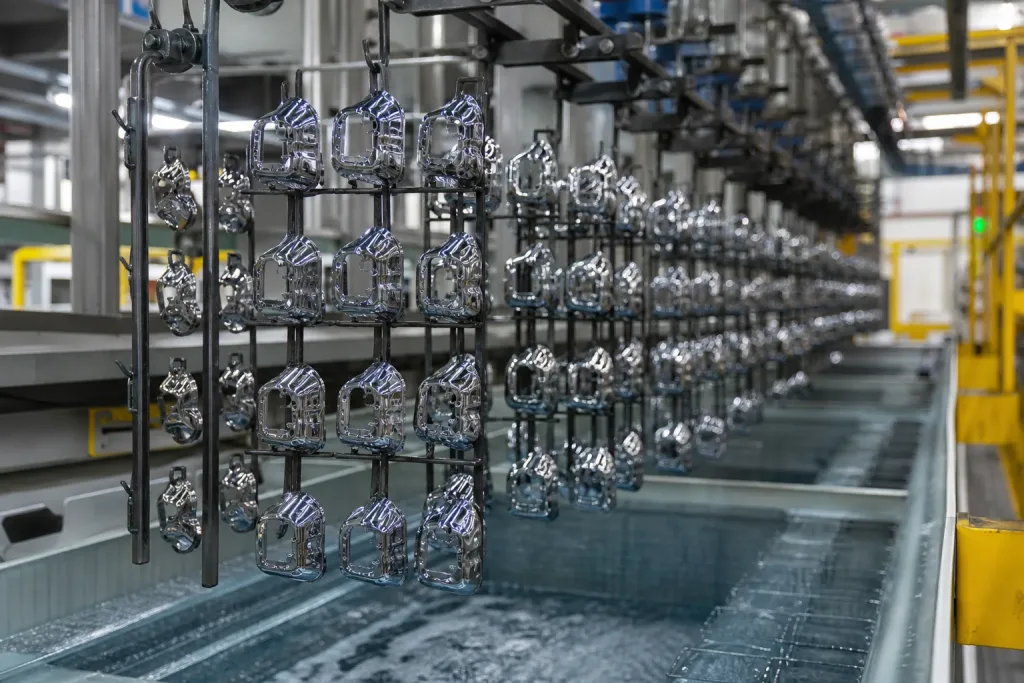
Short answer: Stamped part cleanliness should be specified before quoting when oil, particles, fingerprints, residue, or corrosion can affect plating, soldering, welding, adhesive bonding, medical use, electronics assembly, or visible appearance. A useful RFQ defines the allowed residue, cleaning method, inspection method, packaging, and how parts must stay clean after shipment.
Many iindawo ezinesitampu leave the press with lubricant, fine particles, dust, fingerprints, or handling residue. For a simple hidden bracket, that may be acceptable. For a terminal that must be soldered, a plated uqhagamshelwano, a medical component, or a visible stainless clip, the same residue can become a real quality problem.
Cleanliness control should be treated as part of the manufacturing route. It connects isitampu oil, deburring, tumbling, washing, drying, plating, passivation, packing, and export handling. Use this page with the plating and passivation RFQ guide, the surface finish inspection guide, and the export packaging checklist.
Cleanliness risks to define in the RFQ
| Risk | Where it comes from | What to specify |
|---|---|---|
| Oil film | isitampu lubricant, rust preventive, handling, or storage oil. | Allowed oil level, cleaning requirement, and whether parts must be dry to touch. |
| Particles | Punching fines, tumbling media, deburring residue, dust, or carton fibers. | Particle limit, critical surfaces, cleaning method, and inspection sample plan. |
| Fingerprints | Manual handling before plating, packing, or final inspection. | Glove rules, visible-zone requirements, and acceptable appearance samples. |
| Water stains | Incomplete drying, rinse residue, humid storage, or damaged packaging. | Drying method, stain acceptance, corrosion protection, and packing timing. |
| Chemical residue | Cleaning agents, plating chemicals, passivation, or anti-rust treatment. | Compatibility with soldering, bonding, coating, or downstream assembly. |
Define cleanliness by downstream process
The right cleanliness level depends on what happens Okulandelayo. Amacandelo going to plating may need controlled oil and surface condition. Amacandelo going to soldering need surfaces that do not interfere with wetting. Amacandelo going to welding or adhesive bonding may need low residue. Cosmetic parts may need no visible fingerprints, stains, or water marks.
For terminals and contacts, cleanliness links directly to conductivity, solderability, plating adhesion, and uqhagamshelwano surface performance. Use the terminal and uqhagamshelwano isitampu guide and terminal plating thickness inspection guide when the clean surface is also a functional surface.
Cleaning method and inspection method should match
A drawing note that says “clean” is too vague. State whether the part needs degreasing, ultrasonic cleaning, aqueous washing, solvent cleaning, passivation, drying, or clean bagging. Also state how cleanliness will be checked: visual inspection, wipe test, residue test, particle count, solderability check, plating adhesion test, or buyer-approved sample comparison.
Do not over-specify a cleanliness method if the umboneleli can meet the functional need with a simpler process. The RFQ should explain the downstream risk, then let the umboneleli confirm the method during review. For parts with tight appearance requirements, tie the cleanliness standard to the incoming inspection checklist.
Packaging can undo cleaning work
Clean parts can become contaminated after final inspection. Loose cartons can add paper dust. Unsealed bags can allow moisture. Bare handling can add fingerprints. Mixed packaging can transfer oil from one part to another. If the part must stay clean, the packaging method belongs in the quote.
For export shipments, define sealed bags, trays, dividers, desiccant or VCI where suitable, carton cleanliness, and label rules. If the parts are electronics components, consider whether ESD-safe packaging for stamped electronics parts is needed as well.
Cleanliness checklist for stamped part RFQs
- Inxalenye drawing, material grade, finish, and downstream process.
- Critical surfaces where oil, particles, stains, or residue are not acceptable.
- Allowed oil condition: normal isitampu oil, dry to touch, or cleaned surface.
- Particle, residue, fingerprint, stain, or water mark acceptance criteria.
- Cleaning method or functional cleanliness requirement.
- Inspection method, sample size, report requirement, and retained sample need.
- Packaging method that keeps parts clean through storage and shipment.
- Known failure history such as poor plating, soldering, welding, or cosmetic rejects.
When cleanliness changes quote cost
Cleanliness requirements can add washing, drying, inspection, special packaging, slower handling, or outside processing. This can change both ixesha lokuhambisa and unit price. It is better to define the requirement before quote comparison than to add it after the umboneleli prices normal iindawo ezinesitampu.
If you need iindawo ezinesitampu with a controlled cleanliness level, send the drawing, finish spec, downstream process, cleanliness limit, and packaging requirement through the uqhagamshelwano page. For a quote review or second-source check, use the RFQ form and include photos of contamination or rejected parts if available.
FAQ: stamped part cleanliness control
Why are iindawo ezinesitampu oily after production?
isitampu often uses lubricant to reduce tool wear and forming damage. If the part needs plating, soldering, bonding, or cosmetic surfaces, cleaning may need to be specified.
How should cleanliness be specified on an RFQ?
Define the critical surfaces, allowed oil or residue, downstream process, cleaning method if required, inspection method, packaging, and whether a cleanliness report is needed.
Can packaging contaminate clean iindawo ezinesitampu?
Yes. Paper dust, moisture, fingerprints, loose cartons, reused bags, or part-to-part rubbing can contaminate parts after cleaning and inspection.
Does cleanliness affect isitampu cost?
It can. Washing, drying, extra inspection, clean handling, and special packaging can affect unit price and ixesha lokuhambisa, so they should be included before quoting.