
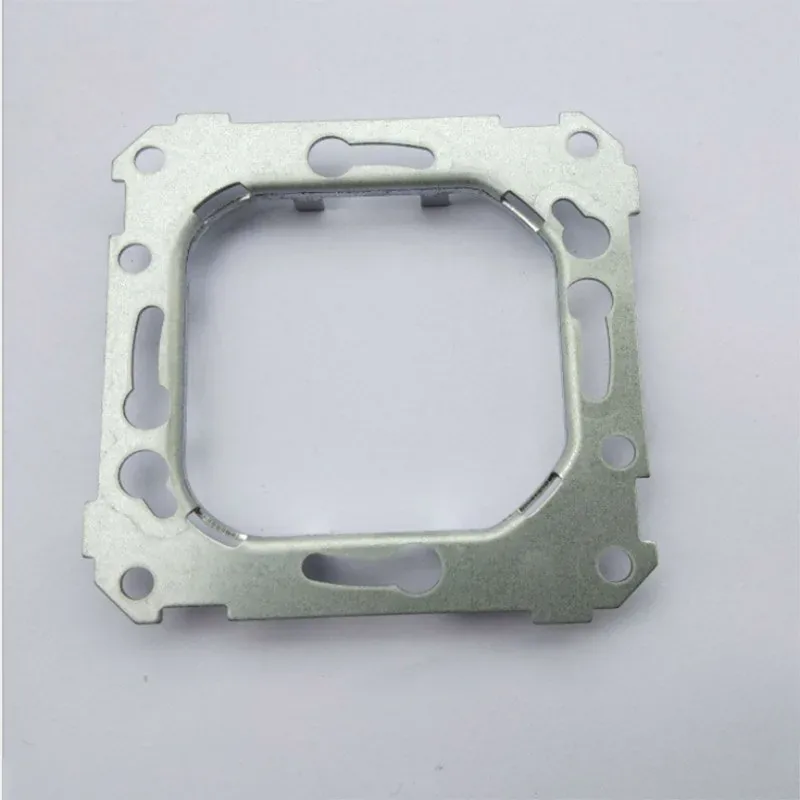
Short answer: Holes and slots in iindawo ezinesitampu should be designed around material thickness, edge distance, web strength, burr direction, tool access, and forming sequence. Small holes, narrow slots, and close-to-bend features can be made, but they increase tool wear, distortion, and inspection risk. Mark critical holes, functional edges, and allowed burr direction before requesting a quote.
This guide is for engineers designing pierced holes, mounting slots, ventilation openings, tabs, and lightening features in stamped metal parts. It focuses on manufacturability, not one rigid rule for every material. Stainless steel, spring steel, aluminum, brass, and copper alloys do not all behave the same.
If you need DFM review for holes or slots, send the drawing, material, thickness, tolerance, and assembly use through the RFQ form. For a full quote package, use the isitampu sentsimbi RFQ checklist.
Why hole and slot design matters
Pierced features look simple on a drawing, but they affect punch strength, strip layout, burr direction, part flatness, plating, and assembly fit. A small hole in thin aluminum may be easy. The same feature in hardened stainless or spring steel may break punches or create heavy burrs.
| Design factor | What it affects | RFQ detail to send |
|---|---|---|
| Hole size | Punch strength, burr height, and tool life. | Diameter, tolerance, and whether the hole is functional. |
| Edge distance | Distortion, breakout, narrow webs, and part strength. | Distance from hole or slot to outside edge and bend lines. |
| Slot width | Punch stability, slug control, and burr consistency. | Slot width, length, end radius, and fit requirement. |
| Feature sequence | Whether piercing occurs before or after forming. | Which dimensions are measured flat and which are measured after forming. |
| Burr direction | Assembly, safety, plating, and mating surfaces. | Which side should be burr-safe or touch-safe. |
Hole diameter and punch strength
Very small holes increase punch breakage risk, especially in hard materials or thicker stock. As a practical starting point, avoid making pierced holes smaller than the material thickness unless the umboneleli confirms the tooling approach. This is not a universal limit, but it is a useful warning sign during DFM review.
If a small hole is needed for function, tell the umboneleli why. A pilot hole, sensor hole, fluid opening, connector feature, or assembly clearance may require different tolerance and inspection decisions.
Slots, narrow webs, and end radii
Long narrow slots can distort during piercing or forming. Sharp internal slot corners also concentrate stress and may create tool wear. A radius at the slot ends is usually easier to stamp and inspect than a sharp corner.
- Avoid extremely narrow webs between two holes, between a slot and an edge, or between a slot and a bend.
- Use generous internal radii when the design allows it.
- Identify whether the slot locates another component or only reduces weight.
- For visible covers or shields, mark which surface must remain cosmetic.
Hole-to-edge and hole-to-bend distance
Features placed close to an outside edge or bend line can stretch, ovalize, or move during forming. If a hole must sit close to a bend, the umboneleli may need a different forming sequence, relief feature, or post-form piercing operation. That decision affects tooling cost and tolerance.
When hole location is critical after bending, define the datum and measurement condition. For formed parts, the springback guide and tolerances guide are useful references.
Burr direction for holes and slots
Pierced holes and slots have a burr side. If the hole carries a screw, receives a pin, slides over a shaft, or touches a gasket, burr direction can affect assembly. If the part is plated, sharp burrs can also create uneven coverage or exposed edges.
Use the burr control guide when the drawing needs burr height, no-sharp-edge, or deburring notes. Burr requirements should be practical. Overly tight edge requirements can add cost without improving the part.
When secondary operations may be needed
isitampu can create many holes and slots efficiently, but not every feature should be forced into the die. A secondary drilling, reaming, tapping, countersinking, or machining operation may be better for a very tight hole, threaded feature, or post-form datum.
| Requirement | Possible approach | Caphula impact |
|---|---|---|
| Tight round hole after forming | Post-form piercing, reaming, or functional gauge control. | Higher tooling or secondary operation cost. |
| Threaded hole | In-die tapping, secondary tapping, weld nut, or formed thread. | Depends on volume, access, and strength requirement. |
| Cosmetic slot edge | Controlled die clearance, deburring, or finishing step. | Adds inspection and edge control time. |
| Very small pierced feature | Special punch design, EDM feature, laser pre-cut, or redesign. | May reduce tool life or require alternate process. |
RFQ checklist for holes and slots
- 2D drawing with hole, slot, and datum tolerances clearly marked.
- Material grade, thickness, temper, and hardness or coating.
- Critical features that control assembly, fit, sealing, or electrical uqhagamshelwano.
- Required burr direction, no-sharp-edge notes, or deburring requirement.
- Whether dimensions are measured flat, after forming, after plating, or in assembly.
- Annual volume and whether ufa oqhubekayo tooling is expected.
- Any secondary operations such as tapping, countersinking, riveting, welding, or plating.
- Photos or mating component details if the part is being redesigned after assembly trouble.
FAQ
How small can a stamped hole be?
It depends on material, thickness, hardness, tolerance, and tool design. Holes smaller than material thickness should be reviewed carefully because punch strength and burr risk increase.
Why do holes move after bending?
Material stretches and springs back during forming. If the hole is close to a bend line, its position and shape can change after the part is formed.
Should slots have rounded ends?
Rounded slot ends are usually easier to stamp and reduce stress concentration compared with sharp internal corners.
Can stamped holes be tapped?
Yes, but the best approach depends on thickness, thread strength, volume, and access. Options include secondary tapping, in-die tapping, formed threads, or added fasteners.
Does burr direction matter for mounting holes?
Yes when the hole touches a fastener head, gasket, wire, operator hand, or mating part. Burr direction should be defined when it affects function or safety.
What causes distorted slots in iindawo ezinesitampu?
Common causes include narrow slot width, close edge distance, forming after piercing, thin webs, material hardness, and inadequate strip support.
Request DFM review for holes and slots
Use the RFQ form to send drawings, material, thickness, critical holes, slot tolerances, finish, and annual volume. We can review manufacturability before tooling decisions are made.