
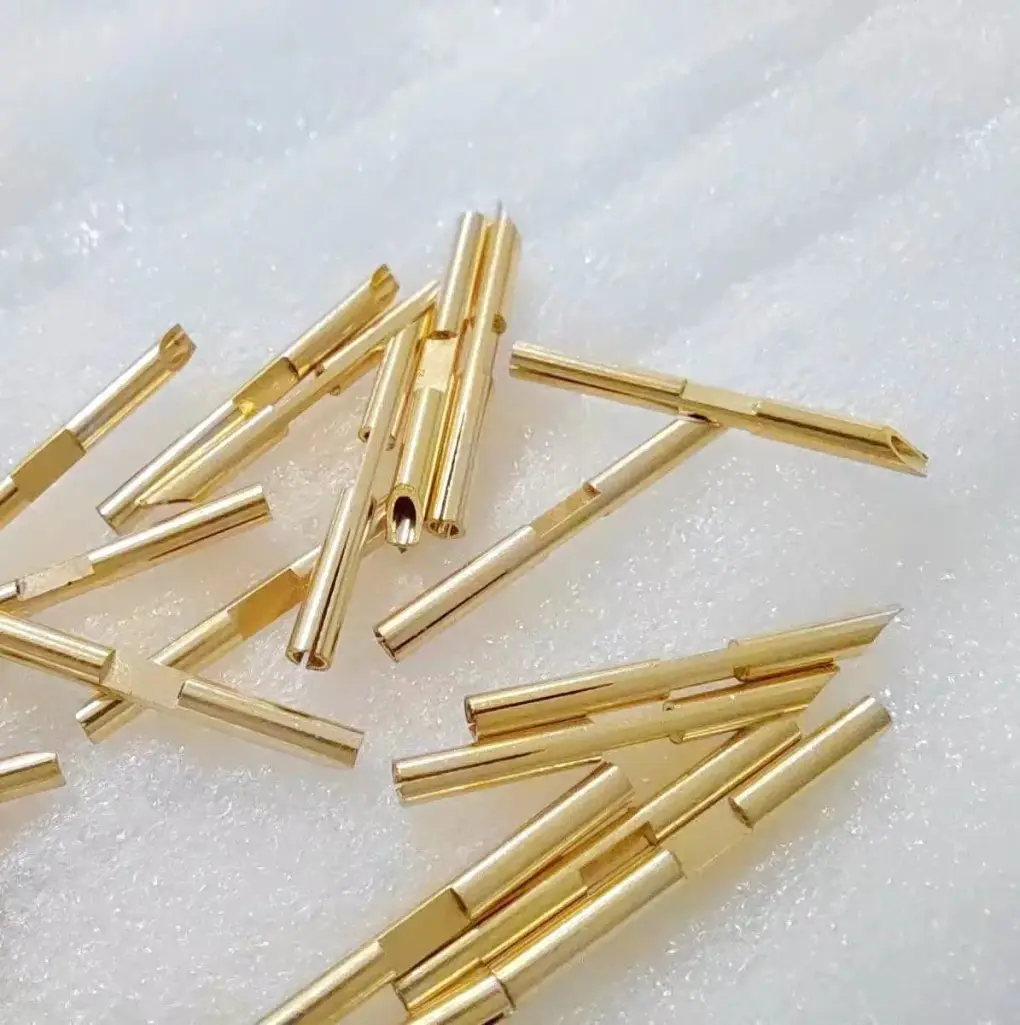
Short answer: Phosphor bronze and beryllium copper are both used for stamped electrical contacts when conductivity and spring behavior matter. Phosphor bronze is often chosen for balanced cost, formability, and spring properties. Beryllium copper can support higher spring performance in demanding contacts, but cost, availability, heat treatment, and compliance requirements must be reviewed before quoting.
This guide is for buyers and engineers sourcing stamped contacts, terminals, connector springs, battery contacts, grounding fingers, and small conductive clips. Bahan choice should be based on current load, kontak force, corrosion environment, plating, mating cycles, and the required formed geometry.
If you have a kontak drawing, send material, thickness, plating, current requirement, and mating details through the RFQ form. For broader kontak design, see the terminal and kontak nyitak design guide.
How these alloys are used in kontak nyitak
Electrical contacts often need conductivity and spring force at the same time. Pure copper may conduct well but may not hold spring shape for some kontak designs. Stainless steel may spring well but is not the right choice when current flow is required. Copper alloys such as phosphor bronze and beryllium copper fill the space between those needs.
| Bahan | Why buyers choose it | What to confirm |
|---|---|---|
| Phosphor bronze | Balanced spring behavior, formability, corrosion resistance, and conductivity for many contacts. | Temper, thickness, plating, kontak force, and bend radius. |
| Beryllium copper | Higher spring performance for demanding connector and kontak applications. | Heat treatment, compliance, sourcing, cost, and handling requirements. |
| Brass | Cost-effective for some terminals, contacts, shields, and hardware. | Spring requirement, dezincification risk, plating, and conductivity. |
| Copper | High conductivity for busbars, battery tabs, grounding, and power parts. | Spring needs, softness, forming, heat, and surface protection. |
When phosphor bronze is a good choice
Phosphor bronze is commonly considered when the part needs moderate conductivity, good formability, corrosion resistance, and spring behavior. It is used in contacts, clips, terminals, switches, and electronics hardware. For many designs, it offers a practical balance between performance and cost.
Quote details should include alloy, temper, thickness, plating, kontak area, and cycle expectations. A vague callout such as “bronze kontak” can lead to the wrong material being quoted.
When beryllium copper may be considered
Beryllium copper is often considered for higher-performance spring contacts, especially where force retention, fatigue resistance, or compact geometry is important. It can be a strong option, but it also brings cost, sourcing, heat treatment, and compliance discussions. These should be settled before tooling is started.
If a drawing calls out beryllium copper, include the exact alloy and temper or heat treatment requirement. If the material is open, explain why the design needs higher spring performance so alternatives can be reviewed honestly.
Plating and kontak surface requirements
kontak materials are often plated to improve solderability, corrosion resistance, wear behavior, or electrical kontak performance. Tin, nickel, silver, and other finishes may be considered depending on the application. The plating decision affects cost, waktos pangiriman, masking, thickness control, and inspection.
For stamped contacts, plating and burr control are connected. Sharp edges can expose base material or create uneven coverage. Tinjauan burr control and surface finishes for bagian dicitak when plating is part of the requirement.
Forming risk and springback
kontak geometry often includes beams, tabs, lance features, coined areas, or small bends. These features must hold force after forming and plating. Bahan temper, bend radius, grain direction, and stress relief can all affect performance.
For spring contacts, do not approve only the flat blank. Ask for formed sample checks and a kontak force or functional test when the part function depends on force. The springback guide explains why this matters for formed metal parts.
Kualitas checks for conductive contacts
| Check | What it proves | When to request it |
|---|---|---|
| Bahan certificate | Alloy, temper, thickness, and panyadia traceability. | Always for functional contacts and battery or connector parts. |
| kontak force test | Whether the formed kontak holds the required spring force. | Spring terminals, connector beams, battery clips, and grounding fingers. |
| Plating inspection | Finish coverage, thickness, adhesion, and visible defects. | When kontak surface or corrosion protection matters. |
| Dimensional inspection | Fit, alignment, formed height, kontak area, and tab location. | First article approval and production control. |
RFQ checklist for copper alloy contacts
- 2D drawing and 3D model with formed kontak geometry.
- Exact alloy, temper, thickness, and whether substitutes are allowed.
- Required conductivity, current, voltage, heat, or kontak resistance target if applicable.
- kontak force, insertion force, retention force, or cycle requirement.
- Plating type, thickness, kontak area, masking, solderability, or corrosion requirement.
- Burr direction, edge condition, cleaning, and packaging requirements.
- Inspection method: material certificate, plating report, CMM, force test, or functional gauge.
- Prototype quantity, annual volume, and whether paeh progresif tooling is expected.
FAQ
Is phosphor bronze good for electrical contacts?
Yes, phosphor bronze is commonly used for contacts and terminals where a balance of formability, spring behavior, corrosion resistance, and conductivity is needed.
Why use beryllium copper for contacts?
Beryllium copper may be used when higher spring performance, fatigue behavior, or compact kontak geometry is required, but cost, sourcing, heat treatment, and compliance must be reviewed.
Do copper alloy contacts need plating?
Often yes. Plating can improve solderability, corrosion resistance, wear behavior, or kontak performance. The right finish depends on the mating part and environment.
Can copper alloy contacts be made in progressive dies?
Yes. paeh progresif nyitak is common for high-volume contacts when the design, material, plating route, and inspection plan are stable.
What causes kontak force variation?
Bahan temper, thickness variation, bend radius, springback, tool wear, plating, and formed geometry can all shift kontak force.
What should I send for a kontak nyitak quote?
Kirim drawings, alloy and temper, thickness, plating, kontak force, current or resistance needs, mating details, annual volume, and inspection requirements.
Request copper alloy kontak nyitak review
Use the RFQ form to send kontak drawings, alloy callout, plating, force requirement, electrical need, quantity, and target waktos pangiriman. We can review material, forming, burr, plating, and inspection risks before quoting.