
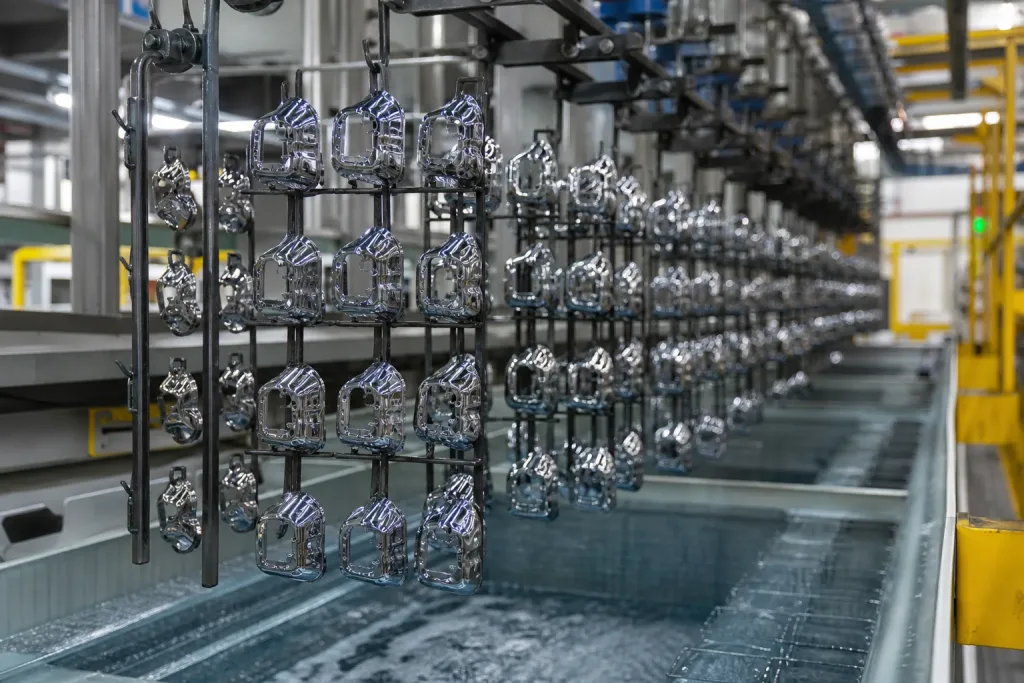
Short answer: Plating and passivation for stamped metal parts should be specified before quoting, not added after samples. The RFQ should define base material, finish type, plated areas, thickness, corrosion target, conductivity or solderability needs, burr condition, cleaning, cosmetic standard, masking, packaging, and inspection reports. Finish choices can change cost, waktos pangiriman, and part function.
This guide is for buyers who need zinc plating, tin plating, nickel plating, passivation, cleaning, anti-corrosion oil, or other surface requirements on bagian dicitak. It applies to brackets, clips, terminals, busbars, shields, covers, and stainless or copper alloy components.
Kirim drawings, material, finish standard, annual volume, and photos of critical surfaces through the RFQ form. For broader part planning, see the surface finishes for bagian dicitak page.
Why finishing belongs in the first RFQ
Finishing can affect thickness, corrosion resistance, solderability, conductivity, appearance, packaging, and inspection. A stamped part that is acceptable before plating may fail after plating because burrs trap chemicals, holes plug, parts tangle, or cosmetic surfaces get marked.
| Finish factor | What it affects | RFQ detail to send |
|---|---|---|
| Base material | Adhesion, corrosion behavior, conductivity, and cleaning process. | Grade, temper, thickness, coating, and certificate need. |
| Plating type | Corrosion, solderability, wear, kontak resistance, and appearance. | Zinc, nickel, tin, silver, passivation, or customer standard. |
| Plated area | Cost, masking, selective finish, and inspection scope. | All-over plating or marked functional zones. |
| Burr and edge condition | Coverage, peeling risk, chemical traps, and handling safety. | Burr side, edge break, deburring, or no-sharp-edge requirement. |
| Packaging | Surface scratches, stains, tangling, and shipping corrosion. | Bulk, tray, bag, separator, oil, or protective wrap. |
Biasa finishing choices for bagian dicitak
There is no single best finish for all bagian dicitak. A zinc plated steel bracket, tin plated kontak, nickel plated shield, and passivated stainless clip solve different problems. The panyadia needs to know the part function before recommending a finish route.
- Zinc plating: often used for steel corrosion protection, sometimes with chromate or sealers depending on requirements.
- Tin plating: common for terminals and contacts where solderability or electrical mating is important.
- Nickel plating: used for corrosion, wear, barrier layer, appearance, or certain electrical applications.
- Passivation: often used for stainless steel to improve corrosion resistance after fabrication.
- Cleaning or oiling: used when parts need controlled residue, temporary corrosion protection, or assembly cleanliness.
Plating thickness and dimensional risk
Plating adds thickness. On loose brackets this may not matter much, but on tight holes, tabs, slots, terminals, contacts, press-fit parts, or mating clips, finish thickness can change fit. State whether dimensions apply before or after plating and which surfaces are critical.
For tight stamped features, connect the finish requirement to the nyitak logam tolerances guide and punched holes and slots guide. A finish note that ignores tolerance can create avoidable sample rejection.
Burrs, cleaning, and surface defects
Sharp burrs and dirty edges can make finishing harder. Burrs may create poor coverage, peeling, stains, chemical traps, or exposed base metal. Oil, residue, and loose slivers can also affect adhesion and appearance.
If the part has a functional edge, define the edge condition before finishing. The burr control guide explains how die clearance, tool wear, deburring, and inspection affect edge quality.
Electrical and solderability requirements
Terminals, contacts, busbars, grounding clips, and EMI shields may need more than corrosion protection. They may need kontak resistance control, solderability, selective plating, low residue, or protected kontak zones.
| Bagian type | Finish concern | Inspection to discuss |
|---|---|---|
| Electrical terminals | Solderability, kontak resistance, wear, and plating zone. | Plating thickness, visual inspection, and functional checks. |
| Busbars | Conductive surface, corrosion, weld or bolt interface. | Flatness, plating thickness, and surface cleanliness. |
| EMI shields | Grounding kontak, solder edge, cosmetic surface. | kontak area, surface marks, and packaging checks. |
| Stainless clips | Passivation, cleaning, and corrosion resistance. | Bahan certificate and passivation record if required. |
RFQ checklist for plating and passivation
- Drawing with finish note, revision, and critical surfaces marked.
- Base material grade, thickness, temper, coating, and substitute rules.
- Finish type, plating thickness, passivation standard, or customer specification.
- Whether dimensions apply before or after finishing.
- Burr direction, deburring, edge break, and no-sharp-edge requirements.
- Conductivity, solderability, kontak resistance, or corrosion target if applicable.
- Masking, selective plating, cosmetic standards, cleaning, oiling, and packaging.
- Required reports: material certificate, plating thickness, salt spray, passivation record, or first article inspection.
FAQ
Should plating be quoted with the stamped part?
Yes. Plating affects cost, waktos pangiriman, dimensions, burr control, packaging, and inspection, so it should be included in the original RFQ.
Can plating change stamped part dimensions?
Yes. Plating adds thickness and can affect tight holes, slots, tabs, terminals, contacts, and mating surfaces.
Do stainless steel bagian dicitak need passivation?
Some applications require passivation after fabrication to improve corrosion resistance. It depends on grade, environment, process, and customer standard.
What finish is best for electrical contacts?
It depends on current, mating cycles, kontak force, solderability, corrosion, and cost. Tin, nickel, silver, or other finishes may be considered depending on the application.
Why do burrs matter before plating?
Burrs can create sharp edges, uneven coverage, peeling risk, chemical traps, and exposed base material after finishing.
What finish documents should I request?
Biasa documents include material certificates, plating thickness reports, passivation records, salt spray results, visual inspection records, or customer-specific reports.
Request finish and plating review
Use the RFQ form to send drawings, material, thickness, finish requirement, critical surfaces, annual volume, and inspection documents. We can review nyitak, finishing, burr, and packaging risks before quoting.