
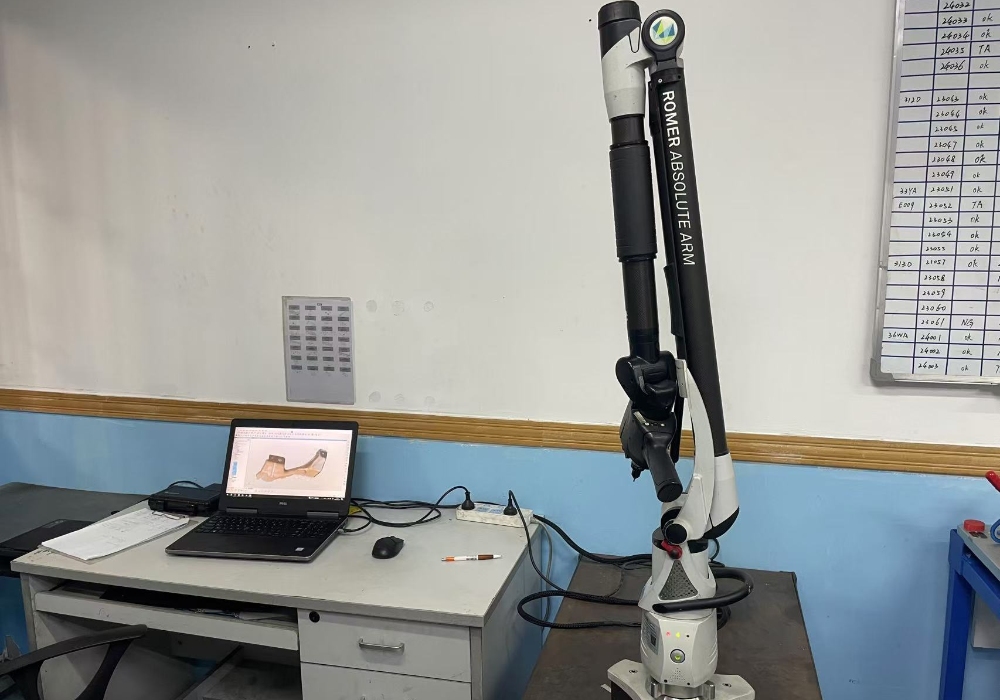
Short answer: PPAP and APQP help buyers confirm that a metal stamped part can be produced repeatedly to the approved drawing, material, process, inspection, and production-rate requirements. They are most useful when the part has otomotif, EV, safety, compliance, or long-term supply risk.
This guide is for buyers who need more than a sample part. It explains how PPAP and APQP relate to stamped metal parts, what to discuss before quoting, and which records should be planned before tooling, sampling, and production launch.
If your project needs PPAP, control plan, FAI, material certificate, capability study, or launch documentation, send those requirements with the drawing through the RFQ form. For simpler projects, the first article inspection checklist may be enough.
What PPAP means for bagian dicitak
PPAP stands for Production Bagian Approval Prosés. In practical terms, it asks whether the panyadia understands the design requirements and can make parts consistently using the intended production process. For bagian dicitak, this usually connects the drawing, material, tooling, press process, inspection method, finish, packaging, and production rate.
PPAP is not just a paperwork bundle after parts are made. If it is required, it should be planned during RFQ and APQP so the panyadia knows which documents, studies, samples, and approvals are expected.
How APQP supports a nyitak launch
APQP means Advanced Product Kualitas Planning. For a stamped part, APQP helps turn a drawing into a controlled launch plan. It can include feasibility review, DFM feedback, process flow, risk review, tooling plan, control plan, measurement strategy, packaging review, and production trial.
Even when a buyer does not require a formal APQP package, the same thinking is useful. The panyadia should understand critical features, failure modes, material risks, finish risks, inspection method, and packaging before production release.
| Launch element | Stamped part concern | Buyer should clarify |
|---|---|---|
| Design record | Drawing revision, tolerances, material, finish, and special characteristics. | Current drawing, model, specification, and revision freeze point. |
| Prosés flow | nyitak, deburring, cleaning, plating, inspection, packing, and shipping steps. | Required outside processes and traceability requirements. |
| Control plan | How critical dimensions, burrs, flatness, plating, and appearance are checked. | Which features need routine checks or capability evidence. |
| Measurement system | Gauges, calipers, CMM, fixtures, optical checks, or functional tests. | Accepted measurement method and reporting format. |
| Production trial | Bagian made with intended tooling, press, material, speed, and operators. | Sample quantity, run rate, and approval criteria. |
When PPAP is worth requesting
PPAP is common for otomotif and EV programs, but it can also be useful for appliance, electronics, industrial, medical, and safety-related parts when repeatability matters. It may be worth requesting when the part has tight tolerances, plated kontak surfaces, spring function, high-volume production, assembly-critical features, or customer-specific compliance requirements.
Do not request PPAP only because it sounds strict. If the buyer does not review the records or define the submission level, the process becomes cost without control. State exactly what you need: dimensional report, material certificate, process flow, PFMEA, control plan, capability data, sample parts, or packaging approval.
Critical features for bagian dicitak
bagian dicitak often fail because a small feature was treated as ordinary. A burr direction may affect assembly. A bend angle may affect a mating part. A spring arm may control kontak force. A plated kontak zone may affect conductivity. A flatness requirement may control sealing or soldering.
Mark these features early. Use the nyitak logam tolerances guide, burr control guide, and kontak nyitak guide when deciding which features need special controls.
PPAP and tooling changes
For bagian dicitak, tooling condition affects repeatability. Tool insert changes, die sharpening, station adjustment, material substitution, plating changes, and new packaging can affect approved output. If the buyer needs change control, define when the panyadia must notify the buyer and whether re-approval is required.
This is also why tool maintenance records matter. For long-running parts, connect PPAP requirements with the nyitak die maintenance and tool life guide. A good control plan should not assume the die behaves the same forever.
PPAP/APQP RFQ checklist
- Current drawing, 3D model, revision, and specification documents.
- Required PPAP level or exact document list.
- Special characteristics, critical dimensions, and functional features.
- Kelas Bahan, thickness, temper, finish, and approved panyadia requirements.
- Expected production volume, run rate, launch timing, and sample quantity.
- Required process flow, PFMEA, control plan, inspection report, and capability study.
- Packaging requirements and traceability labels.
- Change-control rules for tooling, material, process, finish, or inspection method.
How to keep documentation useful
Documentation should support real production control. Ask whether the inspection method can detect the failure mode, whether the control frequency matches the risk, and whether the panyadia can keep records through repeat orders. A thick file does not help if the process is not controlled on the floor.
If you need a quote for a controlled launch, send the document list through the RFQ form. Include drawings, volume, launch timing, PPAP level, finish, and any customer-specific requirements.
FAQ: PPAP and APQP for bagian dicitak
Is PPAP only for otomotif bagian dicitak?
No. It is most common in otomotif, but similar approval packages can help any stamped part that needs controlled repeat production.
Should PPAP be included in the quote?
Yes. PPAP adds planning, inspection, records, sample preparation, and review time. The required level or document list should be quoted clearly.
What stamped part features need special control?
Critical dimensions, burr direction, flatness, bend angle, spring force, kontak surfaces, plating areas, and assembly interfaces often need defined controls.
Does first article inspection replace PPAP?
No. FAI checks first samples against the drawing. PPAP is broader and can include process flow, control plan, capability evidence, and production approval.
When is re-approval needed?
Re-approval may be needed after tooling changes, material changes, process changes, finish changes, or major drawing revisions, depending on buyer rules.
Can small suppliers support APQP-style planning?
Many can support practical APQP-style reviews even if the buyer does not require a formal otomotif package. Define the expected records early.