
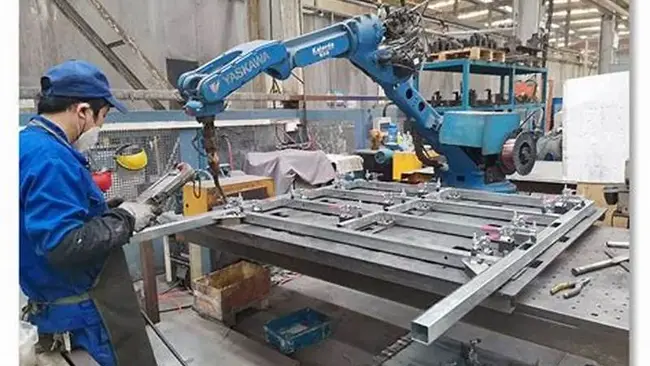
Short answer: Stamped assemblies should be quoted with final datum stack-up and fixture requirements, not only loose-part drawings. The RFQ should define which features locate the assembly, the joining sequence, fixture clamp points, hardware or weld order, coating sequence, final inspection method, and whether dimensions are checked free-state or restrained like the mating product.
A stamped assembly can be built from parts that each pass inspection and still fail fit because the datums stack in the wrong direction. Welding, riveting, inserted hardware, coating, and handling can all move the final locating features. The RFQ should define the final assembly condition before price is compared.
Use this page with the stamped metal assemblies guide, datum and functional gage guide, riveted and staked assemblies guide, and spot welded assemblies guide.
Stamped assembly stack-up decisions
| Decision | Why it matters | RFQ evidence |
|---|---|---|
| Final datums | Loose-part datums may not match the assembled product. | Assembly datum scheme, mating part, and controlled final features. |
| Joining sequence | Welding, riveting, staking, and hardware insertion can move dimensions. | Operation order, clamp points, and final check stage. |
| Fixture restraint | Flexible parts can pass or fail depending on how they are held. | Free-state, restrained, functional gage, or mating fixture condition. |
| Coating sequence | Finish buildup can change seating, hole fit, and hardware access. | Masking, thread protection, coating thickness, and post-finish checks. |
Start with the final assembly function
The final product usually cares about where holes, studs, tabs, clips, seal faces, or contact pads end up after assembly. If each loose part is measured alone, the report may miss accumulated variation. The RFQ should show which final features locate to the mating product and which dimensions are only process controls.
If the assembly uses welded nuts, clinch studs, rivets, tabs, or spot welds, define whether those operations happen before or after coating. A fixture that works before finish may not represent the final product if coating fills holes, changes thickness, or blocks access. For inserted hardware, connect the plan to the insert and stud orientation guide.
Choose a measurement condition buyers and suppliers can repeat
Flexible stamped assemblies often need a restrained check. A part may look warped on a table but fit perfectly when bolted down, or it may look acceptable free-state and fail once installed. The drawing should state whether the assembly is checked free, clamped, bolted, or located in a functional gage.
For launch, the checking method should be part of the quote. A ပေးသွင်းသူ may need a weld fixture, rivet fixture, go/no-go gage, CMM program, optical check, torque check, or master assembly. If tabs and slots are used to hold location before joining, review the tab and slot self-fixturing guide before final fixture cost is accepted. If the buyer owns the fixture, define calibration, storage, revision control, and what happens when the drawing changes.
RFQ details to include
- Assembly drawing, individual part drawings, BOM, final datum scheme, mating part data, and critical final dimensions.
- Joining operations: spot weld, projection weld, rivet, stake, clinch, insert, tab lock, adhesive, or secondary forming.
- Fixture datum points, clamp points, sequence, access direction, operator loading rule, and mistake-proofing expectations.
- Free-state or restrained inspection condition, CMM or functional gage method, sample quantity, report format, and acceptance examples.
- Coating, masking, plating, thread protection, burr limits, cosmetic surfaces, and packaging protection after assembly.
- Prototype quantity, pilot run, annual volume, fixture ownership, and target launch timing.
How to compare ပေးသွင်းသူ answers
A useful answer describes the fixture and final inspection plan, not only the joining process. It should explain which features are controlled during loose-part stamping and which are controlled after assembly. A weak answer only says the parts will be welded or riveted.
Ask whether the quote includes fixture design, destructive samples, first article data, and rework rules if final dimensions drift. Assembly quoting is where hidden cost often appears, so separate tooling, fixture, inspection, and piece price clearly.
Send assembly drawings, final datum requirements, mating part data, operation sequence, coating requirements, and inspection expectations through the contact page. Use the RFQ form to request a fixture concept before production approval.
FAQ
What is datum stack-up in a stamped assembly?
It is the accumulated positional variation from multiple တံဆိပ်နှိပ်ထားသော အစိတ်အပိုင်းများ, bends, holes, hardware, and joining operations that affects final assembly fit.
Should stamped assemblies be inspected free-state or restrained?
It depends on function. Flexible assemblies often need a restrained or functional-gage check that represents how the product is installed.
Can loose-part inspection prove assembly fit?
Not always. Loose parts can pass individually while final holes, studs, tabs, or faces shift after welding, riveting, coating, or hardware insertion.
What should be sent for an assembly fixture RFQ?
Send assembly drawings, BOM, datum scheme, mating part data, joining sequence, coating needs, fixture requirements, inspection method, sample quantity, and volume.