
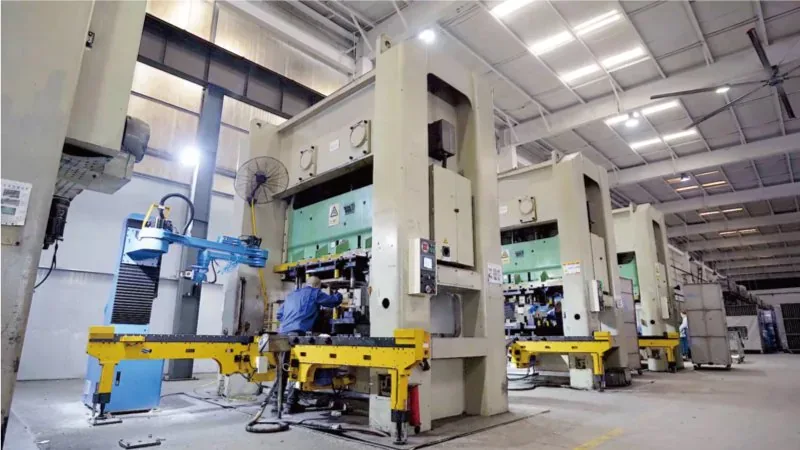
Short answer: स्टॅम्प केलेले भाग should be packaged according to geometry, finish, burr risk, contact surfaces, assembly orientation, quantity, and shipping route. Thin tabs, spring fingers, plated contacts, cosmetic faces, and sharp edges can be damaged after good production if packaging is treated as an afterthought.
This guide is for buyers sourcing stamped metal parts that must arrive clean, separated, flat, scratch-free, and ready for assembly. Packaging is not only a logistics topic. It affects part quality, customer rejects, rework, and whether a production batch can be used without sorting.
For export or assembly-critical parts, send packaging requirements with the drawing through the RFQ form. If you are preparing a full quote package, use the मेटल स्टॅम्पिंग RFQ checklist so finish, inspection, and packaging are defined together.
Why packaging matters for स्टॅम्प केलेले भाग
स्टॅम्प केलेले भाग are often thin, formed, sharp, plated, or cosmetic. A bracket may bend in a carton. A spring clip may lose shape if bulk-packed under load. A tin-plated contact may scratch. A stainless cover may show handling marks. A shield can may arrive flat but fail assembly because a corner was dented in transit.
Packaging should protect the features that make the part functional: flatness, contact zones, formed tabs, plating surfaces, thread features, burr direction, and visible faces. The packaging method should be agreed before mass production, not after the first shipment is rejected.
Common packaging risks
| Risk | Typical cause | RFQ instruction |
|---|---|---|
| Bent tabs or fingers | Loose bulk packing, heavy stack load, or poor orientation. | Define tray, layer, divider, or orientation packing. |
| Scratched plating | Part-to-part rubbing during transport. | Mark contact or cosmetic surfaces and require separation. |
| Mixed revisions or lots | Weak labeling or mixed-bin handling. | Require revision, lot number, quantity, and inspection status on labels. |
| Corrosion or staining | Moisture, unsuitable bags, oil residue, or long sea freight. | State anti-rust, VCI, desiccant, cleaning, or sealed-bag needs. |
| Assembly sorting | Unclear orientation, tangled springs, or uncounted small parts. | Specify counted bags, reels, trays, or assembly-line packaging. |
Bulk packing, bags, trays, reels, or custom cartons?
Bulk packing can be economical for simple, robust parts with no cosmetic or functional surface risk. It is not suitable for every stamped part. Small terminals, clips, shields, spring contacts, plated components, and formed brackets may need counted bags, dividers, tubes, trays, reels, foam, paper interleaving, or custom cartons.
Ask how the parts will be handled after arrival. If they go straight to manual assembly, counted bags may work. If they feed an automated station, orientation, part separation, and container dimensions may matter. If the parts go to plating or passivation after stamping, packaging before and after finishing may be different.
Packaging for plated or cosmetic parts
Plated contacts, nickel surfaces, tin-plated terminals, passivated stainless parts, powder-coated brackets, and visible covers need special attention. Even when the finish meets specification at inspection, rubbing during shipment can create scratches, stains, or exposed base metal.
For finish-sensitive parts, combine this guide with the plating and passivation RFQ guide. Mark visible faces, contact zones, no-touch areas, acceptable handling marks, corrosion requirements, and whether oil residue is allowed.
Packaging for small precision स्टॅम्प केलेले भाग
Small parts can be harder to package than large brackets because they are easy to mix, count incorrectly, bend, tangle, or contaminate. Contacts, spring clips, EMI fingers, lead frames, miniature brackets, and sensor parts often need packaging that supports traceability and easy assembly-line feeding.
Use labels that include part number, revision, lot, quantity, material, finish, inspection status, and purchase order. For very small parts, ask whether weight-counting is acceptable or if the buyer requires exact counted bags.
Export shipping considerations
Export shipments may face long transit time, humidity, stacking, customs inspection, and multiple handling points. A carton that survives local trucking may fail during ocean freight or international express sorting. For corrosion-sensitive parts, packaging should consider VCI materials, sealed bags, desiccant, pallet protection, and carton strength.
Tell the पुरवठादार the shipping route, delivery destination, expected storage time, and whether the parts must remain in original packaging until assembly. If the buyer has an inbound packaging standard, send it with the RFQ.
Stamped part packaging RFQ checklist
- Part drawing, revision, material, finish, and critical surfaces.
- Features that must not bend: tabs, clips, fingers, spring arms, walls, pins, flanges.
- Cosmetic or contact surfaces that need scratch protection.
- Allowed oil residue, cleaning level, rust prevention, and moisture protection.
- Preferred packing unit: bulk carton, bag quantity, tray, reel, tube, divider, pallet.
- Label requirements: part number, revision, lot, quantity, PO, inspection status.
- Shipping method, destination, storage condition, and receiving inspection requirements.
- Photos or sample packaging if you already have an approved method.
Packaging approval before mass shipment
For new projects, packaging should be reviewed with first samples or pilot production. Ask for photos of the proposed pack-out and a sample carton if the part is fragile, plated, cosmetic, or assembly-line sensitive. Packaging approval is especially important when parts are exported, transferred to a finisher, or handled by multiple warehouses.
For high-volume programs, packaging can also affect cost and line efficiency. A slightly more expensive tray may reduce sorting, scratches, and assembly downtime. A cheap carton can become expensive if the buyer must inspect every part before use.
Connect packaging to quality control
Packaging should be treated as part of the control plan for fragile or finish-sensitive parts. Inspection can include carton drop risk, part orientation, label check, quantity check, moisture protection, and final appearance after packing. For automotive or controlled programs, packaging may need to be included in launch documentation.
If your part has high packaging risk, send your requirements through the RFQ form. Include drawings, finish notes, annual volume, shipping route, and photos of any current packaging issues.
FAQ: stamped part packaging and shipping
Can स्टॅम्प केलेले भाग be bulk packed?
Yes, if the parts are robust and have low cosmetic or functional surface risk. Parts with tabs, springs, plating, or visible faces often need separation.
When should trays be used?
Trays are useful when parts must keep orientation, avoid rubbing, protect formed features, or feed an assembly process with minimal sorting.
Do plated parts need special packaging?
Often yes. Tin, nickel, zinc, and passivated surfaces can scratch or stain if parts rub or trap moisture during shipment.
What label information should be required?
At minimum, require part number, revision, lot number, quantity, purchase order, and inspection status. Add material and finish when traceability matters.
How can corrosion be prevented during export?
Use suitable cleaning, anti-rust protection, VCI packaging, sealed bags, desiccant, and strong cartons or pallets based on material and shipping route.
Should packaging be approved before production?
For fragile, plated, cosmetic, or automated-assembly parts, yes. Packaging approval should happen before mass shipment.