
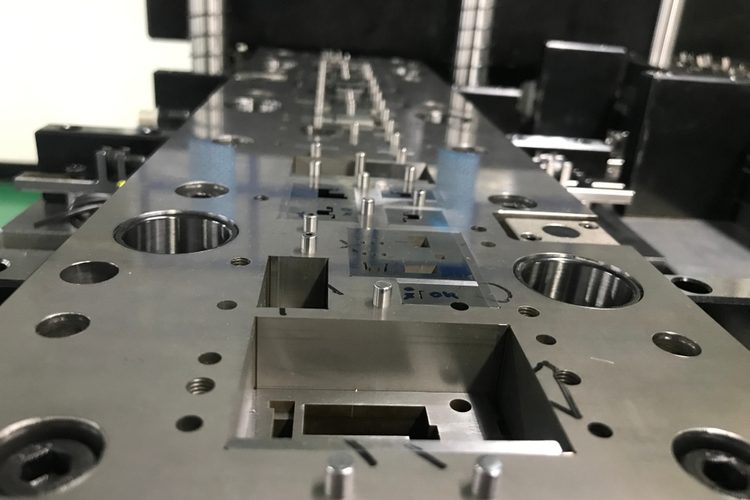
Short answer: Low-volume tā konganuku usually has lower tooling commitment but higher unit cost. High-volume tā often needs stronger tooling, progressive dies, fixtures, and process control, but the unit price can drop when the tooling cost is spread across many parts. Buyers should compare total annual cost, not only tooling price or unit price.
This guide helps buyers decide whether a stamped part should start with soft tooling, simple dies, bridge production, or production tooling. The right choice depends on drawing stability, annual volume, tolerance, material, finish, inspection needs, and how long the program will run.
For a cost review, send drawings, material, thickness, finish, tolerance, sample quantity, and annual volume through the RFQ form.
Low volume vs high volume: the cost difference
Low-volume projects often focus on speed, flexibility, and reducing tooling investment. High-volume projects focus on repeatability, production rate, tool life, material yield, and stable unit cost. Neither is automatically better. The wrong choice can make samples too expensive or production too slow.
| Decision point | Low volume approach | High volume approach |
|---|---|---|
| Tooling | Prototype tooling, soft tooling, simple dies, or staged operations. | mate ahu whakamua, mate whakawhiti, mate pūhui, fixtures, and maintenance plan. |
| Unit price | Higher because setup, handling, and secondary operations are spread over fewer parts. | Lower when production speed and tooling amortization support the volume. |
| wā tuku | Can be faster for samples or pilot builds. | Longer tooling phase, but faster production after approval. |
| Design changes | More flexible before production release. | Changes can be expensive after progressive tooling is built. |
| Kounga control | More manual checks may be acceptable. | Needs repeatable gauges, in-process checks, and tool maintenance. |
When low-volume tā makes sense
Low-volume tā is useful when the design is not fully stable, the buyer needs engineering samples, the annual demand is uncertain, or tooling budget is limited. It is also useful for spare parts, service parts, pilot production, market validation, and bridge production before a larger program starts.
- Prototype or validation quantity is more important than unit price.
- Design changes are likely after testing.
- The part has simple blanking, bending, or forming operations.
- Annual demand is too low to justify progressive tooling.
- The buyer needs first article inspection before committing to production tools.
For related options, see prototype tā konganuku and low volume tā konganuku.
When high-volume tā makes sense
High-volume tā becomes attractive when the design is stable, annual demand is high, quality requirements are repeatable, and tooling cost can be amortized over many parts. mate ahu whakamua tā is often the right path when multiple cutting and forming operations can be completed in a strip layout.
- The drawing is stable and approved.
- Annual volume is high enough to justify tooling cost.
- The part needs consistent dimensions over repeat production lots.
- Rawa yield, press speed, and reduced handling matter to cost.
- Tool maintenance and spare inserts are part of the production plan.
For more detail, review mate ahu whakamua tā cost and high volume tā konganuku.
Total cost factors buyers should compare
Buyers sometimes compare quotes by tooling price alone. That can be misleading. A low tool price may create higher unit cost, more secondary work, or weaker repeatability. A higher tool price may be justified if it reduces unit price and quality risk over the program life.
| Cost factor | Low-volume impact | High-volume impact |
|---|---|---|
| Tooling cost | Lower initial commitment. | Higher upfront cost, spread across more parts. |
| Setup cost | Higher per part if runs are small. | Lower per part with longer runs. |
| Secondary operations | May be acceptable for small batches. | Should be reduced or automated where possible. |
| Inspection | Manual inspection can be practical. | Gauges and process controls reduce repeated inspection burden. |
| Rawa yield | Less important at small quantities. | Very important for long-term cost. |
How to avoid choosing the wrong tooling path
Before choosing low-volume or high-volume tooling, ask whether the drawing will change, which dimensions are critical, whether the material is confirmed, and how long the program will last. If the buyer is unsure, a staged approach may be better: prototype first, then production tooling after sample approval.
- Use prototype tooling when the design still needs validation.
- Use simple tooling when part geometry is basic and demand is limited.
- Use progressive tooling when the design is stable and demand is repeatable.
- Use transfer or tō hōhonu tooling when the part geometry requires it.
- Separate sample cost, tooling cost, and production unit price in the quote.
RFQ checklist for volume and cost planning
- 2D drawing, 3D model, and revision level.
- Rawa, thickness, temper, finish, and allowed substitution.
- Prototype quantity, pilot quantity, annual volume, and expected program life.
- Target unit price, target tooling budget, or current kaiwhakarato benchmark if available.
- Critical tolerances, burr direction, flatness, formed height, and inspection documents.
- Expected design change risk after samples.
- Packaging, release schedule, and delivery destination.
FAQ
Is low-volume tā cheaper than high-volume tā?
Low-volume tā may be cheaper to start because tooling is simpler, but the unit price is usually higher. High-volume tooling costs more upfront but can lower unit price over time.
When does mate ahu whakamua tā become cost-effective?
It becomes cost-effective when the annual volume, part stability, and process sequence justify the tooling cost and the lower unit price offsets the upfront investment.
Should I build production tooling before design validation?
Usually no. If the drawing may change, prototype or pilot tooling can reduce the risk of expensive tool modifications later.
Why do two suppliers quote very different tooling prices?
The tooling scope may differ. One quote may include progressive tooling, gauges, spare inserts, maintenance planning, or sample reports, while another may include only a basic die.
What volume should I include in an RFQ?
Tukuna prototype quantity, first order quantity, annual volume, and expected program life. This helps the kaiwhakarato compare tooling options correctly.
Can one tool support both low and high volume?
Sometimes, but not always. A simple tool may work for pilots but wear too quickly or run too slowly for high-volume production.
Request a volume-cost review
Use the RFQ form to send drawings, material, thickness, finish, tolerances, sample quantity, annual volume, and target schedule. We can compare low-volume and high-volume tā paths before quoting tooling.