
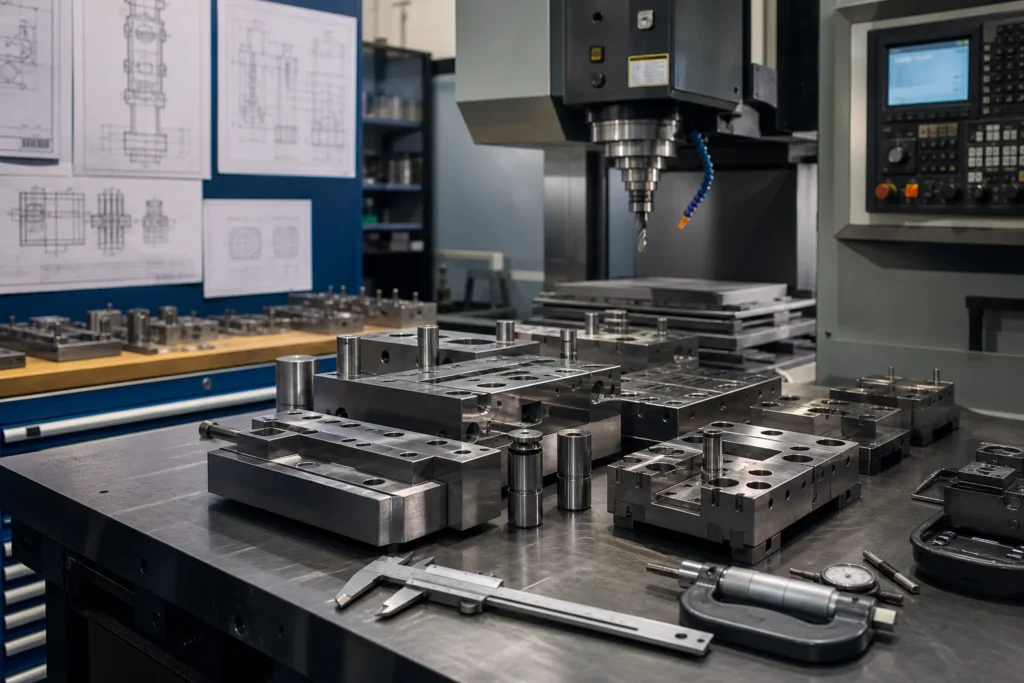
Short answer: fitomboka metaly fotoana fanaterana depends on drawing completeness, material availability, die design, sample approval, finishing, inspection documents, and production volume. A simple repeat order can move quickly, while a new maty miandalana, PPAP package, plating requirement, or tight-tolerance part needs a planned launch schedule instead of a rushed purchase order.
This guide is for buyers who need custom ampahany voatomboka but want a realistic schedule before committing to tooling. It explains what controls fotoana fanaterana, what information a mpamatsy needs, and how to avoid delays during DFM, sample approval, and production release.
If you already have drawings, send the revision, material, thickness, finish, tolerance, annual volume, and target delivery date through the RFQ form. If your quote package is not ready, start with the fitomboka metaly RFQ checklist.
What controls fitomboka metaly fotoana fanaterana?
fotoana fanaterana is not only the press run. For new ampahany voatomboka, most schedule risk happens before production: drawing review, die concept, material choice, tooling build, sample inspection, finishing trials, and customer approval. For repeat orders, the main risks move to coil availability, tooling condition, release quantity, finishing capacity, packaging, and export logistics.
| Schedule driver | Why it matters | Buyer action |
|---|---|---|
| Drawing completeness | Missing tolerances, finish notes, or revision control creates clarification loops. | Alefaso 2D drawing, 3D model, revision, and critical dimensions. |
| Tooling type | Prototype tooling, single-stage dies, progressive dies, and transfer dies follow different schedules. | Separate prototype needs from production-volume needs. |
| Fitaovana and thickness | Special alloys, tempers, spring materials, and imported coil can extend purchasing time. | State approved substitutes or required mill certificates. |
| Surface finish | Plating, passivation, powder coating, cleaning, and masking need process capacity and trials. | Define finish standard, fifandraisana areas, cosmetic side, and corrosion target. |
| kalitao documents | FAI, control plans, PPAP-like packages, material certificates, and capability studies add review time. | Tell the mpamatsy which documents are mandatory before shipment. |
New tooling versus repeat production
A repeat production order can usually be planned around material, machine capacity, tooling readiness, inspection, and finishing. A new stamped part needs a launch path: DFM review, die quotation, die build, first samples, dimensional report, buyer feedback, tool adjustment, and production release.
When a mpamatsy gives one fotoana fanaterana for both tooling and production, ask what is included. Does the schedule include sample approval? Does it include plating or passivation? Does it include packaging approval? Does it assume no design changes after first samples? These answers matter more than the headline number.
DFM review before the clock starts
Many delays are caused by starting tooling before the part is manufacturable. Hole-to-edge distance, bend radius, burr direction, draw depth, flatness, plating fifandraisana zones, and fitambaran'ny fandeferana should be reviewed before the die is cut. A short DFM loop is better than discovering the issue after tool tryout.
For complex geometry, compare the part against the fitomboka metaly tolerances guide, punched holes and slots guide, and springback guide. Deep drawn parts should also use the deep drawn DFM checklist.
Sample approval and first article inspection
First samples are not the finish line. They are the point where the buyer and mpamatsy confirm dimensions, burrs, appearance, material, finish, packaging, and assembly fit. If the drawing has critical features, the first article inspection plan should be agreed before samples are produced.
Use the first article inspection checklist to decide which dimensions, functional features, and documents are required. If the part is for fiara, EV, or another controlled launch, decide early whether a PPAP or APQP-style package is needed.
Finishing, cleaning, and outside processes
Finishing is often the hidden schedule driver. Zinc plating, nickel plating, tin plating, passivation, heat treatment, powder coating, cleaning, and deburring may require outside process windows. If a part has conductive fifandraisana surfaces, cosmetic faces, soldering zones, or corrosion requirements, the finishing plan should be discussed before quote approval.
For finish-related RFQs, use the plating and passivation RFQ guide. Define the finish standard, coating thickness if required, visible side, no-rack-mark areas, salt spray target if used, and packaging method.
fotoana fanaterana checklist for buyers
- 2D drawing and 3D model with current revision.
- Kilasy ara-pitaovana, temper, thickness, and approved substitutes.
- Prototype quantity, pilot quantity, annual volume, and release schedule.
- Tooling target: prototype, bridge, single-stage, progressive, or maty famindrana.
- Critical dimensions, functional surfaces, burr direction, and assembly fit notes.
- Finish, plating, passivation, cleaning, deburring, and packaging requirements.
- Required documents: FAI, material certificate, inspection report, control plan, PPAP.
- Delivery destination, Incoterms if used, and target arrival date.
How to shorten fotoana fanaterana without increasing risk
The safest way to shorten fotoana fanaterana is to remove uncertainty. Alefaso complete drawings, approve material substitutes where possible, separate prototype goals from production goals, and define quality documents at the RFQ stage. If the first quote asks many questions, that is usually a good sign: the mpamatsy is finding schedule risks before they become late parts.
For urgent projects, ask which path is realistic: soft tooling for fit samples, laser-cut blanks before die build, a pilot run before full production, or a phased release schedule. Do not skip inspection or packaging approval for parts with functional tabs, springs, fifandraisana areas, plated surfaces, or tight assembly fit.
RFQ note for schedule-sensitive projects
When sending a schedule-sensitive RFQ, include the required sample date, production date, and final arrival date. Tell the mpamatsy which date is fixed and which can move. A tool completion date is different from approved production parts at your dock.
For a practical schedule review, send drawings and launch targets through the RFQ form. Include any known tooling, finishing, inspection, or shipping constraints so the quote can separate tooling time, sample time, approval time, and production time.
FAQ: fitomboka metaly fotoana fanaterana
Why does a fitomboka quote need drawing details before giving fotoana fanaterana?
fotoana fanaterana depends on geometry, tooling type, material, finish, tolerance, and inspection requirements. Without those details, the mpamatsy can only give a rough guess.
Can a prototype be made before production tooling?
Often yes, but the prototype method may not match the production die. Use prototypes to check fit and function, then confirm production tooling separately.
Does plating add fotoana fanaterana?
It can. Plating, passivation, cleaning, masking, inspection, and packaging may require additional process time and should be included in the RFQ.
What causes most launch delays?
mahazatra causes include incomplete drawings, late design changes, material changes, unapproved samples, unclear finish standards, and missing quality-document requirements.
Should PPAP be requested at quote stage?
Yes. If PPAP or similar documents are required, state the submission level, timing, and required records before tooling is quoted.
How can buyers help keep production on schedule?
Alefaso complete RFQ data, respond quickly to DFM questions, approve samples promptly, freeze revisions before tooling, and define packaging before shipment.