
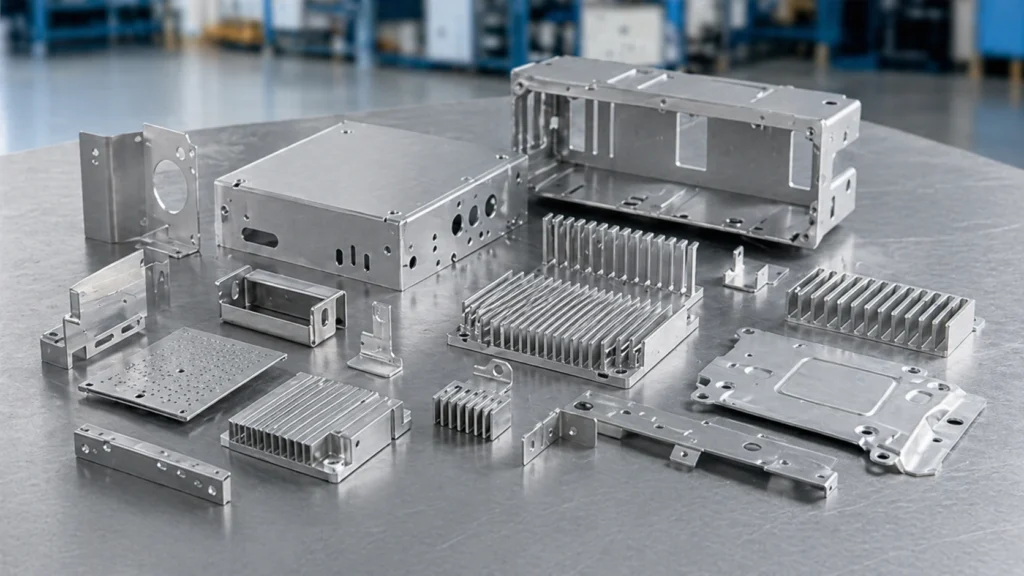
Short answer: EV battery ampahany voatomboka and busbars should be quoted with material grade, conductivity requirement, thickness, flatness, burr direction, plating or surface finish, insulation or welding requirements, inspection documents, and production volume. For battery systems, the key risks are electrical performance, heat, corrosion, cleanliness, dimensional control, and reliable assembly.
Battery components are not only mechanical parts. Busbars, terminals, brackets, shields, covers, and connector pieces may carry current, locate cells, support modules, or protect sensitive assemblies. The RFQ should explain both the part geometry and the battery-system function.
If you need a quote, send drawings through the RFQ form. Include current path, material, thickness, finish, quantity, and inspection requirements where available.
mahazatra EV battery ampahany voatomboka
| Fizarana type | Typical concern | RFQ note |
|---|---|---|
| Busbars | Conductivity, flatness, hole position, plating, weld or bolt interface. | Current path, material, finish, and connection method. |
| Battery terminals | fifandraisana resistance, burr direction, plating, spring behavior, and assembly fit. | Electrical requirement, mating part, and finish standard. |
| Module brackets | Strength, vibration, hole position, corrosion protection, and weight. | Load direction, material, coating, and annual volume. |
| Shields and covers | Fit, edge condition, surface finish, and protection around sensitive areas. | Cosmetic side, burr limit, and packaging method. |
| Small clips and retainers | Spring force, repeatability, and formed feature control. | Functional dimensions and inspection method. |
Fitaovana choices for busbars and battery components
Fitaovana choice depends on current, weight, corrosion, joining method, and cost. A mpamatsy should not quote only from a part shape if the electrical or thermal requirement is important.
- Copper: used when conductivity is the main requirement; may need plating or anti-oxidation treatment.
- Aluminum: used where weight reduction matters, but joining, surface oxide, and thickness must be reviewed.
- Nickel-plated steel or copper alloys: may be used for terminals, contacts, or battery connector parts depending on function.
- Stainless steel: useful for brackets, shields, and retainers where corrosion resistance or spring behavior matters.
- Insulated or laminated parts: require separate review for coating, assembly, and dielectric requirements.
Related pages: EV battery fitomboka parts, stamped busbars, and maty miandalana fitomboka.
Design issues that affect battery part quality
Battery parts often combine electrical, mechanical, and assembly requirements. The drawing should mark the features that affect function.
- Flatness at welded, bolted, or clamped fifandraisana areas.
- Hole position and slot tolerance for module assembly.
- Burr direction near insulation, operators, cables, or cell surfaces.
- Surface finish and plating thickness at electrical fifandraisana points.
- Cleaning requirement if residue or oil could affect assembly.
- Packaging that prevents scratches, bending, oxidation, or mixed lots.
- Traceability for material, plating, and inspection records.
Tooling and volume planning
Low-volume prototype battery parts may use laser cutting, bending, or soft tooling. Production busbars and terminals may use progressive dies when volume, tolerance, and repeatability justify the tooling cost. The right path depends on geometry, material, annual volume, and program timing.
For cost comparison, ask the mpamatsy to separate tooling cost, sample fotoana fanaterana, production unit price, finishing, and inspection. See the metal fitaovana fitomboka cost guide for tooling scope questions.
Finishing, plating, and surface control
Surface treatment should be defined early. Copper and aluminum parts may need plating, cleaning, anti-oxidation control, or special handling. Battery brackets may need coating or corrosion protection. Busbars may need smooth fifandraisana areas and controlled plating thickness.
Tell the mpamatsy whether the part will be welded, bolted, clamped, soldered, riveted, or insulated. That connection method affects both manufacturing and inspection.
Electrical, thermal, and assembly risks
Battery ampahany voatomboka often sit between electrical design and mechanical packaging. A busbar may look like a formed strip, but its thickness, width, surface finish, hole position, and flatness can affect heat, voltage drop, assembly pressure, and long-term reliability.
When preparing the RFQ, explain the practical risk behind the drawing:
- Is the part carrying current or only supporting another component?
- Will the fifandraisana area be welded, bolted, clamped, riveted, or soldered?
- Does the part touch insulation, a cell surface, a cooling plate, or a plastic housing?
- Are scratches, burrs, oil, or plating defects a functional concern?
- Does the part need to stay flat after forming, plating, or packaging?
- Is the assembly manual, semi-automatic, or fully automated?
This context helps the mpamatsy decide whether normal dimensional sampling is enough or whether the project needs added checks for flatness, plating thickness, fifandraisana surfaces, cleaning, and packaging. It also helps avoid quoting a mechanical bracket process for a part that is actually an electrical connection.
Inspection and documentation
Battery-related parts often need more than a simple dimensional check. The inspection plan may include thickness verification, hole position, flatness, burr inspection, plating thickness, conductivity-related checks, surface inspection, and material certificate.
For safety-critical or high-volume programs, ask whether the mpamatsy can support first article inspection, lot traceability, control plan, and customer-specific documentation. Do not assume those documents are included unless the RFQ says so.
RFQ checklist for EV battery ampahany voatomboka and busbars
- 2D drawing, 3D file, and revision level.
- Fizarana function: current carrying, support, shielding, connection, or retention.
- Kilasy ara-pitaovana, thickness, temper, conductivity or strength requirement.
- Critical dimensions, flatness, hole position, burr direction, and fifandraisana areas.
- Finish, plating, cleaning, insulation, or packaging requirement.
- Prototype quantity, production quantity, annual forecast, and project life.
- Welding, bolting, riveting, soldering, or assembly method.
- Inspection documents, material certificate, and traceability needs.
FAQ
What materials are used for stamped EV battery busbars?
Copper and aluminum are common because of conductivity and weight considerations. The right choice depends on current, thermal behavior, joining method, corrosion risk, and cost target.
Why does burr direction matter for battery parts?
Burrs can affect insulation, assembly safety, fifandraisana surfaces, and cable routing. Burr direction and maximum burr height should be specified when they affect function or handling.
Can busbars be made with progressive dies?
Yes, if the geometry and volume support it. Progressive dies can improve repeatability and unit cost for production quantities, but tooling cost and material yield must be reviewed.
Should plating be included in the RFQ?
Yes. Plating or surface treatment can affect fifandraisana resistance, corrosion performance, weldability, fotoana fanaterana, and inspection, so it should be included in the original quote scope.
What quality documents are useful for battery ampahany voatomboka?
Fitaovana certificate, first article inspection, dimensional report, plating thickness report, traceability records, and customer-specific control documents may be needed depending on the program.
What information helps quote battery components faster?
Alefaso drawings, material, thickness, current or function notes, critical dimensions, finish, joining method, volume, inspection needs, and target sample date.
Request a battery fitomboka or busbar quote
For EV battery busbars, terminals, module brackets, shields, retainers, and related stamped metal parts, send your drawings through the RFQ form. Include material, thickness, finish, critical dimensions, annual volume, and assembly method so the manufacturing review can focus on the real cost and risk drivers.