
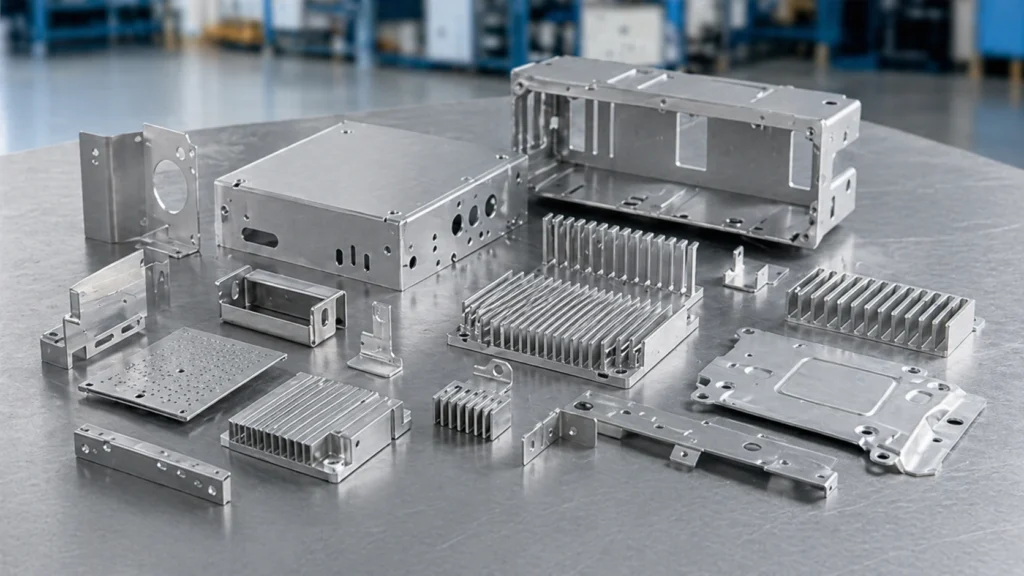
Short answer: battery contact plate stamping is used to produce thin conductive parts that transfer current, provide spring force, or create weldable contact surfaces in battery assemblies. The main RFQ factors are material conductivity, thickness, plating, burr direction, contact force, weldability, flatness, packaging, inspection requirements, volume, and ເວລານໍາສົ່ງ.
This guide is for engineers, purchasing teams, and battery pack builders sourcing stamped battery contact plates, cell contacts, spring battery tabs, nickel-plated contacts, copper contacts, and thin busbar-related ຊິ້ນສ່ວນປັ໊ມ. Small details can affect electrical resistance, assembly yield, welding quality, and long-term contact reliability.
For a quote, send drawings, material and conductivity needs, thickness, plating, weld or contact surfaces, burr direction, quantity, packaging, and inspection requirements through the RFQ form. For heavier conductive parts, review EV battery stamping parts and busbars and the copper busbar stamping RFQ guide.
Common battery contact plate applications
- Positive and negative battery contact plates for consumer, industrial, and mobility products.
- Spring battery tabs that maintain contact pressure after assembly.
- Nickel-plated steel, nickel-plated copper, or pure nickel contacts for weldable cell interfaces.
- Copper and copper alloy contacts where conductivity is more important than spring recovery.
- Thin stamped links used near busbars, protection boards, holders, or pack terminals.
- Contact plates with pierced holes, formed ribs, embossments, dimples, lance features, or solder and weld zones.
Unlike heavier busbars, battery contact plates are often thinner, smaller, and more sensitive to burrs, plating coverage, forming marks, and packaging damage. A good RFQ should describe not only outline dimensions but also which surface touches the cell, which surface is welded, and which edge direction is acceptable after stamping.
Material selection for contact plates
Material choice depends on current, temperature rise, spring force, corrosion risk, welding method, and cost target. Copper and copper alloys are often used where conductivity is the first concern. Brass, phosphor bronze, and beryllium copper may be considered when spring behavior or fatigue resistance matters. Nickel, nickel-plated steel, and nickel-plated copper are common when weldability and corrosion resistance are important.
For spring contacts, temper is as important as alloy. A soft copper contact may conduct well but lose force after forming or repeated compression. A harder copper alloy can hold shape better, but may need larger bend radii and closer forming control. For more detail on spring contact alloys, see phosphor bronze and beryllium copper contact stamping.
| Material | Typical use | RFQ notes |
|---|---|---|
| Copper | Low-resistance contact plates and conductive links | Confirm grade, thickness, hardness, and plating or anti-oxidation requirement. |
| Nickel-plated copper | Conductive contact plates with improved surface protection | Specify plating thickness, weld area, masking needs, and adhesion inspection. |
| Pure nickel or nickel alloy | Weldable battery cell contacts | Confirm weld process, current requirement, and strip thickness. |
| Phosphor bronze | Spring tabs and contacts requiring recovery | Specify temper, contact force, bend direction, and fatigue expectations. |
| Stainless steel | Spring or corrosion-resistant contacts where conductivity is secondary | Confirm whether plating is needed for conductivity or solderability. |
Thickness, geometry, and stamping method
Battery contact plates are commonly made from thin strip, but the correct thickness depends on current, heat rise, spring travel, assembly space, and forming design. Thin parts can reduce material cost and fit tight housings, but may bend during handling. Thicker parts may improve current capacity and stiffness, but increase forming load and may need larger radii.
Simple flat contacts may be made with single-stage tooling for prototype or low-volume orders. Progressive dies are often considered when annual volume is higher, hole positions repeat, and consistent burr direction or forming repeatability matters. Design features such as narrow bridges, small slots, sharp inside corners, and close hole-to-edge distances should be reviewed before tooling. For contact design basics, see the terminal and contact stamping design guide.
Contact force, formed features, and spring tabs
Spring battery tabs need a controlled force window. Too little force can cause unstable contact resistance. Too much force can deform the mating part, make assembly difficult, or create stress relaxation over time. The drawing should show free height, working height, allowable set after compression, and the measurement method for contact force.
Formed ribs, dimples, embossed areas, and raised pads can localize contact pressure or improve stiffness. However, these features may also change flatness, plating wear, and nesting during packaging. When the part has a critical contact surface, mark it clearly on the drawing and define whether tool marks or handling marks are acceptable.
Plating, weldability, and contact surfaces
Plating is often specified for corrosion protection, conductivity, solderability, or weldability. Nickel plating is common for battery contacts, but the correct plating stack depends on base material and joining process. Tin, silver, or selective plating may be used in some electrical contacts, but plating choice should be checked against temperature, friction, mating cycles, and storage conditions.
Weld surfaces should be identified separately from sliding or spring contact surfaces. A plated surface that works for corrosion may not be ideal for spot welding, laser welding, soldering, or ultrasonic welding. If the part will be welded to a cell, tab, PCB terminal, or busbar, include weld method, nugget target if available, and pull test or resistance test requirement. For finish details, see the ການປັ໊ມໂລຫະ plating and passivation RFQ guide.
Burr direction and edge quality
Burr direction is especially important for thin battery contact plates. A burr facing a cell wrap, separator, insulation film, or operator handling area may create damage risk. A burr facing a weld interface may affect fit-up or weld consistency. Drawings should mark burr side, rollover side, and any no-burr or deburred edges.
Normal stamping creates a cut edge with rollover, burnish, fracture, and burr. If the application needs very low burr height, smoother edges, or reduced particle risk, state the requirement in measurable terms. Deburring, brushing, tumbling, or secondary flattening may be possible, but these steps can affect plating, small features, and spring geometry.
Inspection and packaging requirements
Inspection should match the risk of the part. Typical checks may include material certificate review, thickness measurement, profile dimensions, hole location, burr height, plating thickness, surface appearance, flatness, spring height, and contact force. For automotive or high-volume battery work, buyers may request first article inspection, control plans, gauge checks, or PPAP-like documentation.
Packaging is not a small detail for thin contacts. Loose bulk packing can bend spring tabs, scratch plated contact areas, or mix part orientation. Depending on geometry, parts may need layered trays, carrier tape, separators, vacuum bags, anti-tarnish paper, or lot-controlled labels. If the assembly line uses automation, confirm orientation, stack height, and pick-up surface before packaging is quoted.
RFQ checklist for battery contact plate stamping
- 2D drawing and 3D file, including revision level and critical dimensions.
- Material grade, conductivity target, temper, and approved alternatives.
- Thickness and thickness tolerance.
- Plating type, plating thickness, selective plating zones, and surface appearance requirements.
- Spring height, working height, contact force, compression travel, and allowable set if the part is a spring tab.
- Weldability requirement, weld method, weld surface, pull test, or resistance target if available.
- Burr direction, maximum burr height, deburring needs, and edge safety requirement.
- Prototype, pilot, annual volume, and expected order lot size.
- Inspection plan, first article report, material certificate, plating report, or traceability need.
- Packaging method, part orientation, anti-scratch protection, and automation feeding requirements.
- Target ເວລານໍາສົ່ງ, project schedule, and urgent sample date if applicable.
For related process capability, review products and services and custom ການປັ໊ມໂລຫະ. To ຂໍໃບສະເໜີລາຄາ, send the drawing package through the contact page.
FAQ: battery contact plate stamping
What material is best for battery contact plates?
It depends on conductivity, spring force, weldability, and corrosion needs. Copper is often selected for conductivity, nickel or nickel-plated materials for weldable battery contacts, and phosphor bronze or beryllium copper for spring recovery.
Why does burr direction matter on battery contacts?
Burr direction can affect insulation safety, cell surface protection, assembly fit, and weld quality. The drawing should mark which side may have burrs and whether any edges need deburring or special control.
Can stamped battery contacts be plated after forming?
Yes, but the best sequence depends on material, geometry, bend areas, and plating type. Pre-plated strip can reduce cost for some parts, while post-plating may give better coverage on formed edges or complex features.
What files are needed for a battery contact plate RFQ?
A useful RFQ should include 2D drawings, 3D files if available, material and thickness, plating, burr direction, spring force or weld requirements, quantity, inspection needs, packaging method, and target ເວລານໍາສົ່ງ.