
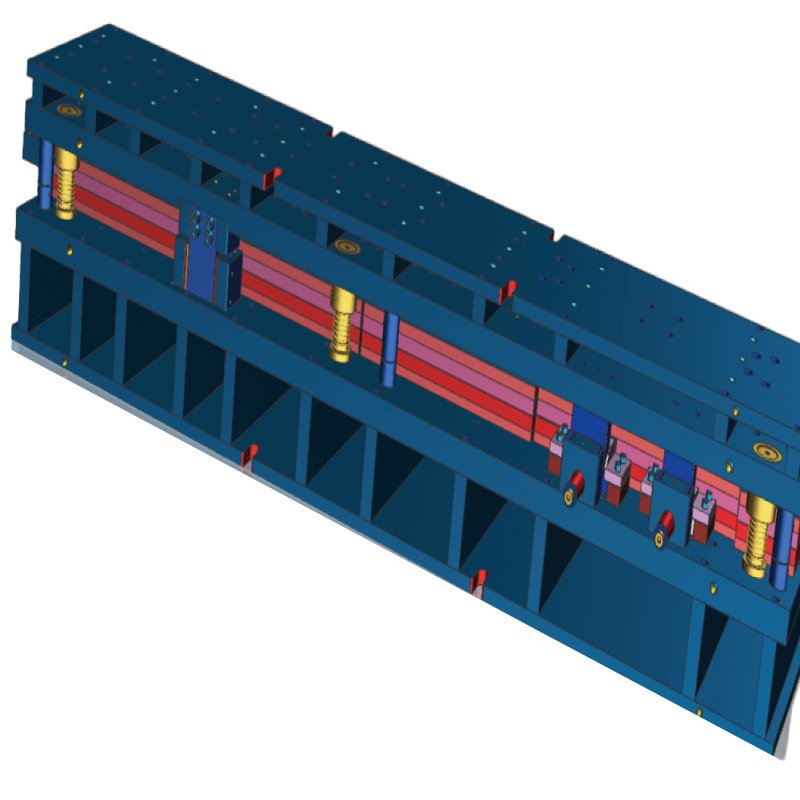
Short answer: the best tool steel for a stamping die depends on the material being stamped, production volume, part geometry, and the dominant wear mode. D2 and DC53 are common for general blanking and forming dies. Carbide grades are used for high-volume runs over 1 million strokes between regrinds. Powder metallurgy steels offer the best wear resistance for abrasive materials like stainless steel and electrical steel.
This guide is for tooling engineers, die designers, and procurement teams choosing tool steel for stamping dies, progressive dies, blanking punches, forming tools, and piercing inserts. The right steel choice affects die cost, regrind frequency, part edge quality, and total cost per stamped part.
Send your part drawing, material, volume, and expected die maintenance schedule through the RFQ form. For tooling cost context, see the metal ابزار قالبزنی cost guide and قالب پیشرونده stamping cost breakdown.
Tool steel categories for stamping dies
| Steel grade | Type | Wear resistance | Toughness | Typical use |
|---|---|---|---|---|
| D2 (Cr12MoV) | High-carbon, high-chromium | High | Moderate | General blanking, piercing, forming dies |
| A2 | Air-hardening medium alloy | Moderate | High | Forming dies, bending tools, punches |
| DC53 (SKD11 modified) | High-carbon, high-chromium | Very high | Good | Precision blanking, fine blanking, long-run dies |
| O1 | Oil-hardening | Low-Moderate | High | Short-run dies, prototype tooling |
| S7 | Shock-resisting | Low | Very high | Coining, embossing, severe forming |
| M2 / M4 HSS | High-speed steel | Very high | Moderate | Piercing punches, thin-stock blanking |
| Carbide (WC-Co) | Cemented tungsten carbide | Extreme | Low | High-volume lamination dies, fine blanking |
| PM (CPM 10V / ASP 23) | Powder metallurgy | Extreme | Good | Abrasive materials, stainless steel stamping |
For die maintenance schedules and regrind intervals, see stamping die maintenance and tool life guide.
Selecting steel by stamped material
The material you stamp directly determines the wear mechanism on the die:
- Carbon steel and low-alloy steel — D2 or DC53 works well for most volumes. For runs under 100,000 parts, A2 is a lower-cost option. For runs over 1 million parts between regrinds, switch to carbide or PM steel for the critical blanking stations.
- Stainless steel (300 series) — work-hardens during stamping and causes rapid abrasive wear. PM steels (CPM 10V or equivalent) or carbide are strongly recommended for production dies. D2 can be used for prototypes but expects regrind intervals of 20-50 thousand parts instead of 200-500 thousand.
- Silicon electrical steel (motor laminations) — extremely abrasive due to silicon content and oxide coatings. Carbide dies are standard for volume lamination production. D2 or DC53 may be used for prototype or low-volume runs. For more on laminations, see motor lamination stamping guide.
- Aluminum — low abrasive wear but can gall and pick up on the die surface. D2 with a surface treatment (CrN, TiN, or DLC coating) reduces galling. For aluminum stamping, see also aluminum stamping services.
- Copper and brass — moderate wear. D2 or DC53 with proper lubrication is sufficient for most volumes. For thin copper strip, carbide inserts improve tool life significantly.
- Spring steel and high-temp alloys — high force and abrasive wear. Use PM steel or carbide for production. Expect faster wear even with premium die materials.
Heat treatment considerations
Hardness after heat treatment must balance wear resistance against toughness:
- Blank and pierce punches: 60-64 HRC for D2/DC53, 65-67 HRC for carbide.
- Forming and bending tools: 56-60 HRC for A2, 58-62 HRC for D2.
- Drawing dies: 58-62 HRC for D2, with polished cavity surfaces.
- Stripper plates and non-critical guides: 50-55 HRC for A2 or O1.
Deep hardening is important for dies that will be reground multiple times. D2 reaches full hardness in sections up to 100 mm. Thicker dies may need high-hardenability grades like Cr12Mo1V1 (D2 equivalent with deeper hardenability).
Surface treatments and coatings
Surface treatments extend die life between regrinds and reduce galling:
- Titanium nitride (TiN) — gold coating, 2-4 microns. Reduces wear on blanking punches and forming tools. Die life improvement 2-5x vs uncoated D2.
- Titanium carbonitride (TiCN) — higher hardness than TiN. Good for abrasive stamping conditions.
- Chromium nitride (CrN) — excellent for aluminum and stainless stamping where galling is a concern.
- Diamond-like carbon (DLC) — low friction, excellent for forming and drawing tools where lubrication is limited.
- Nitriding — case hardening for D2 and H13 dies. Adds 0.05-0.15 mm hardened layer. Die life improvement 1.5-3x.
- Chemical vapor deposition (CVD) for carbide dies — titanium carbide or titanium nitride coating on carbide inserts reduces crater wear and extends regrind intervals for lamination stamping.
For finishing-related coatings, see مهرزنی فلز plating and passivation RFQ guide.
Cost comparison
Tool steel cost varies significantly by grade and processing:
- O1: $5-10 per kg
- A2: $8-15 per kg
- D2: $10-20 per kg
- DC53: $15-25 per kg
- M2 HSS: $15-30 per kg
- PM steel (CPM 10V): $40-80 per kg
- Carbide (WC-Co): $80-200 per kg
The higher material cost of carbide or PM steel is typically offset by longer regrind intervals and less downtime, especially at volumes above 500,000 parts per year. For a detailed cost analysis, see metal ابزار قالبزنی cost guide.
RFQ checklist for die steel selection
- Part material: grade, thickness, temper, and surface condition (abrasive or non-abrasive).
- Production volume: total annual quantity and expected die stations.
- Tooling type: progressive, transfer, compound, or single-station die.
- Critical stations: which punches or die sections see the most wear.
- Required regrind interval between maintenance cycles.
- Surface coating or treatment preference (TiN, CrN, DLC, nitriding).
- Die cooling or lubrication approach: flooded, mist, or dry stamping.
- Budget range for tool steel material cost.
Submit your part and die requirements through the RFQ form. For DFM review guidance, see مهرزنی فلز DFM review before tooling.