
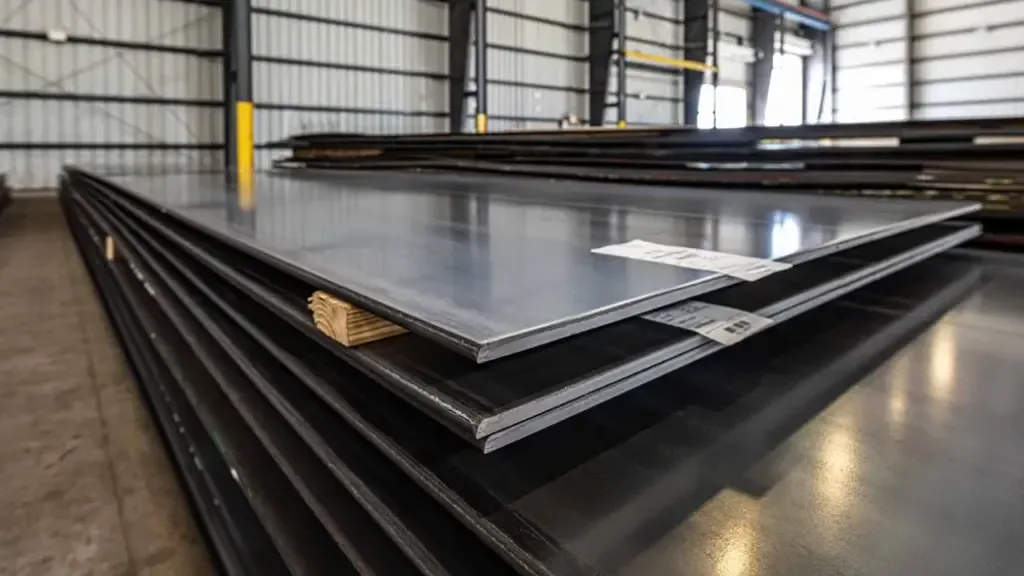
Short answer: HSLA stamped brackets should be quoted with more than grade and thickness. The RFQ should define strength target, bend radii, grain direction if known, critical holes, load faces, flatness, springback allowance, coating route, inspection method, and whether the cyflenwr may suggest a lower-risk material or tooling change after DFM review.
High-strength low-alloy steel is often chosen for modurol brackets, equipment supports, battery trays, chassis clips, and structural rhannau wedi'u stampio. It can reduce weight or improve load capacity, but it can also increase springback, cracking risk, punch wear, and dimensional variation if the drawing was first designed around mild steel.
Use this page with the steel stampio parts guide, modurol stamped bracket guide, material substitution approval guide, and DFM review before tooling guide.
HSLA bracket details that change the quote
| RFQ item | Why it matters | What to send |
|---|---|---|
| Grade and strength | Yield strength affects forming force, springback, cracking risk, and die wear. | Grade, standard, mill cert need, and substitute approval rule. |
| Bend geometry | Small radii and short flanges can crack or move holes after forming. | Inside radius, bend angle, hole-to-bend distance, and loaded face. |
| Flatness and hole position | A strong bracket can still fail if it rocks on a mating surface. | Datum scheme, tolerance, gage need, and assembly stack condition. |
| Finish route | Galvanized, e-coat, powder coat, or plating can change edge and hole fit. | Final finish, masked zones, corrosion target, and packaging rule. |
Design around springback, not only strength
The most common quote gap is assuming an HSLA bracket will behave like low-carbon steel with the same CAD dimensions. Higher yield strength usually means more springback after bending. The die may need overbend, form compensation, stronger pilots, or tighter strip control to keep holes and tabs aligned after forming.
Mark the features that locate the assembly: bolt holes, tabs, slots, datums, weld faces, and load pads. If flatness or hole position is critical only after fastening, say so. That helps the cyflenwr choose between normal dimensional inspection, a functional gage, or a fixture check similar to the datum and functional gage guide.
Check cracking, burr side, and finish early
HSLA is not one behavior. Formability depends on grade, thickness, coil condition, bend radius, grain direction, and edge quality. Tight bends across pierced holes, slots, or notches may need larger radii, reliefs, or a changed sequence. Burr direction can matter when the bracket sits against a gasket, harness, painted panel, or moving part.
Finishing should be included in the first quote, not treated as a later purchasing note. Zinc, galvanized sheet, e-coat, powder coating, and passivation-like cleaning routes each create different concerns. Adolygu related edge and coating rules with the burr control guide, edge break guide, and powder coating masking guide.
RFQ details to include
- 2D drawing and 3D model with material grade, thickness, strength requirement, and allowed substitute materials.
- Critical bends, radii, holes, slots, load faces, datum features, burr direction, and final assembly condition.
- Flatness, profile, hole position, bend angle, and whether inspection is free-state or restrained in a fixture.
- Annual volume, prototype quantity, marw blaengar expectation, sample timing, and PPAP-like documents if needed.
- Surface finish, corrosion target, masked zones, packaging protection, and any no-scratch faces.
- Known field issue: cracking, springback drift, loose fit, rattling, coating chip, or cyflenwr capacity problem.
How to compare cyflenwr replies
A useful reply should name the likely forming risk and explain how the cyflenwr will prove the bracket works. Look for comments about springback compensation, datum choice, inspection fixture, grain direction, pilot strategy, and first article data. A weak reply only repeats the steel grade and offers a unit price.
Ask whether the cyflenwr wants to quote the exact drawing or propose a DFM-adjusted version. For many brackets, a slightly larger radius, moved hole, added relief, or changed burr direction can reduce scrap without changing the product function.
Anfon drawings, material standard, annual volume, finish, and assembly notes through the cyswllt page. If the grade is not fixed yet, use the RFQ form to ask for a mild steel versus HSLA risk review before production tooling is released.
FAQ
Why is HSLA harder to stamp than mild steel?
HSLA usually has higher yield strength, so it can need more forming force, show more springback, wear tooling faster, or crack if bend radii and reliefs are too tight.
Should HSLA bracket tolerances be checked free-state?
Only if that matches the real function. Many brackets should also be checked against datums, mating holes, or a functional fixture that reflects assembly condition.
Can a cyflenwr suggest a different HSLA grade?
Yes, if the drawing allows substitution. The approval route should define mechanical properties, corrosion needs, samples, and whether the customer must sign off before tooling.
What should be sent for an HSLA bracket RFQ?
Anfon drawings, material grade, thickness, strength target, critical features, tolerance scheme, finish, annual volume, samples, and any current fit or cracking issue.