
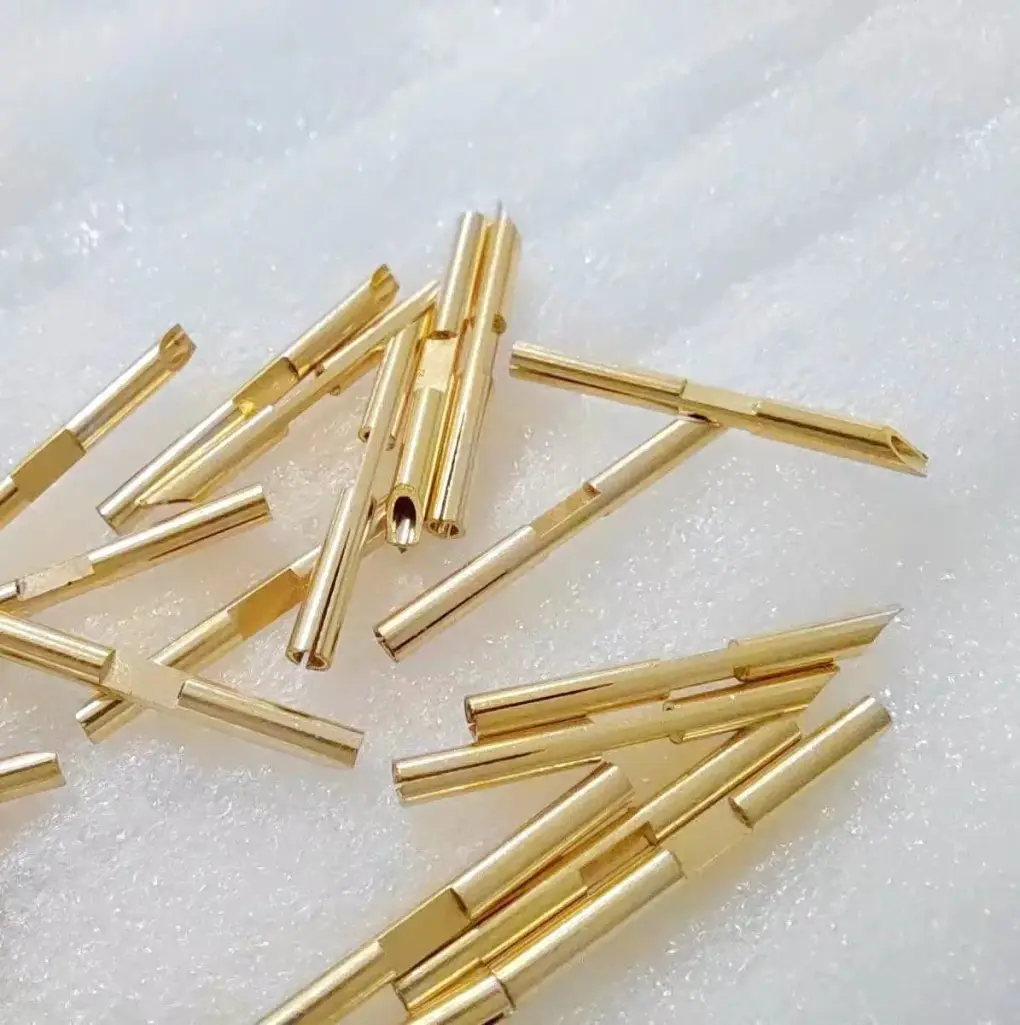
Short answer: stamped metal inserts for insert molding should be designed for stable locating, controlled burr direction, plating compatibility, pull-out strength, cleanliness, and repeatable feed to the molding process. The paghulma tagasuplay does not need to own the molding process to make inserts that a molding partner can use reliably.
This guide is for connector, awtomotibo, appliance, medical device, sensor, and electronics buyers who need stamped inserts for insert molding or overmolding. It focuses on the stamped metal part: geometry, strip supply, surface condition, locating features, and quality requirements before the insert goes into plastic.
If you have an insert drawing or molded assembly model, send metal insert geometry, plastic part context, material, finish, volume, and molding method through the RFQ form. For general quote preparation, use the paghulma sa metal RFQ checklist.
What makes a stamped insert different?
A stamped insert must survive both paghulma and molding. It may need to locate accurately in a mold, bond or lock into plastic, avoid cutting the plastic, and maintain electrical or mechanical function after heat and pressure. A loose stamped part that passes dimensional inspection may still fail if it shifts during molding or creates flash, short shot, or poor retention.
The RFQ should include the insert function and the molding context, even if the paghulma tagasuplay only makes the metal component. The tagasuplay needs to understand which edges touch plastic, which features locate in tooling, and which surfaces must remain plated or clean.
Komon stamped insert applications
| Application | Insert function | RFQ concern |
|---|---|---|
| Connector insert | Electrical kontak or terminal inside molded housing. | Plating, kontak zone, carrier strip, insertion alignment. |
| Threaded or hardware insert support | Metal reinforcement or mounting feature. | Hole position, flatness, pull-out features, burr direction. |
| Sensor or device frame | Supports electronics or provides conductive path. | Cleanliness, coplanarity, plating, heat exposure. |
| awtomotibo terminal strip | Conductive insert molded into a connector or module. | Traceability, PPAP documents, strip handling, packaging. |
| Appliance or industrial insert | Mounting, grounding, retention, or wear surface. | Materyal, corrosion, locating holes, lot consistency. |
Design features that help molding
Good stamped inserts often include locating holes, pilot features, retention tabs, barbs, knurls, slots, or surfaces that help the mold or plastic hold the metal part. These features must be manufacturable in paghulma and safe for the plastic part. Sharp burrs, poorly controlled tabs, or twisted parts can create molding problems.
Use the punched holes and slots guide and burr control guide when defining holes, slots, barbs, and locating features. Mark which edges face plastic and which surfaces must remain smooth.
Materyal, plating, and molding heat
Materyal and finish should be chosen for both metal function and molding exposure. Copper alloys may be used for conductive inserts. Stainless steel or carbon steel may be selected for strength or retention. Plating may be needed for conductivity, solderability, corrosion, or kontak performance, but plating must survive handling and molding conditions.
Tell the tagasuplay the plastic process if known: insert molding, overmolding, heat exposure, resin type, and whether the insert is preheated, manually loaded, robot loaded, or strip fed. For plated inserts, use the plating and passivation RFQ guide.
Loose inserts versus strip-fed inserts
Some inserts are supplied loose in trays or bags. Others are supplied on carrier strip for automated feeding or post-paghulma operations. Strip-fed inserts can reduce handling and improve orientation, but they require carrier design, feed direction, cutoff planning, and packaging control.
If the molding partner needs strip format, state reel size, pitch, carrier hole requirements, leader length, and cut-off method. This overlaps with reel-to-reel paghulma and lead frame paghulma requirements.
Burr direction and plastic damage
Burr direction is especially important for stamped inserts. A burr can scrape plastic, create stress concentration, block seating, or expose base metal after plating. The drawing should identify edges that touch plastic, contacts, seals, wires, or mating components.
For insert molding projects, ask the tagasuplay to review burr side, edge break, deburring, plating coverage, and handling marks before tooling. If a small burr is acceptable in one direction but not another, put that on the drawing.
RFQ checklist for stamped metal inserts
- 2D metal insert drawing and 3D molded assembly context.
- Materyal nga grado, thickness, temper, finish, and approved substitutes.
- Insert function: electrical kontak, reinforcement, grounding, retention, wear surface, or mounting.
- Locating features, carrier strip, feed direction, and molding orientation.
- Burr direction, edge safety, plastic-kontak surfaces, and no-damage zones.
- Plating, solderability, corrosion, pull-out, or conductivity requirements.
- Packaging: loose, tray, tube, reel, counted bags, or molding-line packaging.
- Kalidad documents: FAI, control plan, PPAP, material certificate, plating report.
Inspection and approval
Dimensional inspection should cover the features that locate the insert in the mold and the features that function after molding. For critical inserts, also review plating, burrs, cleanliness, flatness, coplanarity, strip feed, and packaging. A sample approval should include feedback from the molding trial, not only loose insert inspection.
If your insert project needs launch control, use the PPAP/APQP guide and FAI checklist. Ipadala the stamped insert drawing and molded part context through the RFQ form so manufacturability can be reviewed early.
FAQ: stamped metal inserts for insert molding
Can stamped inserts be supplied to a separate molding tagasuplay?
Yes. The paghulma tagasuplay can make inserts for a molding partner if the RFQ defines locating features, packaging, finish, and molding requirements.
What materials are used for stamped inserts?
Komon options include copper alloys, brass, stainless steel, carbon steel, and plated materials, depending on conductivity, strength, and corrosion needs.
Why is burr direction important for inserts?
Burrs can scrape plastic, block seating, damage wires, or create assembly problems. Plastic-kontak edges should be defined clearly.
Should inserts be loose or on strip?
It depends on the molding process. Automated feeding may need carrier strip or reel supply, while lower volume molding may use loose or tray-packed inserts.
Does plating need to be specified before tooling?
Yes. Plating affects kontak zones, masking, burr coverage, handling, and sometimes molding exposure.
What should be sent for an insert molding RFQ?
Ipadala the metal insert drawing, molded assembly context, material, finish, orientation, burr requirements, annual volume, packaging, and quality documents.