
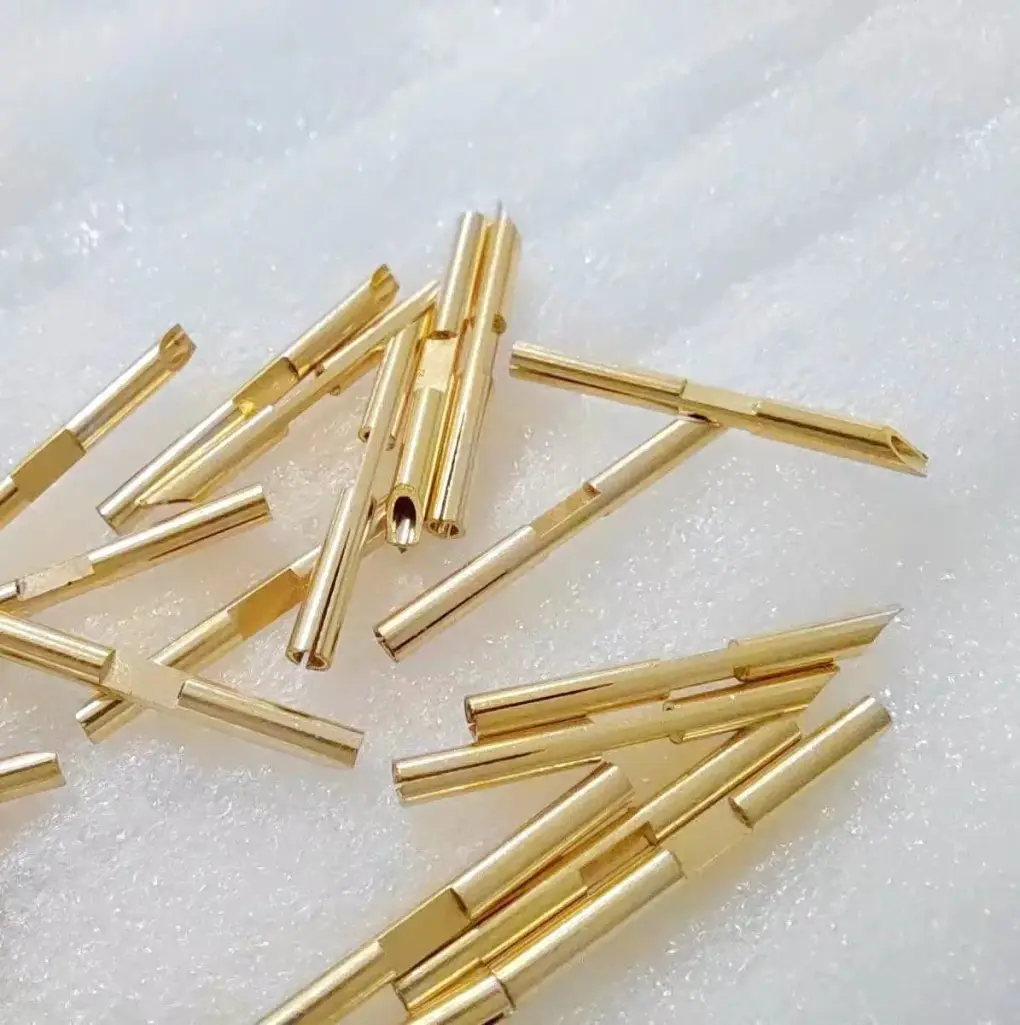
Short answer: Four-slide and multislide paghulma sa metal are useful when a small strip part needs bends from several directions, spring features, or formed kontak geometry that would be awkward in a straight progresibong hulmahan. The RFQ should show material, thickness, bend sequence, spring function, plating needs, annual volume, and packaging method.
Many buyers first ask for progresibong hulmahan paghulma because it is the familiar high-volume route. For some clips, contacts, terminals, shields, and spring parts, a four-slide or multislide machine can form the part more naturally. Slides approach the strip from different directions, so the tool can cut, bend, curl, coin, and form small features without forcing every action into one straight feed direction.
This guide fits alongside the terminal and kontak paghulma guide, spring clip paghulma guide, progresibong hulmahan strip layout guide, and DFM review before tooling guide.
When four-slide or multislide paghulma is worth reviewing
| Bahin condition | Why it matters | RFQ note |
|---|---|---|
| Several bends in different directions | Side slides can form geometry that is hard to reach in one progresibong hulmahan direction. | Ipadala a formed view, flat pattern if available, and bend sequence notes. |
| Small spring clips or contacts | Spring force depends on material temper, bend radius, and controlled forming. | State spring force, working deflection, and fatigue concern. |
| kontak or terminal areas | Functional zones may need burr direction control, plating, and clean packaging. | Mark mating surfaces, plating zones, and allowed cosmetic marks. |
| Moderate to high repeat volume | Tooling can be economical when the part repeats and setup is controlled. | Share annual volume and release quantity, not only lifetime estimate. |
How it differs from a progresibong hulmahan
A progresibong hulmahan usually advances strip through stations in a press. Each station performs a controlled operation until the finished part is cut off. Four-slide and multislide machines feed strip or wire into a forming zone where several tools act around the part. That can reduce the number of stations for compact formed geometry, but it is not automatically better for every part.
Progressive dies often fit wide parts, deep draws, heavy tonnage, or parts that need many pierce and blank stations. Multislide forming often fits smaller parts with bends, hooks, clips, tabs, or spring kontak features. The practical decision is not the machine name. It is whether the part geometry, material, tolerance, volume, and inspection plan match the process route.
Buyer risks to define before tooling
The main risk is treating a formed spring part like a flat blank. Spring clips and contacts need functional checks, not only dimensional checks. Free height, kontak force, insertion feel, tab angle, and part orientation in packaging may matter more than a long list of general dimensions.
Materyal choice also matters. Phosphor bronze, beryllium copper, stainless spring steel, carbon spring steel, and plated strip do not form or recover the same way. If conductivity, corrosion resistance, magnetic behavior, or fatigue life matters, include that in the RFQ before the tagasuplay chooses a route. For related material decisions, review the phosphor bronze and beryllium copper kontak guide and the material selection guide.
What to send for a useful quote
- 2D drawing and 3D model, including formed state and any flat pattern if available.
- Materyal nga grado, temper, thickness, conductivity or spring property needs.
- Critical bend angles, bend radii, free height, spring force, and working deflection.
- Burr side, kontak side, cosmetic side, and any no-scratch zones.
- Plating route, selective plating needs, or post-forming finish requirements.
- Annual volume, order release quantity, target panahon sa paghatod, and current process issue.
- Packaging method if parts tangle, deform, or need orientation for assembly.
Inspection and packaging
A multislide part may pass a basic dimension check but fail in assembly because the spring force, hook angle, or kontak face is wrong. Ask for a practical inspection plan: first article dimensions, functional gage, spring force check when relevant, plating thickness or kontak-zone inspection, and lot traceability. The critical dimensions inspection plan, Gage R&R guide, and packaging damage prevention guide help define those controls.
For a quote review, send drawings and samples through the kontak page. If your current clip or kontak is hard to form or hard to inspect, use the RFQ form to include photos, rejected samples, spring force targets, and the expected assembly condition.
FAQ: four-slide and multislide paghulma
Is four-slide paghulma only for very small parts?
It is commonly used for small clips, contacts, terminals, and springs, but the real limit depends on strip width, material thickness, forming force, and machine capacity.
Can a four-slide tool replace a progresibong hulmahan?
Sometimes. It depends on bend directions, part width, material, tolerance, volume, and whether the required inspection can be controlled on the selected machine.
What drawings are needed for multislide paghulma?
Ipadala the formed drawing, flat pattern if available, material and temper, spring or kontak requirements, burr side, plating needs, and packaging requirement.
Does multislide paghulma reduce tooling cost?
It can for some formed strip parts, but tooling cost depends on part complexity, tolerance, stations, setup needs, volume, and inspection requirements.