
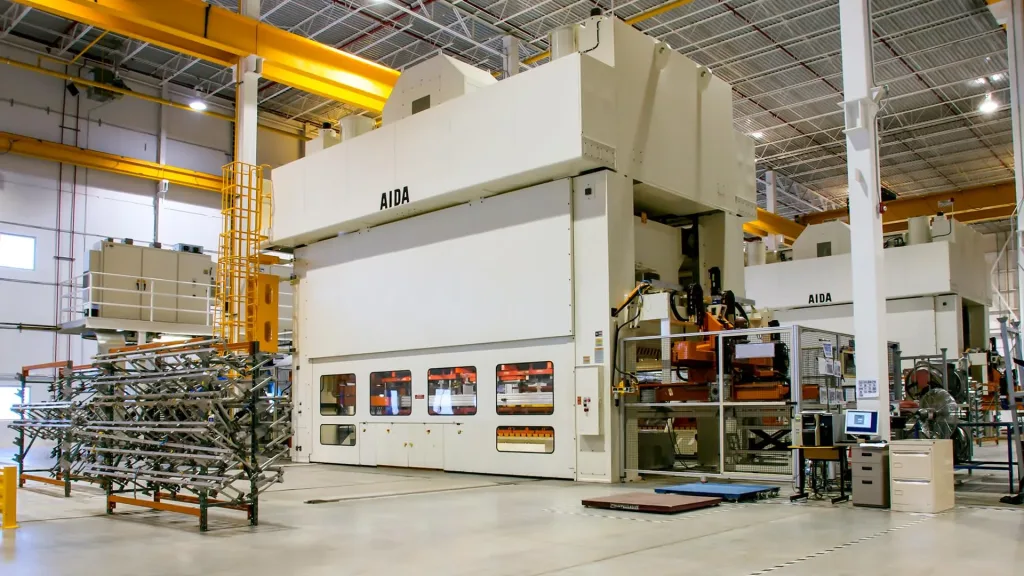
Short answer: Coil-fed paghulma is often best for repeat production, progressive dies, and stable strip layouts. Blank-fed paghulma can be better for larger parts, lower volumes, sensitive surfaces, special grain direction, or material that is only available as sheet. The RFQ should ask suppliers to explain material yield, MOQ, feed direction, scrap, and tooling route.
A stamped part can start as coil strip, cut blanks, or sheet-fed material. The choice changes material utilization, tooling cost, handling, surface risk, production speed, and minimum order quantity. Buyers often compare quotes without realizing one tagasuplay assumed coil-fed progresibong hulmahan production while another assumed blank-fed forming.
Use this guide with the coil yield and scrap rate guide, progresibong hulmahan strip layout guide, MOQ and blanket order guide, and cost reduction DFM guide.
Coil-fed and blank-fed comparison
| Factor | Coil-fed paghulma | Blank-fed paghulma |
|---|---|---|
| Volume | Usually better for repeat production and automated feeding. | Often useful for prototypes, pilots, or lower-volume parts. |
| Materyal yield | Depends on strip layout, carrier width, pitch, and scrap credit. | Depends on blank nesting, sheet size, and manual or automated handling. |
| Bahin size | Limited by coil width, feeder, press bed, and die design. | Can suit wider or irregular parts that do not nest well in a strip. |
| Surface control | Coil handling and feed rolls can mark sensitive surfaces. | Blanks may allow more careful surface orientation and protection. |
When coil-fed paghulma is favored
Coil-fed paghulma fits high-volume parts with stable geometry, repeat demand, and a strip layout that can carry the part through each station. progresibong hulmahan production can combine piercing, forming, trimming, and cutoff in one automated route. It can reduce labor and improve repeatability, but only if coil MOQ, strip scrap, and setup cost make sense.
The tagasuplay should explain the strip pitch, carrier area, feed direction, pilot holes, and whether grain direction affects bends or spring features. If the part is plated, painted, or cosmetic, ask how the coil is protected during feeding.
When blank-fed paghulma is better
Blank-fed tooling can be a better fit for large panels, low-volume brackets, early launch quantities, or parts where the material is purchased as sheet. It can also help when grain direction must be controlled part by part or when a finished surface should not pass through many feed stations.
Blank-fed production may require more handling, but it can avoid over-investing in progressive tooling before demand is proven. It can also support bridge production while the final die is being designed. Compare this with the pilot production checklist and die modification versus new tooling guide.
RFQ details to include
- Materyal nga grado, thickness, temper, coating, sheet or coil availability, and allowed substitutes.
- Bahin envelope size, bend direction, grain direction, cosmetic surface, and flatness needs.
- Annual volume, first order quantity, release quantity, and expected program life.
- Whether the buyer wants coil-fed, blank-fed, or tagasuplay-recommended process comparison.
- Materyal yield assumptions, scrap credit, coil MOQ, setup time, and tooling cost split.
- Inspection, packaging, and surface protection requirements for the chosen route.
How to request a useful comparison
Ask suppliers to quote the same demand scenario. A coil-fed quote for annual volume should not be compared directly with a blank-fed quote for one small release. Ask for tooling cost, unit price, MOQ, material yield, panahon sa paghatod, and risk notes for each route.
Ipadala drawings and expected volumes through the kontak page. If the best route is uncertain, use the RFQ form to request a coil-fed versus blank-fed comparison. Include material constraints and surface expectations so the tagasuplay does not optimize only for unit price.
The best route may also change after launch. A buyer may start with blank-fed samples, move to a simpler production die for pilot demand, and later approve progressive coil-fed tooling once forecast is stable. If that path is likely, ask the tagasuplay to show which dimensions, edge conditions, and packaging rules must stay consistent during the transition.
This keeps sample approval useful when the production route changes later.
FAQ
Is coil-fed paghulma always cheaper?
No. It can reduce unit cost at volume, but tooling, coil MOQ, strip scrap, and setup cost may not fit low-volume or unstable parts.
When is blank-fed paghulma better?
Blank-fed paghulma can suit large parts, lower volumes, sensitive surfaces, special grain direction, or material only available as sheet.
What is the main RFQ risk?
The main risk is comparing suppliers who assumed different production routes. Ask each tagasuplay to state the process route and material yield.
Does grain direction affect the choice?
Yes. Bend cracking, spring function, and blank nesting can depend on rolling direction, especially for aluminum, spring material, and high-strength steel.