
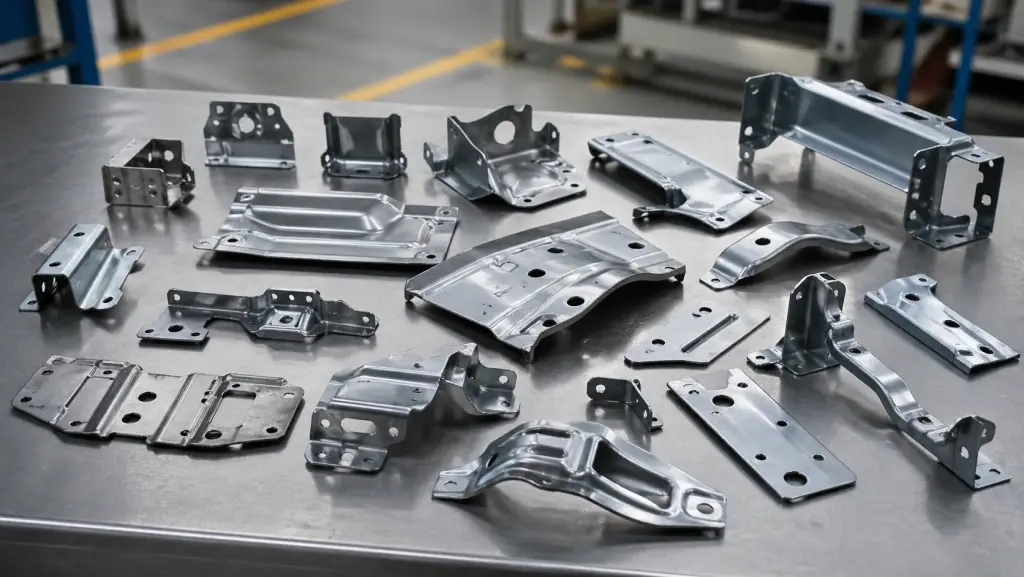
Short answer: awtomotibo stamped brackets should be quoted with clear drawings, material grade, sheet thickness, mounting-hole tolerances, bend requirements, surface finish, inspection documents, and annual volume. The most important manufacturing issues are strength, hole position, flatness, burr control, corrosion protection, and repeatability across production lots.
This guide is for sourcing teams and engineers buying custom stamped brackets for awtomotibo assemblies. Brackets may look simple, but the wrong material, bend tolerance, burr direction, or plating assumption can cause assembly problems after tooling is built.
For a quote, send drawings through the RFQ form. If the design is still open, use this page to prepare the information needed for DFM review.
What makes awtomotibo stamped brackets different?
awtomotibo brackets usually connect, support, locate, or protect another component. They may hold cables, sensors, housings, panels, battery components, fluid-line clips, shields, or structural subassemblies. A bracket often has several functional features: mounting holes, bends, tabs, ribs, slots, welded nuts, or formed locating surfaces.
| Requirement | Paggama concern | RFQ detail to include |
|---|---|---|
| Mounting holes | Hole position affects fit, assembly time, and downstream fixture alignment. | Critical hole dimensions, datum scheme, and mating hardware. |
| Bends and flanges | Springback and bend height can change final assembly position. | Bend angle tolerance, bend radius, and functional surfaces. |
| Strength and stiffness | Materyal nga grado and ribs may be needed to resist vibration or load. | Application, load direction, vibration concern, and material preference. |
| Corrosion protection | Finish changes cost, panahon sa paghatod, and dimensional buildup. | Zinc plating, e-coat, powder coating, passivation, or customer finish standard. |
| Kalidad documentation | awtomotibo programs may need traceability and structured inspection. | FAI, material certificate, control plan, PPAP-like documents, or CMM report. |
Komon bracket materials
Materyal selection depends on strength, weight, corrosion resistance, forming risk, and cost. Do not leave the material open unless you want the tagasuplay to recommend options during DFM review.
- Low-carbon steel: common for cost-effective brackets that need plating or coating.
- High-strength steel or HSLA: used when strength or stiffness must increase without adding much thickness.
- Stainless steel: useful where corrosion resistance or clean appearance is required.
- Aluminum: chosen when weight reduction is important, but bend radius and cracking risk need review.
- Pre-plated or coated material: may reduce finishing work but requires careful surface handling.
Related pages: steel paghulma, stainless steel paghulma, and palid nga metal paghulma.
Design details that affect tooling and cost
Stamped brackets may use simple dies, compound dies, progressive dies, transfer tooling, or secondary forming operations. The right tooling route depends on part size, volume, feature count, and tolerance risk.
- Number of bends, bend sequence, and bend height tolerance.
- Hole-to-bend distance and hole-to-edge distance.
- Ribs, embosses, lances, tabs, clips, or weld features.
- Flatness requirements after forming.
- Whether nuts, studs, washers, or other hardware are assembled after paghulma.
- Production volume and expected program life.
For high-volume parts with repeated features, progresibong hulmahan paghulma may lower unit cost. For lower volumes, short-run tooling or staged operations may be more practical. For cost planning, see the tooling cost guide.
Tolerances and inspection for brackets
awtomotibo bracket drawings should identify the dimensions that actually control fit. Tight tolerances on every edge can add tooling and inspection cost without improving assembly.
Mark these features clearly:
- Mounting hole diameter and location.
- Datum surfaces used during inspection or assembly.
- Bend height, bend angle, and formed tab position.
- Flatness or parallelism when the bracket supports another component.
- Burr direction and edge condition when operators or cables may kontak the edge.
- Critical surfaces after plating or coating.
Surface finish and corrosion protection
Finish requirements should be part of the RFQ, not an afterthought. Zinc plating, powder coating, e-coat, passivation, oiling, or raw finish can change panahon sa paghatod, cost, masking, packaging, and dimensional checks.
If the bracket is used near moisture, heat, vibration, battery components, or road exposure, tell the tagasuplay. The working environment helps decide whether the finish is mainly cosmetic, corrosion-related, or tied to an assembly standard.
Typical awtomotibo bracket applications
Stamped brackets are used across many vehicle systems. The tagasuplay does not need confidential vehicle data to quote the part, but the RFQ should explain the function well enough to review manufacturing risk.
- Sensor brackets where hole position and formed height control alignment.
- Cable and harness retainers where burr direction and edge condition protect insulation.
- Battery, power electronics, or module supports where flatness and corrosion protection matter.
- Body, seat, and interior support brackets where strength and vibration behavior matter.
- Shielding or cover brackets where surface finish and assembly clearance matter.
- Stamped clips or small retainers where spring behavior and repeatable forming are important.
Some brackets can be produced as a stamped blank plus secondary bending. Others are better suited to progressive tooling, especially when the annual volume is high and several pierce, form, and cutoff stations can run in one strip layout. If the bracket needs welded nuts, studs, or secondary assembly, quote those operations together with the stamped part so the total cost is visible.
RFQ checklist for awtomotibo stamped brackets
- 2D drawing and 3D STEP file.
- Materyal nga grado, thickness, and surface condition.
- Critical mounting holes, datums, bend tolerances, and flatness notes.
- Prototype quantity, first order quantity, annual volume, and program life.
- Finish, plating, coating, deburring, and packaging requirements.
- Hardware insertion, welding, riveting, or assembly requirement.
- Inspection documents, material certificate, FAI, or PPAP-like package.
- Target sample date and production launch schedule.
FAQ
What material is best for awtomotibo stamped brackets?
It depends on load, weight, corrosion exposure, and cost. Low-carbon steel is common, HSLA can improve strength, stainless steel helps corrosion resistance, and aluminum can reduce weight when forming risk is managed.
Why do mounting hole tolerances matter so much?
Hole position controls assembly fit. If holes are too loose, the bracket may shift; if tolerances are too tight, tooling and inspection cost can increase. Mark only functional hole locations as critical.
Can stamped brackets include welded nuts or studs?
Yes. Hardware insertion, projection welding, riveting, or assembly can be quoted with the stamped part, but the RFQ should state hardware type, position, torque requirement, and inspection method.
When should a bracket use progresibong hulmahan tooling?
progresibong hulmahan tooling is usually considered when annual volume is high and the bracket has repeated piercing, bending, forming, or cutoff operations that can run efficiently in a strip layout.
Should finish be quoted with the paghulma?
Yes. Plating, coating, deburring, oiling, or passivation can affect cost, panahon sa paghatod, dimensions, and packaging, so the finish should be included in the original RFQ.
What files help quote awtomotibo brackets faster?
Ipadala 2D drawings, 3D files, material grade, thickness, critical tolerances, finish, annual volume, hardware requirements, inspection documents, and target launch schedule.
Request a bracket manufacturing review
For custom awtomotibo stamped brackets, clips, retainers, shields, supports, or mounting plates, send your drawings through the RFQ form. Include material, thickness, finish, critical holes, annual volume, and quality documents so tooling and production can be reviewed together.